
RV Transport from Florida to Michigan
The number that surprises most people on this move is the price gap: where a sedan runs roughly $775 to $975 up the 1,400 miles from Florida to Michigan, your RV can land anywhere from about $1,150 to $2,925, and an oversized Class A coach pushes past the top of that. That spread isn’t a markup someone tacked on. It tracks the real things that change once the vehicle is the size of a small house, namely length, height, weight, whether it drives or gets towed, and how much insurance has to ride along. Get those details right and the price makes sense. Get matched to the wrong carrier off a load board and you find out the hard way. Simple Car Ship handles it the careful way, pairing your exact rig with a carrier whose equipment and coverage actually fit, with a straight quote and a real person from the Florida pickup to the Michigan drop.
Get your instant car shipping price
Real quote in seconds — no spam, no runaround.
How the Florida to Michigan RV Move Works
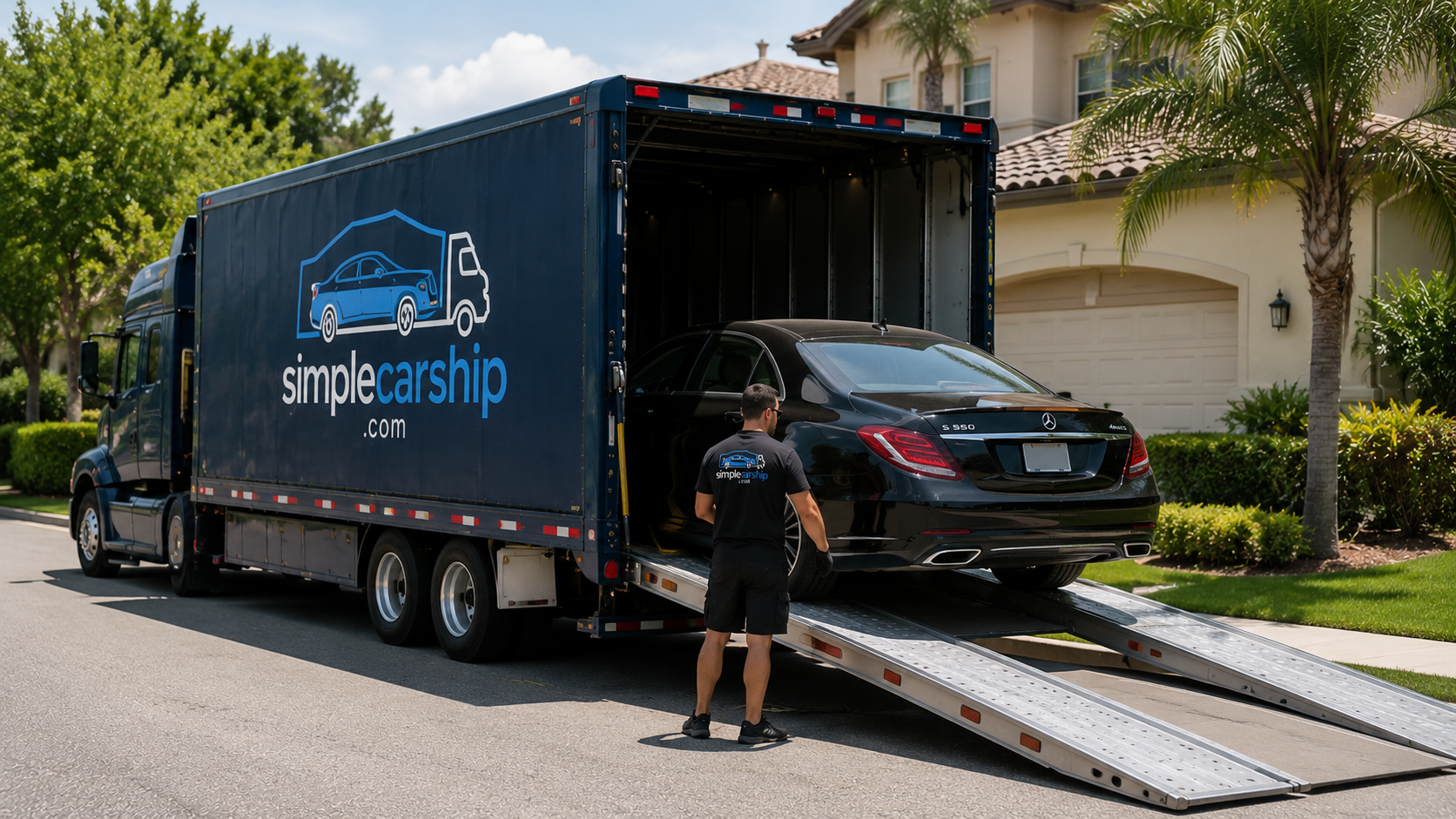
The Florida to Michigan corridor runs roughly 1,400 miles into the Great Lakes, and it happens to be a classic snowbird lane. That works in your favor: plenty of carriers run between the Sunshine State and Michigan every week, especially in spring and fall, so availability is steadier than on a thin route. The wrinkle is that an RV doesn’t ride on a normal multi-car carrier the way a sedan does. How your rig travels depends on what it is and whether it runs.
There are three common ways an RV moves on this lane. Drive-away is when a qualified, insured driver drives a running motorhome (Class A, B, or C) the full route from Florida to Michigan; it’s efficient for larger coaches but adds odometer miles. Tow-away is the standard for travel trailers and fifth-wheels, where the carrier hitches your towable to a properly rated truck with no added engine miles. Flatbed or specialized hauling handles non-running rigs and smaller units. Once you book, we match your RV to a carrier who runs that exact equipment, not whoever bid lowest on a load board.
How Long the Trip Takes
Across roughly 1,400 miles, a typical Florida to Michigan RV move runs about 4 to 7 days door to door. That window accounts for a 1 to 3 day pickup buffer plus around 3 days of transit at the standard pace of about 500 miles a day. Oversized Class A coaches and any move needing permits or routing around height and weight limits can sit at the longer end, since the route gets planned around bridge clearances and axle limits a normal car move never touches. We give you a realistic window up front instead of a best-case promise we can’t keep.
What It Typically Costs to Ship an RV Florida to Michigan
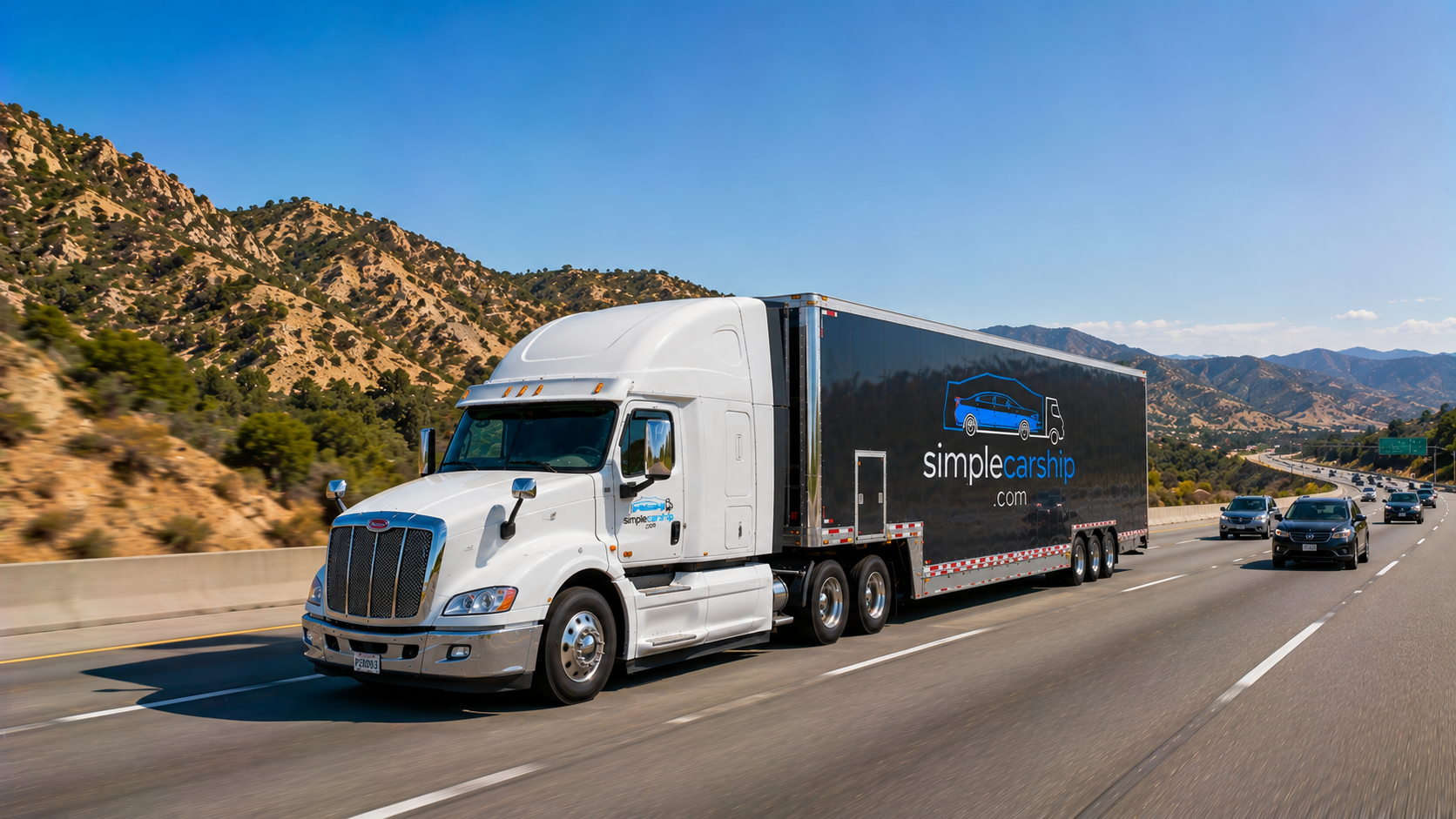
Honest math first. For a standard car on this 1,400-mile route, open transport typically runs about $775 to $975. An RV almost always costs more, and the premium is real, not a markup. As a rough, estimated guide, an RV move tends to run around 1.5 to 3 times what a sedan would on the same trip, which on the Florida to Michigan lane puts a typical rig roughly in the range of about $1,150 to $2,925, with an oversized Class A coach at or above the top. Treat that as a planning estimate, not a guaranteed price.
The premium exists for concrete reasons. Size and weight mean specialized equipment and, for the biggest rigs, permits and planned routing. Drive-away requires a qualified driver’s time for the full distance. Higher value means more insurance coverage in play, since a standard car-carrier policy is sized for cars, not a rig worth into the six figures. The main cost drivers: length, height, and weight; whether the rig runs; the method; how far off main highways your points sit; the season; and how fast you need it. The only way to get your real number is a quote on your actual RV and ZIP codes, with no teaser rate and no “best price” gimmick.
Why Enclosed and Method Choice Matter for an RV
Here’s where an RV differs from a typical car-shipping recommendation. Most RVs aren’t moved on an open multi-car auto carrier at all, because they don’t fit the deck the way a sedan does. A running motorhome travels drive-away on its own wheels, and a trailer travels tow-away behind a truck. Both are exposed to weather, which is safe for vehicles built to live outdoors. That said, this run takes your rig from Florida sun into Great Lakes weather, so for a small, show-condition, or exceptionally valuable unit that fits inside an enclosed trailer, fully enclosed transport can be worth the premium. For most rigs the real choice isn’t open versus enclosed; it’s drive-away versus tow-away versus flatbed, decided by whether the RV runs and what type it is.

Pickup and Delivery Across Both States
On the Florida end, the heaviest pickup volume comes out of Miami, Fort Lauderdale, Orlando, Tampa, and Jacksonville, with strong seasonal outbound activity from snowbird areas like Naples and Sarasota. In Michigan, delivery concentrates around Detroit and its suburbs, plus Grand Rapids, Ann Arbor, Lansing, and Flint, with carriers also running up toward Kalamazoo. Because RVs are oversized, pickup and delivery often need more room than a narrow street or low-clearance entrance allows, so we sort out an accessible meeting point with you at both the Florida and Michigan ends ahead of time. Delivery day in Michigan shouldn’t be a surprise.
Seasonal Booking Advice for This Snowbird Lane
This is a true snowbird lane, and the calendar matters more here than on most routes. Demand and price spike northbound (Florida to Michigan) in spring as seasonal residents head home, and they spike southbound in the fall. During those peaks, trucks and qualified RV drivers book out faster and rates firm up, and that pressure is sharper for RVs because fewer carriers have the right equipment. If your move from Florida to Michigan falls in either window, reserve at least a week or two ahead for better availability and a steadier price. Off-peak, through summer and mid-winter, this route is easier and cheaper to book on shorter notice. Either way, we’ll tell you honestly what the calendar looks like for your dates so you can decide whether to move now or wait.
Prepping Your RV Before Pickup
Prepping an RV takes more than prepping a car, and a little effort here prevents the most common headaches on a long haul like Florida to Michigan:
- Secure everything inside. Latch or remove cabinets, drawers, the fridge contents, and any loose gear that can slide over 1,400 miles.
- Retract and lock slide-outs, awnings, antennas, and steps so nothing extends past the body to catch wind or clearance.
- Know your true loaded height including roof units; it drives routing and clearance for the whole trip.
- Disconnect the propane, empty the waste tanks, and reduce fresh water to cut weight and stop sloshing.
- Check tire pressure and the hitch on towables, and disconnect or fully charge the battery while disabling any alarm.
- Remove valuables, lock it up, photograph it inside and out, and have your registration and keys ready for the pickup inspection.
How Simple Car Ship Handles Your RV
Here’s the part that’s actually different. An RV move from Florida to Michigan is exactly the kind of job where a typical broker disappears after taking your deposit, and the kind we built Simple Car Ship to do right. You get a clear, estimated quote with no bait-and-switch, a hand-selected carrier whose equipment and insurance genuinely fit your rig, and a real person you can reach from pickup to delivery. We confirm operability, dimensions, and the right method up front, plan around the access your rig needs in both Florida and Michigan, and keep you posted the whole way. Whether it’s a travel trailer or a 40-foot Class A coach, your shipment isn’t a load number to us. Ship your RV the simple way.
Want to see where your rig actually lands in that $1,150-to-$2,925 range? Get your free quote in about a minute, or pick up the phone and talk to a real person who knows the difference between a fifth-wheel and a 40-foot coach. No pressure, no spam, just a number you can plan around. You can also read more about nationwide RV transport, compare a standard Florida to Michigan car shipping move, or look at snowbird car shipping if your rig makes this trip every season.
Florida to Michigan RV Transport FAQ
How much does it cost to ship an RV from Florida to Michigan?
A standard car on this 1,400-mile route typically runs about $775 to $975 open, and an RV almost always costs more. As a rough, estimated guide an RV runs about 1.5 to 3 times a sedan on the same trip, putting a typical rig roughly in the range of about $1,150 to $2,925, with an oversized Class A coach at or above the top. That premium reflects size, weight, equipment, possible permits, and higher insurance value, so the only way to get your real number is a quote on your actual RV and ZIP codes.
How long does it take to ship an RV from Florida to Michigan?
Most moves take about 4 to 7 days door to door over the roughly 1,400-mile route. That includes a 1 to 3 day pickup window plus around 3 days of transit at the typical pace of about 500 miles per day. Oversized Class A coaches, or any rig needing permits and routing around height and weight limits, can sit at the longer end of that window.
What’s the difference between drive-away, tow-away, and flatbed for this route?
Drive-away means a qualified, insured driver drives a running motorhome the full route from Florida to Michigan, efficient for larger Class A and C coaches but it adds odometer miles. Tow-away is for travel trailers and fifth-wheels: the carrier hauls your towable behind a properly rated truck with no added engine miles. Flatbed or specialized hauling handles non-running rigs and smaller units. The right method depends on whether your RV runs and what type it is.
When is the cheapest time to ship an RV from Florida to Michigan?
Off-peak, which on this snowbird lane means roughly summer and mid-winter rather than the spring and fall peaks. Northbound demand from Florida to Michigan spikes in spring as seasonal residents head home, and that pressure is sharper for RVs because fewer carriers have the right equipment. Booking outside the peak windows, or reserving a week or two ahead during them, gets you better rates and availability on the route.
Should I ship my RV enclosed for the Florida to Michigan trip?
For most RVs the real choice isn’t open versus enclosed; it’s drive-away versus tow-away versus flatbed, since rigs don’t fit a standard open auto carrier the way a car does. A running motorhome travels drive-away and a trailer travels tow-away, both exposed to weather, which is safe for vehicles built to live outdoors. The Florida to Michigan run does cross from Florida sun into Great Lakes weather, so fully enclosed transport can be worth it for a small, show-condition, or exceptionally valuable unit that fits inside an enclosed trailer.
Which Florida and Michigan cities do you pick up and deliver in?
On the Florida side we see the most volume from Miami, Fort Lauderdale, Orlando, Tampa, and Jacksonville, plus snowbird areas like Naples and Sarasota. In Michigan, delivery concentrates around Detroit, Grand Rapids, Ann Arbor, Lansing, and Flint. Because an RV is oversized, we arrange an accessible meeting point at both ends ahead of time rather than relying on a tight driveway, so delivery day in Michigan isn’t a surprise.
Related routes & guides
- Florida To Massachusetts car shipping
- Cost to ship a car from Pennsylvania To Florida
- Cost to ship a car from Michigan To California
- Cost to ship a car from Florida To Ohio
- North Carolina To Florida car shipping
- Cost to ship a car from Florida To Texas
- Car Shipping Companies
- Best Car Shipping Companies
- Cross Country Car Shipping
- Open Vs Enclosed Auto Transport