Cross-Country Car Shipping: What It Costs, How It Works, and What to Expect
Shipping a car cross-country—whether you’re relocating from California to New York, buying a vehicle out of state, or splitting time between coasts—is one of the most common auto transport scenarios, and also one of the most misunderstood. You’re not just looking for the cheapest quote; you need to know what actually moves the price, which transport type makes sense for your situation, and how to avoid the guesswork and runaround that plague this industry.
This guide walks through the real costs, the decision points that matter, and how the process actually unfolds when you’re moving a vehicle 1,500 to 3,000 miles. No hype, no “guaranteed lowest price” promises—just the straight story on shipping automobiles across country.
Get your instant car shipping price
Real quote in seconds — no spam, no runaround.
What Cross-Country Car Shipping Actually Is
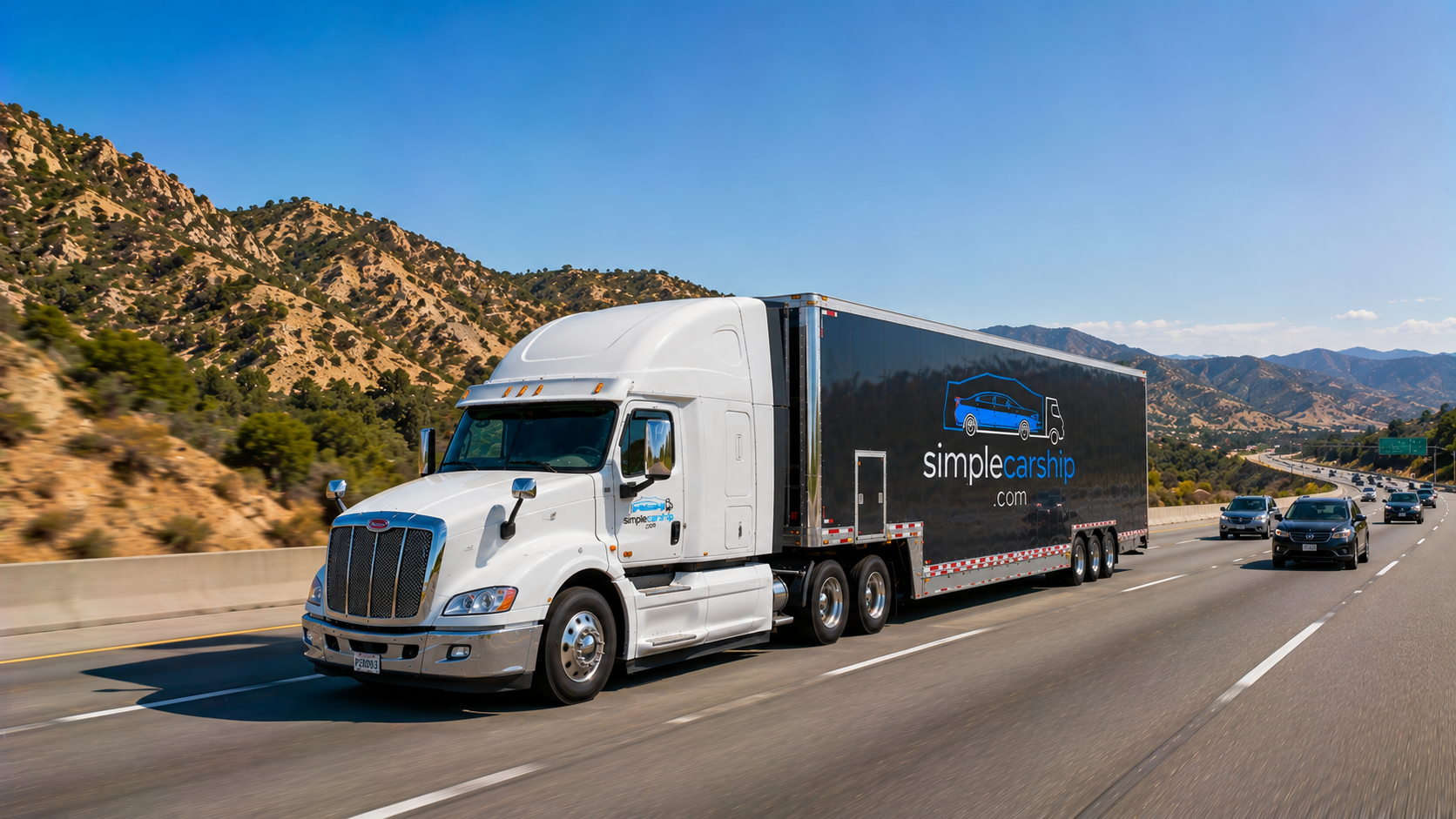
Cross-country auto shipping typically means moving a vehicle between regions separated by more than 1,200 miles—think Seattle to Miami, Boston to Los Angeles, or Denver to Atlanta. These routes cross multiple states and often multiple carrier handoffs if you’re working with a broker. Unlike a 300-mile regional haul that might happen overnight, a cross-country shipment takes 5 to 10 days in transit, depending on the specific origin-destination pair and whether your addresses are on a major route or require a detour.
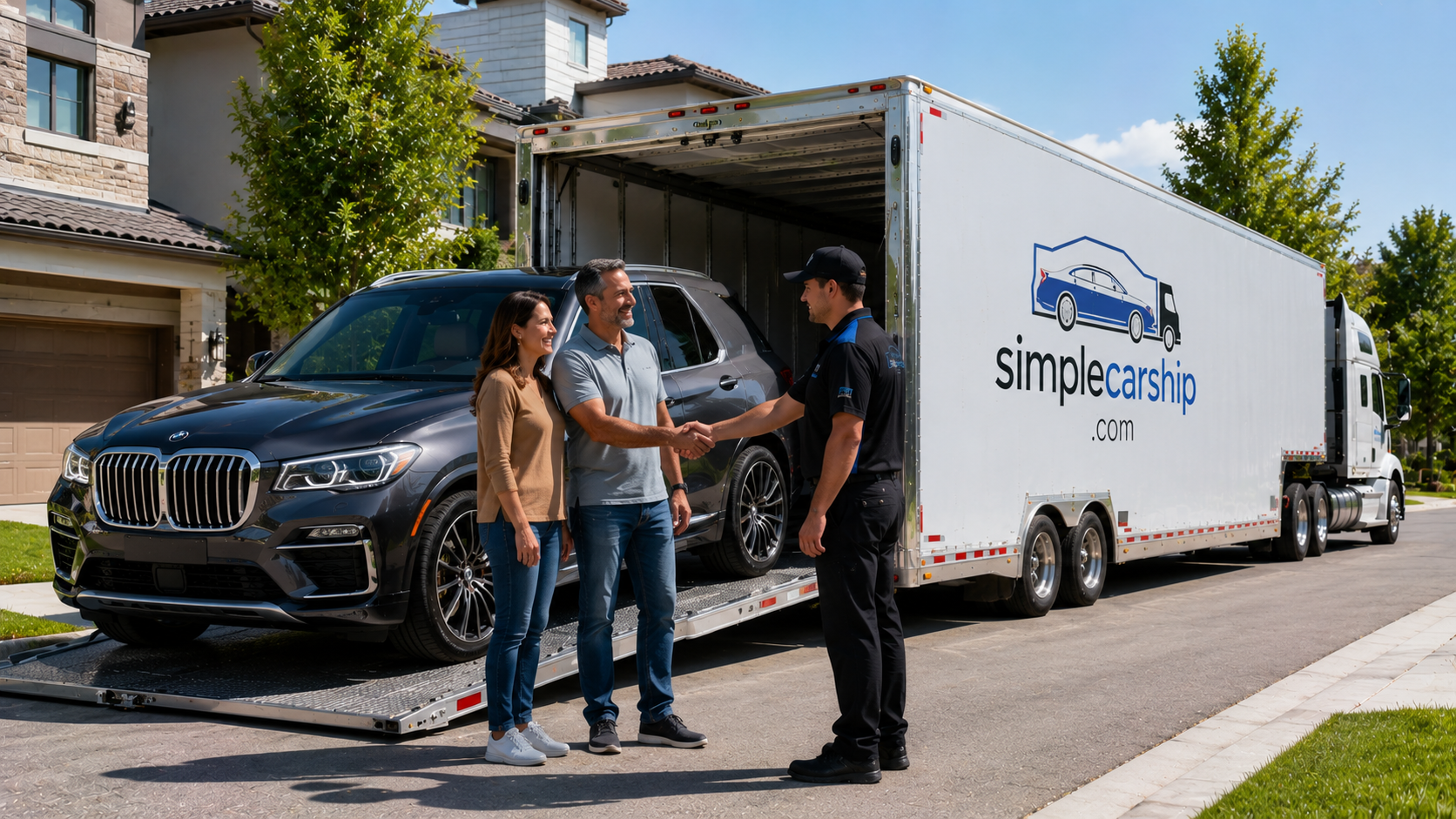
The process itself is straightforward: a carrier (usually an 8- or 9-car hauler) picks up your vehicle at your address or a nearby terminal, secures it on the trailer, and delivers it to your destination. You’ll do a condition inspection at both ends, sign the bill of lading, and pay the driver on delivery. The complexity comes in scheduling—cross-country routes depend on the carrier’s other loads, so flexibility in your pickup window (typically 1–5 days) makes a significant difference in both price and availability.
You’re buying space on a multi-car trailer that’s assembling a route, not a dedicated point-to-point service. That’s why major corridors (I-80, I-40, I-10) move faster and cost less per mile than routes that veer off into less-trafficked areas. If your pickup or delivery is in a rural zip code, expect either a higher quote or a request to meet the carrier at a more accessible location.
What Cross-Country Car Transport Costs
Nationwide, open transport for a standard sedan on a cross-country route typically runs $1,300 to $1,800, depending on the exact mileage and the specifics below. Shorter long-hauls—say, 800 to 1,200 miles—land in the $700 to $1,000 range, while the longest routes (2,500+ miles, coast to coast) can push toward the higher end or slightly above. Enclosed transport runs 30% to 60% more—figure $1,700 to $2,600 for the same cross-country move.
Price drivers you need to understand: Distance is the baseline, but it’s not linear—the per-mile cost drops as distance increases, because the fixed costs (pickup, loading) get amortized. Vehicle size and condition matter significantly: an inoperable vehicle requires a winch and takes longer to load, adding $150 to $250; an oversized SUV or lifted truck takes more deck space. Season and demand are huge—October through April is snowbird season, when retirees flood the Florida, Arizona, and Texas lanes, compressing capacity and driving prices up 15% to 30% on those routes.
Accessibility is often underestimated: a suburban pickup with easy street access costs baseline; a condo complex with tight turns or a rural address 40 miles off the interstate will add $75 to $200. Finally, open versus enclosed is the single biggest toggle—it’s not just about cost, it’s about whether you need weather protection and white-glove handling or whether standard exposure is fine for your vehicle.
Open vs. Enclosed Transport: Which One Fits Your Cross-Country Move
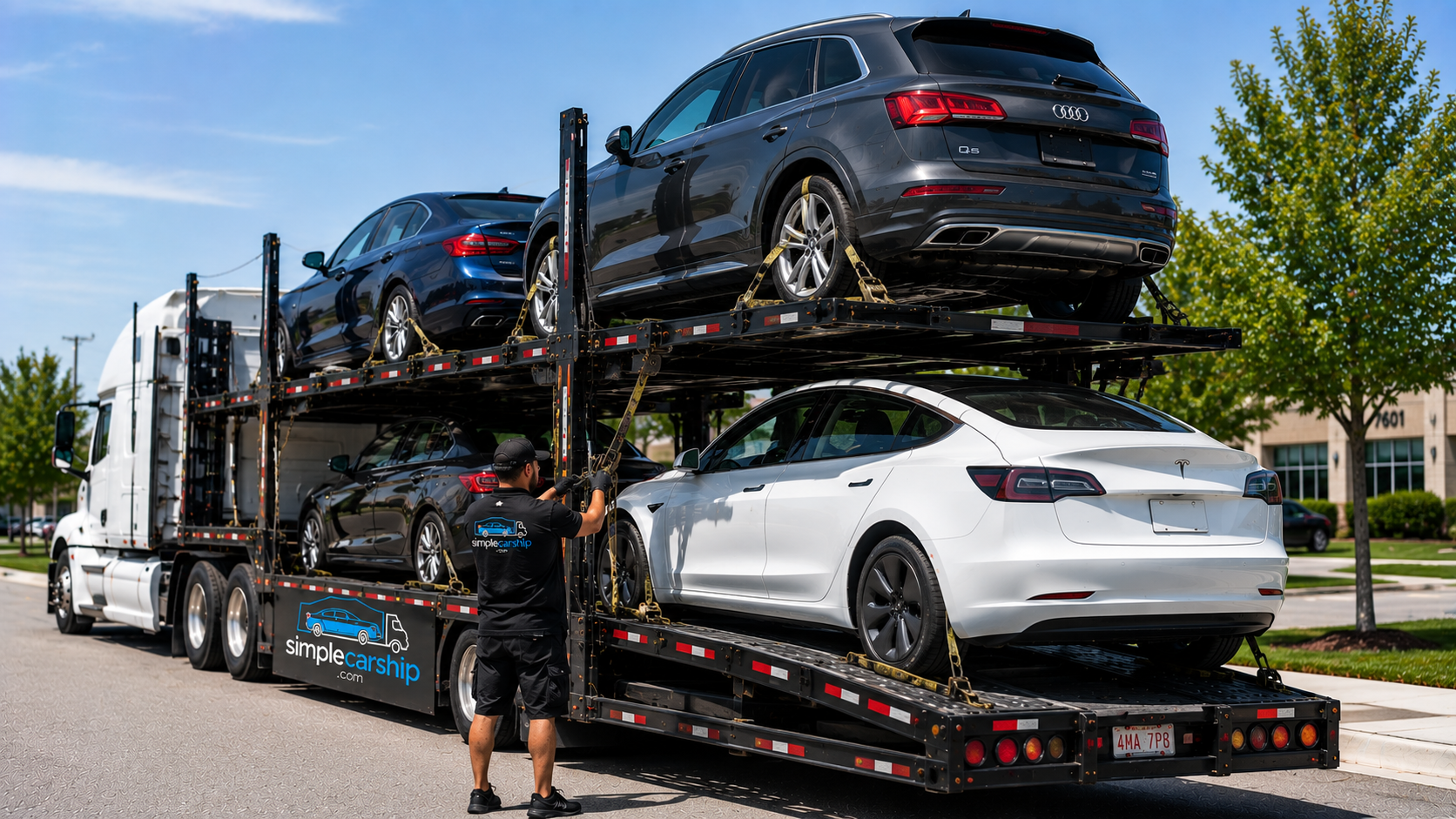
Open transport is the industry standard—about 90% of cross-country shipments move this way. Your car rides on an uncovered multi-car hauler, exposed to weather and road spray, the same way new vehicles travel from factories to dealerships. It’s safe, it’s insured (carriers hold $100,000 minimum cargo coverage, often more), and it’s appropriate for any daily-driver sedan, SUV, or truck in normal used condition. If your vehicle is worth under $50,000, runs and drives, and you’re comfortable with the same exposure it would get on a long road trip, open transport is the right economic choice.
Enclosed transport ships your vehicle inside a covered trailer—either a soft-sided curtain rig or a hard-sided box truck. It protects against weather, road debris, and sun exposure, and it’s handled by experienced drivers who specialize in high-value or collector vehicles. You’d choose enclosed if: your car is a classic, exotic, or luxury vehicle worth $75,000+; it has a custom paint job or irreplaceable interior; it’s being shipped for a concours event or sale where presentation is critical; or it’s inoperable and you want extra care during loading. The 30–60% premium is insurance against the tiny risk of road-spray damage and the larger peace-of-mind factor.
For a cross-country move specifically, the decision often hinges on how much you care about dust accumulation—an open shipment from Phoenix to Charlotte in July will arrive dusty. If that bothers you or the car is detailed for immediate resale, enclosed makes sense. If you were planning to wash it anyway and the vehicle is a 2019 Honda Accord, save the $500 and go open.
How to Choose a Cross-Country Car Shipping Company
Most people start by chasing the lowest quote, which is exactly how they end up with a broker who lowballs to win the order, then can’t find a carrier willing to move the car at that price. Here’s the framework that separates a smooth shipment from a nightmare: First, verify the company is a licensed broker (MC# visible on their site and searchable at FMCSA) or a direct carrier (DOT# and MC#). Unlicensed “lead generators” collect your info and sell it to five brokers who’ll hound you for days—skip them entirely.
Second, assess how they quote: a reputable company will ask about your vehicle’s size, condition, exact addresses, and preferred dates before giving a number, because those details swing the price by hundreds of dollars. If you get an instant quote with no questions, it’s a placeholder designed to hook you, not a real estimate. Third, read how they communicate—do they explain what the price includes (carrier insurance, door-to-door or terminal), what might change it (access fees, inop charges), and what the timing looks like? Transparency here predicts transparency later.
Fourth, look at how they handle carrier assignment. The best brokers hand-select carriers from their vetted network and tell you who’s picking up your car, with the driver’s contact info, before the truck arrives. The worst auto-dispatch your order to whoever bids lowest on a load board. Finally, ignore review volume and look at review detail—a hundred generic five-stars mean nothing; a handful of reviews that describe specific problems and how they were resolved tell you everything.
Timing, Process, and What to Expect on a Cross-Country Shipment
Transit time for a cross-country car shipment typically runs 5 to 10 days once the carrier picks up your vehicle. The variation depends on the exact route—a straight shot along I-10 from Los Angeles to Jacksonville might take 5 to 6 days; a more complex route involving rural pickups can stretch to 8 or 9. The pickup window is usually 1 to 5 days from your requested “first available” date, depending on current demand and how close you are to the carrier’s existing route.
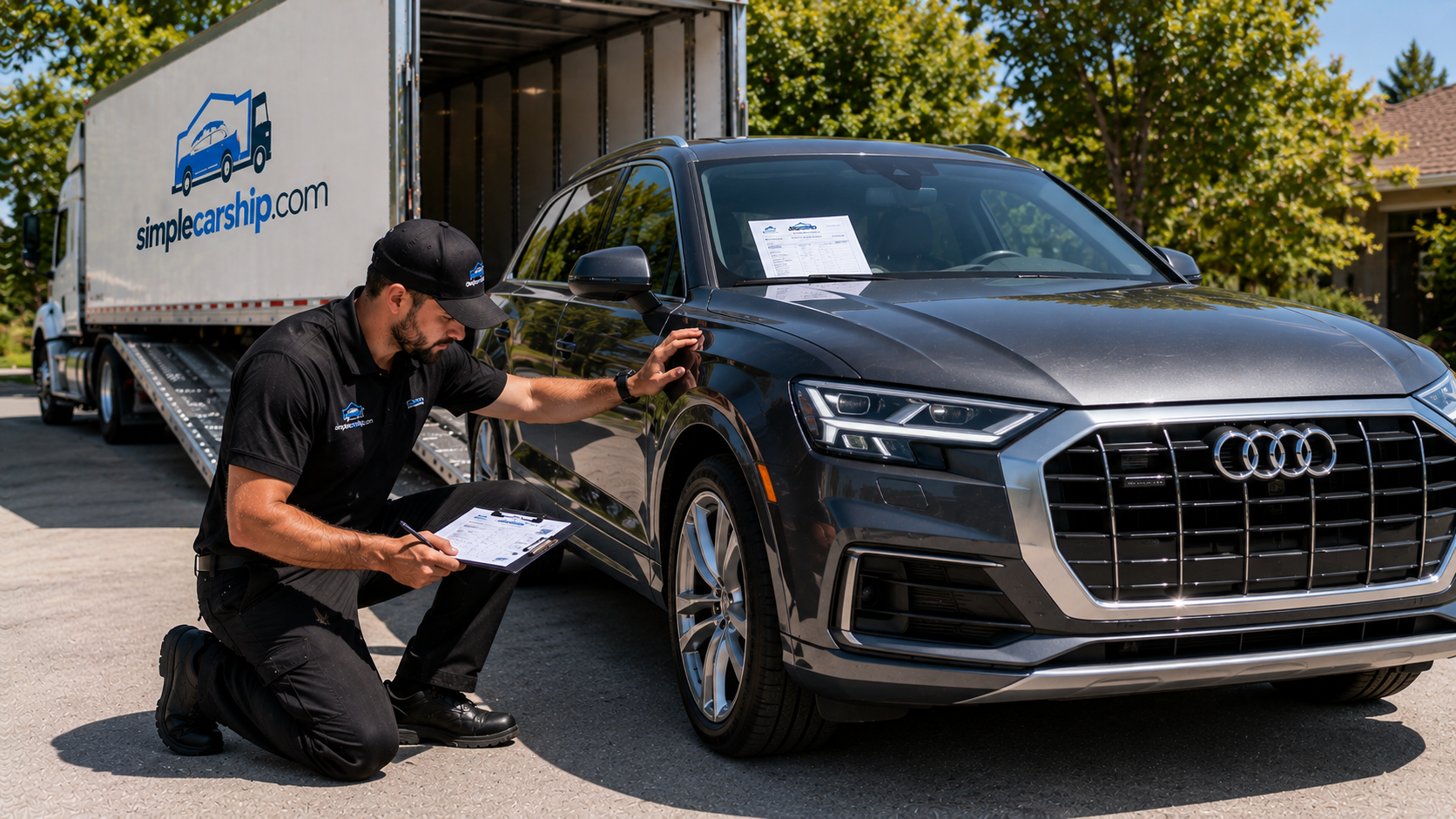
Here’s how the process unfolds: once you book, the company assigns a carrier (this should happen within 24 to 72 hours on most routes). The carrier or driver calls you directly to confirm a specific pickup day and a rough time window—often “morning” or “afternoon.” On pickup day, you meet the driver, walk around the vehicle together to document existing damage on the bill of lading (take photos), hand over one set of keys, and the car is loaded.
On delivery, the driver calls a day ahead to schedule a window, then you repeat the inspection process in reverse—check for new damage (rare but it happens; document it immediately on the BOL if it does), sign off, pay the balance if it’s a collect-on-delivery arrangement, and you’re done. The biggest mistake people make is being inflexible: if you insist on a single-day pickup and delivery with no wiggle room, you’ll either pay a significant rush premium or you won’t find a carrier willing to commit. Build a 2- to 3-day buffer on both ends if your schedule allows.
How Simple Car Ship Handles Cross-Country Shipments
We built Simple Car Ship specifically to solve the problems that make cross-country auto transport frustrating—vague quotes, disappearing brokers, and drivers who show up three days late with no warning. Here’s how we do it differently: you get a clear, honest quote up front, based on the real details of your shipment. That quote reflects current market rates for your route, and it includes door-to-door service and the carrier’s cargo insurance—no surprise fees unless your location genuinely requires extra coordination, and we tell you that before you book.
Once you confirm, we hand-select a carrier from our vetted network—these are haulers we’ve worked with repeatedly, whose safety records and communication we’ve verified, and who actually service your lane. You’re not a load number on a dispatch board; your shipment is assigned to a specific driver, and we give you that driver’s direct contact info. If something changes—weather delays, a scheduling hiccup, anything—you hear about it from us or the driver immediately.
Real human support means you can call or text us during the shipment and get a person who knows your order, not a script-reader in a call center. We follow the truck, we check in at delivery, and if there’s an issue, we handle it directly with the carrier and the insurance process. Ship your car the simple way: clear quotes, real communication, no runaround.
Comparing Cross-Country Shipping Options
| Factor | Open Transport | Enclosed Transport | Drive It Yourself |
|---|---|---|---|
| Cost (cross-country) | $1,300–$1,800 | $1,700–$2,600 | $600–$900 (gas, tolls, hotel, wear) |
| Transit time | 5–10 days | 5–10 days | 4–6 days (driving 8–10 hrs/day) |
| Mileage added | Zero | Zero | 2,000–3,000 miles |
| Best for | Daily drivers, standard vehicles under $50k | Classics, exotics, luxury cars $75k+ | Tight timelines, one-way road trip appeal |
| Risk | Minor road spray/dust exposure | Minimal; fully protected | Full wear, breakdown risk, your time |
Popular car-shipping routes
- Phoenix To Chicago car shipping
- New York To Atlanta car shipping
- Atlanta To New York car shipping
- North Carolina To Texas car shipping
- Texas To North Carolina car shipping
- Cost to ship a car from California To Maryland
- Cost to ship a car from California To Missouri
- Cost to ship a car from Maryland To California
- Cost to ship a car from Missouri To California
- Cost to ship a car from Arizona To Texas
Ready to ship your car cross-country without the runaround? Get a clear, honest quote in two minutes—real numbers, real humans, no guesswork. We’ll walk you through your options, match you with a vetted carrier, and keep you in the loop from pickup to delivery. That’s the Simple Car Ship difference.
Frequently Asked Questions About Cross-Country Car Shipping
How much does it cost to ship a car cross-country?
Open transport for a standard sedan on a cross-country route (1,500 to 3,000 miles) typically costs $1,300 to $1,800, depending on the exact distance, season, and pickup/delivery accessibility. Enclosed transport runs 30% to 60% higher—roughly $1,700 to $2,600 for the same route. Shorter long-hauls (800 to 1,200 miles) fall in the $700 to $1,000 range for open. Price varies with vehicle size, whether it runs, and demand spikes during snowbird season (October through April on southern routes).
How long does cross-country car shipping take?
Transit time is typically 5 to 10 days once the carrier picks up your vehicle. A direct route along a major interstate (like I-10 or I-80) usually takes 5 to 6 days; more complex routes involving rural areas can stretch to 8 or 9 days. The pickup window—when the carrier will arrive to load your car—is usually 1 to 5 days from your requested date, depending on current demand and how close your location is to the carrier’s existing route. Plan for a 2- to 3-day buffer on both ends if your schedule allows.
Is it better to ship a car open or enclosed across the country?
Open transport is the right choice for most daily-driver vehicles worth under $50,000—it’s safe, fully insured, and how 90% of cars are shipped nationwide. Enclosed transport makes sense if your vehicle is a classic, exotic, or luxury car worth $75,000 or more, has a custom paint job, or is being shipped for a show or sale where presentation matters. The 30–60% premium buys weather protection and white-glove handling. For a typical cross-country move of a standard sedan or SUV in normal condition, open transport is the economical and appropriate option.
Can I put personal items in my car during cross-country shipping?
Most carriers allow up to 100 pounds of personal items in the trunk or rear cargo area, below the window line, but this is at the carrier’s discretion and is not covered by their cargo insurance. The Department of Transportation prohibits household goods transport on auto carriers, so technically you’re in a gray area. Never put valuables, important documents, or anything you can’t afford to lose. If you need to move belongings cross-country, use a separate freight or moving service. The carrier’s insurance covers only the vehicle itself, not contents.
What happens if my car is damaged during cross-country shipping?
Every licensed carrier holds at least $100,000 in cargo insurance, often more. If damage occurs, document it immediately on the delivery bill of lading before you sign—take photos, note the damage clearly, and do not sign off as “received in good condition” if it’s not. File a claim with the carrier’s insurance within the timeframe specified in your contract (usually 7 to 10 days). A good broker will assist you through the claims process and advocate on your behalf. Damage is rare, but when it happens, thorough documentation at delivery is your most important protection.
Is cross-country car shipping cheaper than driving it myself?
It depends on your time value and vehicle condition. Driving a car 2,500 miles cross-country costs roughly $600 to $900 in gas, tolls, hotels, and meals. You also add 2,500 miles of wear to the vehicle and spend four to six days on the road. Shipping costs $1,300 to $1,800 open, but your car arrives with zero added mileage, you avoid wear and breakdown risk, and you can fly and be there in hours. If your time is worth anything or the vehicle is older and you’re wary of a breakdown halfway across the country, shipping usually makes more sense.