Car Shipping Companies: How to Choose the Right Auto Transport Service
Car shipping companies coordinate the transport of vehicles across the country, acting as brokers who connect you with licensed carriers or operating their own trucks. Whether you’re relocating, buying a car out of state, or shipping a classic vehicle, understanding how these companies work—and what separates a reliable service from a problematic one—makes the difference between a smooth experience and a frustrating one.
The industry is crowded with brokers making identical promises. This guide gives you the decision framework, real cost ranges, and specific questions that help you choose wisely.

Get your instant car shipping price
Real quote in seconds — no spam, no runaround.
What a Car Shipping Company Actually Does
Most car shipping companies operate as brokers: they take your booking, then assign your vehicle to a licensed motor carrier from their network. A smaller number are carrier-brokers who own trucks and also book third-party capacity. Pure brokers don’t touch your car—they coordinate logistics, communicate pickup and delivery windows, and serve as your point of contact.
This broker-carrier model isn’t inherently bad, but it creates a communication layer. Quality brokers vet carriers carefully, maintain direct relationships, and stay in communication throughout transit. Poor brokers list your car on a load board, take the lowest bid, and disappear when problems arise.
Understanding this distinction matters because you’ll interact with both entities. The shipping company sets your price and manages expectations. The carrier controls the actual pickup date and completes delivery. A good automobile shipping company bridges that gap seamlessly.
What Car Shipping Costs (and Why Prices Vary)
Nationwide, open transport typically runs $500–$1,800 depending on distance. Shorter routes—500 miles or less—generally cost $500–$700. Cross-country shipments run $1,300–$1,800. Enclosed transport, which shields your vehicle inside a covered trailer, runs 30–60% more than open.
Distance is the baseline, but vehicle size and condition move the price significantly. An inoperable car requires a winch, often adding $150–$300. Oversized vehicles take extra trailer space, which carriers price accordingly. Season matters: snowbird migration from October through April drives demand on routes to Florida, Arizona, and Texas, pushing prices up 20–30%. Pickup and delivery accessibility also factor in. Rural locations may require repositioning fees or longer wait times.
Automotive shipping companies that quote firm prices upfront and explain these drivers give you realistic expectations. Brokers who lowball to secure your deposit, then call back later to say “no carrier will take it at that price,” are playing a bait-and-switch that’s depressingly common.
How to Choose a Car Shipping Company: The Real Decision Framework
Start with transparency. A trustworthy company provides a clear quote breakdown, explains whether the price is an estimate or a firm dispatch rate, and tells you how they vet carriers. Ask: “Will you assign my shipment to a specific carrier before I pay, or will it go on a load board?” Ask: “What’s your carrier’s insurance coverage, and can I see the certificate before pickup?” Ask: “Who do I contact if there’s a problem during transit—you or the carrier directly?”
Check their communication structure. Real human support means you can reach someone by phone who knows your shipment. During transit, you should receive proactive updates—carrier assigned, pickup confirmed, delivery ETA—without having to chase them down.
Verify carrier vetting standards. Responsible brokers check USDOT safety records, confirm active insurance, and maintain ongoing relationships with their carriers. Avoid companies that require large upfront deposits before assigning a carrier—$100–$200 is standard; anything more is a red flag. Ignore companies that use high-pressure tactics or promise guaranteed pickup dates.
| Factor | Good Sign | Red Flag |
|---|---|---|
| Quote Transparency | Firm price or honest estimate with clear variables | Lowball quote, then “adjustment” after deposit |
| Carrier Assignment | Specific carrier info before you pay balance | “We’ll post it and see who bids” |
| Communication | Proactive updates, real human contact | No answer, voicemail loops, scripted responses |
| Deposit | $100–$200 to book | 50% upfront before carrier is assigned |
Open vs. Enclosed Transport: When Each Makes Sense
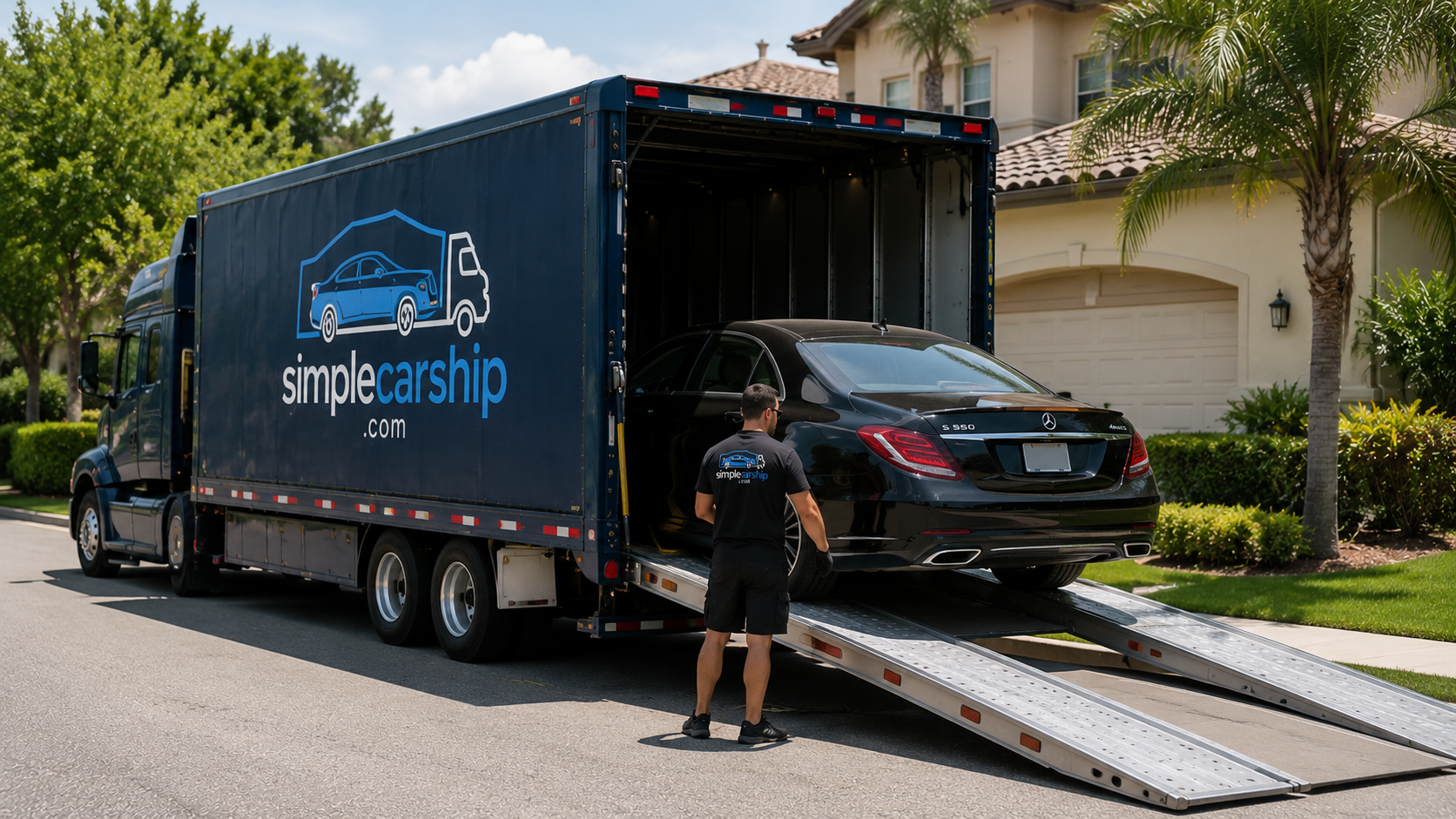
Open transport is the default for most shipments—cars are loaded onto an open-air trailer, exposed to weather and road debris just like they would be driving down the highway. It’s affordable, widely available, and perfectly suitable for everyday vehicles. If you’re shipping a daily driver, open transport does the job.
Enclosed transport makes sense when the vehicle’s value or condition justifies the premium. Classic cars, high-end sports cars, luxury vehicles, or anything with custom paint, low ground clearance, or collector status benefits from the added protection. Enclosed trailers shield the vehicle from weather, road spray, and debris. Enclosed carriers also tend to handle fewer vehicles per load, which translates to more careful handling and often faster delivery.
Don’t let a broker upsell you on enclosed if it’s not necessary. Open transport is safe and professional; carriers move millions of vehicles this way every year. But don’t cheap out on enclosed if your vehicle legitimately warrants it. A reputable car freight shipping company will ask about your vehicle and recommend the option that fits.
Timing, Process, and What to Actually Expect
Most shipments book 1–2 weeks ahead of your desired pickup date, though faster service is possible if you’re flexible on price and the route has regular carrier traffic. Once you book, the company assigns a carrier—ideally within 24–48 hours—and you’ll receive the carrier’s contact information and an estimated pickup window, usually spanning 1–3 days.
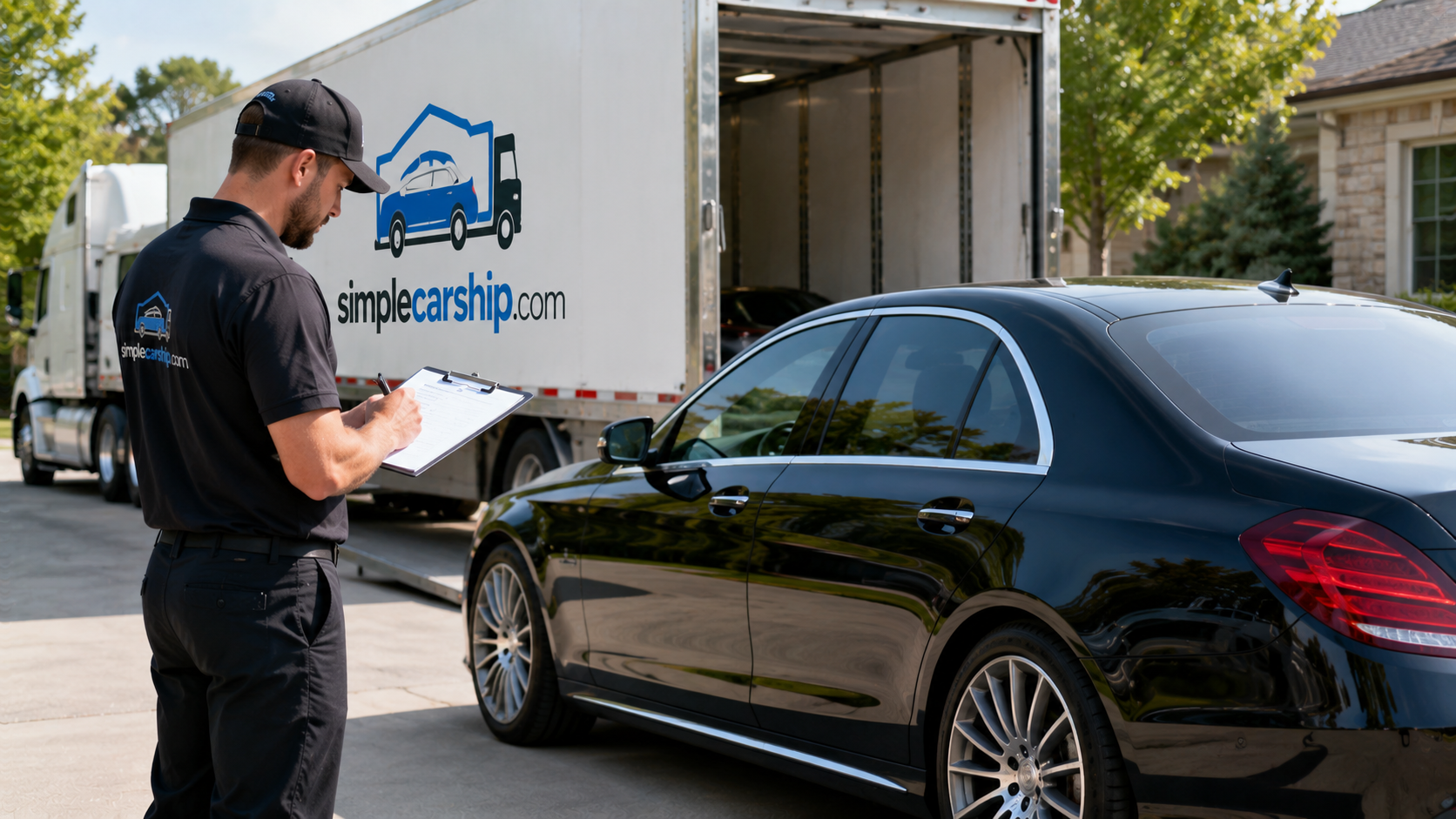
At pickup, the driver performs a joint inspection with you, noting any existing damage on a Bill of Lading. Take photos of all four sides of the vehicle before it’s loaded. Transit time depends on distance—roughly 350–500 miles per day—so a cross-country shipment takes 5–7 days, regional moves 2–3 days. Delays happen due to weather, traffic, or DOT hours-of-service rules; a reliable company keeps you updated if timing shifts.
At delivery, inspect the vehicle with the driver present before signing the BOL. If you notice new damage, note it on the form immediately and photograph it. File a claim with the carrier’s insurance right away. Most transports complete without incident, but the documentation you gather at pickup and delivery is your only leverage if something goes wrong.
How Simple Car Ship Handles Auto Transport
We built Simple Car Ship to fix the parts of this industry that frustrate people: vanishing brokers, mystery pricing, and carriers who show up late with no explanation. Clear quotes, real communication. When you request a quote, we give you an honest number based on current routing and demand—not a teaser rate that changes when you’re ready to book.
We work with hand-selected carriers we’ve vetted and used repeatedly. You get the carrier’s name, USDOT number, and insurance details before you pay your balance, and we stay in contact with both you and the carrier throughout transit. If there’s a delay, a question, or a problem, you call us and reach a real human who knows your booking.
Ship your car the simple way. We handle the logistics, the vetting, and the follow-up so you don’t have to wonder what’s happening or who to call. Whether it’s open or enclosed, cross-country or regional, you get the same straightforward process and the same actual support.
Ready to move your vehicle? Get a clear quote in two minutes—real pricing, no runaround, and a team that picks up the phone when you call.
Popular car-shipping routes
- Phoenix To Chicago car shipping
- New York To Atlanta car shipping
- Atlanta To New York car shipping
- North Carolina To Texas car shipping
- Texas To North Carolina car shipping
- Cost to ship a car from California To Maryland
- Cost to ship a car from California To Missouri
- Cost to ship a car from Maryland To California
- Cost to ship a car from Missouri To California
- Cost to ship a car from Arizona To Texas
Frequently Asked Questions
How do I know if a car shipping company is legitimate?
Check their operating authority—they should provide a USDOT number or MC number you can verify through the FMCSA website. Legitimate companies explain their carrier vetting process, provide transparent quotes, and communicate clearly. Avoid companies that demand large upfront deposits before assigning a carrier, refuse to provide carrier details, or use high-pressure sales tactics.
What’s the difference between a broker and a carrier?
A broker coordinates your shipment and connects you with a licensed motor carrier; they don’t own the trucks. A carrier is the trucking company that loads your vehicle and transports it. Most car shipping companies are brokers—good brokers vet their carriers, manage communication, and provide accountability. The key is choosing a broker who maintains strong carrier relationships and stays involved throughout the process.
Can I ship personal items inside my car?
Carriers typically allow up to 100 pounds of personal items in the trunk or rear cargo area, as long as the items are below window level and secured. However, personal belongings aren’t covered under the carrier’s insurance, so don’t pack anything valuable. Some carriers don’t allow personal items at all due to DOT weight regulations, so confirm with your shipping company before loading anything.
How far in advance should I book car shipping?
Booking 1–2 weeks ahead of your desired pickup date gives you the best combination of availability and pricing. Last-minute bookings are possible, especially on high-traffic routes, but expect to pay a premium. If you’re shipping during peak season—snowbird migration between October and April, or summer moving season—book 3–4 weeks ahead to secure capacity.
What happens if my car is damaged during transport?
All licensed carriers are required to carry cargo insurance, typically $100,000 minimum for open transport and higher for enclosed. If you notice damage at delivery, note it on the Bill of Lading immediately before signing, take photos, and file a claim with the carrier’s insurance within the timeframe specified in your contract—usually 24–48 hours. This is why documenting your vehicle’s condition with photos at pickup is critical.
Is door-to-door shipping actually door-to-door?
In most cases, yes—the carrier picks up and delivers as close to your specified addresses as the truck can safely access. However, if you live on a narrow street, a road with low-hanging trees, or an area with weight restrictions, the driver may ask you to meet at a nearby accessible location. Large car carriers are 70–80 feet long and require turning radius and clearance.
Do car shipping companies transport inoperable vehicles?
Yes, but it costs more—typically an additional $150–$300—because the carrier must use a winch to load and unload the vehicle. When you request a quote, disclose if your car doesn’t run, doesn’t shift into neutral, or has steering or brake issues. Carriers need this information upfront to bring the right equipment. Surprising a driver at pickup with an inoperable vehicle can result in refusal to load.