How Much Does It Cost to Ship a Car from Indiana to Colorado?
Shipping a car from Indiana to Colorado typically costs between $1,320 and $1,605 for open transport, or $2,110 to $2,570 for enclosed carriers. The exact price depends on your vehicle size, the trailer type you choose, current fuel costs, and seasonal carrier availability across the 1,086-mile route. Whether you’re moving from Indianapolis to Denver or Fort Wayne to Colorado Springs, understanding what drives these numbers helps you plan accurately and avoid surprise fees.
Most shipments on this route take 2–4 days in transit once a carrier picks up your vehicle. Below, we’ll break down exactly what you’ll pay, what moves the price up or down, and how Simple Car Ship keeps the process transparent from quote to delivery.
Get your instant car shipping price
Real quote in seconds — no spam, no runaround.
What You’ll Pay to Ship from Indiana to Colorado
Open auto transport — the most common method — runs $1,320 to $1,605 for the Indiana–Colorado corridor. Your car rides on an open multi-car carrier alongside six to nine other vehicles, exposed to weather but fully insured. This is the workhorse option: safe, reliable, and budget-friendly for daily drivers, commuter sedans, and most SUVs. Within that range, compact cars typically land near $1,320, while larger trucks or three-row SUVs push toward $1,605 because they consume more deck space and add weight.
Enclosed transport costs $2,110 to $2,570 on this route. Enclosed trailers carry two to six vehicles inside a fully covered trailer, shielding paint and trim from road spray, dust, and UV exposure. Collectors shipping vintage muscle cars, Tesla owners wary of stone chips, or anyone moving a high-value vehicle choose enclosed. The price premium reflects lower carrier availability — only about 10 percent of U.S. car-hauling capacity is enclosed — and smaller load counts per truck. If you need faster pickup or tighter delivery windows, expedited open service runs around $2,150, prioritizing your booking and trimming a day or two off the timeline.
How Distance, Timing, and Vehicle Size Move the Price
At 1,086 miles, the Indiana–Colorado haul is a middle-distance run, long enough that per-mile rates drop compared to shorter trips but not so long that coast-to-coast discounts kick in. Fuel surcharges and toll expenses (particularly crossing the Mississippi and climbing through the Rockies) directly affect quotes; when diesel prices spike, carriers adjust rates within days. Pickup and delivery locations also matter: Indianapolis and Denver sit on major freight corridors (I-70, I-80), so carriers pass through regularly and competition keeps prices competitive. If you’re outside the metro zones — say, Bloomington, Indiana, to Durango, Colorado — expect a $75 to $150 rural surcharge because the truck has to detour off its primary lane.
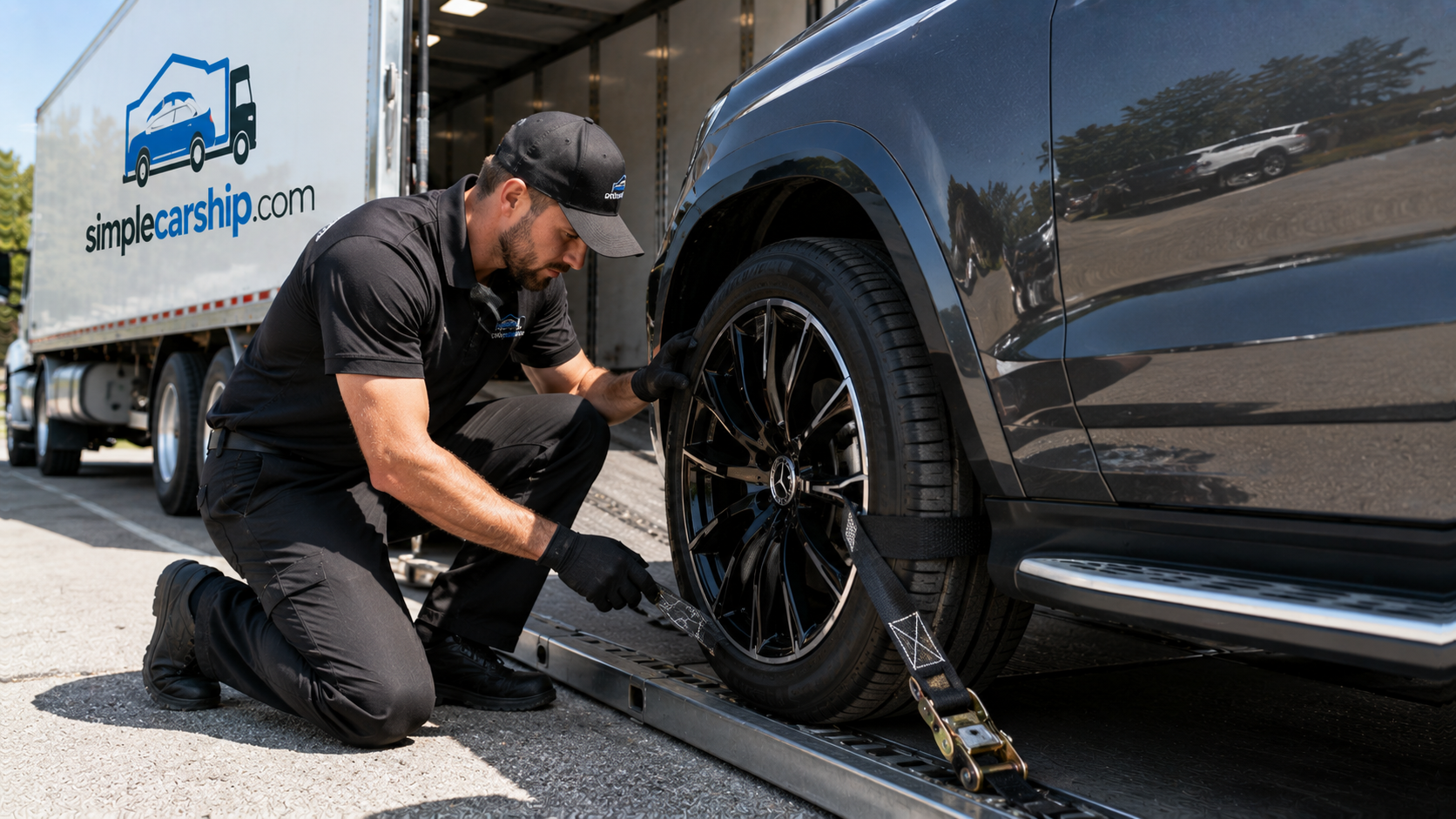
Vehicle dimensions and operability round out the big three pricing factors. A standard sedan consumes one deck slot; a lifted F-250 or a Suburban takes 1.5 slots and weighs significantly more, raising the rate by 15 to 25 percent. Non-running vehicles require a winch and flatbed positioning, adding $150 to $200 to the base price. Seasonal swings are modest on this route — unlike snowbird corridors to Florida or Arizona — but late spring and early fall see slightly higher demand as families relocate for school or new jobs, which can nudge open-transport quotes up by $50 to $100 during those windows.
Open vs. Enclosed: Which Makes Sense for Indiana to Colorado?
Most customers shipping from Indiana to Colorado choose open transport. The route crosses farm country, plains, and foothills — dry climates with minimal salt exposure once you’re west of the Mississippi. Modern open carriers have decades of experience securing vehicles, and comprehensive cargo insurance (typically $100,000 to $250,000 per load) covers damage in the rare event something happens. Daily drivers, leased vehicles, and anything under $40,000 in value ship open without worry. You’ll save $800 to $1,000 compared to enclosed, and transit times are identical because open carriers dominate highway freight lanes.
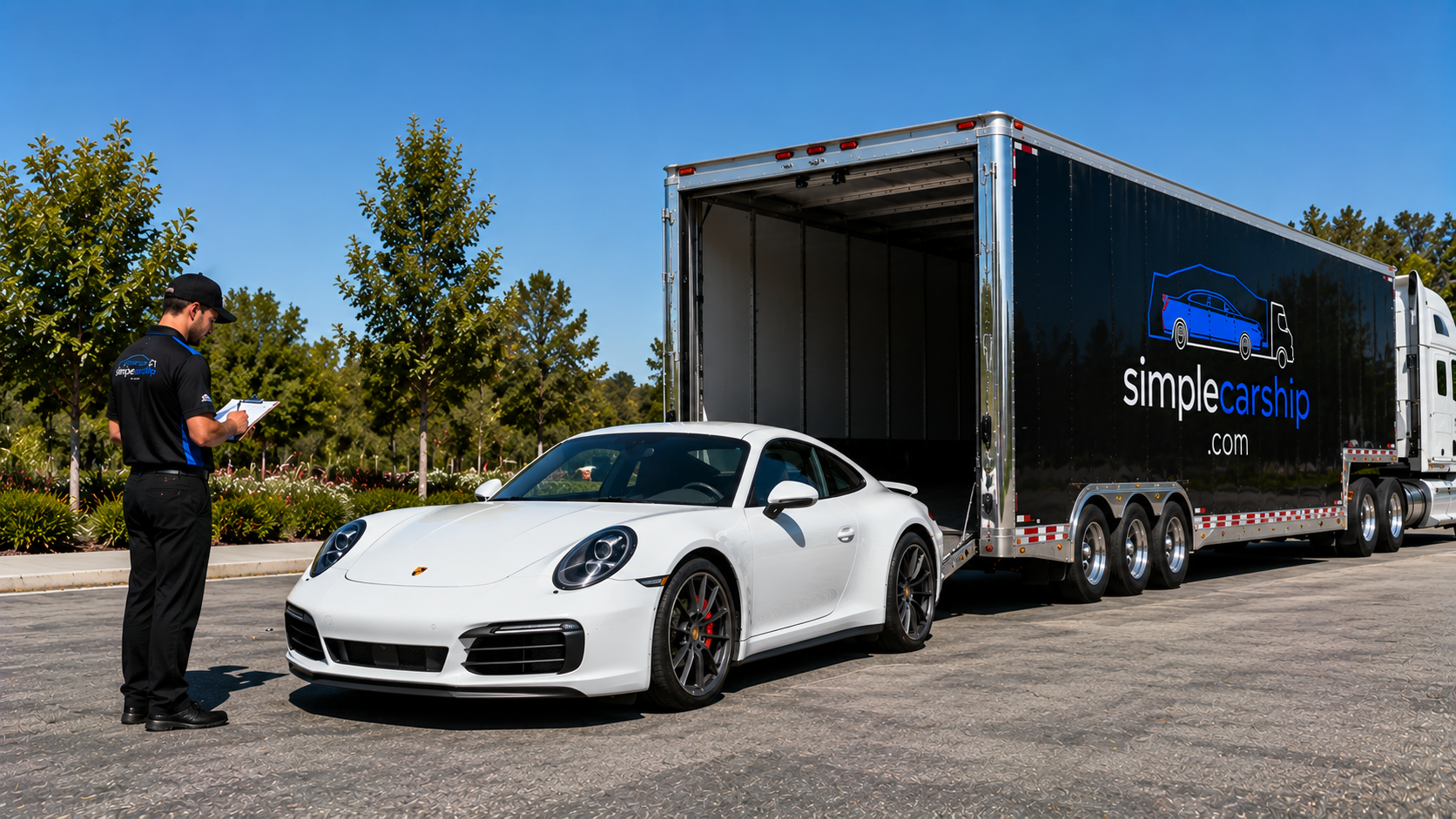
Enclosed makes sense for high-value or sentimental cars: restored classics, exotic sports cars, luxury sedans with custom paint, or any vehicle where even minor road rash matters. Colorado’s mountain roads can kick up gravel, and if your car is headed to a show, auction, or private sale, enclosed delivery preserves showroom condition. Enclosed carriers also offer lift-gate loading for low-clearance vehicles (think Corvettes or Lamborghinis) that can’t safely navigate steep ramps. The premium is real, but for a $75,000 Porsche or a numbers-matching ’69 Camaro, it’s a rounding error against the car’s value and irreplaceable peace of mind.

Pickup in Indiana, Delivery in Colorado
In Indiana, most shipments originate in Indianapolis or Fort Wayne, where I-65, I-69, and I-70 converge and carrier traffic is constant. If you’re in Indianapolis, door-to-door pickup is standard; the driver calls a day ahead, arrives with a 2–4 hour window, and completes a joint walk-around inspection documenting existing dings, scratches, and tire condition. You’ll sign a Bill of Lading, receive a copy, and hand over one set of keys. Fort Wayne pickups work the same way, though scheduling can take an extra day if the carrier is routing through Indianapolis first. For towns like Evansville, South Bend, or Bloomington, terminal pickup at an Indianapolis hub is occasionally faster and cheaper — you drop the car at a secure lot, and the carrier loads it there.
On the Colorado side, Denver and Colorado Springs anchor delivery. Denver’s I-25/I-70 interchange is one of the busiest freight crossroads in the Mountain West, so carriers deliver there daily. Colorado Springs, an hour south, sits on the same I-25 corridor and sees nearly as much traffic. Door-to-door delivery is again the norm: the driver calls when he’s a few hours out, you meet at your address (or a nearby large parking lot if your street has low clearances or tight turns), inspect the vehicle, and sign off. If you’re in Aspen, Boulder, or mountain towns west of the Front Range, expect the driver to ask you to meet in Denver or a nearby truck-friendly area; 53-foot car carriers don’t navigate narrow canyon roads or residential switchbacks.
How Simple Car Ship Handles Your Indiana–Colorado Shipment
We quote this route using live carrier availability and real fuel indexes, not algorithm averages that get revised at booking. When you request a quote, you’ll see the actual open and enclosed ranges — $1,320–$1,605 and $2,110–$2,570 — with a plain-English explanation of what moves your job toward the high or low end. No bait-and-switch, no “prices starting at” asterisks. Once you book, we assign a dedicated coordinator who hand-selects a carrier based on lane history, insurance limits, and equipment type. You’ll get the driver’s name, truck number, and cell phone before pickup, and you can call or text them directly to confirm timing.
Your shipment isn’t a load number cycled through a call center. If weather delays the route (Colorado’s I-70 corridor can close for avalanche control or spring blizzards), your coordinator tracks it in real time and updates you without you having to chase us. We don’t dispatch your car to the cheapest bid; we work with vetted carriers who maintain equipment, carry $1M+ liability policies, and communicate like professionals. The 1,086 miles from Indiana to Colorado typically take 2–4 days once the truck is loaded — day one covers Indiana to eastern Kansas, day two pushes through to the Front Range, and day three (if needed) handles final Colorado Springs or metro Denver delivery. If you need it faster, our expedited service prioritizes your vehicle for next-available pickup and can trim a day off each end.
| Feature | Open Transport | Enclosed Transport |
|---|---|---|
| Price (IN→CO) | $1,320–$1,605 | $2,110–$2,570 |
| Transit Time | 2–4 days | 2–4 days |
| Protection | Fully insured, open to weather | Fully enclosed, shielded from elements |
| Best For | Daily drivers, standard vehicles | Classics, luxury, high-value cars |
Ready to ship your car the simple way? Get a clear, honest quote for your Indiana–Colorado move — real numbers, no runaround, and a human you can call when you have questions.
Frequently Asked Questions: Shipping a Car from Indiana to Colorado
- How much does it cost to ship a car from Indiana to Colorado?
- Open transport costs $1,320 to $1,605 for the 1,086-mile route, depending on vehicle size and exact pickup/delivery locations. Enclosed transport runs $2,110 to $2,570. Compact sedans land at the lower end; large SUVs and trucks cost more due to weight and deck space.
- How long does shipping take from Indiana to Colorado?
- Most shipments take 2 to 4 days in transit once a carrier picks up your vehicle. Indianapolis to Denver typically completes in 2–3 days on open transport. Weather closures on I-70 through the Rockies or rural pickups outside major metros can add a day to the timeline.
- Is open or enclosed transport better for this route?
- Open transport works well for daily drivers and standard vehicles, saving $800+ compared to enclosed. Choose enclosed if you’re shipping a classic, exotic, or high-value car where road spray and UV exposure matter. Both options carry full insurance and deliver in the same 2–4 day window.
- Can I ship a non-running car from Indiana to Colorado?
- Yes. Non-running vehicles require winch loading and add $150 to $200 to the base rate. The car must roll, steer, and brake even if the engine doesn’t start. Communicate non-op status at booking so the carrier brings the correct equipment and doesn’t arrive unprepared.
- What cities in Indiana and Colorado do carriers serve?
- Indianapolis and Fort Wayne are the primary Indiana pickup hubs, with daily carrier traffic on I-65 and I-70. Denver and Colorado Springs anchor Colorado delivery, sitting on the I-25 corridor. Rural or mountain locations may require you to meet the truck at a nearby terminal or truck-friendly lot.