
How Much Does It Cost to Ship a Car from Colorado to North Carolina?
Shipping a car from Colorado to North Carolina typically costs between $1,230 and $1,500 for open transport, or $1,970 to $2,400 for enclosed transport across the 1,564-mile route. The final price depends on your vehicle type, the season you’re shipping, current fuel prices, and how flexible you are with pickup timing. If you need expedited service, expect to pay around $2,007 for guaranteed faster pickup and delivery.
Understanding what drives these numbers helps you budget accurately and avoid surprises. Here’s everything you need to know about the real cost of moving your vehicle from the Rockies to the Carolinas.
Get your instant car shipping price
Real quote in seconds — no spam, no runaround.
What Determines the Cost of Colorado to North Carolina Car Shipping?
The 1,564-mile distance between Denver and Charlotte forms the baseline, but several factors push your quote up or down. Vehicle size matters—shipping a compact sedan costs less than a three-row SUV because carriers price partly by weight and deck space. Seasonality plays a role too: summer and early fall see higher demand on eastbound routes as college students move and families relocate, which can nudge prices toward the upper end of the range. Fuel costs fluctuate, and reputable carriers adjust rates accordingly rather than locking artificially low quotes they can’t honor.
Flexibility is your best lever for savings. If you can offer a 3–5 day pickup window instead of demanding next-day service, carriers can consolidate your vehicle with others heading east, lowering your per-mile cost. Door-to-door service from a residential address in Colorado Springs to a suburban Raleigh neighborhood costs slightly more than terminal-to-terminal, but the convenience is usually worth the $75–$150 premium. Operational vehicles ship at standard rates; inoperable cars require a winch and cost an additional $150–$250.
Open vs. Enclosed Transport: Which Makes Sense for This Route?
Open transport—the same multi-car carriers you see on highways—handles 90% of Colorado-to-North Carolina shipments and costs $1,230–$1,500. Your car rides exposed to weather and road dust but arrives perfectly fine for daily drivers, recently purchased used cars, and even newer vehicles. The route crosses the Rockies, the Plains, and the Appalachians, all of which are well-traveled corridors with frequent carrier runs. Open transport is safe, insured, and the clear choice for standard vehicles.
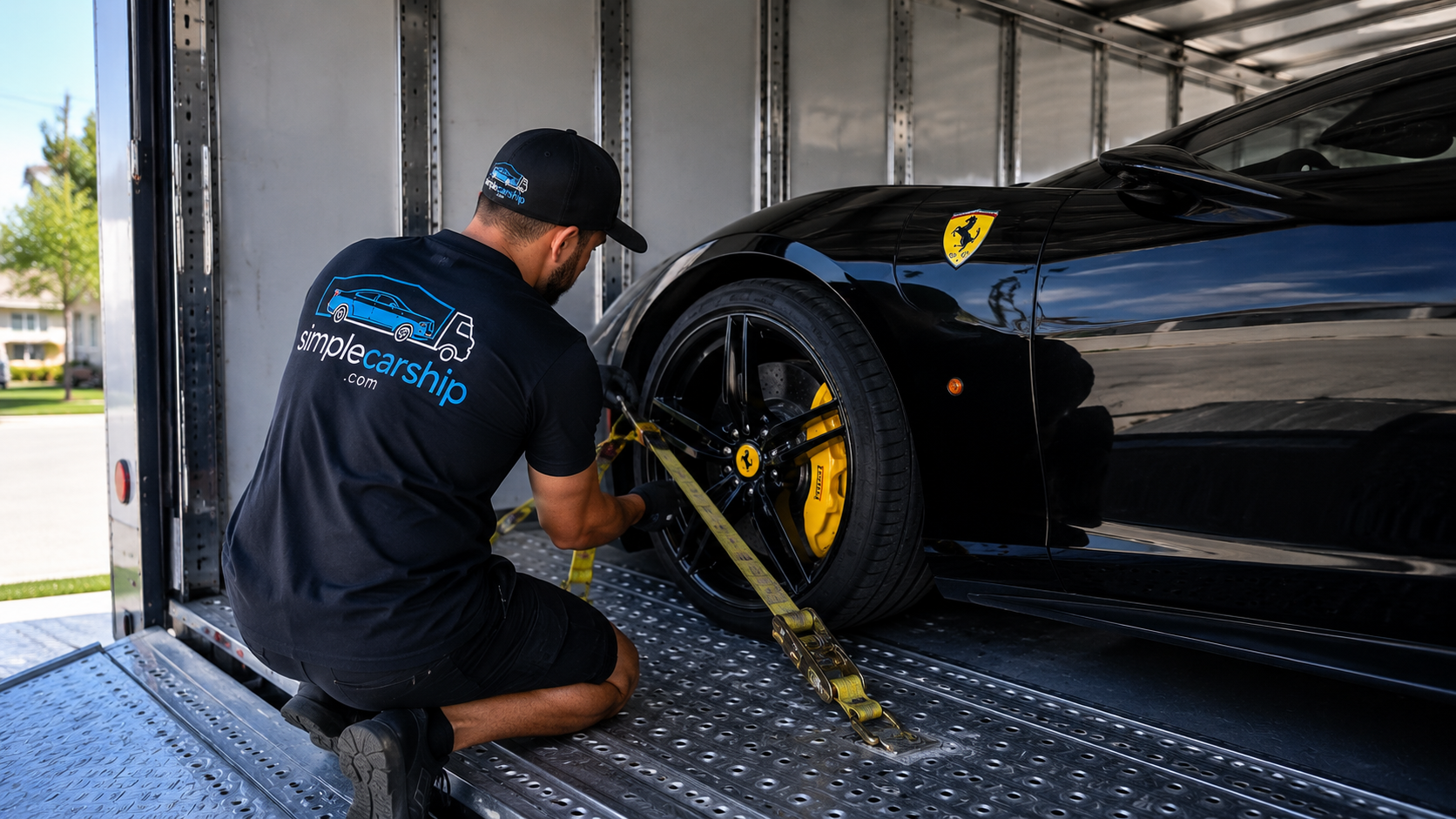
Enclosed transport makes sense for specific scenarios: classic cars, luxury vehicles over $70,000, exotic sports cars, or freshly restored projects where even minor dust or chips matter. The $1,970–$2,400 range buys you a fully enclosed trailer, often with hydraulic lifts and climate control. Collectors shipping vintage Corvettes from Denver to Charlotte car shows choose enclosed. If you’re moving a three-year-old crossover, you’re paying double for protection you don’t need. Be honest about your vehicle’s value and your risk tolerance.
| Feature | Open Transport | Enclosed Transport |
|---|---|---|
| Price Range | $1,230–$1,500 | $1,970–$2,400 |
| Transit Time | 3–5 days | 3–5 days |
| Protection Level | Insured; weather-exposed | Fully enclosed; maximum protection |
| Best For | Daily drivers, standard vehicles | Classics, luxury, exotics |
Pickup and Delivery Logistics in Colorado and North Carolina
Most Colorado pickups happen in the Denver metro—including Aurora, Lakewood, and Boulder—or Colorado Springs, where carrier traffic is heaviest. If you’re in a mountain town like Vail or Aspen, you’ll typically meet the truck in a nearby valley location or pay a small surcharge for the driver to navigate narrow alpine roads. Carriers schedule pickup within your agreed window, usually calling 24 hours ahead to confirm the exact time. Inspect your car together, note existing damage on the bill of lading, and hand over one set of keys—keep a spare.
On the North Carolina end, Charlotte and Raleigh anchor most deliveries, with Greensboro, Durham, and Winston-Salem easily accessible. Coastal areas like Wilmington or the Outer Banks add 100–200 miles beyond the mainline route, sometimes tacking on $100–$150. Delivery works the same way: the driver calls ahead, you meet the truck, inspect the vehicle, and sign off. Simple Car Ship keeps you updated at every handoff, so you’re never guessing where your car is or when it’ll arrive.
Transit Time and Scheduling Your Shipment
Standard transit from Colorado to North Carolina takes 3 to 5 days once your vehicle is loaded. The route runs east through Kansas, Missouri, and Tennessee—major freight corridors with reliable carrier availability year-round. Weather rarely delays this route significantly; winter snowstorms in the Rockies or the Appalachians might add half a day, but carriers plan for it. If you need guaranteed faster service—say, you’re flying to Raleigh and need your car within 72 hours—expedited shipping at around $2,007 prioritizes your load and tightens the pickup window.
Book at least a week ahead for standard transport, two weeks if you’re shipping in summer or around holidays. Last-minute orders are possible but cost more because carriers have less flexibility to route efficiently. Snowbird migrations (northbound in spring, southbound in fall) don’t heavily affect the Colorado–North Carolina lane the way they do Florida routes, so you won’t see wild seasonal swings—just modest $100–$200 increases during peak moving months of May through September.
How Simple Car Ship Handles Your Colorado to North Carolina Move
We don’t play the typical broker game of collecting your deposit and disappearing. When you request a quote for the 1,564-mile Colorado–North Carolina route, you get a clear breakdown: open or enclosed, standard or expedited, and the real price range based on current market rates. No bait-and-switch, no hidden fees that appear at delivery. Once you book, we hand-select a carrier from our vetted network—drivers we’ve worked with repeatedly, who carry proper FMCSA authority and cargo insurance—and introduce you directly. You’ll have the driver’s contact info and ours.
Your shipment isn’t a load number lost in a dispatch queue. We check in at pickup, during transit, and before delivery. If something changes—weather delay, route adjustment—you hear it from us first, not through silence and voicemail. That’s the simple way: real communication, no runaround, and your car treated like it matters. Ready to get an accurate quote and lock in your dates? Start your shipment here.
Frequently Asked Questions
What’s the cheapest time of year to ship from Colorado to North Carolina?
Late fall (November) and winter (January–February) typically see the lowest demand on eastbound routes, which can bring your open-transport cost closer to $1,230. Summer and early fall are busiest due to relocations and college moves, pushing prices toward $1,500. Flexibility with your pickup window also saves money regardless of season.
Do I need to be present for pickup and delivery?
You or someone you authorize must be present to hand over keys, inspect the vehicle, and sign the bill of lading at pickup in Colorado, then repeat the process at delivery in North Carolina. The carrier will call 24 hours ahead to coordinate. Most appointments take 15–20 minutes.
Are fuel surcharges included in the $1,230–$1,500 estimate?
Yes. Reputable carriers and brokers build current fuel costs into the quoted price for the 1,564-mile route. If diesel spikes suddenly between quote and booking, a small adjustment may apply, but ethical companies disclose that upfront—never at delivery as a surprise fee.
Can I ship personal items inside my car?
Carriers generally allow up to 100 pounds in the trunk, below the window line, at no extra charge for the Colorado–North Carolina route. Items must be secured and aren’t covered by the carrier’s cargo insurance. Don’t pack valuables, and never fill the cabin—it adds weight and can void coverage.
How does elevation change in Colorado affect pickup?
Denver sits at 5,280 feet and Colorado Springs at 6,035 feet, but major metros have full truck access. Mountain towns above 8,000 feet or with narrow roads may require you to meet the carrier at a lower staging area. If applicable, your dispatcher will coordinate a convenient meet point to avoid surcharges.