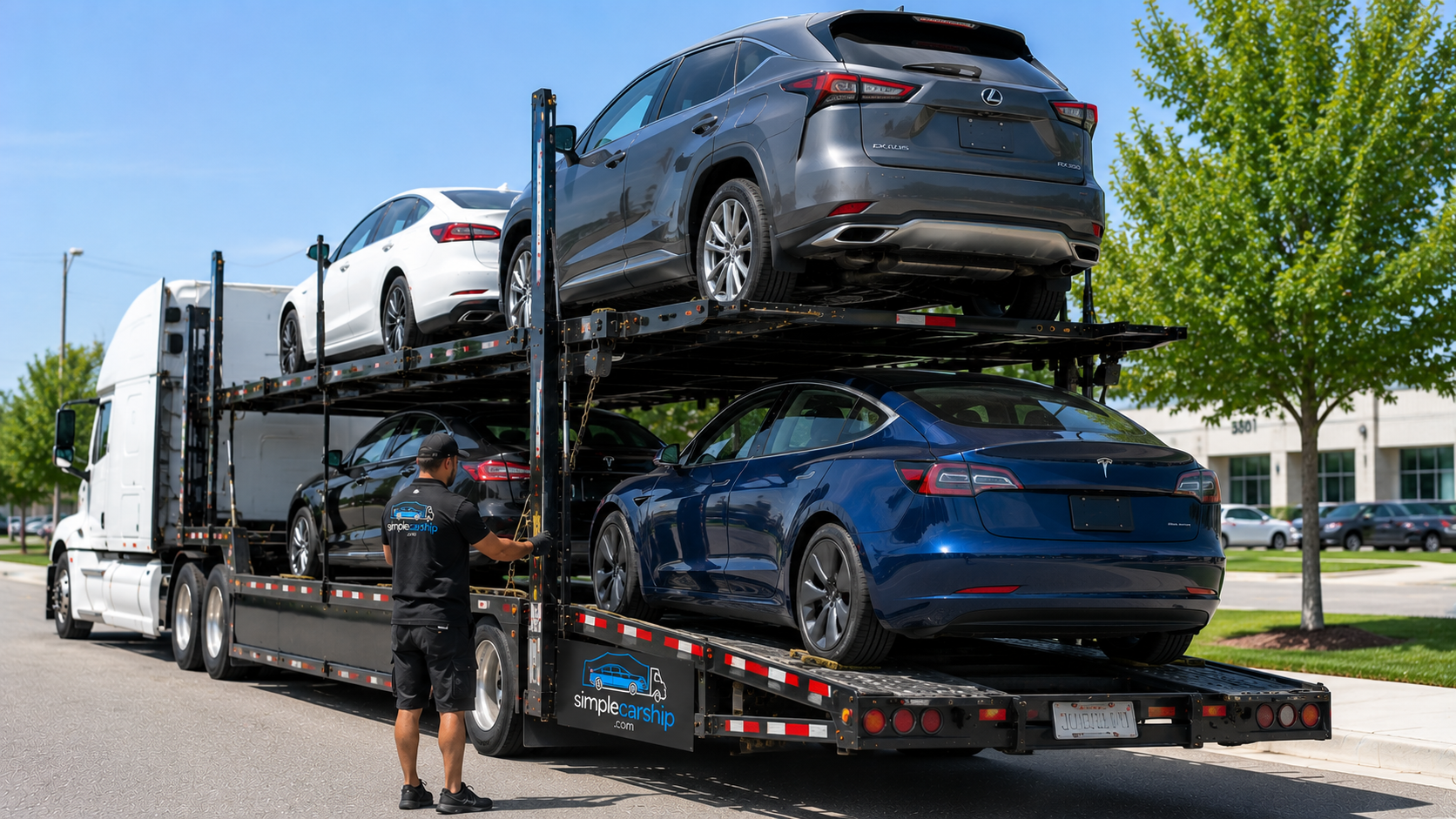
How Much Does It Cost to Ship a Car from Oregon to Texas?
Shipping a car from Oregon to Texas typically costs between $1,865 and $2,270 for open transport, or $2,985 to $3,630 for enclosed carriers. The final price depends on your vehicle type, the specific cities you’re shipping between, carrier availability, and whether you choose standard or expedited service across this 2,284-mile route.
Distance is the biggest cost driver—Oregon to Texas is one of the longer cross-country hauls—but pickup and delivery locations matter just as much. A Portland-to-Dallas shipment on major carrier routes will often cost less than Eugene-to-smaller-Texas-town runs that require detours off the Interstate corridors.

Get your instant car shipping price
Real quote in seconds — no spam, no runaround.
What Determines the Cost of Shipping Your Car from Oregon to Texas
The 2,284-mile distance sets the baseline, but several variables shift the final number. Vehicle size and weight affect fuel costs and trailer space: a compact sedan ships cheaper than a full-size truck or SUV. Transport type is the next lever—open carriers cost $1,120 to $1,360 less than enclosed, but enclosed protects high-value or classic cars from road debris and weather across two mountain ranges and the arid Southwest. Seasonality plays a smaller role on this route than snowbird corridors, though summer demand from college relocations (Eugene and Austin are both university towns) can tighten carrier availability and nudge prices upward. Finally, pickup and delivery specifics matter: metro-to-metro shipments between Portland and Houston move fastest and cheapest because carriers run those lanes constantly, while rural pickups or deliveries add $150–$300 and a day or two of scheduling.
If you need your car faster than the standard 4–6 day window, expedited service runs about $3,041 for open transport—prioritizing your vehicle on the next available truck and shrinking transit to as little as 3 days. That premium buys speed but rarely makes sense unless you’re coordinating a tight move-in date or replacing a totaled vehicle under time pressure.
Open vs. Enclosed Transport: Which Makes Sense for Oregon to Texas
Open transport moves 90% of vehicles on this route. Your car rides on a double-decker trailer exposed to weather, which sounds risky but is the same method dealerships use to move inventory nationwide. For daily drivers, commuter cars, and most SUVs, open is the rational choice—it saves over a thousand dollars and gets your vehicle to Texas just as quickly. The I-84 and I-10 corridors are well-maintained, and rain or dust wipes off.
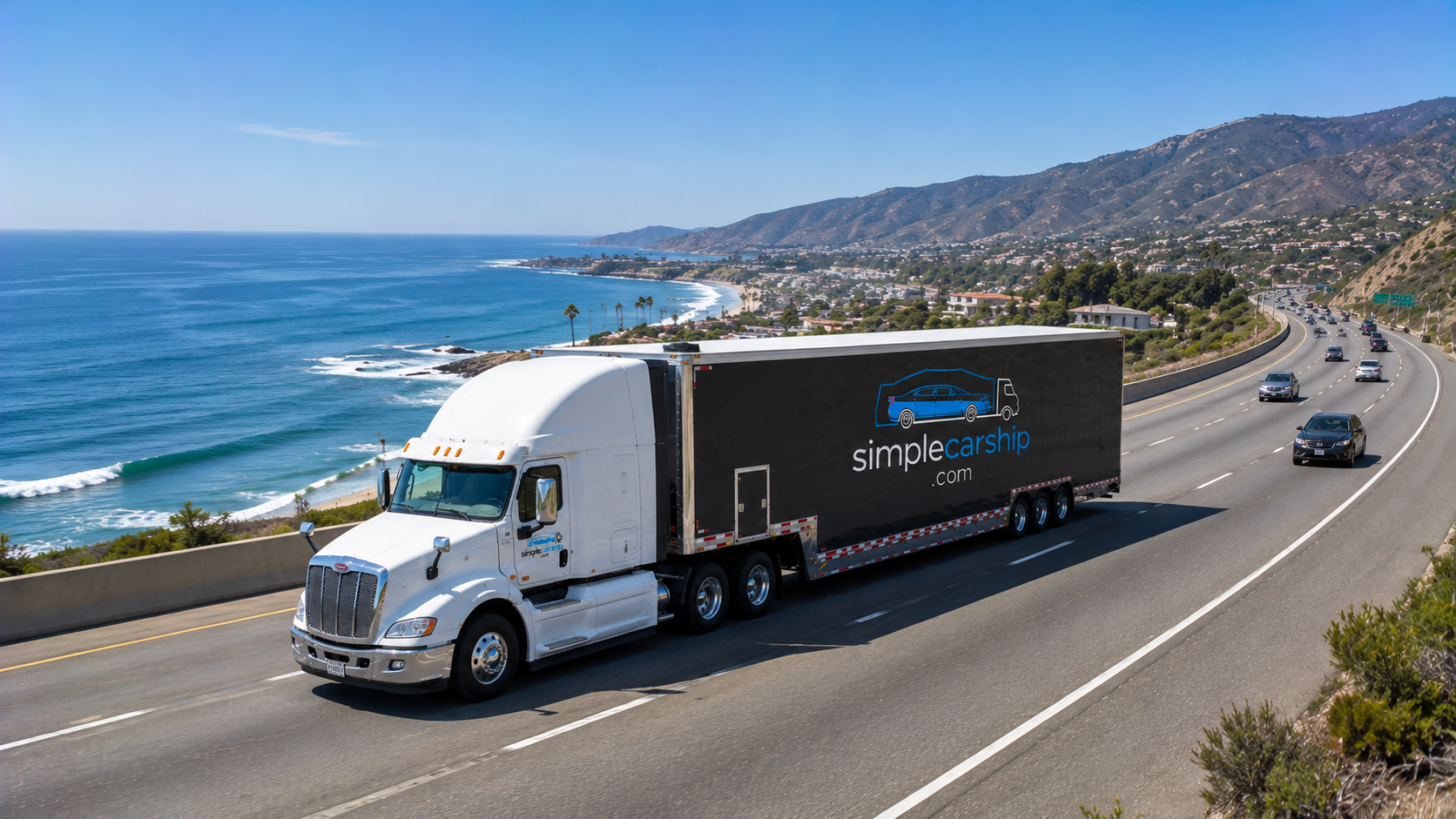
Enclosed transport makes sense when the vehicle’s value or condition justifies the $2,985–$3,630 cost. Classic cars, exotic sports cars, luxury sedans with custom paint, or any car you wouldn’t park outside in a hailstorm—those belong in an enclosed trailer. The hard sides shield against rock chips, sun fade, and the unpredictable weather between the Cascades and the Texas plains. Collectors shipping to auctions in Houston or Barrett-Jackson events choose enclosed; families moving a 2018 Camry choose open.
| Feature | Open Transport | Enclosed Transport |
|---|---|---|
| Price Range | $1,865–$2,270 | $2,985–$3,630 |
| Transit Time | 4–6 days | 4–6 days |
| Protection | Standard; exposed to weather | Fully enclosed; shielded from elements |
| Best For | Daily drivers, sedans, most SUVs | Classics, exotics, high-value vehicles |
How the Oregon-to-Texas Route Works: Pickup, Transit, and Delivery
Most shipments originate in Portland or Eugene—Oregon’s two largest metros and natural carrier hubs along I-5 and I-84. Carriers running southbound or eastbound routes pass through both cities regularly, so scheduling pickup is straightforward and usually happens within 1–3 days of your preferred date. If you’re outside these metros—say, in Bend or Medford—the carrier will either route through your town if it’s on the way or arrange a meet-point at a nearby truck stop or shopping center along a major highway. Rural pickups aren’t a problem; they just require a day or two of extra coordination.
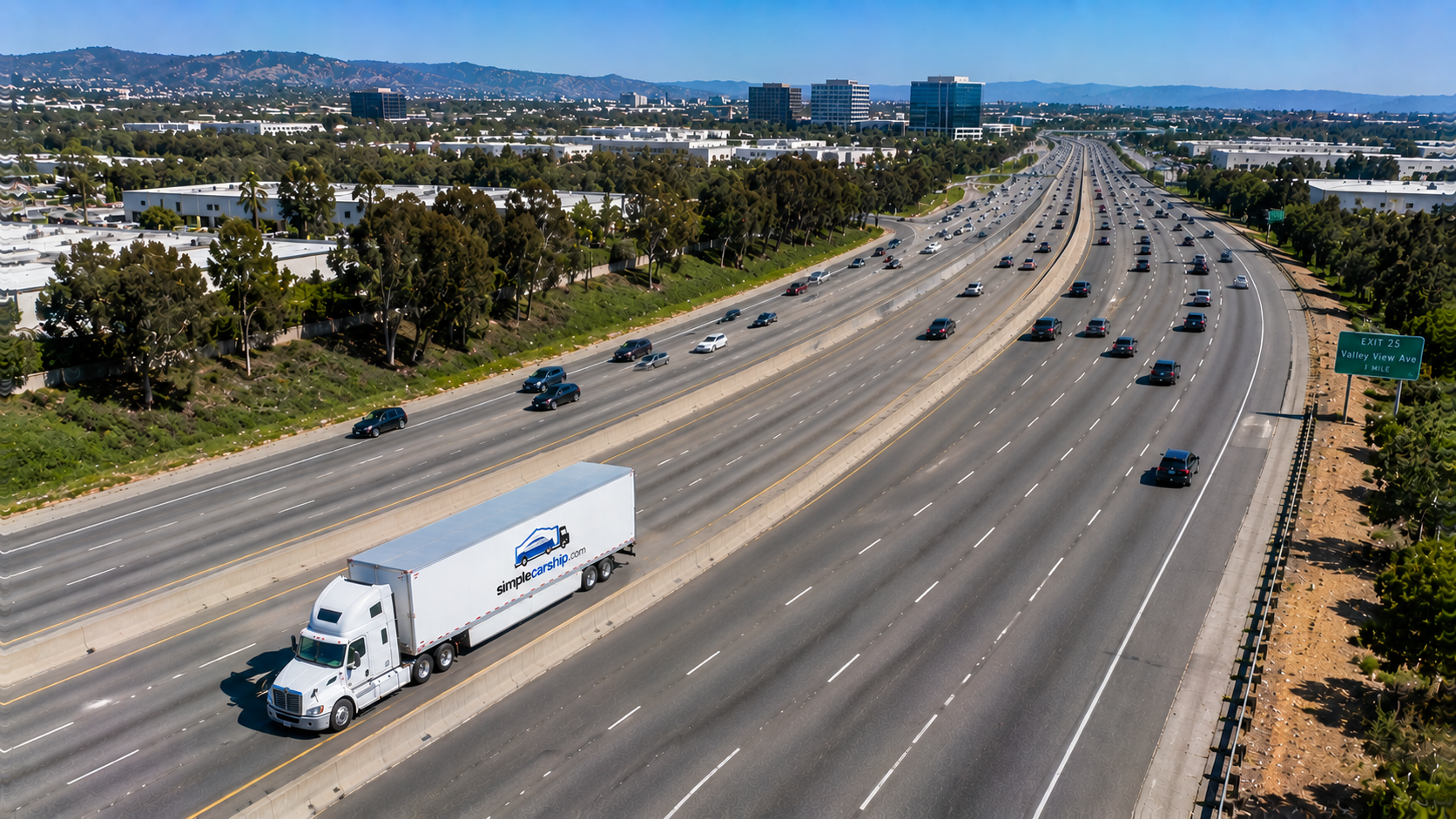
The route itself follows I-84 east through the Columbia River Gorge into Idaho, then drops south on I-15 or continues east on I-80 depending on the carrier’s manifest, eventually connecting to I-10 or I-20 into Texas. Total road distance is 2,284 miles, and trucks average 400–500 miles per day accounting for rest breaks, fueling, and DOT hours-of-service limits. That puts transit time at 4–6 days for most shipments. Delivery happens in Houston, Dallas, Austin, or San Antonio—Texas’s four major metros and the densest freight corridors in the state. Smaller cities like Lubbock or Amarillo are reachable but may add a half-day and $100–$200 if the carrier has to deviate from the Interstate.
Carriers call 24 hours before pickup and again 24 hours before delivery, giving you time to arrange to be present or designate someone 18+ to hand over or accept the keys. Inspect the car together with the driver at both ends, note any existing damage on the Bill of Lading, and snap photos. The process is simple, and most shipments move without a hitch—but documentation protects you in the rare case something goes wrong.
How Simple Car Ship Handles Your Oregon-to-Texas Shipment
We don’t post your car on a load board and hope for the best. Every carrier we work with is hand-selected, fully insured, and vetted for safety ratings and customer feedback. When you request a quote, you’ll get a clear breakdown of open and enclosed pricing—no fake urgency, no “prices expire in 30 minutes” nonsense—and a real human walks you through what the numbers mean and which option fits your vehicle and timeline.
Once you book, we monitor the shipment from Portland to Houston (or wherever in Texas you’re headed). You’ll have a direct contact—not a ticket queue—and we’ll update you when the carrier is assigned, when pickup is confirmed, and when delivery is inbound. Your shipment isn’t a load number to us. We’ve built this business on clear communication and no runarounds, because handing over your car to a stranger 2,000+ miles away shouldn’t feel like a gamble. Get a transparent quote for your Oregon-to-Texas car shipment here—real numbers, no guesswork.
Frequently Asked Questions: Shipping a Car from Oregon to Texas
How much does it cost to ship a car from Oregon to Texas?
Open transport costs between $1,865 and $2,270 for the 2,284-mile route, while enclosed carriers run $2,985 to $3,630. Final price depends on vehicle size, exact pickup and delivery cities, and current carrier availability. Metro-to-metro shipments (Portland to Dallas, for example) typically fall in the lower end of those ranges.
How long does it take to ship a car from Oregon to Texas?
Standard transit is 4–6 days. Carriers cover roughly 400–500 miles per day, and the Oregon-Texas route spans 2,284 miles via I-84 and I-10/I-20 corridors. Pickup typically happens within 1–3 days of booking, so plan on 5–9 days total from quote to delivery in most cases.
Is open or enclosed transport better for this route?
Open transport works for 90% of vehicles—it’s $1,120+ cheaper and just as fast. Choose enclosed ($2,985–$3,630) if you’re shipping a classic, exotic, or high-value car that you wouldn’t expose to road debris and weather across two mountain ranges and the Southwest plains. Daily drivers go open.
Can I ship from Eugene to Austin, or does it have to be Portland to a major Texas city?
You can ship from any Oregon city to any Texas city. Eugene and Portland are the busiest pickup points, and Houston, Dallas, Austin, and San Antonio see the most deliveries, so those combinations cost least and schedule fastest. Smaller towns are reachable but may add $100–$300 and a day of coordination.
What if I need my car in Texas faster than 4–6 days?
Expedited service prioritizes your vehicle on the next available carrier and can shrink transit to as little as 3 days. Pricing runs around $3,041 for open transport—a meaningful premium over standard $1,865–$2,270 rates. It makes sense for tight move-in deadlines or urgent replacements, not for routine relocations where a week’s lead time works fine.