
Get your instant car shipping price
Real quote in seconds — no spam, no runaround.
Luxury Vehicle Transport
Drive past the gated cul-de-sacs of Beverly Hills or the showroom row along Miami’s Biscayne Boulevard and you’ll see the cars this page is about: an S-Class idling in a Bal Harbour porte-cochere, a Porsche tucked into a Highland Park garage, a Bentley waiting behind a guarded Naples community gate. Getting one of those onto a transporter without a knot in your stomach is a different job than booking a commuter sedan, and you already know it. The value is higher, the finish is fussier, and “close enough” stops being acceptable the second a soft-paint fender meets a steep ramp. Simple Car Ship moves high-value vehicles across the country the way their owners actually expect them to be moved: a quote you can read line by line, a carrier we pick by hand for your exact car, and a person who answers the phone from booking through delivery. You’re not a row on a load board here, and neither is a vehicle that cost more than most people’s house.
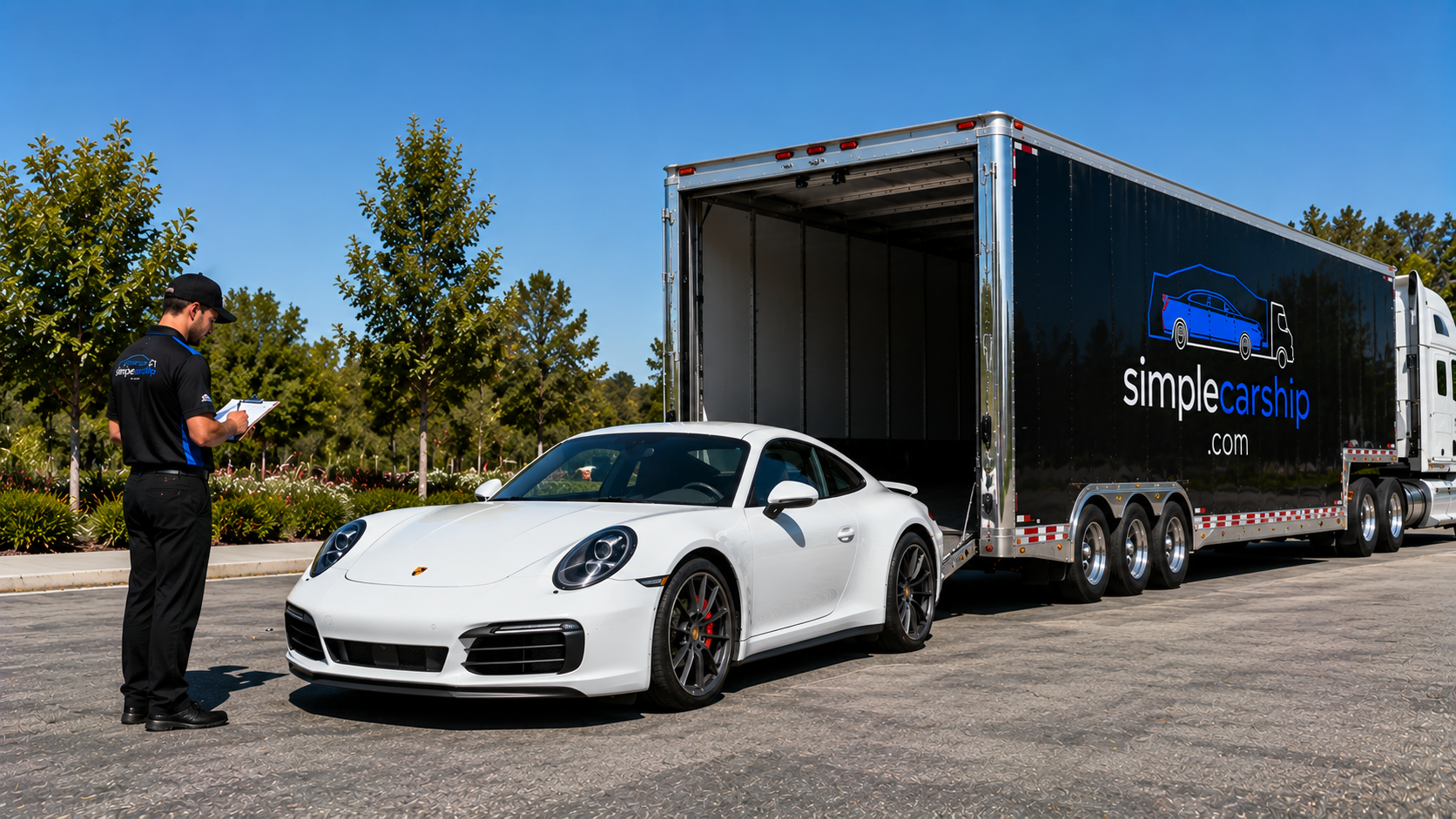
Below, we walk through what genuinely sets luxury vehicle transport apart, where open transport is perfectly fine and where enclosed earns its premium, what that premium over a standard sedan actually adds up to and why, how to get a high-value car ready for the truck, and exactly how we run the move. Plain English, no broker-speak.
What Makes Luxury Vehicle Transport Different
On paper, a luxury sedan and an economy sedan are both “a car on a truck.” In practice they’re handled differently, and the differences are worth understanding before you book. Four things matter most: value, finish and dimensions, operability, and insurance.
Value. A daily driver might be worth $15,000. A luxury or exotic vehicle can run from $80,000 to well past $300,000. That changes the math on everything, including which carrier should touch it, how it should be loaded, and what level of coverage you want behind it. The more a vehicle is worth, the more it makes sense to pay for care rather than the cheapest possible quote.
Finish and dimensions. Luxury vehicles often have low ground clearance, front splitters, wide aftermarket or factory wheels, soft paint, ceramic coatings, paint protection film, and bodywork that scuffs or scrapes if it’s loaded carelessly on a steep ramp. Some are longer, wider, or lower than a standard sedan, which affects how they fit on a trailer. These aren’t reasons to worry, they’re reasons to use a carrier who knows how to handle them: low-angle ramps, liftgates, soft straps, and extra clearance.
Operability. Most luxury cars run and drive, which keeps loading simple. But high-performance and collector vehicles can have very low clearance, race or track setups, drained batteries from sitting, or be flat-out non-running. A non-running or “inop” vehicle needs a carrier equipped with a winch or liftgate, and that should be flagged at quote time so the right truck shows up, not a surprise on pickup day.
Insurance. Every legitimate carrier carries cargo insurance, but coverage limits vary, and a limit that’s fine for a $20,000 sedan may not fully cover a $200,000 vehicle. With luxury transport it’s worth confirming the carrier’s coverage matches your vehicle’s value before it’s loaded. We verify that for you, and we’ll never wave a “fully insured” line at you without backing it up with the actual carrier’s coverage.
Open vs Enclosed Transport for Luxury Vehicles
This is the question that matters most for high-value cars, so here’s the honest answer. Open transport, the same kind of trailer that delivers new cars to dealerships, is safe, widely available, and cost-effective. It’s perfectly fine for a great many luxury vehicles, especially newer ones you drive regularly and aren’t precious about. Millions of premium cars ship open every year without a scratch.
That said, for genuinely high-value, rare, exotic, or show-condition vehicles, we lean toward enclosed transport, and we’ll tell you so plainly. Enclosed trailers fully shield the car from road debris, rocks, weather, and prying eyes. Many enclosed carriers also run liftgates instead of ramps, which is gentler on low-clearance vehicles, and they typically haul fewer cars per load with more attention per vehicle. If the car is worth more than you’d comfortably absorb a chip or scuff on, or if it’s irreplaceable, enclosed is the call. The premium buys protection and peace of mind, not just a fancier truck.
What Luxury Vehicle Transport Costs and Why
Cost is always estimated, and the honest way to get your number is a real quote on your actual vehicle and ZIP codes. But here’s how to think about it. Luxury vehicle transport carries a premium over shipping a standard sedan, and that premium is real, not a markup for the badge on the hood.
For open transport, a luxury vehicle typically runs a modest premium over a comparable economy car on the same route, often in the range of about 10% to 30% more, driven by size, weight, and the extra handling care these cars need. The bigger jump is enclosed transport, which generally costs around 1.5 times the open rate for the same move. So if a standard sedan ships open for a certain figure, a high-value car shipped enclosed can land roughly 50% to 75% above that baseline. These are estimated, typical ranges, not a guaranteed price.
The premium comes from concrete things, not guesswork. Enclosed trailers haul fewer vehicles per trip, so each car carries more of the cost. They often use liftgates and require more careful, slower loading. Larger and heavier luxury SUVs take up more deck space and weight allowance. Higher-value cargo means carriers carry and price in higher insurance coverage. And low-clearance or non-running vehicles need specialized equipment. None of that is upcharge theater. When we quote a luxury move, we tell you what’s driving the number so you can decide what’s worth it. No “best price guaranteed” broker games, no teaser rate to get you on the phone.
How to Prep a Luxury Vehicle for Shipping
A little prep protects the car and protects you on the inspection report. For high-value vehicles specifically, run through this before pickup:
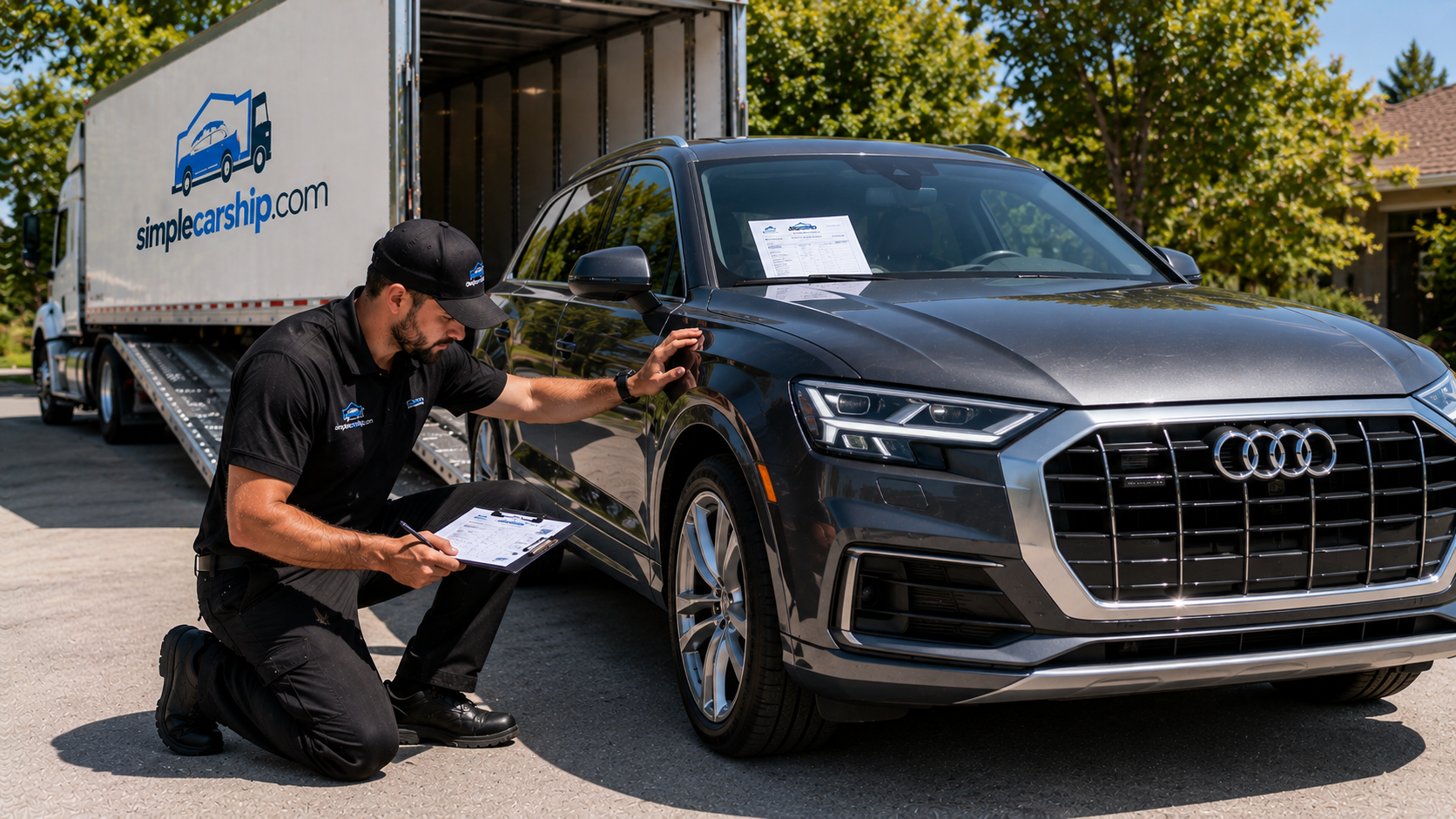
Document everything. Photograph the car thoroughly in good light from every angle, including wheels, lower bodywork, splitters, and any existing chips or marks. Date-stamp them. This is your record alongside the carrier’s inspection report.
Wash it first. A clean car makes existing scratches, swirls, and chips visible, so both you and the driver note the true condition at pickup. You can’t inspect what road grime is hiding.
Remove personal and aftermarket items. Take out valuables, electronics, and toll transponders. Remove or secure loose aftermarket pieces, custom spoilers, or removable hardtops where practical, and fold in mirrors if they’re power-folding.
Note the clearance. If the car is lowered, has a front splitter, or sits low, tell us at quote time so we assign a carrier with low-angle ramps or a liftgate. This is the single most common luxury-specific detail people forget.
Battery, fuel, and alarms. Leave the tank about a quarter full, make sure the battery holds a charge, and disable or share instructions for any aftermarket alarm or kill switch. For collector cars that have been sitting, mention it so the carrier is prepared.
Share quirks. Air suspension, transport mode, soft-close doors, performance settings, hidden charge ports on EVs, these are exactly the details a good carrier wants to know up front.
How Simple Car Ship Handles Luxury Transport
Here’s the part that’s actually different. We don’t post your six-figure car to a load board and hand it to whoever bids lowest. We hand-select an insured carrier whose equipment and experience match your specific vehicle, then we confirm their coverage lines up with what your car is worth before it’s ever loaded. For low-clearance, exotic, or non-running vehicles, that means a carrier with the right ramps, liftgate, or winch, not a hopeful guess.
You get a clear quote with the cost drivers explained, an honest open-versus-enclosed recommendation based on your actual car rather than on what’s easiest to sell, and a real person you can reach the whole way. We coordinate door-to-door across the country, work out an accessible loading spot if your street is tight or low-clearance, and keep you posted instead of going quiet. We treat a daily-driven SUV and an irreplaceable collector car with the same care, because that’s the whole point. If shipping a car has burned you before, this is the antidote. Ship your car the simple way.
Want a real figure for your luxury move? Get your free quote in about a minute, or pick up the phone and talk to an actual person. No pressure, no spam, just a straight answer about your car and your route. If what you’re moving is especially rare, read up on exotic and collector car transport, weigh your choices for classic car shipping, or if a full household is on the move see our luxury relocation shipping guide.
Luxury Vehicle Transport FAQ
Should I ship my luxury car open or enclosed?
It depends on the car. Open transport is safe, widely available, and cost-effective, and it’s perfectly fine for newer luxury vehicles you drive regularly. For genuinely high-value, rare, exotic, or show-condition cars, we lean toward enclosed, which fully shields the vehicle from road debris and weather and often uses a gentler liftgate instead of ramps. Enclosed runs roughly 1.5 times the open rate, so the right call comes down to your car’s value and how much a chip or scuff would cost you.
How much more does it cost to ship a luxury vehicle than a regular sedan?
Open transport for a luxury vehicle typically runs a modest premium over a comparable economy car, often around 10% to 30% more based on size, weight, and the extra handling care involved. Enclosed transport generally costs about 1.5 times the open rate, so a high-value car shipped enclosed can land roughly 50% to 75% above a standard sedan’s open baseline. These are estimated ranges, not a guaranteed price, and a real quote on your vehicle and ZIP codes is the only way to pin the number down.
Is open transport actually safe for a high-value car?
Yes, for most newer luxury vehicles. Open carriers are the same trucks that deliver new cars to dealerships, and millions of premium cars ship open every year without issue. The reason we recommend enclosed for exotic, collector, or show-condition vehicles is that it fully shields the car from rocks, road debris, and weather, and enclosed carriers typically haul fewer cars per load with more attention each. If a chip or scuff would genuinely hurt, the enclosed premium is worth it.
Why does the carrier’s insurance matter more for a luxury vehicle?
Because coverage limits vary, and a limit that’s adequate for a $20,000 sedan may not fully cover a $200,000 vehicle. Every legitimate carrier carries cargo insurance, but with a high-value car you want to confirm the coverage actually matches what the vehicle is worth before it’s loaded. We verify that for you and won’t wave a vague “fully insured” line without backing it up with the carrier’s real coverage. It’s a small step that protects a large amount of value.
How do I prep a low-clearance or lowered car for shipping?
Tell us at quote time so we assign a carrier with low-angle ramps or a liftgate, which is the most common luxury-specific detail people forget. Beyond that, wash and photograph the car in good light from every angle including the lower bodywork and splitter, remove valuables and loose aftermarket pieces, leave the tank about a quarter full, make sure the battery holds a charge, and share any quirks like air suspension, transport mode, or a kill switch so the driver loads it correctly.
What if my luxury or collector car doesn’t run?
That’s fine, but flag it when you request a quote. A non-running or “inop” vehicle needs a carrier equipped with a winch or liftgate rather than a standard ramp, and naming it up front means the right truck shows up instead of a surprise on pickup day. The same goes for collector cars that have been sitting with a weak battery or for race and track setups with very low clearance. Sharing those details lets us match the equipment to your car.