
Get your instant car shipping price
Real quote in seconds. Enter your details and we’ll show your price instantly.
No spam — we only use this to send your quote and confirm your booking.
Boat Hauling and Boat Transport, Nationwide
A boat on a trailer doesn’t get to take the short way. It threads the low-clearance overpasses of I-95 along the Eastern Seaboard, the long climb over Donner Pass on I-80, the wind-raked flats of I-10 through west Texas, and the bridge tunnels around the Chesapeake, and on a wide hull every one of those is a clearance question before it’s a mileage question. A center console headed from a Florida ramp to a Great Lakes marina, a sailboat bound up the Pacific coast, a bass boat sold to a buyer two states away, each one travels a route that has to be cleared for its beam and height first, then priced. That’s the part most people don’t see coming, and it’s the part we map out before we ever quote you. A boat you’ve sunk money and weekends into deserves a real plan, not a low bid parked on a load board, so we tell you plainly what your boat is, what road it has to take, and what that costs.

What Makes Boat Hauling Different
A standard sedan is roughly 6 feet wide and weighs a few thousand pounds. A boat on its trailer can be 8.5 feet wide or more, well over 13.5 feet tall once you account for the trailer height and any hardtop, T-top, or tower, and tens of thousands of dollars in value before you reach the high end. Those three numbers, dimension, weight, and value, change everything about how a haul is planned, priced, and protected.
The first dividing line is dimension. Any load over 8.5 feet wide is legally “oversize” in most states, and that triggers permits, marked routes, sometimes daylight-only travel, and in the widest cases escort or pilot vehicles. Height matters just as much, because bridge and overpass clearance dictates which roads a carrier can legally use. A 7-foot-wide jon boat travels almost like a car. A 10-foot-beam cruiser is a permitted oversize move with a routed plan. We figure out which category your boat falls into before anyone quotes you a number.
The second is operability and the trailer. Most boats ship on a trailer, and the condition of that trailer is part of the load. Tires that hold air, working lights, a coupler that latches, and bearings that aren’t seized are the difference between a smooth haul and a roadside problem. Boats without a roadworthy trailer can still move, but typically need flatbed or step-deck equipment, which changes the plan and the price. The third is value and finish: gelcoat, wrapped hulls, electronics, and rigging are expensive and exposed, so insurance and handling carry more weight here than on an everyday driver.
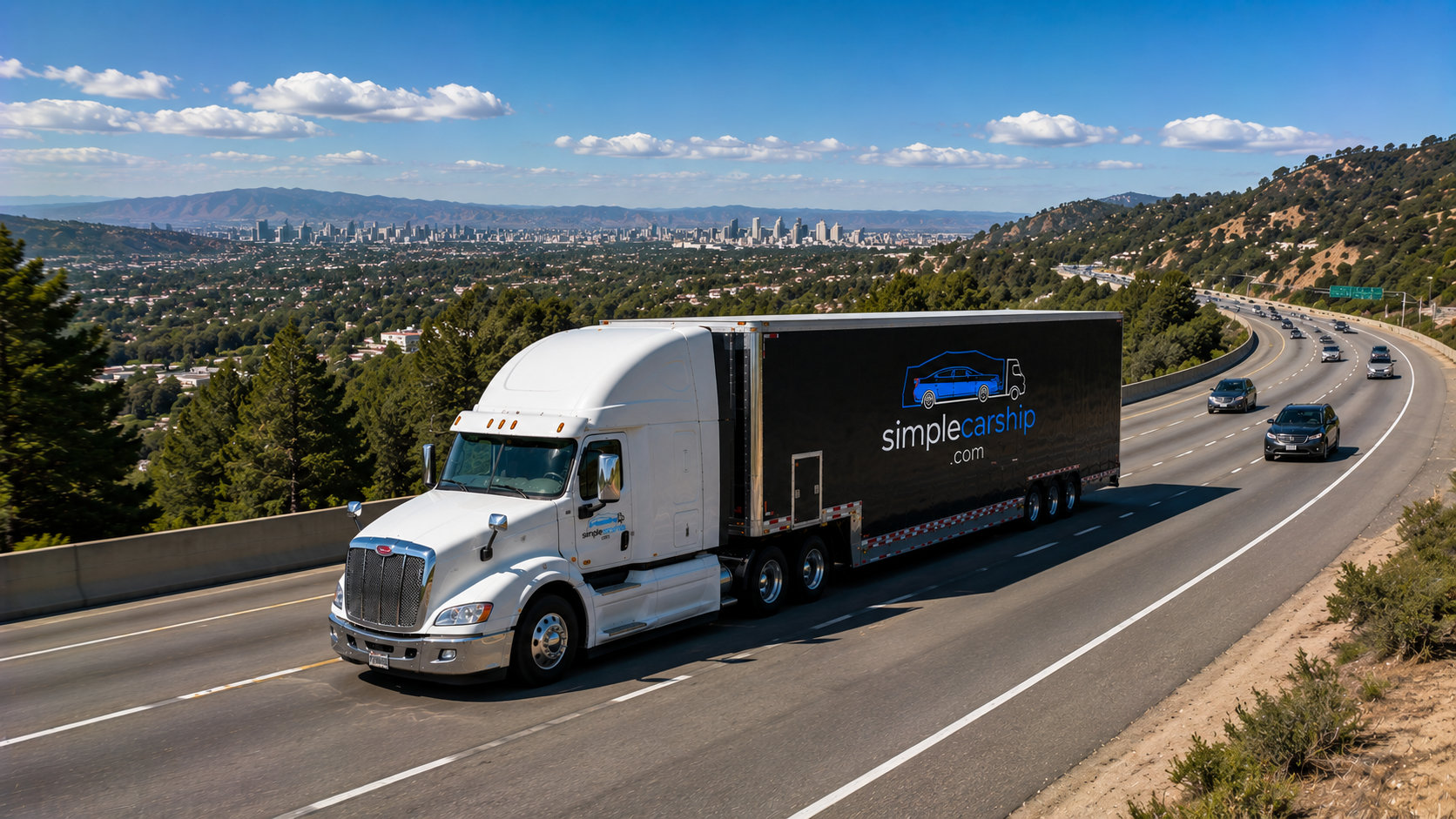
Open vs Enclosed for Boats
Here’s the honest answer most boat owners are looking for. The large majority of boats ship “open,” meaning out in the air on a trailer or a flatbed, and that’s completely normal and safe. Boats are built to sit outside, get rained on, and take spray and sun. A few days of road exposure is not what damages a hull. Open hauling is also the only practical option for most trailered boats simply because of their size, since true enclosed trailers can’t physically accommodate a tall, wide boat.
So unlike cars, where enclosed is a common upgrade for anything special, boat transport is overwhelmingly an open-equipment service. The real protection for a boat in transit isn’t four walls, it’s the prep: a tight shrink-wrap or fitted cover, secured hatches, removed or stowed electronics, and proper tie-down at the trailer frame rather than over the hull. Enclosed transport does exist for smaller, exceptionally high-value craft, like a show-quality wooden runabout or a compact performance boat that fits inside a trailer, and there it carries the same kind of premium it does for an exotic car. For nearly everyone else, well-prepped open hauling is the right call.
What Boat Hauling Typically Costs
Boat transport is priced on the same fundamentals as any vehicle, distance and the realities of the load, so a short in-state haul and a coast-to-coast move are very different numbers. We don’t publish a single flat rate because that would be a guess dressed up as a quote. What we can be straight about are the cost drivers and the typical premium a boat carries over a standard sedan on the same trip.
Expect a boat to run meaningfully more than a sedan over the same distance. For a trailered boat that stays within legal width, somewhere around 8.5 feet or under, plan on a premium in the range of roughly 25 to 60 percent above a standard car for the same lane, mostly because of size, weight, and the care involved. Once a boat crosses into oversize territory, the premium climbs further, often 75 to 150 percent or more above a sedan, because of permits, specialized routing, slower travel, and in the widest cases pilot or escort vehicles. These are estimated, typical ranges, not guaranteed prices.
The factors that move your number are concrete: beam (width) and whether it forces an oversize permit, overall height and bridge clearance along the route, total weight of boat plus trailer, the length and busyness of the lane, whether your trailer is roadworthy or the boat needs flatbed equipment, the season, and how far your pickup and drop sit from main highways. The only way to a real figure is a quote on your actual boat, trailer, and ZIP codes, and that’s exactly what we give, no teaser rate to get you on the phone.
Boat Prep Checklist Before Pickup
Good prep is what protects a boat on the road, and it’s specific to this kind of load. Work through this before pickup day:
- Drain water from the bilge, livewells, and any tanks, and back the fuel down to about a quarter tank to cut weight and spillage risk.
- Remove or secure all loose gear: electronics, fishing equipment, cushions, anchors, lines, and anything that can shift or walk off during transit.
- Shrink-wrap, tarp, or fit a tight cover, and tape down or remove anything that can catch wind, like a loose bimini or canvas.
- Lower antennas, outriggers, and towers, and note overall height with everything down so it can be matched against route clearance.
- Disconnect and secure the battery, and make sure the engine and outdrive are trimmed up and supported.
- Check the trailer hard: tire pressure and tread (including the spare), working lights, a latching coupler, safety chains, and bearings that spin freely.
- Take dated photos of the hull, gelcoat, and trailer from every angle so the pre-haul condition is documented.
- Have your title, registration, and any required ownership paperwork ready, especially for an interstate sale.

Transit Time and Routing
Boat hauls follow the same physics as any over-the-road move: figure roughly 500 miles of progress per day of transit, plus a realistic 1 to 3 day pickup window once a carrier is assigned. So a 500-mile haul commonly lands in a 2 to 4 day door-to-door range, a 1,500-mile haul around 4 to 6 days, and a true coast-to-coast move in the neighborhood of 7 to 10 days. Oversize boats can run a little longer, because permitted loads are often restricted to daylight hours and specific routes, which trims daily mileage.
Routing is a bigger deal for boats than for cars. Because width and height drive which roads are legal, a wide boat can’t simply take the shortest line, it takes the cleared one. We sort the routing and any permits before the wheels turn, so the timeline you’re given already accounts for the real path your boat has to travel rather than the map’s straight line.
How Simple Car Ship Handles Boat Hauling
This is where the difference shows up. You get a clear quote built around your actual boat, not a board-rate guess, and we tell you up front whether your boat is a standard trailered haul or an oversize move with permits, so there are no surprises on cost or timing. We hand-select an insured carrier with the right equipment for your beam, height, and weight, rather than handing your boat to whoever bid lowest. And you get a real person you can reach from pickup to delivery, who can answer a routing or timing question without a runaround.
We treat a $4,000 fishing boat and a six-figure cruiser with the same care, because both represent something real to the person who owns them. The boat that comes off the trailer should be the same one that went on. If a broker has burned you before with a too-good number that fell apart at pickup, this is the antidote. Ship your boat the simple way.
Want a straight number on your haul, beam, route, and all? Get your free quote in about a minute, or call and talk to an actual human, no pressure and no spam. If you’re moving more than a boat, see how we handle oversized vehicle transport, or if this is part of a relocation read our guide to seasonal and snowbird vehicle shipping for owners who move south and back each year.
Boat Hauling FAQ
How much does boat hauling cost compared to shipping a car?
Expect to pay more than a standard sedan on the same lane. A trailered boat under about 8.5 feet wide typically runs roughly 25 to 60 percent more than a car, mainly for size, weight, and handling. An oversize boat that needs permits can run 75 to 150 percent or more above a sedan because of routing, slower travel, and possible escort vehicles. These are estimated ranges, and your real number depends on the boat, trailer, distance, and ZIP codes.
Do boats ship open or enclosed?
The large majority of boats ship open, on a trailer or flatbed out in the air, and that’s completely safe because boats are built to sit outside. Enclosed transport only fits small, exceptionally high-value craft that physically fit inside a trailer, and it carries a premium of roughly 1.5x or more. For nearly every owner, the real protection isn’t enclosure, it’s proper prep: a tight cover, secured hatches, and correct tie-down at the trailer frame.
What counts as an oversize boat haul?
In most states any load wider than 8.5 feet is legally oversize, which triggers permits, marked or daylight-only routes, and in the widest cases pilot or escort vehicles. Height matters too, since clearance over about 13.5 feet limits which roads and bridges a carrier can use. We measure beam and overall height with antennas and towers down before quoting, so we know whether your boat is a standard trailered haul or a permitted oversize move.
How long does it take to haul a boat across the country?
Plan on roughly 500 miles of progress per day of transit plus a 1 to 3 day pickup window. A 500-mile haul commonly takes 2 to 4 days door to door, a 1,500-mile haul around 4 to 6 days, and a coast-to-coast move about 7 to 10 days. Oversize boats can run a bit longer because permitted loads are often limited to daylight hours and specific cleared routes, which reduces daily mileage.
Does my boat trailer need to be roadworthy?
Yes, if the boat ships on its own trailer, that trailer is part of the load. It needs tires that hold air with good tread plus a spare, working lights, safety chains, a latching coupler, and bearings that aren’t seized. A boat without a roadworthy trailer can still move, but usually needs flatbed or step-deck equipment, which changes the plan and the price. Check the trailer before pickup so a roadside problem doesn’t delay your haul.
How should I prepare my boat for transport?
Drain the bilge, livewells, and tanks and reduce fuel to about a quarter tank, then remove or secure all loose gear and electronics. Shrink-wrap or fit a tight cover, lower antennas, outriggers, and towers, disconnect the battery, and trim the engine up. Inspect the trailer fully, take dated photos of the hull and trailer from every angle, and have your title and registration ready, especially for an interstate sale.