
Get your instant car shipping price
Real quote in seconds. Enter your details and we’ll show your price instantly.
No spam — we only use this to send your quote and confirm your booking.
Auction Vehicle Transport
Picture a buyer in Ohio who just outbid the room on a Copart F-250 sitting in a salvage yard outside Phoenix. They’ve never touched the truck, the listing says “starts and runs” with a question mark, and the yard’s free storage days are already ticking down. That gap between the winning bid and the truck actually rolling into the driveway is exactly where auction shipping goes sideways. It’s a different animal: the vehicle might fire up or sit dead, you’re often buying off four photos, and gate passes and stock numbers decide whether the carrier even gets through the fence. At Simple Car Ship we manage auction pickups coast to coast with up-front pricing, carriers we choose by hand for the car’s real condition, and a person who answers the phone from the lot to your address. No load-board roulette, no surprises at the gate. Your car is never just a line item to us. Ship your car the simple way.
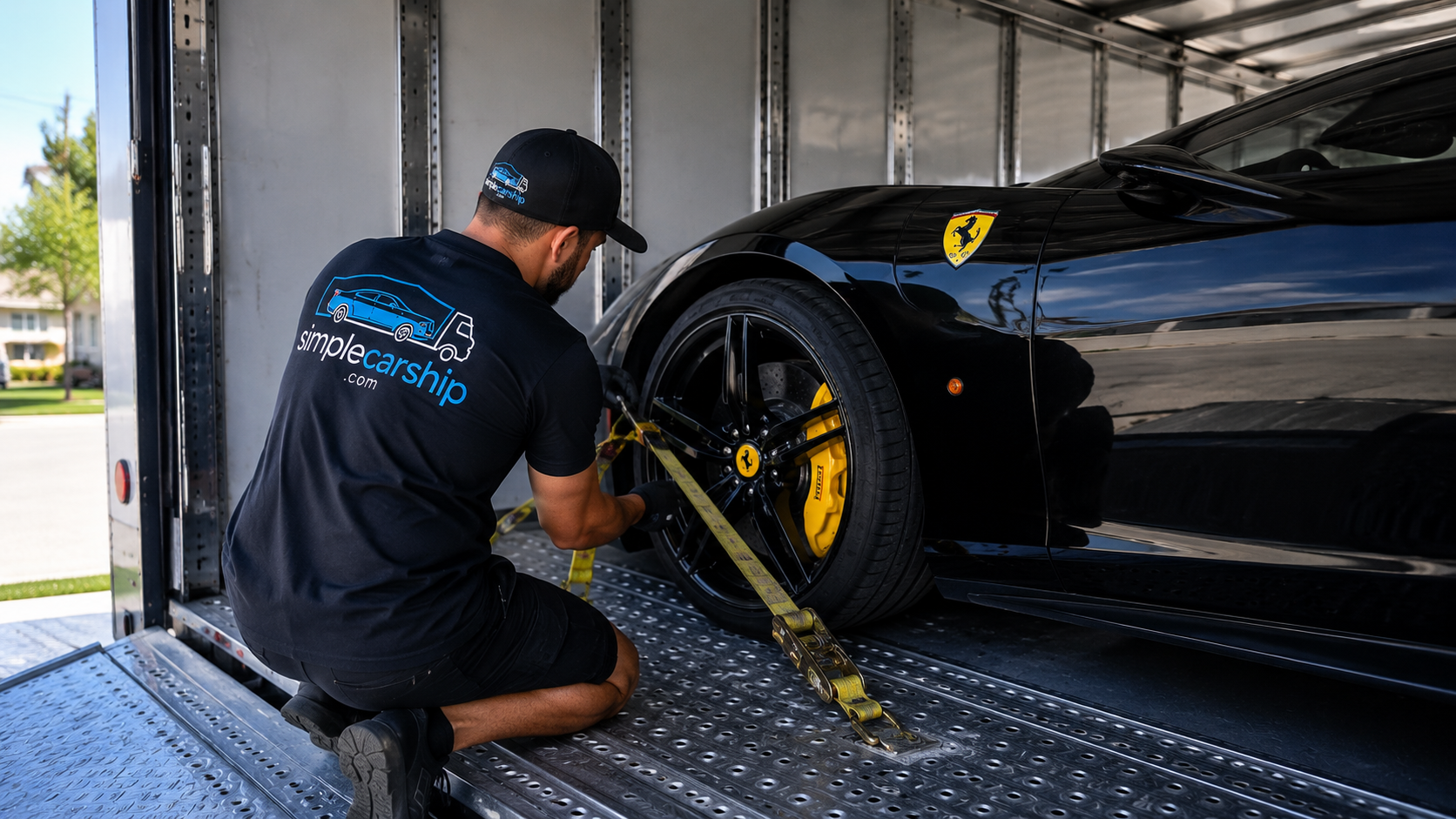
What Makes Auction Vehicle Transport Different
Hauling a car you bought at auction isn’t the same as moving the daily driver out of your own garage, and pretending otherwise is how people get burned. Four things set it apart, and every one of them affects how the move is planned and priced.
First is operability. Plenty of auction cars don’t start, don’t roll, or don’t brake. A non-running or “inop” vehicle has to be winched onto the truck instead of driven on, which means the carrier needs the right equipment and usually charges more for the extra labor and slot it takes up. Being honest about condition up front matters here. If a car listed as “runs and drives” actually arrives dead at the lot, the carrier can refuse it or reprice on the spot, and that’s exactly the kind of surprise we work to kill before pickup.
Second is the unknown. At dealer and insurance auctions you’re often buying sight-unseen or off a handful of photos. Damage, leaks, missing keys, or a flat tire can all turn up at pickup. A good inspection at load time protects you, because the condition report becomes the baseline if anything changes in transit.
Third is value and dimensions. Auction inventory runs the full spread, from a $2,000 fixer to a six-figure collector car, and from a compact sedan to a dually pickup or a lifted SUV. Higher value and larger size both push the transport decision toward more protection and a higher rate. Fourth is the deadline. Auctions charge storage fees that stack up fast once your free days run out, so speed of pickup is part of the job, not an afterthought.
Where Auction Cars Get Picked Up
Auction transport is a nationwide service, and the pickup point is rarely a quiet residential street. It’s a sprawling auction facility, often with gate procedures, a buyer ID or gate pass requirement, set yard hours, and a checkout line. Major dealer auctions and salvage or insurance auction yards sit in nearly every metro in the country, which is good news for availability. Carriers run past these lots constantly, so finding a truck heading your direction is usually straightforward.
The trick is the paperwork and access, not the route. The carrier typically needs the buyer’s gate release, the lot or stock number, and sometimes a printed pass to even get the car off the property. We line that up with you before dispatch so the driver isn’t stuck at a closed gate burning a pickup window, which is how cars end up sitting and racking storage fees. Because auctions exist in every region, we can coordinate a pickup whether your winning bid is two states away or clear across the country, and we’ll tell you the realistic pickup window up front instead of a fantasy date.
Open vs Enclosed for Auction Vehicles
Most auction cars ship just fine on an open carrier. It’s the same equipment that delivers new cars to dealerships, it’s the most available option in every region, and it’s the cost-effective choice for a daily driver, a flip, a dealer restock, or a project car. If the vehicle already has cosmetic damage or you’re rehabbing it anyway, paying a premium to shield it from road grime rarely makes sense.
Enclosed transport earns its premium when the value or finish justifies it: a collector car, a low-mileage find, an exotic, or a freshly restored vehicle you don’t want exposed to weather and road debris on a long haul. Here’s the honest comparison for an auction context.
What Auction Transport Typically Costs
Because auction cars are picked up all over the country, there’s no single price. Cost is driven by distance, vehicle size and weight, and a few auction-specific factors, and the only honest number comes from a real quote on your actual vehicle and the two ZIP codes involved. That said, here are the cost drivers that matter and roughly how they move the figure. All of these are estimated and typical, not a guaranteed price.
The biggest driver is distance, the same as any move. On top of that, an auction vehicle commonly carries a modest premium over a standard running sedan on the same lane, and it’s worth understanding why. A non-running or inoperable vehicle typically adds roughly $150 to $350 because it must be winched on and off and ties up extra deck space and labor. Oversized vehicles like full-size pickups, lifted trucks, and large SUVs usually add about 10 to 30 percent over a compact-sedan rate simply because they take up more room and weight on the trailer. Enclosed transport, when the car warrants it, runs about 1.5 times the open rate. Tight auction-lot access or strict gate hours can occasionally add cost if a carrier has to work around them.
So a clean, running compact won at auction ships at close to a normal sedan rate, while a dead, oversized truck from a salvage yard sits at the higher end of that premium. No teaser pricing, no “best price guaranteed” broker-speak. Just a straight estimate you can actually plan around, and a real number once we know the car and the route.
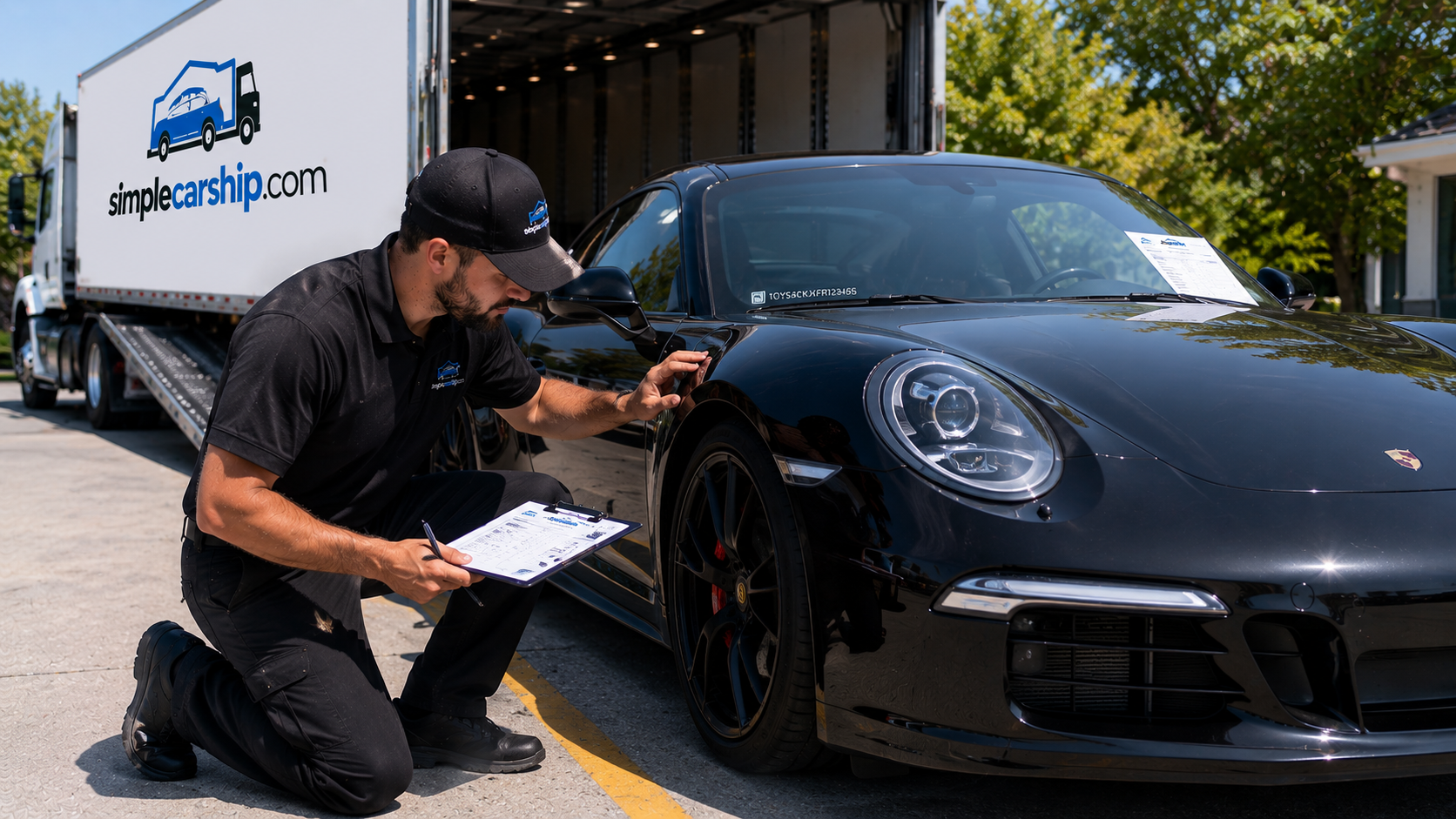
Auction Vehicle Prep Checklist
A little prep on an auction move prevents the two things that hurt most: a refused pickup and a stack of storage fees. Run through this before the carrier rolls up to the lot.
Confirm operability honestly. Find out whether the car runs, rolls, steers, and brakes, and tell us the truth. If it’s inop, we dispatch a carrier with a winch and price it correctly so nothing falls apart at the gate. Handle the gate release and paperwork. Make sure the auction has your payment cleared and the buyer’s gate pass or release is set, and send us the lot or stock number so the driver can actually claim the car. Note existing damage. Auction cars often arrive with dents, scratches, or missing parts; documenting condition at pickup protects you for the rest of the trip.
Account for keys and access. Confirm whether keys are present, because a car with no key may need to be winched even if it technically runs. Check tires and fluids if you can. A flat tire or a dead battery can complicate loading, so flag it ahead of time. Know the storage clock. Find out how many free days the auction allows and when fees start, and tell us, so we prioritize the pickup window accordingly. Clear personal items. Loose items aren’t covered in transit and add weight, so leave the car empty.
How Simple Car Ship Handles Auction Moves
Here’s the part that’s actually different. You get a clear quote with no bait-and-switch, a hand-selected, insured carrier matched to your car’s real condition, and a real person you can reach from the lot to your door. We confirm operability and gate paperwork before dispatch so the driver isn’t turned away. We move fast on pickup because we know the storage clock is running. And we treat a $2,000 auction project and a six-figure collector pull with the same care and the same straight talk. If shipping a car has burned you before, this is the antidote. Clear quotes. Real communication. No guesswork, no runaround. Ship your car the simple way.
Got the winning bid and a storage clock you’d rather not feed? Get your free quote in about a minute, or pick up the phone and reach a real person, no pressure and no spam. If your pickup is something rare or freshly restored, compare classic and collector car transport and weigh the enclosed option. Buying to flip or restock the lot? See how we handle dealer and wholesale car shipping. And if your win sits dead at the yard, read up on shipping a non-running vehicle before pickup day.
Auction Vehicle Transport FAQ
Can you transport a non-running car I bought at auction?
Yes. Inoperable auction cars are common, and we dispatch a carrier equipped with a winch to load and unload a vehicle that doesn’t start, roll, or brake. Expect a typical added cost of roughly $150 to $350 over a running car on the same lane, because winching ties up extra labor and deck space. The most important step is telling us the true condition up front, including whether keys are present, so the right truck shows up and the pickup isn’t refused at the gate.
How much more does auction transport cost than shipping a normal car?
An auction vehicle usually carries a modest premium over a standard running sedan on the same route. A non-running car typically adds about $150 to $350 for winch loading, and oversized vehicles like full-size or lifted trucks add roughly 10 to 30 percent for the extra space and weight. Enclosed transport, if the car warrants it, runs about 1.5 times the open rate. These are estimated ranges, not a guaranteed price; a real quote on your actual vehicle and ZIP codes is the only way to pin the number down.
How fast can you pick up from the auction before storage fees hit?
Speed matters, because auctions start charging storage once your free days run out. We prioritize the pickup window on auction moves and tell you a realistic date up front rather than a fantasy one. The biggest factor in your favor is having the paperwork ready: cleared payment, the buyer’s gate release, and the lot or stock number. When that’s set before dispatch, the carrier can claim the car on the first attempt instead of getting stuck at a closed gate and burning days.
Should I choose open or enclosed transport for an auction car?
Most auction cars ship fine on open transport, the same trucks that deliver new cars to dealerships. It’s the cost-effective, widely available choice for flips, projects, dealer restock, and daily drivers, especially if the car already has cosmetic wear. Enclosed transport runs about 1.5 times the open rate and is worth it for a collector car, an exotic, a low-mileage find, or a freshly restored vehicle you want fully shielded from weather and road debris. We help you weigh value against the premium honestly.
What paperwork does the carrier need to get my car off the auction lot?
Auction yards don’t release a car to just any driver. The carrier typically needs the buyer’s gate release or pass, the lot or stock number, and confirmation that your payment has cleared, and some yards require a printed pass to enter. Yard hours and gate procedures vary by facility. We coordinate all of this with you before the driver is dispatched so nobody arrives to a locked gate, which is the most common cause of a missed pickup window and unnecessary storage fees.
Do you ship auction cars anywhere in the country?
Yes. Auction transport is a nationwide service, and dealer, salvage, and insurance auction yards sit in nearly every metro, so carriers pass these lots constantly. That keeps availability strong whether your winning bid is a couple of states away or clear across the country. The route itself is usually the easy part; access and paperwork are what need planning. We arrange door-to-door delivery from the lot to your address and give you a realistic pickup and transit window before you commit.