
Get your instant car shipping price
Real quote in seconds — no spam, no runaround.
Relocation Long-Distance Vehicle Shipping
Roughly seventy percent of American moves land between Memorial Day and Labor Day, and the relocation calendar is brutally predictable: leases turn over on the first, school years end in June, and corporate transfers cluster around the new fiscal quarter. That means the exact weeks you most need a car carrier are the exact weeks every other moving family needs one too. Lanes book up, summer rates firm up, and the people who waited until the moving truck was already loaded end up paying a premium or stuck waiting days for an open slot. Lock your dates early and most of that pressure disappears.
If you’re reading this, you’re probably staring at a calendar with a new job start date, a closing or lease that won’t budge, kids to enroll, and a to-do list that grows every time you cross something off. Getting the family car (or two) from the old driveway to the new one shouldn’t be the thing that keeps you up at night. Shipping it usually beats driving it, and that’s what we handle. Simple Car Ship moves relocating families with a quote you can actually plan around, a real person on the phone, and zero broker games. This page walks you through your move: when to ship around your dates, what to prep, what it tends to cost, and how we take this one piece off your plate.

Why Ship Instead of Drive During a Relocation
When you’re relocating 1,500 or 2,000-plus miles, the instinct is often to just drive the car. Sometimes that’s the right call. But for a lot of moving families, the math doesn’t actually favor it once you add everything up honestly.
A long-distance drive eats days you probably don’t have. A 2,000-mile haul is roughly four full days behind the wheel at a sane pace, plus hotels, meals, fuel, and the wear you put on the car. If both adults need to be at the new place to receive the moving truck, unpack, and start a job, one person tied up driving for half a week is a real cost. Two cars makes it worse: now you’re caravanning, or someone’s flying back.
Then there’s the human side. Long road trips with kids, pets, or an elderly parent are exhausting in a way that has nothing to do with money. And driving a fully loaded car through winter weather or unfamiliar mountain passes adds risk most people would rather skip during an already stressful month. Shipping the car lets the family fly together, arrive rested, and have the vehicle show up at the new home without anyone burning a tank of energy to get it there. To us you’re a family in the middle of a move, not a posting on a load board.

Timing Your Shipment Around Moving Day
Timing is the part movers worry about most, and rightly so. The goal is simple: don’t be carless when you need wheels, and don’t pay to store a car you can’t use yet. Here’s how to think about it.
Start by booking early. As soon as your move date firms up, get your shipment on the calendar. We recommend reaching out about two to three weeks ahead when you can. That gives time to match a quality carrier to your route at a fair rate rather than scrambling for whatever’s available last-minute. Moving season runs heavy from late spring through summer, so popular lanes fill up.
Next, build in a pickup window. Carriers work within a window, not a to-the-minute appointment, so plan for a one to three day pickup range rather than a single guaranteed hour. The smart move is to ship the car a few days before you fly out, or arrange pickup right as you leave, so you’re not standing in an empty house waiting on a truck while your flight boards.
For transit, a good rule of thumb is about 500 miles of driving per day once the car is loaded, plus that initial pickup window. So a 2,000-mile cross-country move typically runs somewhere in the range of about five to seven days door to door; a 1,200-mile move lands closer to four to six. A shorter regional relocation under 600 miles is often two to four days. These are realistic estimated ranges, not promises, weather and road conditions always have a say. If you’ll land before the car does, line up a few days of a rental or a ride from a friend so the gap is covered without stress.
What a Relocation Car Shipment Typically Costs
Cost during a move is mostly about distance, and for a relocation it’s almost always a long one. Every quote is estimated and priced on your actual route, but here’s an honest framework so you can budget instead of guess. These are typical open-transport ranges, the standard choice for everyday family vehicles, and they’re rounded estimates rather than a guaranteed price.
For a shorter regional relocation under 600 miles, a typical open-transport estimate lands around $550 to $700. A mid-range move of roughly 1,000 to 1,200 miles, say a Midwest-to-Southeast relocation, often runs about $700 to $1,000. A longer 1,500-to-1,800-mile haul typically falls around $900 to $1,250. And a true cross-country move of 2,400-plus miles, coast to coast, commonly runs in the range of $1,000 to $1,500 for an open carrier. Enclosed transport runs about 1.5 times those figures and is usually overkill for a standard family car, though it’s there if you’re moving something special.
A few things nudge the number: an oversized SUV, truck, or van costs more than a sedan; a non-running car needs special handling; and hard-to-reach pickup or delivery points (tight city streets, rural addresses) can add a bit. Rather than throw out a teaser rate, we give you a real estimate on your actual vehicles and ZIP codes. No bait-and-switch, no “best price guaranteed” broker-speak, just a straight figure you can plan your move around.
How to Prepare Your Car for a Relocation Move
A few minutes of prep keeps loading day smooth and protects you if any question ever comes up. Run through this before the carrier arrives:
- Empty the car of personal items. It’s tempting to stuff a moving car full of boxes, but carriers aren’t licensed to haul household goods, loose items aren’t covered, and added weight can be a problem. Keep it clear, or ask us about the limited personal-items allowance before you load anything.
- Document the car’s condition. Take clear, dated photos of every panel, the wheels, and any existing scratches or dings. This is your baseline for the pre-load inspection, and it takes five minutes.
- Keep fuel to about a quarter tank. That’s plenty to load and unload, and it keeps unnecessary weight off the trailer.
- Note anything quirky in writing. A weak battery, a finicky alarm, a low front bumper, or a car that doesn’t start, tell us up front so the right equipment shows up. Surprises at the ramp slow everyone down.
- Disable the alarm and toll transponders. A car that won’t stop honking is a headache, and an active toll tag can rack up charges as it rides through gantries.
- Leave it mostly clean and remove valuables. A clean car makes the inspection accurate, and you never want anything irreplaceable riding along.
- Confirm your contact details and a backup person. Mid-move, phones get busy and you may be in the air. Give us a second contact who can meet the driver if you can’t.
How Simple Car Ship Makes Relocation Easy
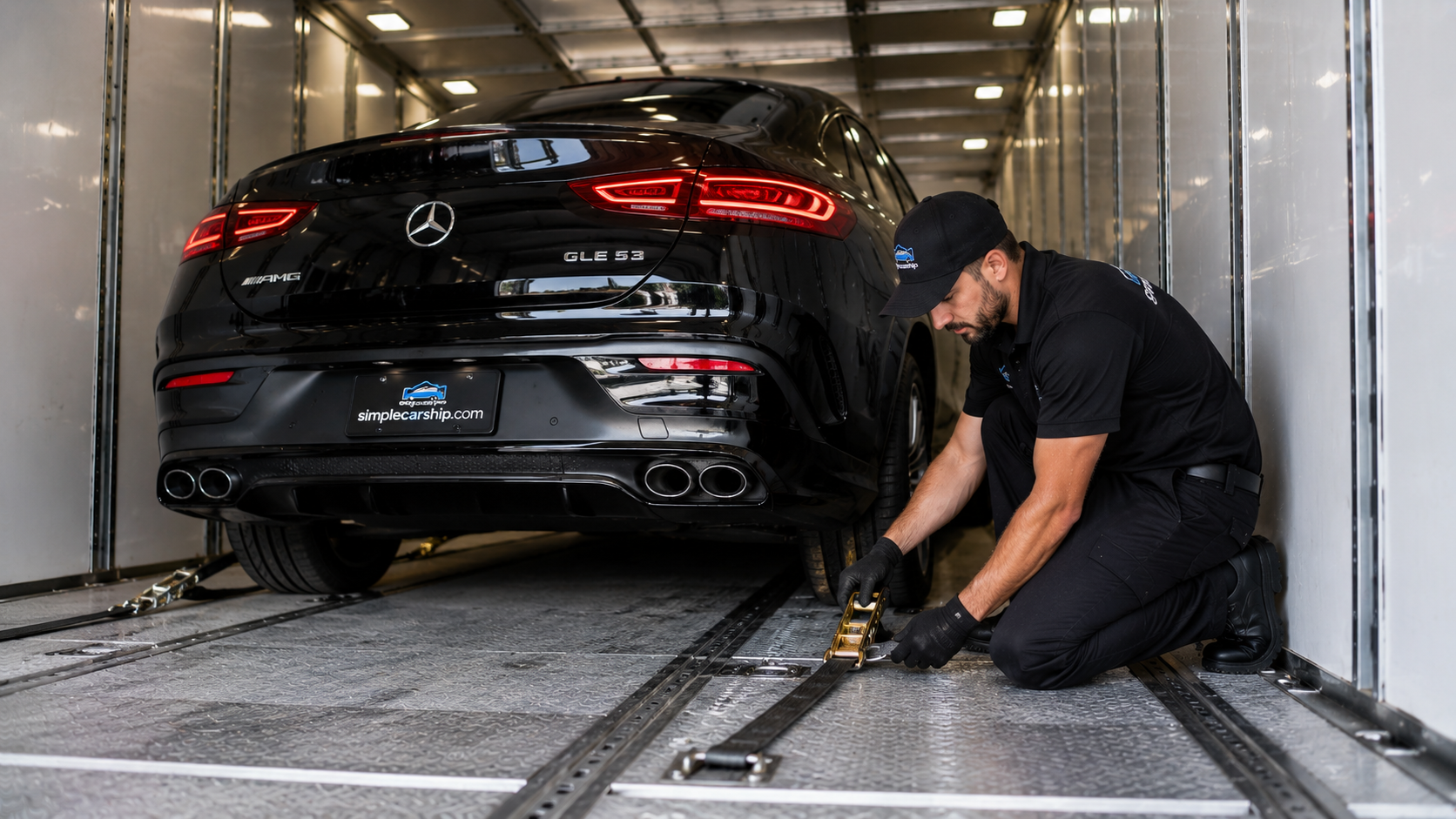
Here’s what’s actually different. When you ship with us during a move, you get a clear quote with no hidden fees, a hand-selected carrier matched to your route (not whoever bid lowest on a load board), and a real human you can reach from pickup to delivery, even when your week is chaos. We coordinate the pickup window around your travel plans, we keep you posted instead of going dark the moment you’ve paid, and we arrange door-to-door service so the car comes to you wherever you’re landing. If a full-size carrier can’t physically reach a tight street or gated community, we’ll work out a nearby accessible meeting point with you ahead of time so delivery day isn’t a surprise.
We know a relocation is a hundred moving parts and you’re juggling all of them at once. Our job is to take this one off your plate completely and do it without the runaround that gives car shipping a bad name. No hype, no fake urgency, no pressure. Just careful handling and straight communication while you focus on the rest of your move. If shipping a car has burned you before, this is the antidote. Ship your car the simple way.
Know your move dates? Get them on the calendar before the summer rush squeezes your options. Get your free quote in about a minute, or call and talk to an actual human, no spam, no pressure, just a straight figure priced on your route. If you’re a snowbird heading south for the season, see our snowbird car shipping guide; military families on PCS orders can read about military PCS vehicle shipping; and if you’re weighing covered transport for something special, compare enclosed auto transport.
Relocation Vehicle Shipping FAQ
Should I ship my car or drive it when relocating long-distance?
For most cross-country relocations, shipping wins once you add up the real costs of driving: a 2,000-mile haul is roughly four full days behind the wheel plus hotels, meals, fuel, and vehicle wear, and it ties up a driver your family probably needs at the new home. Shipping lets everyone fly together and arrive rested while the car shows up door to door. Driving can still make sense for shorter moves or if you genuinely want the road trip, but for long hauls with kids, pets, or two vehicles, shipping usually saves time, energy, and risk.
How far in advance should I book my relocation car shipment?
We recommend booking about two to three weeks ahead once your move date firms up. That lead time lets us match a quality carrier to your route at a fair rate instead of scrambling last-minute. Moving season is heaviest from late spring through summer, so popular lanes fill up and booking early matters even more then. If your timeline is tighter than that, we can still help, but the earlier you reach out, the more flexibility you have on pickup timing and the better the rate tends to be.
How long does a long-distance relocation shipment take?
Plan on roughly 500 miles of driving per day once the car is loaded, plus a one to three day pickup window. That means a 2,000-mile cross-country move typically runs about five to seven days door to door, a 1,200-mile move lands around four to six days, and a shorter regional relocation under 600 miles is often two to four days. These are realistic estimated ranges, not guarantees, since weather and road conditions always have a say. If you’ll arrive before the car does, line up a short rental to cover the gap.
How much does it cost to ship a car when relocating?
Cost is driven mostly by distance and these are typical estimated open-transport ranges: under 600 miles runs about $550 to $700, a 1,000-to-1,200-mile move about $700 to $1,000, a 1,500-to-1,800-mile haul around $900 to $1,250, and a coast-to-coast move of 2,400-plus miles commonly $1,000 to $1,500. Enclosed transport runs about 1.5 times those figures. Oversized vehicles, non-running cars, and hard-to-reach addresses can nudge the price. The only way to pin down your number is a real quote on your actual vehicles and ZIP codes.
Can I pack belongings in my car during the move?
It’s best to keep the car empty. Carriers aren’t licensed to haul household goods, loose items inside the car generally aren’t covered if anything shifts, and extra weight can be a problem on the trailer. Some carriers allow a limited amount of personal items in the trunk, so ask us about that allowance before you load anything rather than assuming. For a relocation, the safest approach is to ship the car clear and move your belongings through your moving company or a separate shipment.
Do you ship to and from any address during a relocation?
Yes. We arrange door-to-door pickup and delivery nationwide, so the car comes to your old home and is delivered to your new one whenever possible. The one caveat is access: if a full-size carrier physically can’t reach a narrow street, low-clearance area, or gated community, we’ll arrange a nearby accessible meeting point with you ahead of time so delivery day isn’t a surprise. We coordinate the pickup window around your travel plans so you’re not stuck waiting on a truck while your flight boards.