
Get your instant car shipping price
Real quote in seconds — no spam, no runaround.
Snowbird Car Shipping
The classic snowbird corridor runs roughly 1,200 to 1,500 miles down the Eastern Seaboard, and carriers run it constantly: in peak season, trucks leave the Northeast for Florida nearly every day, which is why this is one of the most actively serviced lanes in the country. That frequency is the good news. If you spend winters in the Sun Belt and summers back home, you already know the drill: every fall and every spring there’s a week when the car has to move, and you’d rather fly down rested than grind out two days on I-95. At Simple Car Ship, we think the trip should be the predictable part of your season. You get a quote that holds, a person who picks up the phone, and a car treated like it belongs to someone, because it does.

Snowbirds are some of the most experienced shippers we work with, and also some of the most burned. You’ve probably had a broker quote one price and then “discover” a higher one once your car was already promised. You’ve waited by the phone for an update that never came. We handle it the opposite way, and we do it season after season for people who plan their migration around the calendar.
Why Snowbirds Ship Instead of Drive
The classic snowbird routes are long. New York to Florida is about 1,250 miles. Boston to Florida runs closer to 1,500. Chicago and Detroit to the Gulf coast are 1,200 to 1,400 miles. Driving those distances means two days minimum behind the wheel, a hotel night, fuel, meals, and the wear you put on your own vehicle, twice a year. For many seasonal residents that’s the part of the move they dread most.
Shipping flips it. You fly down on your schedule, comfortable and unhurried, and your car meets you at the other end. No marathon drive, no white-knuckle weather through the Carolinas in November, no arriving exhausted. For couples who only need one car at the destination, shipping one and flying both of you is often the calmer, simpler way to start the season.
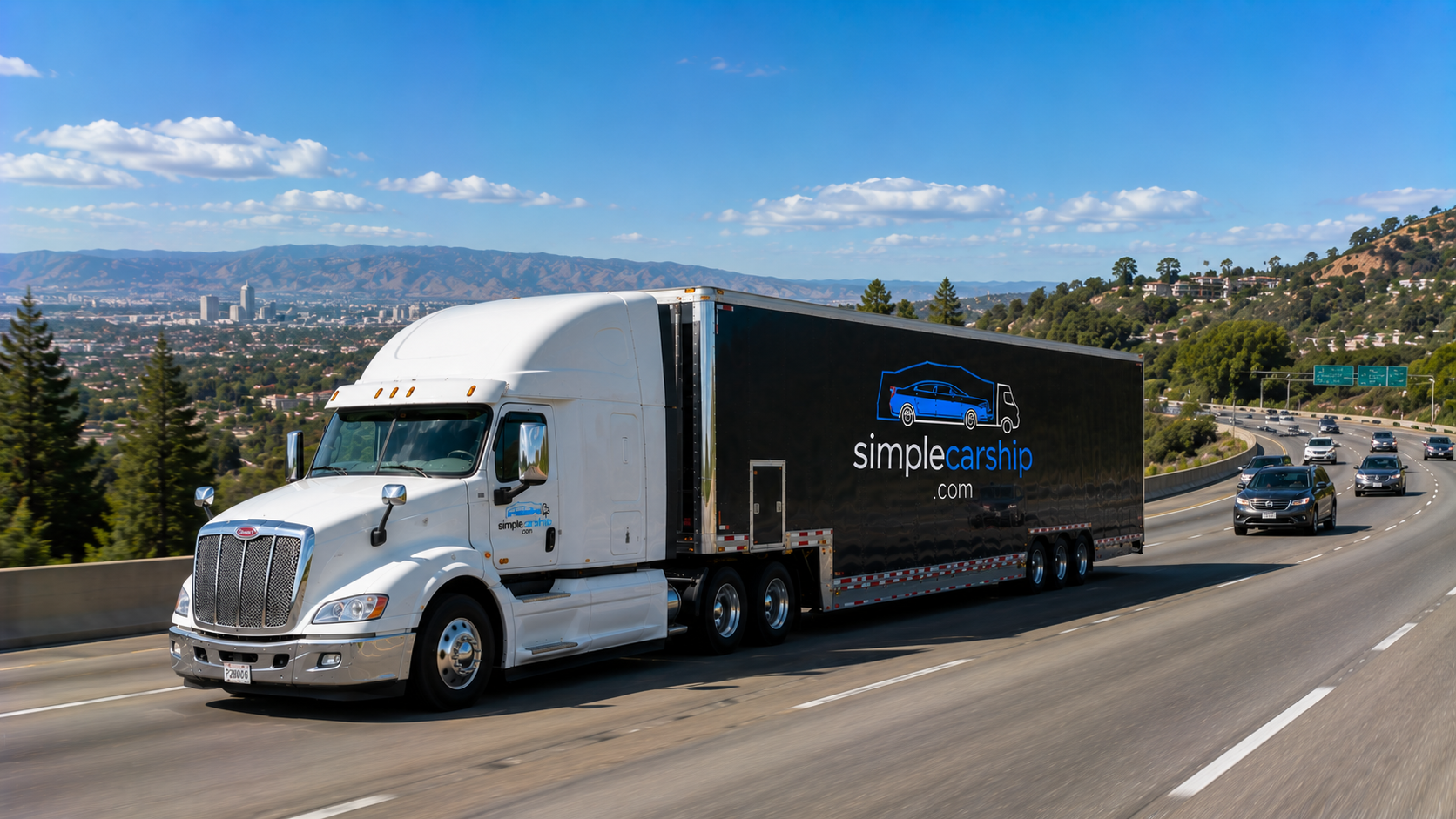
What Snowbird Car Shipping Costs
Cost depends on distance, and snowbird lanes cover a wide spread. Here’s an honest, estimated picture for open transport, which is how the large majority of seasonal vehicles move:
A shorter run like Northeast metro areas down to Florida (roughly 1,200 to 1,400 miles) typically lands around $750 to $1,050 on open transport. A longer haul such as New England to South Florida (about 1,500 miles) typically runs closer to $850 to $1,050. Cross-country snowbird moves, like the Upper Midwest to Arizona or the Northeast to the desert Southwest (1,800 to 2,400 miles), typically run about $900 to $1,300. Enclosed transport runs roughly 1.5 times the open price and makes sense mainly for collector or luxury vehicles.
These are typical, estimated ranges, never a guaranteed price. The number moves with your vehicle’s size and condition, how far your pickup and delivery sit off the main corridor, and the season. And season matters a lot on snowbird lanes, which we’ll get to. The only way to get your real number is a quote on your actual vehicle and ZIP codes, and that’s exactly what we’ll give you, no teaser rate designed to get you on the phone.
Timing Your Move Around the Migration
This is the single most important thing for a snowbird to understand, because it affects both price and availability. Snowbird lanes are seasonal by definition. Southbound demand spikes hard from roughly October through December as seasonal residents head down for the winter. Northbound demand spikes from roughly March through May as everyone heads home. During those peaks, trucks book out faster and rates firm up, because thousands of people are all trying to move their cars the same few weeks.
The fix is simple: plan ahead. If you can reserve a week or more before your ideal pickup date during peak season, you’ll get better availability and a steadier rate. If your dates are flexible, shipping a couple of weeks before or after the rush usually means a lower price and easier scheduling. We’ll always tell you a realistic window up front rather than a best-case promise we can’t keep. Figure roughly 500 miles of transit per day plus a 1 to 3 day pickup buffer, so a 1,250-mile move typically runs about 3 to 6 days door to door, and a 2,000-mile cross-country move about 5 to 8 days.

How to Prepare Your Car for the Trip
Prep is straightforward, and a little of it goes a long way toward a smooth pickup. Wash the car so existing scratches or dings are visible, then take date-stamped photos from several angles for your own records. Remove personal belongings, toll transponders, parking passes, and anything loose; carriers transport the vehicle, not its contents, and loose items can shift in transit.
Leave about a quarter tank of fuel, no more. It’s enough for loading and unloading without adding unnecessary weight. Note any existing leaks, disable aftermarket alarms, and make sure the carrier has a working key. If you’re heading south for months, double-check that registration and insurance won’t lapse mid-season. A few minutes of prep makes the inspection at pickup quick and clean for everyone.
Open vs Enclosed for Snowbird Moves
Most snowbird vehicles ship open carrier, the same trucks that deliver new cars to dealerships. It’s cost-effective, widely available on these high-traffic lanes, and perfectly safe for everyday vehicles. Enclosed transport is worth the premium when the car’s value or finish justifies it, like a classic, an exotic, or a low-mileage luxury car you’d rather shield from road and weather exposure over a long haul.
How Simple Car Ship Makes It Easy
Here’s where the experience splits from the usual broker scramble. You get a quote with no bait-and-switch, a hand-selected, insured carrier rather than whoever bid lowest on a load board, and a real person you can reach from pickup to delivery. We tell you the realistic window, we keep you posted, and we treat a daily-driver sedan and a collector car with the same care. For snowbirds who do this twice a year, that consistency is the whole point. You shouldn’t have to re-learn who you can trust every single season.
Many of our snowbird customers ship the same pair of lanes year after year, so we already know the rhythm of the route, where pickups concentrate, and how the season affects timing. If shipping a car has burned you before, this is the antidote. Plain English, calm communication, and a straight answer every time.
If you want some of our most-traveled snowbird routes spelled out, see our guides on shipping a car from New York to Florida and the spring return on Florida to Massachusetts. Not sure which option fits your car? Our seasonal shipping overview walks through the choices.
Want a real number on this season’s move before the southbound or northbound rush books up? Get your free quote in about a minute, or call and talk to an actual human. No pressure, no spam, just a straight read on the lane, the timing, and what it takes to get your car where you’re headed.
Snowbird Car Shipping FAQ
How much does it cost to ship a snowbird car?
It depends on distance. A typical Northeast-to-Florida move of about 1,250 miles runs roughly $750 to $1,050 on open transport, while a cross-country move to Arizona of 1,800 to 2,400 miles runs about $900 to $1,300. Enclosed transport is roughly 1.5 times those figures. These are estimated ranges; your exact price depends on the vehicle, your ZIP codes, and the season.
When is the best time to book snowbird car shipping?
Book early during peak migration. Southbound demand spikes October through December and northbound spikes March through May, when trucks fill fast and rates firm up. Reserving a week or more before your ideal pickup date during those windows gets you better availability and a steadier rate. Shipping a couple of weeks outside the rush usually means a lower price and easier scheduling.
How long does shipping take on a snowbird route?
Plan on roughly 500 miles of transit per day plus a 1 to 3 day pickup window. That means a 1,250-mile Northeast-to-Florida move typically takes about 3 to 6 days door to door, and a 2,000-mile cross-country move to the Southwest about 5 to 8 days. We give you a realistic window up front instead of a best-case promise we cannot keep.
Can I leave belongings in the car while it ships?
It is best not to. Carriers transport the vehicle, not its contents, and loose items can shift during a long haul. Remove personal belongings, toll transponders, and parking passes before pickup. Leave about a quarter tank of fuel, enough for loading and unloading without adding weight, and make sure the carrier has a working key.
Should I choose open or enclosed transport for my car?
Most snowbird vehicles ship open carrier, the same trucks that deliver new cars to dealerships. It is cost-effective, widely available on these busy lanes, and safe for everyday vehicles. Enclosed transport, which runs about 1.5 times the open price, is worth it mainly for classic, exotic, or high-value luxury cars you want shielded from road and weather exposure.
Do you ship the same routes every season?
Yes. Many of our snowbird customers ship the same pair of lanes year after year, southbound in the fall and northbound in the spring. Because we run these routes repeatedly, we know where pickups concentrate and how the season affects timing, so you get the same hand-selected, insured carriers and the same real human support each season without re-learning who to trust.