How Long Does It Take to Ship a Car from Michigan to Arizona?
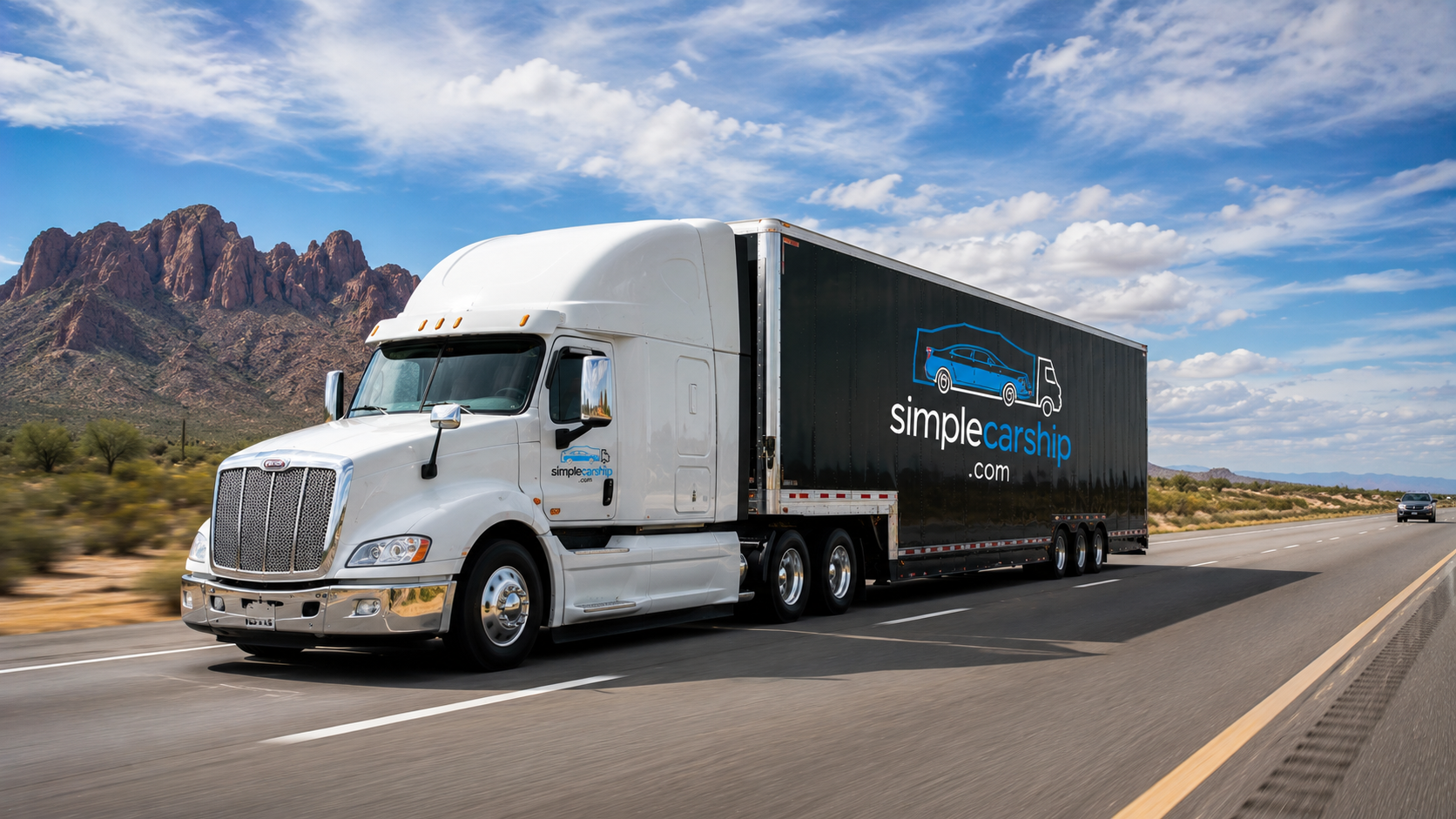
Shipping a car from Michigan to Arizona typically takes 3 to 5 days in transit once a carrier picks up your vehicle. The entire process—from booking to delivery—usually spans 5 to 8 days, depending on how quickly a carrier is dispatched to your pickup location and the specific route they run. Over 2,005 miles of highway separate Detroit from Phoenix, and understanding the timeline helps you plan pickup windows, coordinate travel, and avoid last-minute surprises.
At Simple Car Ship, we walk you through every stage so you know exactly when to expect your vehicle. No guesswork, no runaround—just clear communication from quote to delivery.

Get your instant car shipping price
Real quote in seconds — no spam, no runaround.
The Day-by-Day Timeline: What Happens When
Here’s how the process unfolds. Day 0 is when you book. Within 24 to 48 hours, we assign a hand-selected carrier and confirm your pickup window—typically a 1- to 2-day span. On pickup day (usually Day 1 or 2 after booking), the driver inspects your car, loads it onto the trailer, and begins the 2,005-mile journey. Transit itself takes 3 to 5 days depending on the carrier’s route, the number of stops, and whether they’re running a direct Michigan-to-Arizona lane or making deliveries along the way. Most carriers average 400 to 500 miles per day, factoring in DOT-mandated rest breaks and fueling stops.
Once your car arrives in Arizona—whether it’s Phoenix, Tucson, or another metro—the carrier contacts you to schedule delivery, usually within a few hours of reaching the area. From the moment your vehicle leaves Detroit or Grand Rapids to the moment it’s unloaded in the Arizona sun, expect 3 to 5 days of actual road time. The full cycle, including dispatch and final delivery coordination, lands between 5 and 8 days for most shipments. If you need faster service, expedited dispatch can shrink the booking-to-pickup window to under 24 hours, though transit days remain the same—physics and DOT hours-of-service rules don’t bend.
What Affects Transit Time on the Michigan–Arizona Route
Several factors influence whether your shipment lands closer to 3 days or 5. Carrier route density matters: direct lanes from Detroit to Phoenix are common, especially during fall and winter when snowbirds migrate, so carriers often run dedicated westbound routes with fewer intermediate stops. If you’re shipping from a smaller Michigan town or to a rural Arizona destination outside the Phoenix-Tucson corridor, the carrier may need to adjust their route, adding half a day to a full day. Weather rarely delays this route in summer, but Michigan winter storms in November through March can postpone pickup by a day if roads are impassable.
The type of trailer also plays a role. Open carriers are more plentiful and tend to move faster because they carry 7 to 10 vehicles per load, making the economics of a direct run work better. Enclosed trailers carry fewer cars—usually 2 to 6—so they may consolidate routes or wait for a full load, occasionally adding a day to dispatch. Finally, your flexibility on pickup and delivery windows helps. If you can offer a 2-day pickup window rather than insisting on a single date, carriers have more room to optimize their schedule, often resulting in faster dispatch and smoother transit.
Costs and How They Tie to Speed
Standard open transport from Michigan to Arizona runs $1,625 to $1,980, with transit taking the typical 3 to 5 days. Enclosed transport costs $2,600 to $3,165 and follows a similar timeline, though dispatch can take an extra day if enclosed carrier availability is tight. These prices reflect the 2,005-mile haul, current fuel costs, and seasonal demand. If you need your car faster, expedited service—priced around $2,649 for open transport—prioritizes your shipment for the next available carrier, often cutting the booking-to-pickup window to 24 hours or less. Transit days remain the same because the distance doesn’t change, but you skip the dispatch queue.
Price and speed are connected, but not always linearly. Paying for expedited service buys you faster dispatch, not a faster truck. If your timeline is firm—say, you’re flying to Arizona in four days and need your car waiting—expedited dispatch makes sense. If you have a week or more of flexibility, standard service delivers the same transit performance at a lower cost. Seasonal shifts also matter: November through March sees heavier westbound traffic as snowbirds head to Arizona, so booking a week ahead ensures you get a carrier slot without paying rush premiums.
Open vs. Enclosed: Which Makes Sense for This Route
For the Michigan-to-Arizona run, open transport is the default choice for most vehicles. It’s faster to dispatch, costs $975 to $1,185 less than enclosed, and handles the journey without issue—your car faces the same highway conditions it would if you drove it yourself. Open carriers are plentiful on this route, especially during snowbird season, so you’ll see quicker pickup windows and reliable 3-to-5-day transit. If you’re shipping a daily driver, a leased vehicle, or anything with typical resale value, open transport delivers the best balance of cost, speed, and protection.
Enclosed transport makes sense for high-value, classic, or low-clearance vehicles. If you’re moving a restored Mustang, a luxury sedan, or a collector car, the extra $975 to $1,185 buys full weather protection and reduced road-spray exposure across four states. Enclosed trailers also shield your car from the temperature swings between Michigan’s cold and Arizona’s desert heat, which can matter for delicate paint or interiors. Transit time is comparable—still 3 to 5 days—but dispatch may take an extra day because fewer enclosed carriers run this lane. For most shipments, open is the smart call; for anything irreplaceable or worth north of $50,000, enclosed is worth the premium and the slight scheduling trade-off.
| Feature | Open Transport | Enclosed Transport |
|---|---|---|
| Price Range | $1,625–$1,980 | $2,600–$3,165 |
| Transit Time | 3–5 days | 3–5 days |
| Protection | Weather exposure, road spray | Fully enclosed, climate-stable |
| Best For | Daily drivers, standard vehicles | Classics, luxury, high-value cars |
Pickup in Michigan, Delivery in Arizona
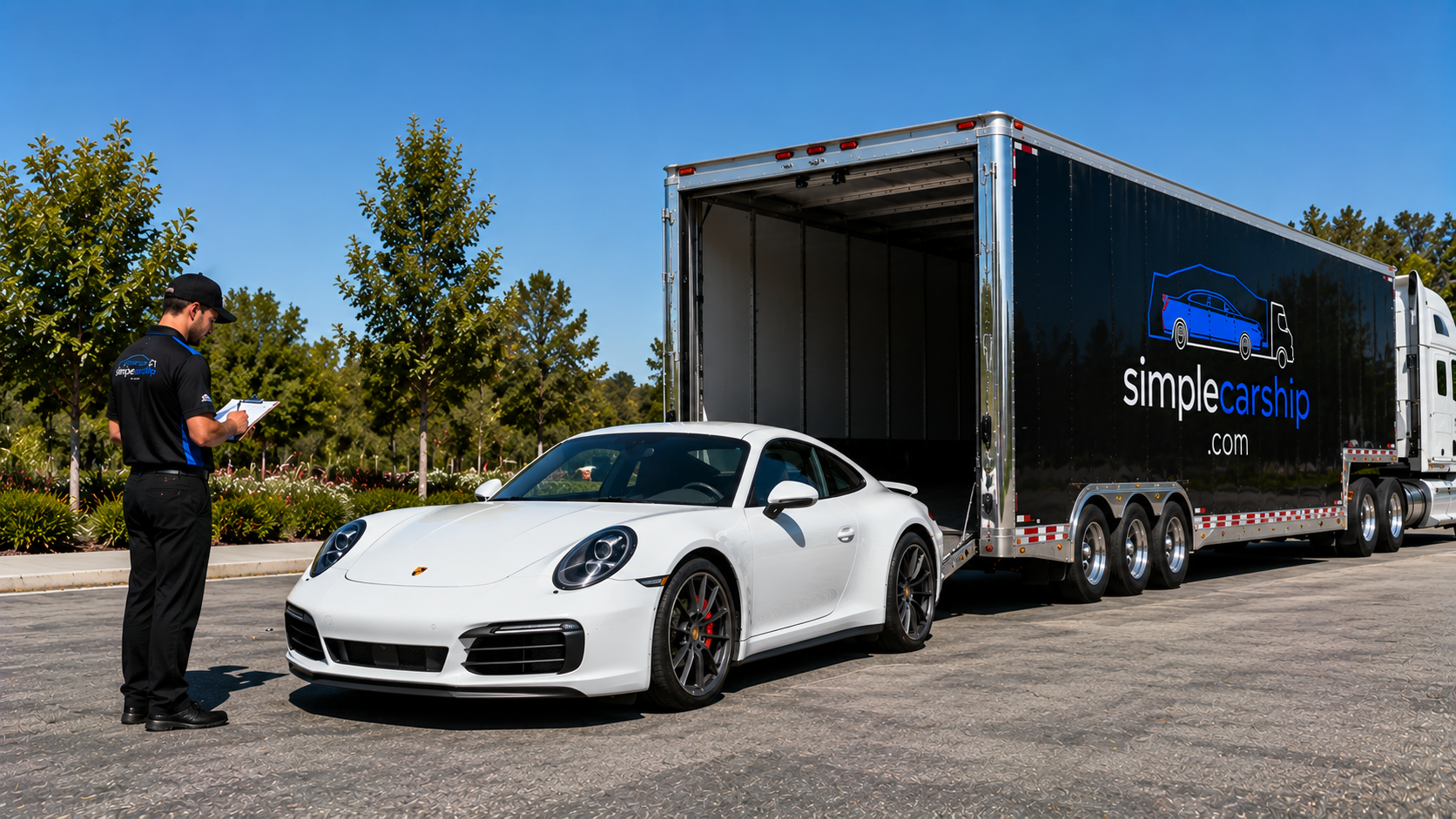
Most Michigan pickups happen in the Detroit metro or Grand Rapids, where carrier traffic is heaviest and scheduling is simplest. If you’re outside these metros, carriers can often still reach you, though rural or northern Michigan locations may add half a day to the pickup window as the driver routes in from a major highway. The driver will call or text an hour or two before arrival, conduct a full inspection with you, note any existing damage on a bill of lading, and load your car. The entire pickup takes 15 to 20 minutes.
On the Arizona end, Phoenix and Tucson see the majority of deliveries. These metros sit on Interstate 10, the main artery for cross-country freight, so carriers can deliver efficiently without detouring. If you’re outside the Phoenix-Tucson corridor—Flagstaff, Sedona, Yuma—the carrier may request a meet-point at a nearby truck stop or major intersection to avoid navigating a large trailer through narrow roads. Delivery works the same way as pickup: the driver contacts you with a narrow ETA window, you inspect the car together, sign the bill of lading, and pay any remaining balance (usually via cash or certified check). Most deliveries happen within a few hours of the carrier arriving in the destination metro, so your 3-to-5-day transit window holds tight from Michigan departure to Arizona handoff.
How Simple Car Ship Handles Your Michigan–Arizona Shipment
We don’t play load-board roulette with your vehicle. Every carrier we assign is hand-selected, fully insured, and vetted for the Michigan-to-Arizona lane. When you book, you get a dedicated coordinator who tracks your shipment from dispatch through delivery—your car isn’t a load number handed off to a call center. We confirm your pickup window within 24 to 48 hours, send you the driver’s contact info before they arrive, and stay available by phone or text if anything changes. Real human support, not a chatbot.
Transparency is built into every step. Your quote includes the full price—no hidden fees, no surprise fuel surcharges at delivery. We explain the 3-to-5-day transit window up front, show you how dispatch timing works, and give you realistic expectations for both open and enclosed options. If you’re on a tight timeline, we’ll tell you whether expedited service is necessary or whether standard dispatch will get your car there in time. No runaround, no upselling—just clear information so you can make the right call. When you’re handing over a $30,000 vehicle to drive 2,005 miles, you deserve to know exactly what’s happening and when. That’s how we do it. Get a clear quote in 60 seconds—we’ll show you real pricing, real transit days, and real options for your Michigan-to-Arizona move.
Frequently Asked Questions
- Can I get my car from Michigan to Arizona in under 3 days?
- Transit itself rarely drops below 3 days because the 2,005-mile distance requires at least three full driving days under DOT hours-of-service rules. Expedited dispatch can get a carrier to you within 24 hours, but the road time remains the same. If you need your car faster than 3 days, drive it yourself or fly and rent—freight logistics can’t beat physics on this route.
- What if I’m shipping from a small town in Michigan?
- Carriers can usually reach smaller towns, but expect your pickup window to widen by half a day to a full day. The driver will route in from Detroit or Grand Rapids, pick up your car, then rejoin the main interstate. This adds a few hours but doesn’t typically extend the total 5-to-8-day booking-to-delivery timeline by more than a day.
- Does winter weather in Michigan delay my shipment?
- Michigan snowstorms in November through March can postpone pickup by a day if roads are unsafe, but once your car is loaded, carriers run Interstate 80 or 40 west, which are plowed and passable. Arizona weather is rarely a factor. If you’re booking during Michigan winter, allow an extra day in your timeline for potential weather holds on the pickup end.
- How much does expedited service cost, and does it shorten transit?
- Expedited open transport runs around $2,649 for this route, compared to $1,625–$1,980 for standard. It shortens dispatch time to under 24 hours but does not reduce the 3-to-5-day transit window—the truck still covers 2,005 miles at the same legal speed. Use expedited if you need fast pickup, not faster transit.
- When is the best time to ship from Michigan to Arizona for the fastest service?
- May through September sees lighter demand and faster dispatch because snowbird traffic is minimal. November through March is peak season for westbound Michigan-to-Arizona shipments, so booking 7 to 10 days ahead ensures you get a carrier slot without delay. Fall and winter don’t slow transit days, but they can stretch dispatch by a day if you wait until the last minute.