Texas to Alabama: live carrier pricing
| Open transport (most vehicles) | $745 – $905 |
| Enclosed transport | $1,190 – $1,450 |
| Lane distance | 667 miles |
| Typical transit | 1–3 days |
Quoted from our carrier network on September 29, 2026 for a standard operable car, door to door.
Auto transport is a live market, so your exact price depends on vehicle size, timing and current truck availability on this lane.
How Much Does It Cost to Ship a Car from Texas to Alabama?
Shipping a car from Texas to Alabama typically costs between $710 and $860 for open transport, while enclosed transport runs $1,135 to $1,380. The 667-mile route between major metros like Houston or Dallas and Birmingham or Mobile is one of the most straightforward cross-state hauls in the South, with transit times of just 1–3 days. What you’ll actually pay depends on your vehicle type, the season, your exact pickup and delivery cities, and how quickly you need it done.
Ship your car the simple way. Clear quotes. Real communication. No guesswork, no runaround.
Get your instant car shipping price
Real quote in seconds — no spam, no runaround.
How Car Shipping from Texas to Alabama Works
The Texas-to-Alabama corridor is a high-traffic freight lane, which works in your favor. Carriers running between Houston, Dallas, Austin, or San Antonio and cities like Birmingham, Montgomery, Mobile, and Huntsville make this trip multiple times a week, so availability is usually strong. Once you book, a carrier picks up your vehicle from your specified address or a nearby terminal, secures it on a multi-car hauler, and delivers it to Alabama within 1 to 3 days. The 667-mile distance means this is often a direct run with minimal stops, and many shipments complete in under 48 hours if road conditions cooperate.
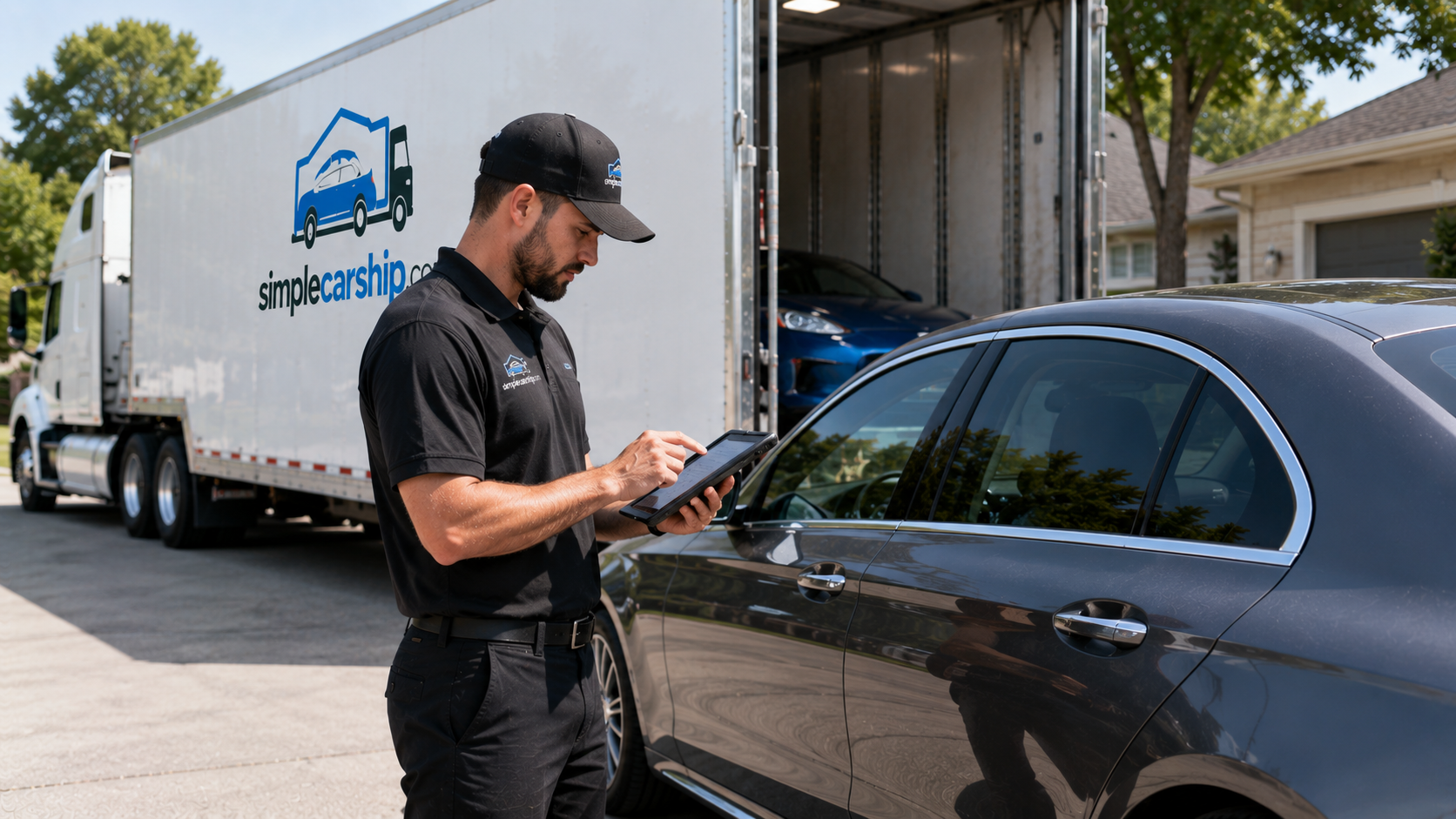
You’ll schedule pickup with the driver directly—usually a 24-hour advance window—and you’ll do a walkaround inspection at both ends, noting any existing scratches or dings on the Bill of Lading. Your vehicle should be clean, no more than a quarter tank of gas, and free of personal items (carriers’ insurance doesn’t cover belongings left inside). Real human support means you’ll have a dedicated contact at Simple Car Ship from quote to delivery, not a ticket number in a queue.
What It Costs to Ship a Car from Texas to Alabama—and Why
For a standard sedan in open transport, budget $710–$860. That’s the most common choice for everyday vehicles and represents about $1.06–$1.29 per mile. Enclosed transport—fully walled trailers that shield your car from weather and road debris—costs $1,135–$1,380, roughly 60% more. If you need expedited service, express open transport starts around $1,155, guaranteeing a carrier within 24–48 hours and prioritized routing.
Several factors push your price toward the higher end of those ranges. Larger or heavier vehicles (trucks, SUVs, luxury sedans) take up more deck space and add weight, so carriers charge a premium. Pickup or delivery in rural areas outside the major metros—say, a small town in East Texas or rural North Alabama—often incurs an extra $50–$150 because the driver has to detour off the Interstate corridor. Seasonally, late spring and early fall see the highest demand as students move and retirees relocate, which can nudge prices up by 10–15%. Winter and mid-summer are typically softer, sometimes yielding quotes at the lower end of the range.
One often-overlooked lever: flexibility. If you can offer a 3–5 day pickup window instead of insisting on next-day service, carriers can slot your vehicle into an existing route, and you’ll usually see a quote $75–$125 lower than rush pricing. It’s the difference between $710 and $835 for the same truck, same driver, same service—just a bit of patience on the calendar.
Open vs. Enclosed Transport for the Texas–Alabama Route
Open transport is the workhorse of the industry: your car rides on an uncovered multi-car hauler, exposed to the elements but fully insured and securely strapped. For the 667-mile Texas-to-Alabama run—mostly Interstate 20 or Interstate 10 to I-65, dry and well-maintained—open carriers handle the vast majority of shipments without incident. Weather rarely poses a serious threat on this route; rain and road spray are cosmetic, and any reputable carrier includes up to $250,000 in cargo insurance as a baseline. If you’re moving a daily driver, a leased sedan, or a pickup truck, open transport at $710–$860 is the smart, cost-effective choice.
Enclosed makes sense in three scenarios: you’re shipping a collector car, exotic, or high-value vehicle (think Porsche, Tesla Model S Plaid, restored muscle car); you want zero risk of rock chips or sun exposure; or your vehicle sits very low to the ground and would scrape on an open trailer’s steep ramps. Enclosed trailers are fully walled, often climate-controlled, and typically carry only 2–4 cars instead of 8–10, so scheduling can take an extra day. On this relatively short route the transit-time difference is minimal—still 1–3 days—but the peace of mind and added protection justify the $1,135–$1,380 price for the right vehicle.
| Feature | Open Transport | Enclosed Transport |
|---|---|---|
| Price (TX–AL) | $710–$860 | $1,135–$1,380 |
| Transit Time | 1–3 days | 1–3 days |
| Protection | Insured; weather-exposed | Fully enclosed; max protection |
| Best For | Daily drivers, trucks, standard sedans | Classics, exotics, luxury, low-clearance cars |
Pickup in Texas, Delivery in Alabama: Metro Logistics
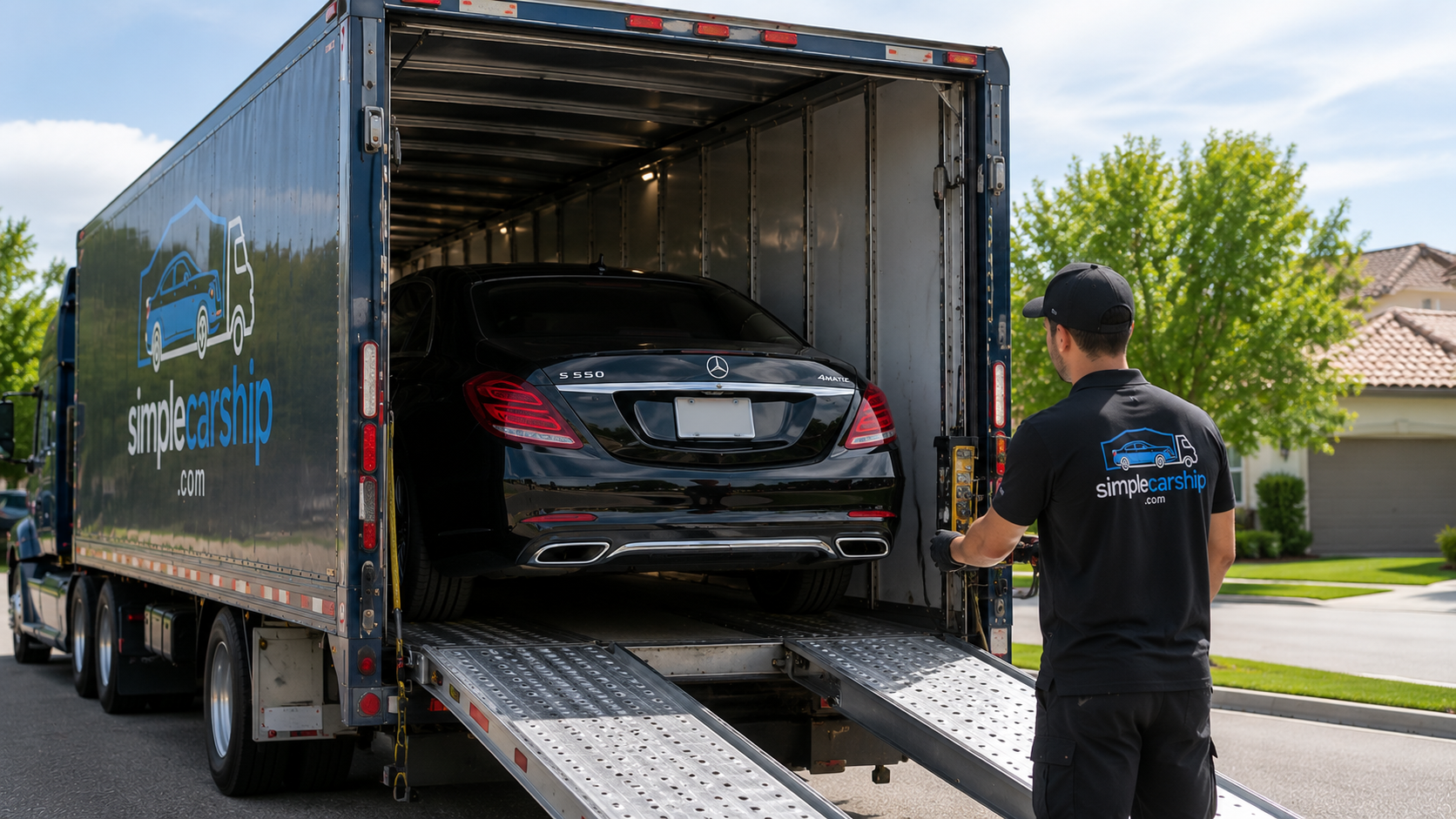
Most Texas pickups happen in or near Houston, Dallas, Austin, or San Antonio—the state’s four largest metros and major carrier hubs. If you’re within the metro service area (typically a 30–50 mile radius), door-to-door pickup is standard and included in your quote. Suburban addresses in places like Plano, Sugar Land, Round Rock, or New Braunfels are no problem. If you’re in a more remote area—West Texas ranch country, the Panhandle, or deep East Texas pine forests—the carrier may ask you to meet at a nearby truck stop or shopping-center parking lot along the Interstate, saving you the rural-delivery surcharge and keeping the schedule on track.
On the Alabama side, Birmingham, Montgomery, Mobile, and Huntsville anchor delivery logistics. Birmingham sits right on I-20/I-59, making it the natural endpoint for carriers coming from Dallas or Shreveport. Montgomery and Mobile are I-65 corridor cities, ideal for routes originating in Houston or San Antonio. Huntsville, in the north, connects easily via I-65 from Nashville, so carriers often combine Texas-to-Alabama runs with Tennessee drop-offs. As in Texas, door-to-door delivery within metro limits is the norm; rural deliveries in areas like the Gulf Coast backroads or the Appalachian foothills may require a meet-point to avoid delays.
Your shipment isn’t a load number. You’ll coordinate the final pickup window directly with the driver—usually a call or text 12–24 hours out—and the same at delivery. Both you and the driver inspect the vehicle together, compare the condition to the Bill of Lading signed at origin, and you receive the keys. Simple, transparent, human.
Timing, Flexibility, and When to Book
The 1-to-3-day transit window for the 667-mile Texas–Alabama route is one of the shortest in the industry. Many shipments deliver in under 48 hours, especially if pickup happens in Houston or Dallas and delivery is Birmingham or Montgomery—straight shots on I-20 or I-10/I-65 with minimal layovers. Enclosed transport may add a half-day on the front end due to lower trailer availability, but once rolling the drive time is identical.
Booking lead time matters more than people expect. If you reserve 7–10 days in advance and offer a flexible 3-to-5-day pickup window, dispatchers can bundle your car with others heading the same direction, and you’ll typically land at the lower end of the price range. Need it picked up tomorrow? Express service at around $1,155 guarantees a truck within 24–48 hours, but you’re paying for the carrier to prioritize your vehicle—sometimes even deadheading (driving empty) part of the way to get to you. For most relocations, job transfers, or college moves, a week’s notice and a flexible window save you $100–$200 with zero compromise on quality or safety.
This route has no major seasonal bottlenecks. Unlike snowbird corridors (think Michigan to Florida, which spike in October and April), Texas-to-Alabama runs year-round at fairly stable prices. Late spring and early fall do see modest upticks as students and military families move, but availability remains strong because the I-20 and I-10/I-65 lanes serve multiple high-volume markets. If your schedule allows, mid-January through March and late June through August are historically the softest months, sometimes yielding quotes $50–$75 below peak.
Frequently Asked Questions: Texas to Alabama Car Shipping
How much does it cost to ship a car from Texas to Alabama?
Open transport typically runs $710–$860 for a standard sedan on the 667-mile route, averaging about $1.06–$1.29 per mile. Enclosed transport costs $1,135–$1,380, roughly 60% more, and is recommended for classic, exotic, or high-value vehicles. Express open service starts around $1,155 if you need guaranteed pickup within 24–48 hours.
How long does it take to ship a car from Texas to Alabama?
Transit time is 1 to 3 days for the 667-mile distance between major metros like Houston or Dallas and Birmingham or Mobile. Most shipments complete in under 48 hours on direct Interstate routes. Enclosed transport may add a half-day for scheduling but drive time remains the same once the carrier is en route.
Is my car insured during transport from Texas to Alabama?
Yes. Every licensed carrier must hold at least $750,000 in federal cargo liability insurance, covering your vehicle from pickup to delivery. Most reputable carriers on this route carry $250,000–$1,000,000 per load. You’ll receive a copy of the carrier’s insurance certificate before pickup, and both open and enclosed transport are fully covered under these policies.
Should I choose open or enclosed transport for this route?
For daily drivers, trucks, or leased vehicles, open transport at $710–$860 is the cost-effective choice; the 667-mile Texas–Alabama corridor is dry, well-maintained Interstate highway with minimal weather risk. Choose enclosed transport at $1,135–$1,380 if you’re shipping a classic, exotic, luxury car, or low-clearance vehicle that needs maximum protection from road debris and elements.
Can I ship from a rural town in Texas or Alabama?
Yes, though rural pickups or deliveries outside major metros may incur a $50–$150 surcharge because the carrier must detour off the main Interstate corridor. Alternatively, you can meet the driver at a nearby truck stop or shopping center along I-20, I-10, or I-65 to avoid the extra fee and keep your quote at the lower end of the range.