Oklahoma to Illinois: live carrier pricing
| Open transport (most vehicles) | $1,155 – $1,405 |
| Enclosed transport | $1,845 – $2,245 |
| Lane distance | 795 miles |
| Typical transit | 1–3 days |
Quoted from our carrier network on September 29, 2026 for a standard operable car, door to door.
Auto transport is a live market, so your exact price depends on vehicle size, timing and current truck availability on this lane.
How Much Does It Cost to Ship a Car from Oklahoma to Illinois?
Shipping a car from Oklahoma to Illinois typically costs between $915 and $1,115 for open transport, or $1,465 to $1,785 for enclosed carriers. The 795-mile route between states like Oklahoma City and Chicago is straightforward, with transit times ranging from one to three days depending on carrier schedules and your exact pickup and delivery locations. What you’ll actually pay depends on your vehicle type, the service level you choose, seasonal demand, and how flexible you can be with timing.
Ship your car the simple way. Clear quotes. Real communication. No guesswork, no runaround.

Get your instant car shipping price
Real quote in seconds — no spam, no runaround.
What Moves the Price on the Oklahoma–Illinois Route
The cost ranges above reflect real market rates for the 795-mile corridor, but your quote will land somewhere specific within that band based on a handful of factors. Vehicle size and weight matter most: a compact sedan ships at the lower end, while a full-size truck or SUV pushes toward the higher figure because it occupies more carrier space and adds weight. Transport type is the second-largest variable—open transport runs $915–$1,115 because carriers can stack multiple vehicles on a single trailer, while enclosed service costs $1,465–$1,785 for the added protection of walls and a roof. If you need your car faster than the standard one-to-three-day window, expedited open transport jumps to around $1,496, prioritizing your vehicle for the next available carrier.
Pickup and delivery locations also shift the number. Metros like Oklahoma City, Tulsa, and Norman on the origin side, and Chicago or Naperville on the destination side, sit along high-traffic carrier routes, so pricing stays competitive. If you’re outside those zones—say, a rural town an hour off the interstate—expect a modest premium or the option to meet the driver at a nearby hub. Seasonal demand is less pronounced on this route than snowbird corridors, but late spring and early fall see slightly higher volumes as college students and relocating families book shipments. Flexibility with your pickup window can save you fifty to a hundred dollars; locked-in dates cost more because the carrier has less routing flexibility.
Open vs. Enclosed: Which Makes Sense for Oklahoma to Illinois
Most customers shipping between Oklahoma and Illinois choose open transport. It’s the same method dealerships use to move inventory—your car rides on an open-air trailer, exposed to weather but fully insured and transported by professional drivers who haul vehicles every day. For the 795-mile trip, open carriers are plentiful, transit is fast, and the $915–$1,115 price range fits the budget for daily drivers, commuter cars, and standard family vehicles. The route crosses I-44 and I-55 through relatively mild terrain, so road grime and dust are the only real exposures; mechanical damage from transport is extraordinarily rare with any reputable carrier.
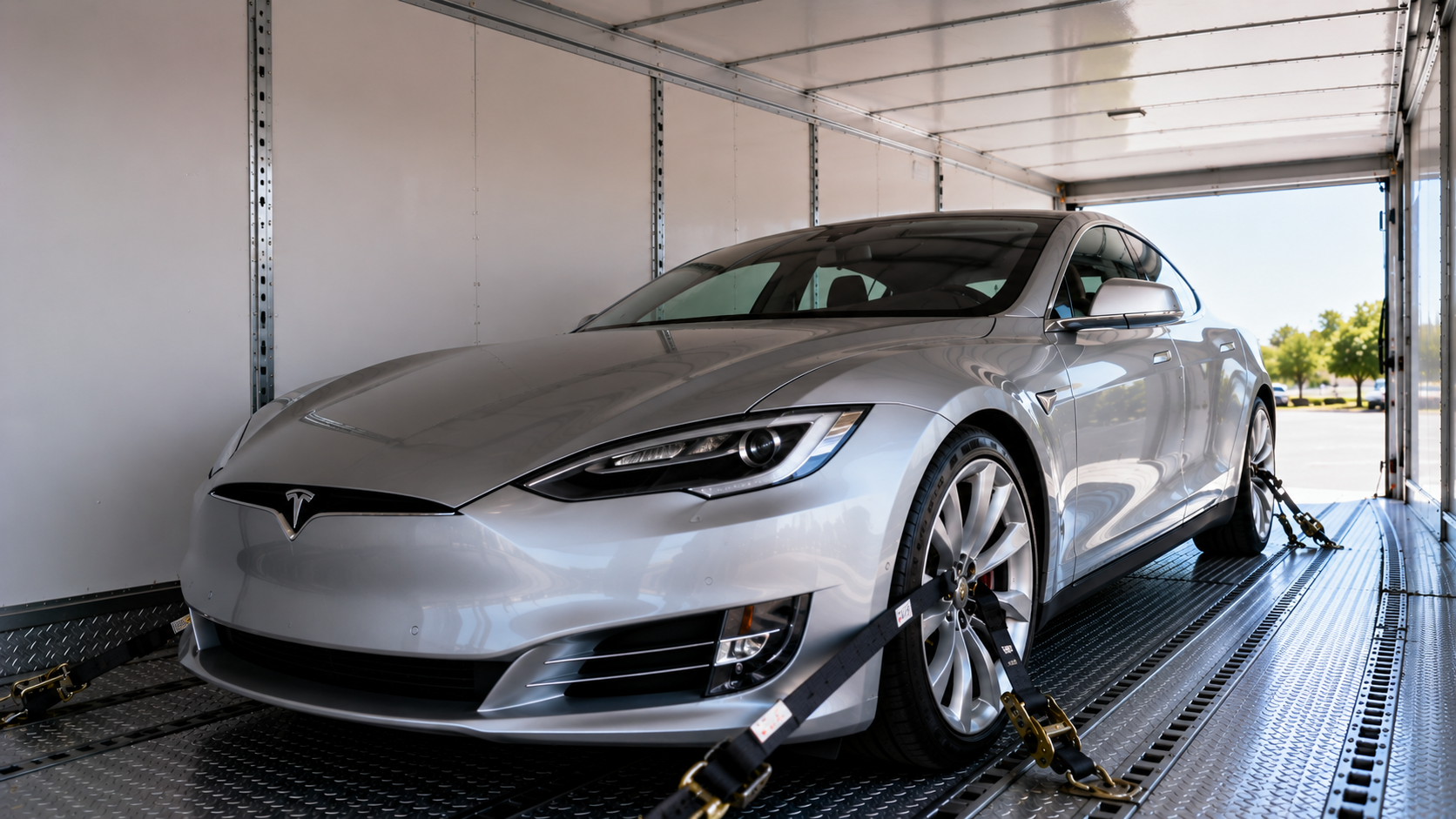
Enclosed transport makes sense in three scenarios. First, if you’re moving a classic car, luxury vehicle, or low-clearance sports car, the $1,465–$1,785 premium buys you walls, a roof, and often a two-level enclosed trailer with hydraulic lifts to avoid scraping. Second, if your car has custom paint, a recent restoration, or high resale value, enclosed service eliminates rock chips and road spray. Third, if you simply want maximum peace of mind and the budget allows, enclosed carriers typically handle fewer vehicles per load and offer white-glove service. For a ten-year-old sedan making a routine move, open transport is the rational choice. For a pristine Corvette or a Tesla with a showroom finish, enclosed is worth every dollar.
| Feature | Open Transport | Enclosed Transport |
|---|---|---|
| Price (OK→IL) | $915–$1,115 | $1,465–$1,785 |
| Transit Time | 1–3 days | 1–3 days |
| Protection | Insured, weather-exposed | Fully enclosed, premium coverage |
| Best For | Daily drivers, standard vehicles | Classics, luxury, high-value cars |
How Pickup and Delivery Work Between Oklahoma and Illinois
On the Oklahoma side, most carriers service Oklahoma City, Tulsa, and Norman as primary pickup zones. These metros sit on or near I-35 and I-44, the main commercial arteries feeding northbound routes toward Kansas City, St. Louis, and Chicago. If you’re within the metro limits, door-to-door pickup is standard: the driver calls 24 hours ahead, arrives with a multi-car trailer, performs a joint inspection with you, notes any pre-existing damage on the bill of lading, loads your vehicle, and hands you a copy. If your address has tight streets, low-hanging trees, or no space for a 75-foot rig, you’ll arrange to meet the driver at a nearby parking lot—a mall, grocery store, or truck stop within a few miles.
On the Illinois end, Chicago and Naperville anchor delivery. Chicago is one of the busiest freight hubs in the country, so carrier availability is high and scheduling is straightforward. Naperville and the western suburbs are equally accessible along I-88 and I-55. Delivery works the same way: the driver calls ahead, you meet the truck, perform a walk-around inspection together, check the condition against the origin report, sign off, and take your keys. Transit time from Oklahoma to Illinois runs one to three days—often two for most routes—because the 795 miles fit comfortably within a single driver’s duty cycle or a quick handoff between regional carriers. Your shipment isn’t a load number; you’ll have a direct contact and real-time updates from dispatch as the truck moves.
Timing Your Oklahoma-to-Illinois Auto Transport
The 795-mile distance translates to one to three days in transit once your car is loaded. Single-driver carriers can complete the run in under two days if it’s a direct shot; multi-vehicle loads with intermediate stops in Wichita or Springfield stretch it to three. Booking to pickup typically adds two to five days in standard service—time for the carrier to finalize their route and position the truck. If you choose expedited open transport at $1,496, pickup can happen within 24 to 48 hours, and transit tightens toward the one-day end of the range.
Seasonally, the Oklahoma–Illinois corridor doesn’t see the dramatic swings of snowbird or college routes, but late spring (April–May) and early fall (September–October) bring modest upticks in volume as families relocate and students move between school years. Booking a week or two ahead during those windows ensures you lock competitive pricing and your preferred pickup date. Winter months (December–February) are the quietest, and carriers sometimes offer slight discounts to fill capacity. Weather delays are rare—both states occasionally see ice or snow, but I-44 and I-55 are priority-clearance interstates, and professional drivers know how to adjust. If a storm does hit, your carrier will communicate delays immediately; most disruptions add only a day.
Why Simple Car Ship for Oklahoma to Illinois
We handle the Oklahoma-to-Illinois route the same way we handle every route: hand-selected carriers, transparent pricing, and real human support from quote to delivery. When you request a quote, you’ll see the actual $915–$1,115 open range or $1,465–$1,785 enclosed range—no bait-and-switch, no “prices starting at” games. We pull from a vetted network of licensed, insured carriers who run the I-44 and I-55 corridors regularly, so your car moves on a truck that’s already optimized for the route. You’re not handed off to a call center after booking; the same person who answers your questions will track your shipment and text you updates when the driver is a day out, then an hour out.
We’ve seen too many customers burned by brokers who lowball a quote, then call back three days later claiming “the market changed” and demand an extra $300. We don’t play that game. The price we quote from these real ranges is the price you pay, and if a carrier can’t be secured at that figure, we tell you up front and offer alternatives. For routes like Oklahoma City to Chicago or Tulsa to Naperville, carrier availability is strong, so assignments happen quickly. For more remote origins or destinations, we’ll coordinate a meet-point if that saves you money or speeds up the process. Your shipment isn’t a load number. It’s your car, and we treat it that way. Get your transparent quote here—no runaround, no pressure, just the real cost and a clear plan to move your vehicle.
Frequently Asked Questions: Shipping a Car from Oklahoma to Illinois
What’s the average cost to ship a car from Oklahoma to Illinois?
Open transport typically runs $915 to $1,115 for the 795-mile route, while enclosed service costs $1,465 to $1,785. Your final price depends on vehicle size, exact pickup and delivery cities, and how much scheduling flexibility you offer. Compact sedans land at the lower end; trucks and SUVs push higher.
How long does it take to ship a car from Oklahoma to Illinois?
Transit time is one to three days once your car is loaded, with most shipments completing in two days. Booking to pickup adds another two to five days under standard service, or as little as 24 hours if you choose expedited transport at $1,496 for guaranteed faster assignment.
Is open transport safe for the Oklahoma–Illinois route?
Yes. Open carriers are fully insured and handle thousands of vehicles daily using the same trailers dealerships rely on. The 795-mile route crosses well-maintained interstates, so your car’s exposure is limited to weather and road dust. Mechanical damage or theft during transport is exceptionally rare with licensed carriers.
Can I ship from Tulsa to Chicago suburbs like Naperville?
Absolutely. Tulsa and Oklahoma City are common pickup metros, and Naperville sits along I-88 west of Chicago, a high-traffic delivery zone. Door-to-door service is standard for both ends. If your specific address can’t accommodate a full-size trailer, the driver will arrange a nearby meet-point within a few miles.
Does the price change depending on the season?
Modest fluctuations occur in late spring and early fall when moving volume peaks, but the Oklahoma–Illinois route doesn’t see the dramatic swings of snowbird corridors. Booking a week ahead during busy months locks in competitive rates. Winter is often the quietest season, and pricing sometimes dips slightly to fill carrier capacity.