Oklahoma to Florida: live carrier pricing
| Open transport (most vehicles) | $1,290 – $1,570 |
| Enclosed transport | $2,060 – $2,510 |
| Lane distance | 1,510 miles |
| Typical transit | 3–5 days |
Quoted from our carrier network on September 29, 2026 for a standard operable car, door to door.
Auto transport is a live market, so your exact price depends on vehicle size, timing and current truck availability on this lane.
How Much Does It Cost to Ship a Car from Oklahoma to Florida?
Shipping a car from Oklahoma to Florida typically costs between $985 and $1,200 for open transport, or $1,580 to $1,925 for enclosed. The 1,510-mile journey takes 3–5 days, and your final price depends on pickup location, vehicle size, transport type, and seasonal demand. Here’s what moves the number—and how to plan for it.
Get your instant car shipping price
Real quote in seconds — no spam, no runaround.
What You’ll Pay to Ship a Car from Oklahoma to Florida
Open transport—where your car rides on a multi-level carrier alongside other vehicles—runs $985 to $1,200 for the Oklahoma-to-Florida corridor. It’s the most common method and perfectly safe for daily drivers, commuter cars, and most sedans or SUVs. Enclosed transport, which wraps your vehicle inside a covered trailer, costs $1,580 to $1,925 and makes sense for luxury cars, classics, or anything you’d rather not expose to road spray and weather for 1,510 miles. If timing is critical, expedited open service is available at around $1,610, prioritizing your car for the next available carrier.
Several factors push your quote toward the higher or lower end of these ranges. Larger vehicles—trucks, SUVs, or extended-cab pickups—cost more because they occupy more deck space and add weight. Pickup or delivery outside major metro areas (Oklahoma City, Tulsa, Norman, Miami, Orlando, Tampa, Jacksonville) can add $75 to $150 if the carrier has to detour off primary routes. Booking during peak summer months or around college move-in dates tightens carrier availability, nudging prices up by 10–15%. Inoperable vehicles that require a winch add a flat $150 to $250. The cleanest way to lock in the lower end of the range: book two to three weeks ahead, choose flexible pickup dates, and meet the carrier in or near a major metro.

Open vs. Enclosed Transport for the Oklahoma–Florida Route
Open transport is the workhorse of the Oklahoma-to-Florida lane. Your car is fully secured on a two-level carrier, exposed to weather but protected by the same logistics networks that move thousands of vehicles daily across I-40, I-10, and I-75. It’s safe, efficient, and priced for volume. Enclosed transport—whether soft-sided or hard-sided—adds four walls and a roof, shielding your car from rain, dust, and road debris. It’s slower to book because enclosed carriers run fewer trucks and carry fewer vehicles per load, but for a Porsche, a restored Camaro, or a Tesla you’re moving to a Florida garage, the extra $600 to $725 buys real peace of mind.
Most customers shipping sedans, crossovers, or work trucks choose open. Most customers shipping six-figure cars or collector vehicles choose enclosed. If your car sits somewhere in between—say, a three-year-old Audi or a lightly modified pickup—ask yourself whether you’d be comfortable with light road dust and the possibility of a bug strike on the grille. If the answer is yes, save the money. If not, go enclosed. There’s no wrong choice; it’s about match-fitting the service to what you’re moving and how you’ll feel when it arrives.
| Feature | Open Transport | Enclosed Transport |
|---|---|---|
| Price (OK–FL) | $985–$1,200 | $1,580–$1,925 |
| Transit Time | 3–5 days | 3–5 days |
| Protection | Secured, weather-exposed | Fully enclosed, climate-shielded |
| Best For | Daily drivers, SUVs, trucks | Luxury, classic, high-value cars |
How the 1,510-Mile Oklahoma-to-Florida Route Works
Carriers running Oklahoma to Florida typically follow I-40 east out of Oklahoma City or Tulsa, drop south through Arkansas, cross into Tennessee, then angle down through Alabama or Georgia before entering Florida via I-10 or I-75. The 1,510-mile haul takes 3 to 5 days, depending on how many other vehicles are on the load, how many drop-offs the driver makes along the way, and whether your delivery city is Miami (straight shot down the Turnpike) or a smaller Gulf Coast town that requires a detour. Most carriers book four to six cars per load, so your pickup window might flex by a day to let the driver fill the truck economically.
When you book, you’ll receive a pickup window—usually a two- or three-day span—and the dispatcher will call 24 hours before arrival to confirm timing. The driver inspects your car with you, notes any existing damage on a condition report (take photos), loads it, and secures it with wheel straps. You get a copy of the report; the driver gets a copy. At delivery, you’ll repeat the inspection in Florida, compare the condition to the original report, and sign off. If your car is inoperable, let the booking agent know up front so the carrier brings a winch. If it’s modified or lowered, mention ground clearance—some enclosed trailers sit lower and need a heads-up.
Pickup in Oklahoma, Delivery in Florida
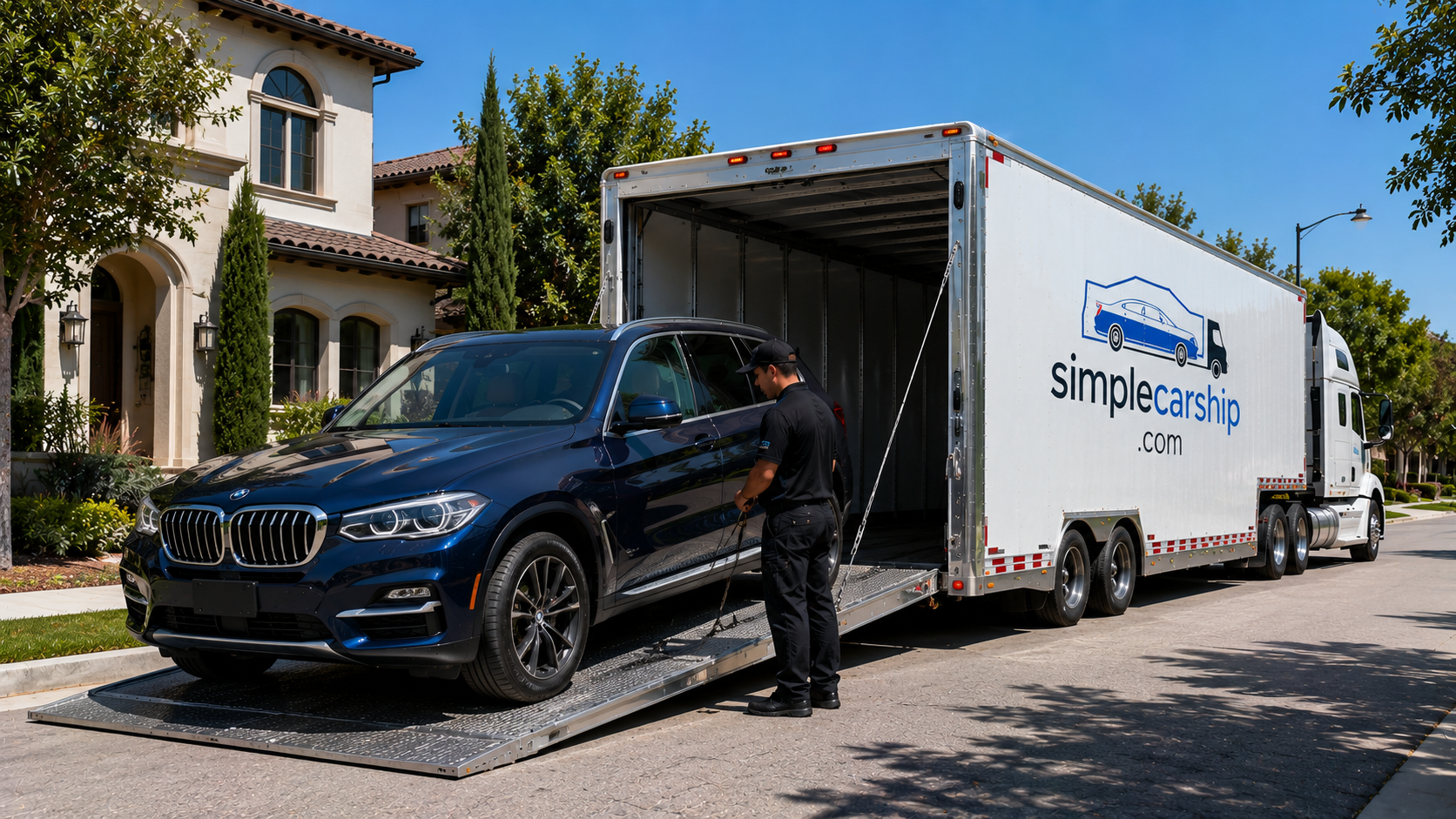
Most Oklahoma pickups happen in or near Oklahoma City, Tulsa, or Norman—cities that sit on or near I-40 and I-35, where carriers naturally route. If you’re outside those metros—say, Lawton or Enid—the carrier may ask you to meet at a nearby truck stop or shopping-center lot to avoid residential backroads that a 75-foot rig can’t navigate. On the Florida end, Miami, Orlando, Tampa, and Jacksonville see daily carrier traffic, so scheduling is straightforward. Smaller cities like Fort Myers, Pensacola, or Gainesville are reachable but may add a half-day to transit or a small surcharge if the driver has to split off the main corridor.
Door-to-door service means the carrier comes as close to your address as local roads and truck size allow. In suburban or rural areas, that’s often a nearby intersection or commercial parking lot. Terminal-to-terminal service—where you drop off and pick up at a carrier’s yard—can save $50 to $100 but is less common for long routes like this. Most customers prefer the convenience of door-to-door, even if “door” means the entrance to your neighborhood rather than your exact driveway. Communicate your address clearly when you book, and the dispatcher will work out the safest, legal spot for the truck to park.
How Simple Car Ship Handles Your Oklahoma–Florida Shipment
We don’t operate a fleet; we operate a vetting process. Every carrier we assign to your Oklahoma–Florida route is licensed, insured for at least $1,000,000 cargo liability, and selected based on track record for this lane. You’ll get a clear quote up front—$985 to $1,200 open or $1,580 to $1,925 enclosed—with no surprise fees at delivery. Once you book, a dedicated route coordinator walks you through pickup timing, answers questions about your specific vehicle, and stays available by phone or text until your car is unloaded in Florida.
Your shipment isn’t a load number in a queue. We know you’re handing a $30,000 asset to someone you’ve never met, and we know that feels risky. So we make communication the default, not the exception. If the carrier is running an hour late, you’ll know. If weather slows transit by half a day, you’ll know. If you need to reach your driver directly, we’ll bridge that call. Ship your car the simple way: real humans, real answers, no runaround. Get your free quote here and we’ll show you exactly what this move costs for your vehicle and your dates.
Frequently Asked Questions: Shipping a Car from Oklahoma to Florida
- How much does it cost to ship a car from Oklahoma City to Miami?
- Open transport from Oklahoma City to Miami typically costs $985 to $1,200, while enclosed runs $1,580 to $1,925. The 1,510-mile route takes 3–5 days. Final price depends on your vehicle size, exact pickup and delivery addresses, and how far in advance you book. Larger SUVs or trucks cost more than sedans.
- How long does it take to ship a car from Tulsa to Orlando?
- Transit time from Tulsa to Orlando is 3 to 5 days for both open and enclosed transport. Carriers follow I-40 east, then drop south through Alabama or Georgia into Florida. Multi-car loads may add a day if the driver has other deliveries along the route before reaching Central Florida.
- Can I put personal items in my car during shipping from Oklahoma to Florida?
- Carriers generally allow up to 100 pounds of personal items in the trunk or cargo area, below window level, but these items are not covered by the carrier’s cargo insurance. Avoid valuables, and keep the load secure so nothing shifts during the 1,510-mile drive. Check with your coordinator before loading.
- What’s the difference in price between open and enclosed transport on this route?
- Open transport costs $985–$1,200, and enclosed costs $1,580–$1,925—a difference of roughly $600 to $725. Enclosed protects your car from weather and road debris inside a covered trailer and is worth the premium for luxury, classic, or high-value vehicles. Open is safe and cost-effective for daily drivers.
- Do I need to be present for pickup and delivery?
- Yes. You or a designated representative must be present to hand over keys, sign the condition report, and complete the walk-around inspection at both pickup in Oklahoma and delivery in Florida. The driver will document your car’s condition with you, so both parties agree before transport begins and again when it ends.