New York to Louisiana: live carrier pricing
| Open transport (most vehicles) | $1,480 – $1,800 |
| Enclosed transport | $2,365 – $2,880 |
| Lane distance | 1,308 miles |
| Typical transit | 2–4 days |
Quoted from our carrier network on September 29, 2026 for a standard operable car, door to door.
Auto transport is a live market, so your exact price depends on vehicle size, timing and current truck availability on this lane.
How Much Does It Cost to Ship a Car from New York to Louisiana?
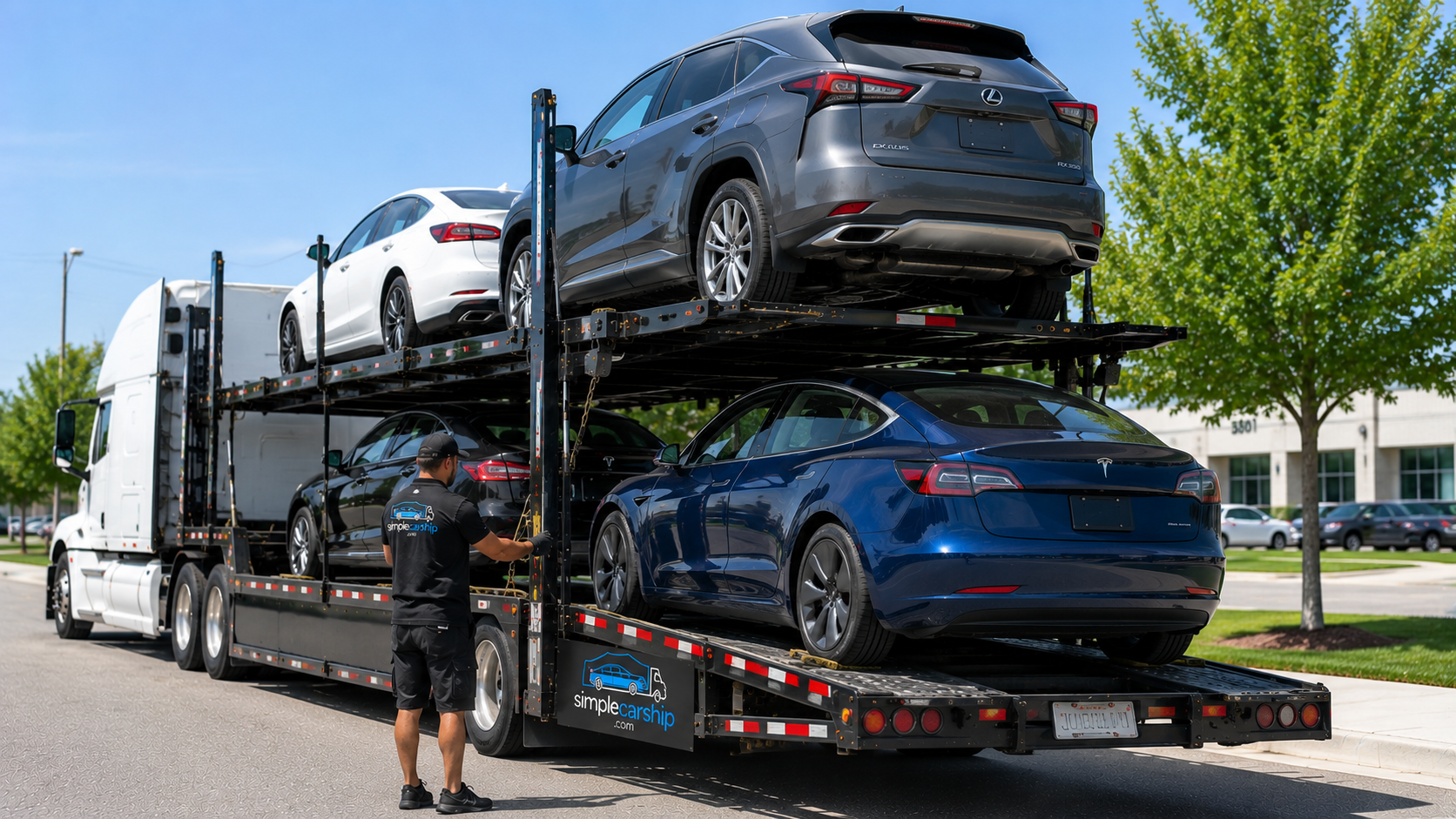
Shipping a car from New York to Louisiana typically costs between $1,570 and $1,915 for open transport, or $2,515 to $3,060 for enclosed carriers. The final price depends on your exact pickup and delivery cities, the size and condition of your vehicle, current carrier availability, and how flexible you are with timing. Over the 1,308-mile route from the Northeast down to the Gulf Coast, most vehicles arrive in 2–4 days once loaded.

Get your instant car shipping price
Real quote in seconds — no spam, no runaround.
You’re not just paying for distance—you’re paying for the logistics of moving a high-value asset across eight states, coordinating pickup windows in dense metro areas like New York City or Long Island, and delivering to cities like New Orleans or Baton Rouge where carrier networks thin out. Understanding what drives the price helps you plan smarter and avoid surprise costs.
What Moves the Price on the New York–Louisiana Route
Distance is the baseline: at 1,308 miles, carriers price this route in the mid-range tier for cross-country transport. But the real variables are vehicle type, transport method, and timing. A standard sedan in open transport during normal season falls in the $1,570–$1,915 range. A lifted truck, luxury SUV, or non-running vehicle adds $150–$400 because of weight, size, or the winch work required. Enclosed transport—metal walls and a roof protecting your car from road spray and weather—costs $2,515–$3,060, nearly double the open rate, because enclosed trailers carry fewer vehicles and command premium scheduling.
Pickup and delivery metro pairs also matter. New York City and Long Island are high-volume origins with steady carrier traffic, which keeps prices competitive. Buffalo pickups can add $100–$200 because fewer carriers run that northern corridor. On the Louisiana end, New Orleans and Baton Rouge sit on I-10, a major east-west artery, so delivery is straightforward. Shreveport, farther north and off the interstate spine, may incur a $75–$150 surcharge for the detour. If you need guaranteed pickup within 24–48 hours, expedited service runs around $2,562 for open transport—worth it if you’re relocating on a tight deadline, but not necessary for most shipments.
Open vs. Enclosed Transport: Which Makes Sense for New York to Louisiana
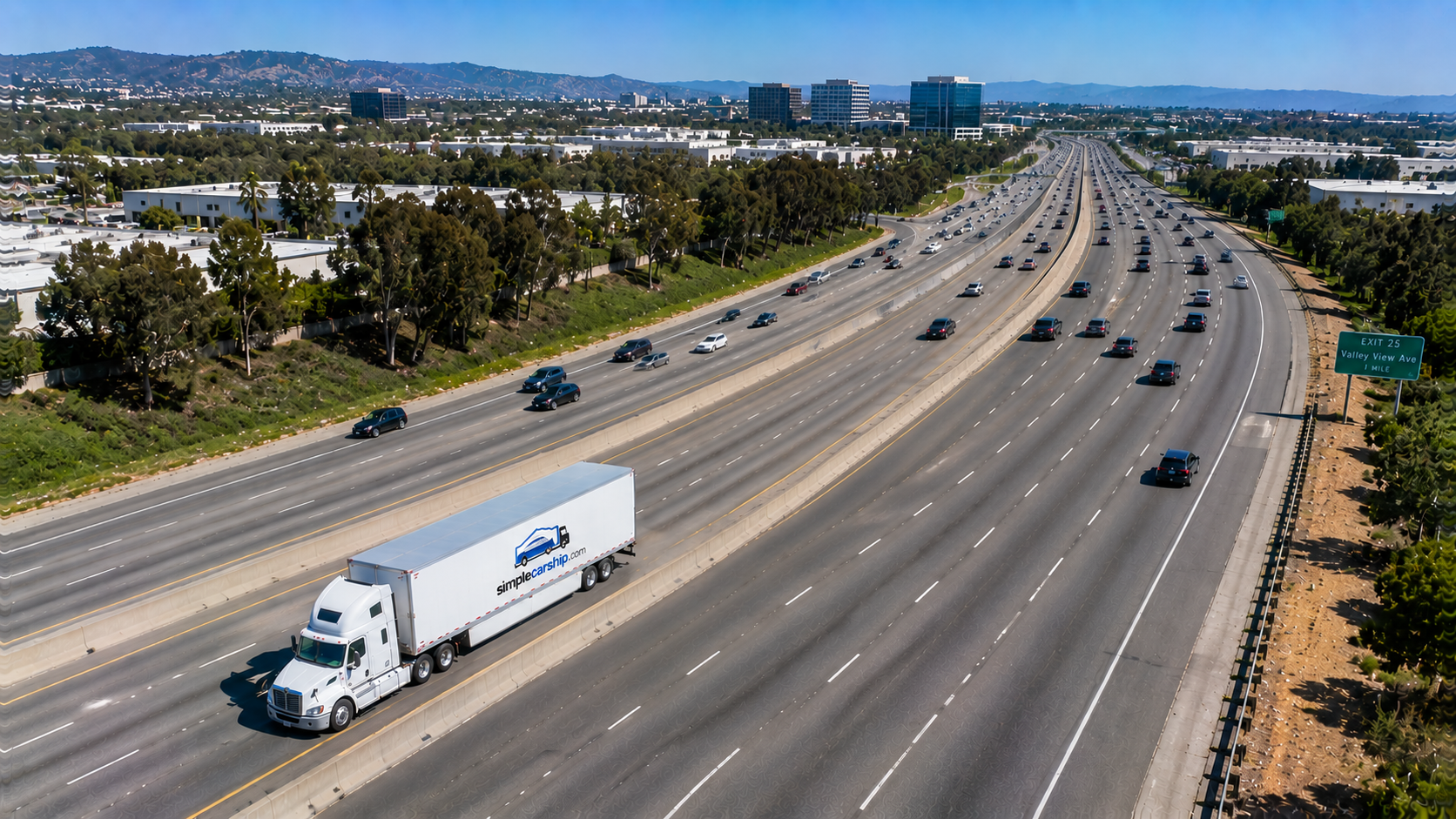
Open transport is how 85% of vehicles move across the country. Your car rides on a two-level trailer, exposed to weather but fully insured, and costs $1,570–$1,915 on this route. It’s the smart choice for daily drivers, recent-model sedans, and trucks in normal working condition. The 1,308-mile run from New York to Louisiana crosses predictable interstate highways—I-81 South, I-77 through Virginia, then I-20 across the Deep South—so road conditions are stable year-round, and open trailers have no trouble with the route.
Enclosed transport makes sense for high-value, classic, or freshly detailed vehicles. If you’re moving a restored Mustang, a European luxury car, or anything you wouldn’t want exposed to road salt, bug splatter, or the occasional rainstorm through Tennessee, the $2,515–$3,060 enclosed rate buys peace of mind. Enclosed carriers also offer tighter delivery windows because they run fewer vehicles per load and prioritize schedule reliability. For a standard commuter car, enclosed is overkill—but for anything irreplaceable or worth more than $50,000, it’s the professional move.
| Feature | Open Transport | Enclosed Transport |
|---|---|---|
| Cost (NY–LA) | $1,570–$1,915 | $2,515–$3,060 |
| Transit Time | 2–4 days | 2–4 days |
| Protection | Insured; weather-exposed | Fully enclosed; shielded |
| Best For | Daily drivers, standard vehicles | Classics, luxury, high-value cars |
Pickup in New York, Delivery in Louisiana: How the Handoffs Work
Carriers running the New York–Louisiana corridor pick up most frequently from New York City, Long Island, and Buffalo. In NYC and Long Island, door-to-door pickup works if your street allows a 75-foot tractor-trailer to maneuver; if not, you’ll meet the driver at a nearby parking lot or shopping center—common practice in dense neighborhoods, and the dispatcher coordinates the details a day in advance. Buffalo pickups often route south via I-90 and I-81, joining the main southbound lanes through Pennsylvania and into the Mid-Atlantic.
On the Louisiana end, New Orleans and Baton Rouge are the easiest delivery points—both sit on I-10 and I-12, major truck routes with ample carrier coverage. Shreveport deliveries require a northbound detour off I-20, so expect slightly longer lead times and possibly a small surcharge. Most carriers offer a delivery window (morning or afternoon) and call an hour out. You inspect the vehicle, sign the bill of lading, and pay the driver the remaining balance if you didn’t prepay in full. The whole process—pickup to delivery—runs 2–4 days once your car is loaded, though booking and carrier assignment can add 1–5 days depending on season and route demand.
How Simple Car Ship Handles the New York–Louisiana Route
We don’t play load-board roulette with your vehicle. Every carrier we assign to the New York–Louisiana run is hand-vetted—current FMCSA authority, active cargo insurance, and a track record on long-haul interstate routes. You get a dedicated route coordinator who knows the I-81 and I-20 corridors, understands the pickup quirks of New York metro areas, and has relationships with drivers who actually answer their phones. Your shipment isn’t a load number; it’s a car you care about, and we treat it that way.
When you request a quote, we pull real-time carrier availability for your metro pair and give you a transparent price breakdown—no hidden fees, no bait-and-switch “market adjustments” at pickup. You’ll know the pickup window, the driver’s contact info, and the delivery ETA before you commit. If something changes—weather delay, driver swap, earlier-than-expected arrival—you hear it from us first, not from silence. That’s the difference between a broker who lists your car on a board and a transport partner who owns the outcome. Get your upfront quote here—clear numbers, real communication, no runaround.
Frequently Asked Questions: Shipping a Car from New York to Louisiana
- How much does it cost to ship a car from New York to Louisiana?
- Open transport typically costs $1,570–$1,915, while enclosed carriers run $2,515–$3,060. The exact price depends on your specific pickup and delivery cities, vehicle size, current carrier availability, and how quickly you need it moved. Expedited open service costs around $2,562 for guaranteed faster pickup.
- How long does it take to ship a car from New York to Louisiana?
- Transit time is 2–4 days once your vehicle is loaded onto the carrier. The 1,308-mile route runs primarily on I-81 South and I-20 West, both high-traffic interstate corridors. Booking and carrier assignment can add 1–5 days depending on season, your flexibility, and metro-pair demand on the route.
- Is open or enclosed transport better for the New York to Louisiana route?
- Open transport works well for daily drivers and standard vehicles; the route is interstate-highway stable year-round, and open trailers cost $1,570–$1,915. Enclosed transport ($2,515–$3,060) is worth it for classics, luxury cars, or anything you want shielded from weather and road debris across eight states.
- Do carriers pick up anywhere in New York and deliver anywhere in Louisiana?
- Most carriers serve New York City, Long Island, and Buffalo on the pickup side, and New Orleans, Baton Rouge, and Shreveport for delivery. Door-to-door works if your street accommodates a large trailer; otherwise, you meet the driver nearby. Remote or rural addresses may incur $75–$150 surcharges for detours off major routes.
- Can I put personal items in the car during transport?
- Carriers allow up to 100 pounds in the trunk, below the window line, because federal regulations and insurance treat vehicles as cargo, not moving vans. Items must be secured and out of sight. Anything above that limit risks rejection at pickup or isn’t covered if damaged or lost during the 1,308-mile haul.