
New York to Arkansas: live carrier pricing
| Open transport (most vehicles) | $1,580 – $1,920 |
| Enclosed transport | $2,525 – $3,075 |
| Lane distance | 1,239 miles |
| Typical transit | 2–4 days |
Quoted from our carrier network on September 29, 2026 for a standard operable car, door to door.
Auto transport is a live market, so your exact price depends on vehicle size, timing and current truck availability on this lane.
How Much Does It Cost to Ship a Car from New York to Arkansas?
Shipping a car from New York to Arkansas typically costs between $1,155 and $1,405 for open transport, or $1,845 to $2,245 for enclosed transport across the 1,239-mile route. The final price depends on your vehicle type, trailer preference, pickup and delivery locations, and current carrier availability. Understanding these variables helps you budget accurately and choose the right service for your needs.
Get your instant car shipping price
Real quote in seconds — no spam, no runaround.
What Determines the Cost of Shipping a Car from New York to Arkansas
The 1,239-mile distance between New York and Arkansas forms the baseline, but several factors push your quote higher or lower within the typical range. Vehicle size matters significantly—a compact sedan ships for less than a full-size SUV or truck because carriers calculate space and weight. Seasonal demand fluctuates carrier availability; late spring and summer see higher volumes as people relocate, which can tighten capacity and nudge prices upward. Your specific pickup and delivery addresses also play a role: carriers prefer accessible metro areas with multiple stops, so a rural pickup in upstate New York or delivery to a remote Arkansas town may add $75–150 to cover the extra miles.
Trailer type creates the largest cost split. Open transport—where your car rides on an exposed multi-level carrier—runs $1,155 to $1,405 and suits the majority of everyday vehicles. Enclosed transport, which shields your car inside a covered trailer, costs $1,845 to $2,245 and appeals to owners of high-value, classic, or luxury vehicles. Finally, timing flexibility affects price: if you need guaranteed pickup within 1–2 days, expedited open service runs approximately $1,881, roughly 50% above standard rates. Flexible scheduling lets carriers optimize routes and pass savings to you.
Open vs. Enclosed Transport: Choosing the Right Option for Your New York to Arkansas Shipment
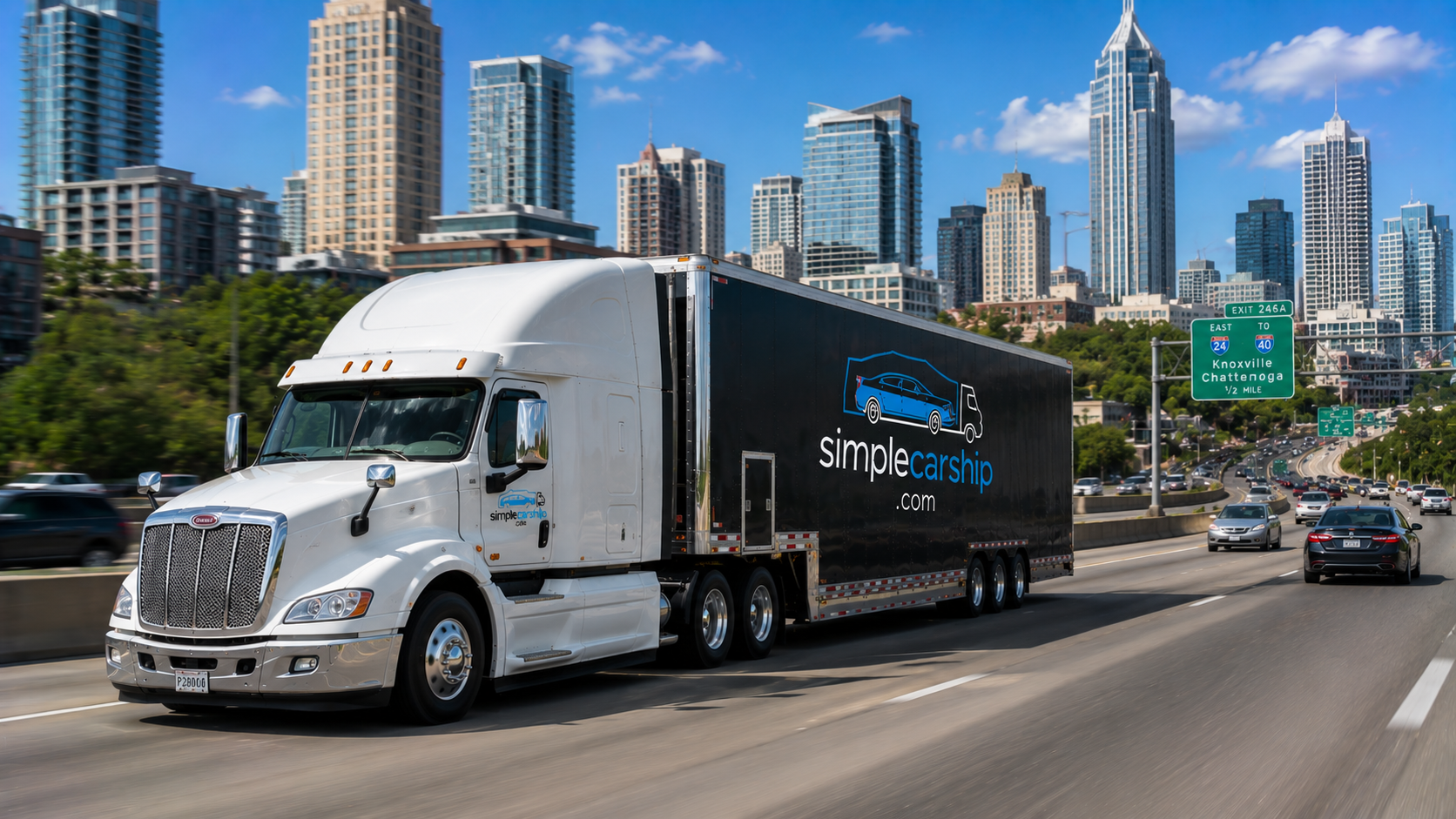
Open transport dominates the New York–Arkansas corridor because it’s cost-effective, widely available, and perfectly safe for most vehicles. Your car shares a trailer with up to nine others, exposed to weather and road dust but protected by the same professional handling that moves thousands of vehicles daily. If you’re shipping a daily driver, a recently purchased used car, or any standard sedan or SUV, open transport delivers excellent value. Transit time remains the same as enclosed—typically 2 to 4 days—and the $690 to $840 you save can cover your first tank of gas in Arkansas.
Enclosed transport makes sense when your vehicle’s value or condition justifies the premium. Classic cars, exotic sports cars, luxury sedans with custom paint, or any vehicle worth over $75,000 benefit from full weather protection and reduced handling exposure. Enclosed trailers carry fewer vehicles—usually two to six—which means less loading and unloading and a quieter, more controlled environment. For a pristine 1967 Mustang or a new Porsche, the extra $690 to $840 buys peace of mind across 1,239 miles. If your car is irreplaceable or you’re shipping it to a show or sale, enclosed is the clear choice.
Pickup and Delivery Logistics Across New York and Arkansas
Carriers serving this route focus on major metros to maximize efficiency. In New York, the busiest pickup zones are New York City, Long Island, and Buffalo—all connected by I-90, I-87, and I-278, making them natural consolidation points. Most carriers offer door-to-door service within these areas, meaning a driver brings a smaller truck to your residence, loads your car, and transports it to the main trailer at a nearby staging lot. If you live in a neighborhood with narrow streets, low-hanging trees, or tight turns, you may meet the driver at a nearby parking lot or shopping center; your transport coordinator will walk you through this during booking.
In Arkansas, deliveries concentrate around Little Rock, Fayetteville, and Fort Smith. Little Rock sits at the intersection of I-30 and I-40, making it the state’s primary hub for inbound freight. Fayetteville and Fort Smith, in the northwest corner near the Oklahoma border, serve the growing population corridor and benefit from steady carrier traffic. If your delivery address lies outside these metros—say, in Jonesboro or Hot Springs—expect the driver to coordinate a meet point along a major highway or at a recognizable landmark. This adds minimal hassle and avoids the delays and potential damage risks of navigating a 70-foot trailer down rural roads.
Transit Time and What to Expect During Your Shipment
The New York to Arkansas route takes 2 to 4 days in transit once your car is loaded onto the carrier. This window accounts for the 1,239 miles of highway travel, mandatory rest breaks for drivers (federally regulated), and potential weather or traffic delays. Most shipments trend toward the shorter end—2 to 3 days—when carriers run direct or near-direct routes along I-78, I-81, and I-40. A 4-day transit usually means your car joined a trailer making additional pickups or deliveries in Pennsylvania, Tennessee, or Missouri, which is common practice and built into standard pricing.
Pickup scheduling depends on current carrier availability. Standard service typically secures a carrier within 1 to 5 days of your requested date; urban pickups in NYC or Long Island often happen faster due to high route density. Once your car is loaded, you’ll receive the driver’s contact information and can check in for updates. Carriers don’t provide real-time GPS tracking like a pizza delivery, but a quick text or call gives you an arrival estimate. If you need a tighter window—perhaps you’re flying out and must hand off keys by a specific date—expedited service at $1,881 prioritizes your vehicle and assigns a carrier within 24 to 48 hours.
How Simple Car Ship Handles Your New York to Arkansas Transport
Ship your car the simple way. We start with a clear quote based on the real numbers: $1,155 to $1,405 open, $1,845 to $2,245 enclosed, across 1,239 miles with 2- to 4-day transit. No guesswork, no runaround. You’ll speak with a real human coordinator who knows the New York–Arkansas corridor, understands the difference between shipping from Manhattan versus Buffalo, and can explain why a Little Rock delivery costs less than a rural Ozark drop-off. Your shipment isn’t a load number—we hand-select carriers with strong performance records on this route, verify insurance coverage, and stay in contact from pickup through delivery.
We’ve seen too many brokers vanish after taking a deposit, leaving customers with no updates and no accountability. That’s not how we operate. You’ll receive your driver’s name and phone number before pickup, and if anything changes—weather delays, a missed connection, a scheduling adjustment—we reach out proactively. Real communication means you’re never left guessing where your $30,000 vehicle is or when it will arrive. Whether you’re relocating for work, sending a car to family, or moving a classic car to a new garage, we treat the shipment with the seriousness it deserves. Ready to move forward? Get your quote below and let’s get your car on the road to Arkansas.
| Feature | Open Transport | Enclosed Transport |
|---|---|---|
| Price Range | $1,155 – $1,405 | $1,845 – $2,245 |
| Transit Time | 2–4 days | 2–4 days |
| Protection Level | Standard; weather-exposed | Fully enclosed; shielded from elements |
| Best For | Daily drivers, standard vehicles, budget-conscious shippers | Luxury, classic, exotic, or high-value vehicles |
Frequently Asked Questions: Shipping a Car from New York to Arkansas
- How much does it cost to ship a car from New York to Arkansas?
- Open transport typically costs between $1,155 and $1,405 for the 1,239-mile route, while enclosed transport runs $1,845 to $2,245. Your final price depends on vehicle size, pickup and delivery locations, current carrier availability, and whether you choose standard or expedited service. Flexible scheduling and metro-area pickup help keep costs at the lower end.
- How long does it take to ship a car from New York to Arkansas?
- Transit takes 2 to 4 days once your vehicle is loaded onto the carrier. Most shipments complete in 2 to 3 days when traveling direct routes along I-78, I-81, and I-40. Standard pickup scheduling typically secures a carrier within 1 to 5 days, though urban New York pickups often happen faster due to high route density and carrier frequency.
- Is open or enclosed transport better for this route?
- Open transport suits most everyday vehicles—sedans, SUVs, trucks—and saves $690 to $840 while delivering the same 2- to 4-day transit. Enclosed transport is worth the premium for luxury cars, classics, exotics, or any vehicle over $75,000 in value, providing full weather protection and reduced handling exposure across the 1,239-mile journey. Choose based on your vehicle’s condition and value.
- Can I ship to rural areas in Arkansas, or only major cities?
- Carriers serve the entire state, but they optimize routes around Little Rock, Fayetteville, and Fort Smith due to highway access and volume. Rural deliveries are common; you’ll typically meet the driver at a nearby town or highway intersection to avoid navigating a large trailer down narrow roads. Your coordinator arranges the meet point during booking, adding minimal inconvenience.
- What if I need my car delivered by a specific date?
- Expedited service guarantees carrier assignment within 24 to 48 hours and prioritizes your vehicle for faster pickup and delivery, costing approximately $1,881 for open transport. Standard service offers pickup within 1 to 5 days and 2- to 4-day transit, which works well for most moves. Communicate your deadline upfront so your coordinator can recommend the best option.