
Michigan to North Carolina: live carrier pricing
| Open transport (most vehicles) | $855 – $1,045 |
| Enclosed transport | $1,370 – $1,670 |
| Lane distance | 640 miles |
| Typical transit | 1–3 days |
Quoted from our carrier network on September 29, 2026 for a standard operable car, door to door.
Auto transport is a live market, so your exact price depends on vehicle size, timing and current truck availability on this lane.
How Much Does It Cost to Ship a Car from Michigan to North Carolina?
Shipping a car from Michigan to North Carolina typically costs between $780 and $950 for open transport, or $1,250 to $1,520 for enclosed carriers. The 640-mile route from cities like Detroit or Grand Rapids to Charlotte or Raleigh usually takes 1–3 days in transit, and your final price depends on the trailer type you choose, your exact pickup and delivery locations, the season, and your vehicle’s size and condition.
Get your instant car shipping price
Real quote in seconds. Enter your details and we’ll show your price instantly.
No spam — we only use this to send your quote and confirm your booking.
What Moves the Price for Michigan–North Carolina Auto Transport
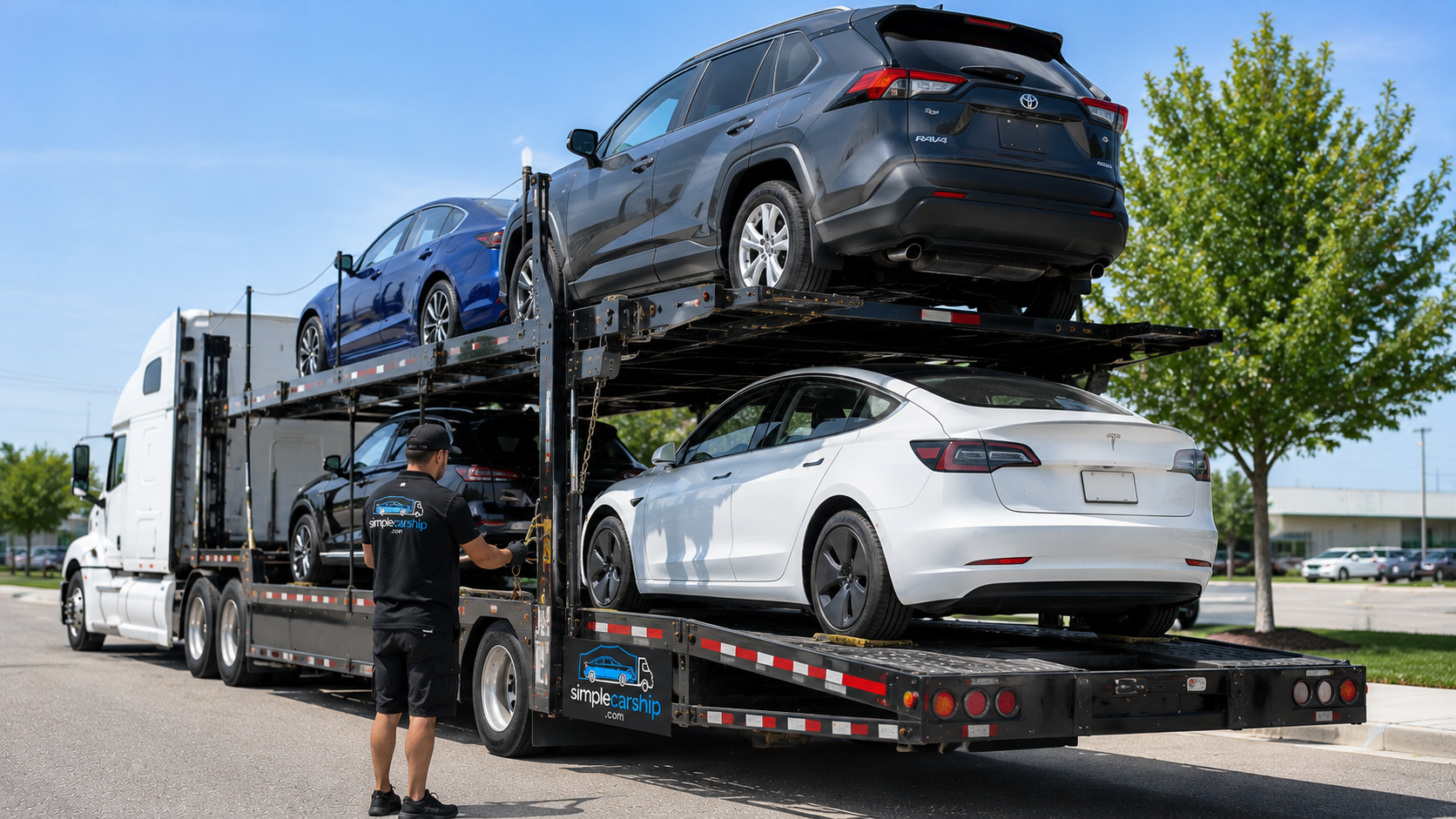
The base cost reflects a moderately traveled 640-mile corridor with good carrier availability year-round. Open transport—the standard method where your car rides on an uncovered multi-vehicle trailer—lands in the $780–$950 range for sedans and smaller SUVs. Enclosed transport, where your vehicle travels inside a fully protected trailer, runs $1,250–$1,520. Larger vehicles (heavy-duty trucks, three-row SUVs) add $100–$200 because they consume more deck space and weight capacity.
Location granularity matters more than many drivers expect. Pickups in metro Detroit or Grand Rapids and deliveries to Charlotte or Raleigh stay at the lower end of the range because carriers run those lanes regularly. Ask for door-to-door service to a rural address forty miles outside Asheville or a small town in Michigan’s Upper Peninsula, and you’ll pay a premium—often $150–$250 extra—because the driver must detour off the main route. Season plays a smaller role on this route than on snowbird corridors, but late spring and early fall see modestly higher demand as college students and relocating families move between the Midwest and the Southeast. If you need guaranteed pickup within 24–48 hours, expedited open transport runs around $1,272, roughly 35–40 percent above standard pricing.
Open vs. Enclosed Transport: Which Makes Sense for This Route
Most Michigan-to-North-Carolina shipments move on open trailers. The route is short enough—one to three days—that weather exposure is minimal, and open carriers are plentiful along I-75 and I-77. If you’re shipping a daily-driver sedan, a family SUV, or a pickup truck in normal working condition, open transport delivers the best value. Your vehicle arrives with the same road dust it would collect on a long highway drive, nothing more.
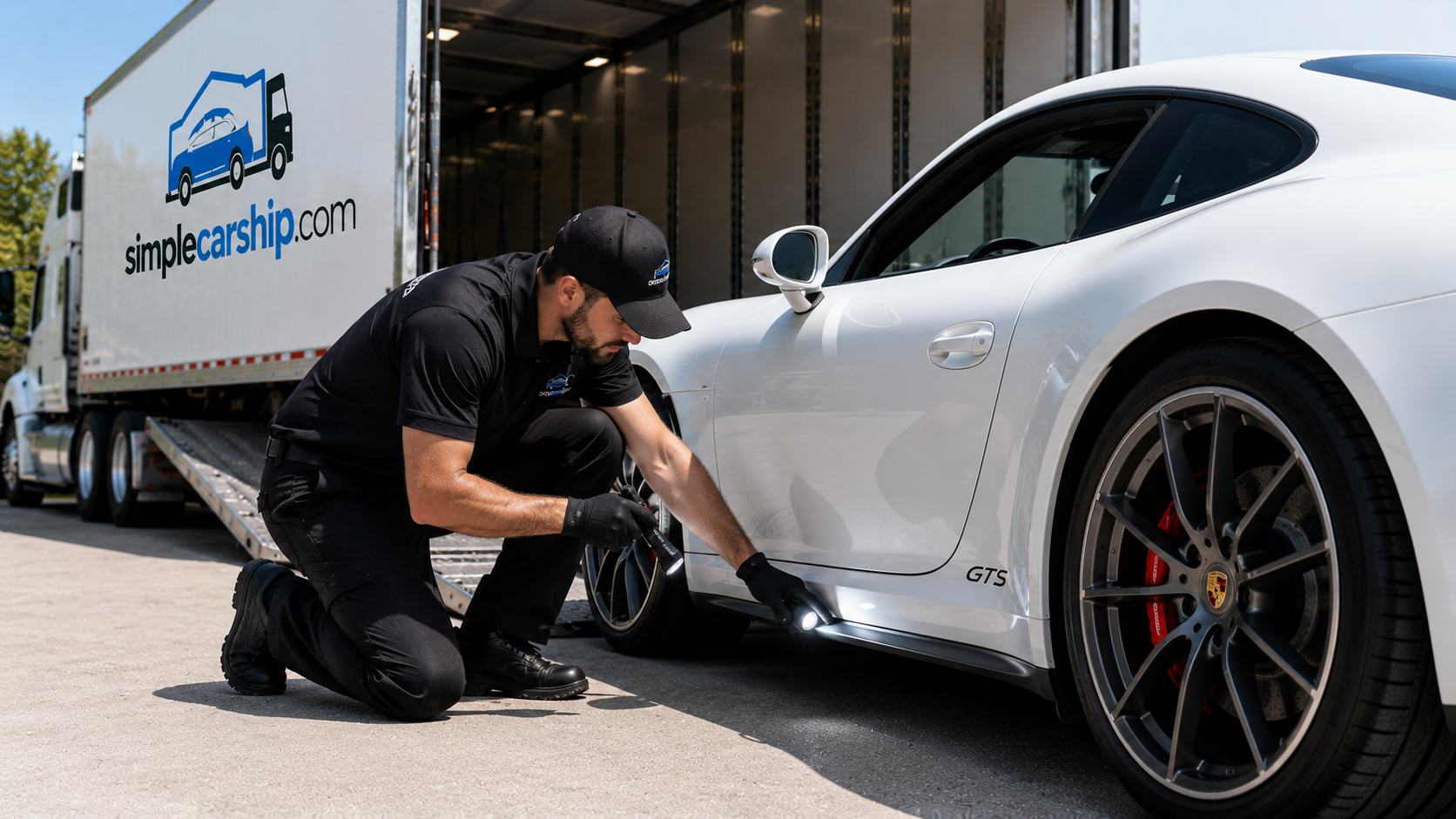
Enclosed transport makes sense in three scenarios: you’re moving a classic car, a high-value luxury or exotic vehicle, or a freshly restored show car where even minor paint chips or road grime matter. The enclosed trailer shields your car from weather, road spray, and prying eyes. It’s also the right call if your vehicle sits low to the ground—track-prepped sports cars and custom builds—and you want to eliminate any risk of undercarriage scrapes during loading. For a standard commuter car, the extra $500 rarely pays off, but for a $75,000 sports car or a concours-condition classic, the peace of mind is worth every dollar.
| Feature | Open Transport | Enclosed Transport |
|---|---|---|
| Price (MI–NC) | $780–$950 | $1,250–$1,520 |
| Transit Time | 1–3 days | 1–3 days |
| Protection | Weather-exposed, secure tie-downs | Fully enclosed, climate-shielded |
| Best For | Daily drivers, standard vehicles | Classics, luxury, low-clearance cars |
How Pickup and Delivery Work in Michigan and North Carolina
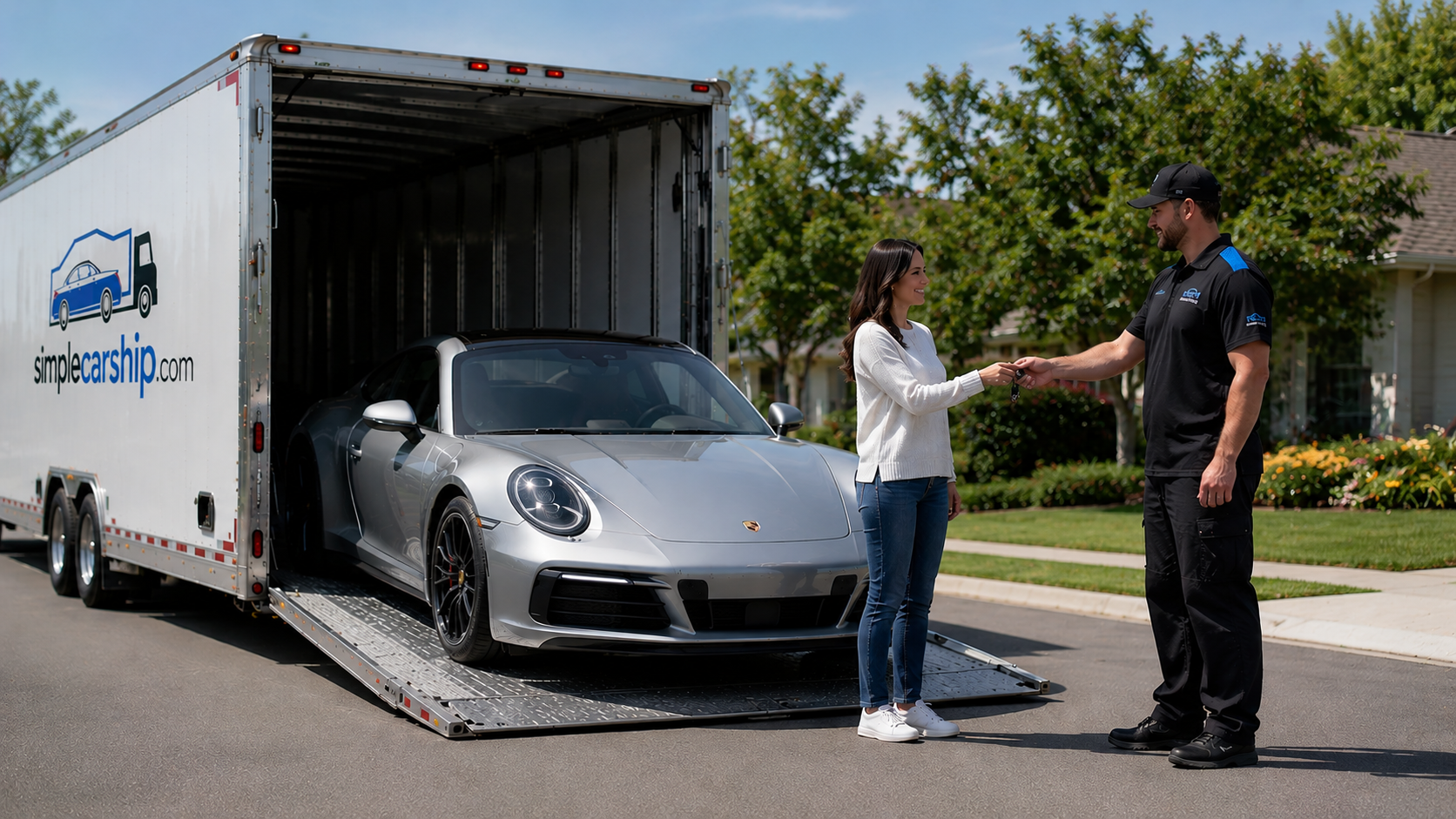
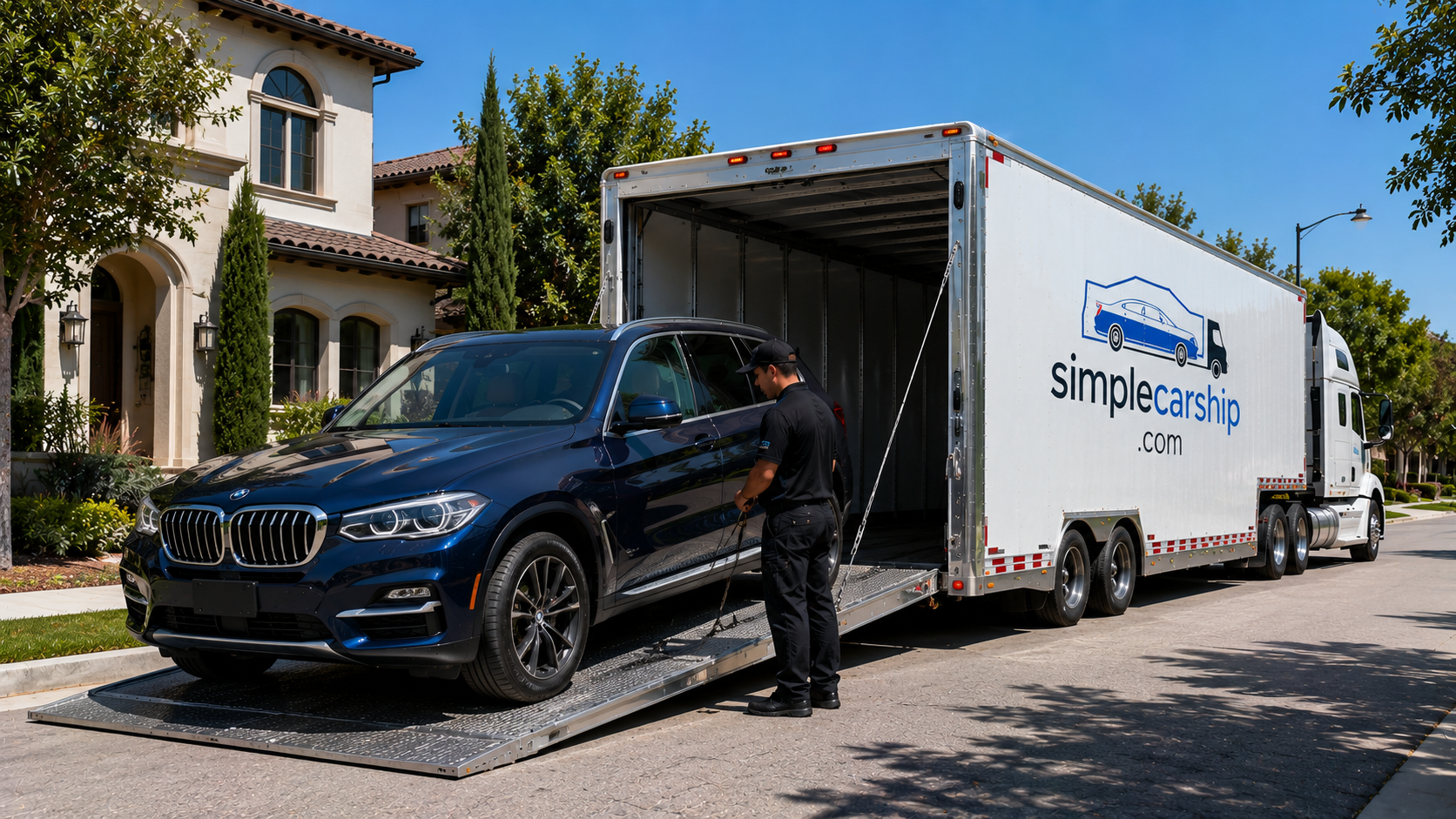
Carriers on this route concentrate around Detroit, Grand Rapids, Charlotte, and Raleigh—the four metros that anchor the corridor. If you’re in one of those cities or within a fifteen-mile radius, door-to-door service is straightforward: the driver brings the trailer to your home or office, loads your car, and delivers it the same way at the destination. Trucks are large—fifty to seventy feet long—so if your street has low-hanging trees, tight turns, or local ordinances against commercial vehicles, you may need to meet the driver at a nearby parking lot or main road. Most carriers will call a day ahead to coordinate a two-hour window.
Outside the metros, flexibility helps. A pickup in Traverse City or a delivery in Wilmington is entirely doable, but expect the scheduling window to widen by a day and the price to tick up $100–$200. Rural or hard-to-reach locations often require a meet-point arrangement—you drive your car to the nearest town along the carrier’s route, and the driver loads it there. That compromise keeps your cost reasonable and avoids forcing the carrier onto narrow back roads where a seventy-foot trailer can’t turn around. When you book, be candid about your addresses; a good broker will tell you up front if a meet point makes sense or if door-to-door will work without hassle.
Transit Time and When Your Car Arrives
The 640 miles from Michigan to North Carolina translates to one to three days in transit once your car is on the trailer. A direct run with no intermediate stops—common on enclosed trailers carrying two to four high-value vehicles—can complete in as little as one long driving day. Open carriers typically haul six to nine vehicles and make multiple pickups and drop-offs, so two to three days is the norm. Your car won’t spend the entire window on the road; much of the time accounts for the carrier’s other stops along the route.
Booking to pickup adds another variable. Standard scheduling—submitting your order and waiting for a carrier to claim the load—takes two to five days in normal market conditions. Spring moving season (April–May) and fall (September–October) can push that to a week, especially if your pickup location is outside the main metros. If you’re on a tight deadline—closing on a house, starting a new job, arriving on campus—consider expedited service at $1,272. That price buys you a confirmed carrier within 24 to 48 hours and priority routing. For most household moves and relocations, standard scheduling provides plenty of lead time as long as you book a week or two ahead.
How Simple Car Ship Handles Your Michigan–North Carolina Move
We don’t operate a fleet, and we don’t call ourselves the cheapest or the biggest. What we do is pair your shipment with a hand-vetted carrier who runs the Michigan–North Carolina corridor regularly, then stay in communication from quote to delivery. You’ll get a clear breakdown of the cost—no hidden fees, no bait-and-switch tactics where the price jumps once a carrier is assigned. When you call or submit a quote request, you talk to a real person who knows this route, knows how Detroit-to-Charlotte pricing works in March versus October, and will tell you honestly whether enclosed transport makes sense for your car or if you’d be overpaying.
Once your car is dispatched, we share the driver’s contact information so you can coordinate timing directly. Your shipment isn’t a load number in a queue. If the carrier hits weather on I-77 through the Appalachian foothills or needs to adjust the delivery window by a few hours, you’ll know. We follow up at delivery to confirm everything arrived as expected. Get a transparent quote for your Michigan–North Carolina car shipment today—real numbers, real timeline, no guesswork.
Related Routes and Seasonal Patterns
If you’re exploring options beyond the direct Michigan–North Carolina route, consider adjacent corridors that share pricing and logistics characteristics. Shipping a car from Michigan to Florida covers a similar north-south path with slightly higher mileage and more pronounced snowbird seasonality. Likewise, a Ohio to North Carolina route overlaps much of the same carrier network and offers comparable transit times. These internal connections help you understand how regional pricing tiers work and whether bundling a second vehicle or coordinating timing with a family member’s move might unlock modest savings.
Michigan–North Carolina doesn’t have the extreme seasonal swings of snowbird routes—Michigan residents heading to Florida in November or returning in April—but you will see modestly higher demand during college move-in (late August) and move-out (May), plus the general spring-and-fall relocation surge when corporate transfers and home sales cluster. Booking two weeks ahead keeps you ahead of that demand and gives carriers time to optimize their routes, which often translates to a pickup date within your preferred window and a price at the lower end of the range. Last-minute bookings—72 hours or less—compress the carrier pool and frequently add $100–$150 to the quote, particularly if your pickup or delivery location isn’t on a high-traffic lane.
Frequently Asked Questions: Shipping a Car from Michigan to North Carolina
How long does it take to ship a car from Michigan to North Carolina?
Transit time is one to three days once your vehicle is loaded. Open carriers typically take two to three days because they make multiple stops. Enclosed trailers with fewer vehicles can complete the 640-mile route in one long day. Booking to pickup adds another two to five days under normal conditions.
What’s the cheapest way to ship a car on this route?
Open transport with flexible scheduling and door-to-door pickup in Detroit or Grand Rapids delivers the lowest price—$780 to $950 for a sedan. Choosing a meet point near a main highway instead of remote door-to-door service, and booking two weeks ahead, keeps you at the bottom of that range without sacrificing reliability.
Should I use enclosed transport from Michigan to North Carolina?
Use enclosed transport if you’re moving a classic, exotic, or high-value vehicle where paint protection and privacy justify the $1,250–$1,520 cost. For daily drivers and standard SUVs in good condition, open transport is more than adequate for the short 640-mile trip and saves you roughly $500 with no meaningful added risk.
Can I ship a non-running car from Michigan to North Carolina?
Yes, but expect an additional $150–$250 surcharge. Non-running vehicles require a winch to load and unload, and they consume extra time at each stop. The car must roll, steer, and brake even if the engine won’t start. Disclose the condition when you book so the carrier arrives with the right equipment.
What if my delivery address in North Carolina is outside Charlotte or Raleigh?
Deliveries to smaller towns or rural areas add $100–$200 and may extend the transit window by a day. Carriers prefer main routes along I-77 and I-85, so addresses far off those corridors often require a meet-point arrangement where you drive to a nearby town and take delivery there, keeping cost reasonable.