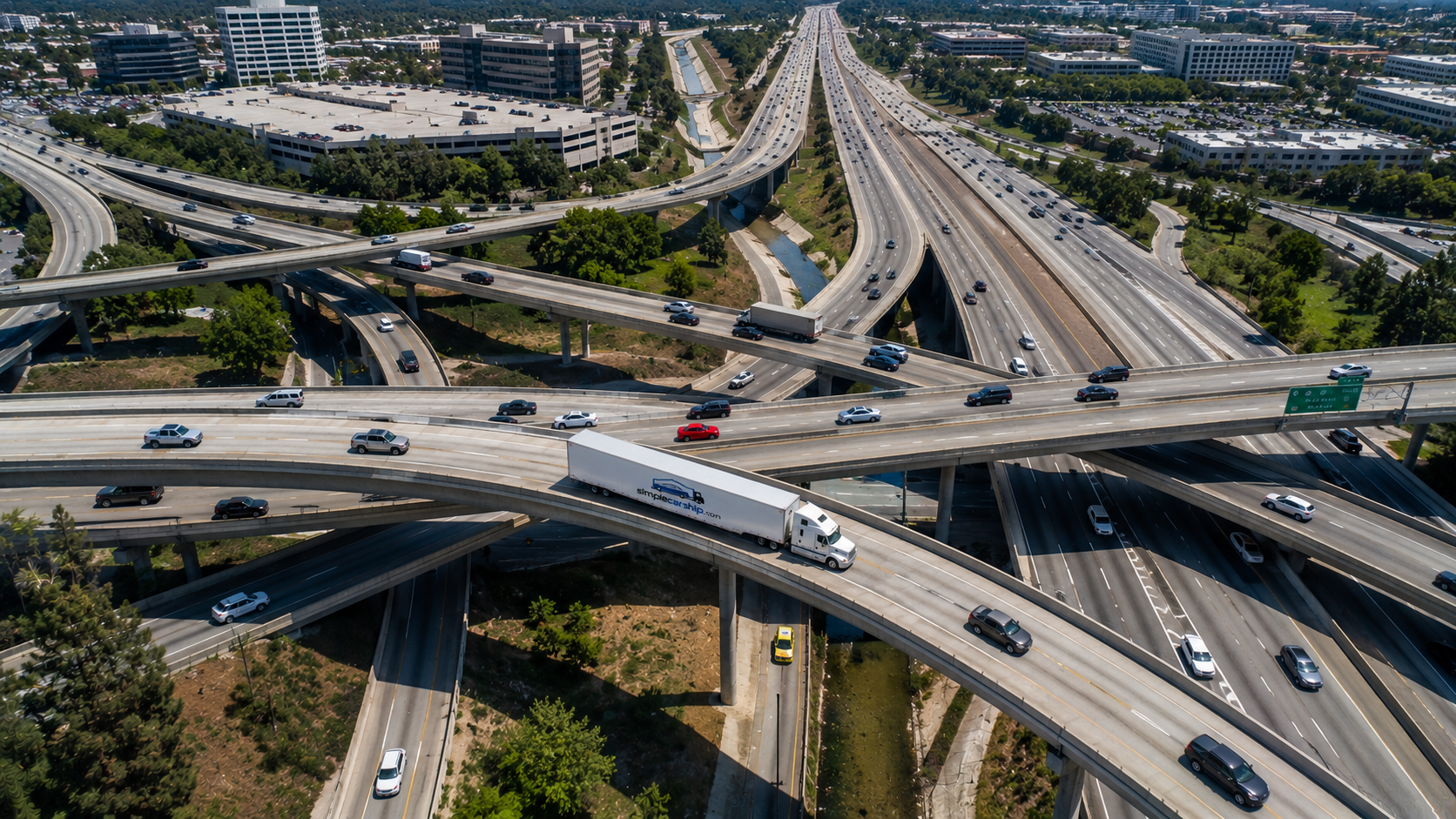
Kentucky to North Carolina: live carrier pricing
| Open transport (most vehicles) | $725 – $880 |
| Enclosed transport | $1,160 – $1,410 |
| Lane distance | 468 miles |
| Typical transit | 1–3 days |
Quoted from our carrier network on September 29, 2026 for a standard operable car, door to door.
Auto transport is a live market, so your exact price depends on vehicle size, timing and current truck availability on this lane.
How Much Does It Cost to Ship a Car from Kentucky to North Carolina?
Shipping a car from Kentucky to North Carolina typically costs between $605 and $735 for open transport, or $970 to $1,180 for enclosed service. The 468-mile route connecting cities like Louisville and Lexington to Charlotte and Raleigh is a common corridor with reliable carrier availability, and most shipments arrive in 1–3 days. What you actually pay depends on your vehicle type, the trailer style you choose, your exact pickup and delivery locations, and when you book.
Get your instant car shipping price
Real quote in seconds — no spam, no runaround.
If you’ve never shipped a car before, the price spread can feel opaque. But the factors are straightforward: a standard sedan on an open trailer during normal season will land near the low end, while a lifted truck, enclosed service, or a rural pickup adds cost. We’ll walk through the real numbers for this route, explain what moves the price, and show you how Simple Car Ship keeps the process transparent from quote to delivery.
What It Costs to Ship a Car from Kentucky to North Carolina—and What Moves the Price
The baseline for this route is $605–$735 open transport. That covers a running sedan or compact SUV picked up in a metro area like Louisville or Lexington and delivered to Charlotte or Raleigh. Open auto transport—your car rides on a multi-vehicle carrier, exposed to weather—is how roughly 85% of vehicles move across the country, and it’s safe, insured, and fast for this distance.
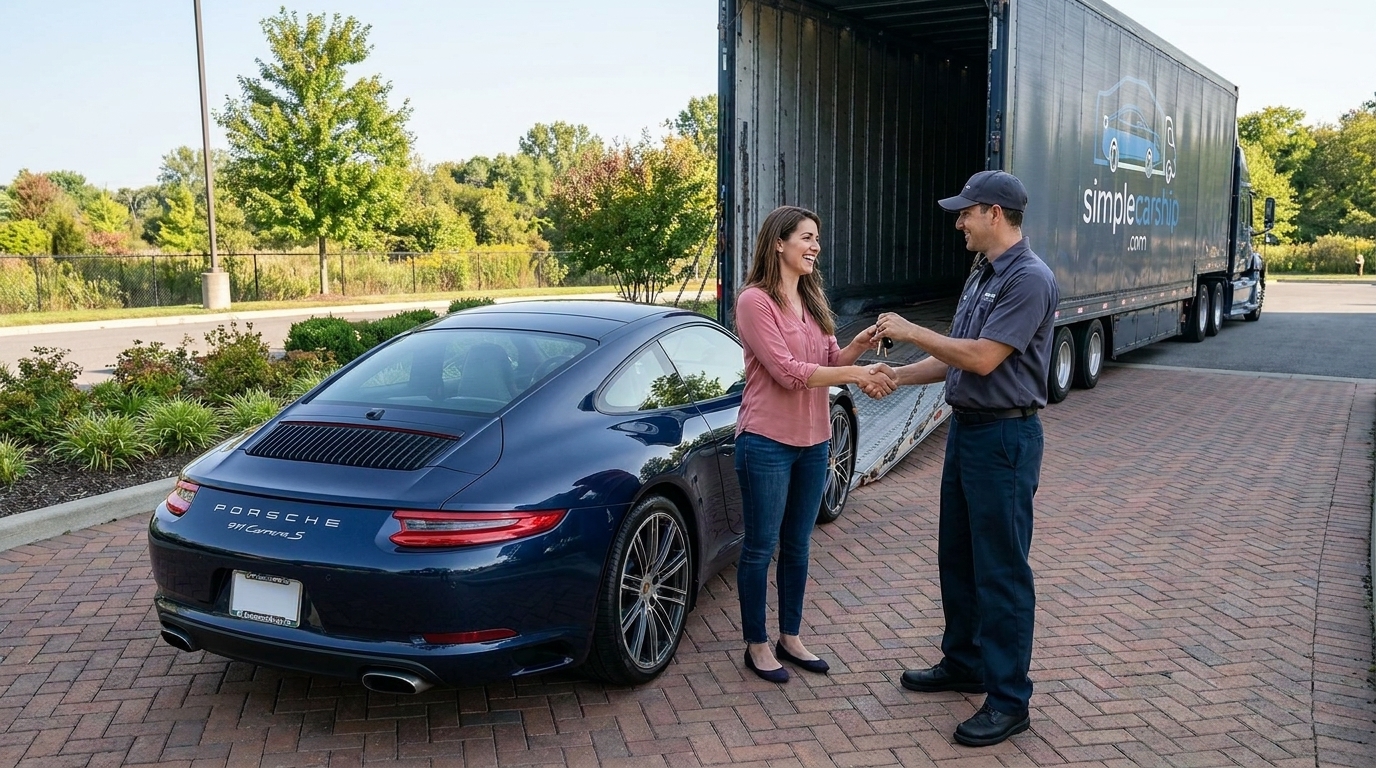
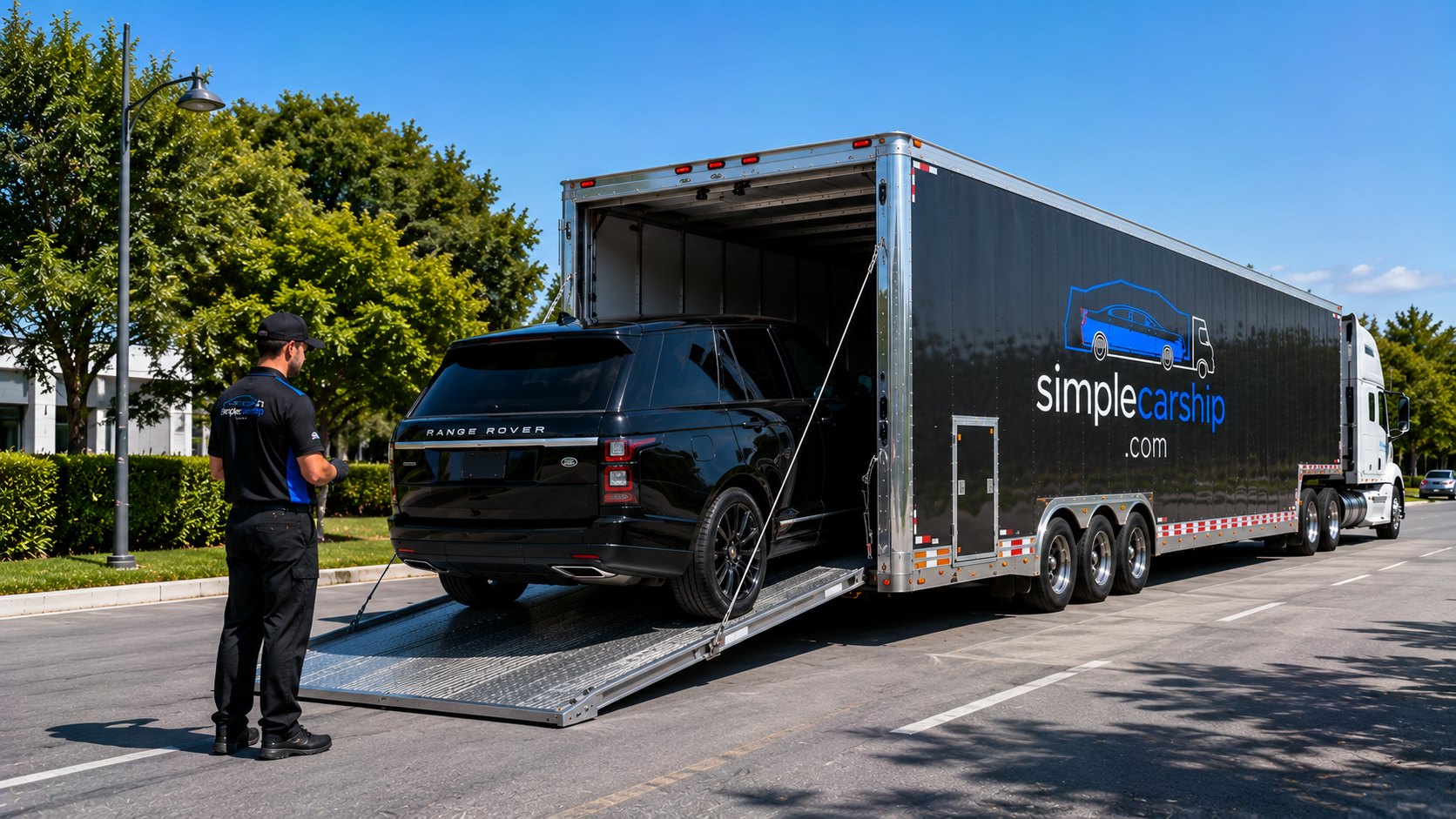
Enclosed transport runs $970–$1,180. You’re paying for a covered trailer that shields your car from road spray, sun, and the elements. That’s worth it if you’re moving a Tesla Model S, a restored classic, a luxury sedan with delicate paint, or any vehicle where cosmetic condition matters more than the extra four hundred dollars. For this short 468-mile run, enclosed service is common among buyers relocating high-value cars or collectors moving show vehicles to the Carolina coast.
Three levers move your quote within those ranges. First, vehicle size and weight: a Chevy Silverado or three-row SUV costs $60–$100 more than a Honda Civic because it takes more deck space and burns more fuel. Second, your exact addresses—if either end is outside the Louisville–Lexington or Charlotte–Raleigh metro corridors, the carrier may need to detour or coordinate a meet-up point, adding $40–$80. Third, timing: if you need guaranteed pickup within 48 hours, expedited open service runs around $987 for this route, roughly 35% more than standard booking. Standard scheduling—giving the carrier a 3–5 day pickup window—keeps cost down and still delivers your car in under three days once it’s loaded.
Open vs. Enclosed Transport for the Kentucky–North Carolina Route
Open transport makes sense for daily drivers, recent-model commuters, leased vehicles, and anything you’d park outside at home. The carrier straps your car onto a double-deck trailer alongside seven or eight other vehicles, drives I-64 and I-77 through the Appalachian corridor, and delivers it to North Carolina in one to three days. Your car arrives dusty—plan to wash it—but mechanically identical to how it left. Comprehensive insurance covers the vehicle in transit, and damage claims on this route are statistically rare because the mileage is short and interstate highways are smooth.
Enclosed makes sense when cosmetic risk outweighs cost. High-end imports, classic muscle cars, freshly detailed luxury sedans, exotic sports cars, or any vehicle headed to a showroom or concours event should ride enclosed. You also see enclosed bookings from buyers who purchased a car sight-unseen at auction and want zero chance of road grime or stone chips before they take delivery. The premium is significant on a percentage basis—60% more than open—but in absolute dollars it’s $365–$445, and for many owners that’s a rounding error compared to the vehicle’s value.
| Feature | Open Transport | Enclosed Transport |
|---|---|---|
| Price (KY–NC) | $605–$735 | $970–$1,180 |
| Transit Time | 1–3 days | 1–3 days |
| Protection | Insured; exposed to weather | Fully enclosed; climate shielded |
| Best For | Daily drivers, leased cars, commuters | Classics, luxury, exotics, high-value |
How the Kentucky-to-North-Carolina Route Works (Pickup, Transit, Delivery)
Most shipments originate in Louisville, Lexington, or Bowling Green and deliver to Charlotte or Raleigh. Carriers running this lane typically consolidate loads along I-64 East and I-77 South, which means pickup availability is high and you’re rarely waiting more than two or three days for a truck. Once your car is loaded—usually at your home, office, or a nearby shopping-center lot—the driver inspects it with you, notes existing damage on a bill of lading, and you both sign. Keep that copy; it’s your proof of condition at origin.
The 468-mile drive takes one full transit day if your vehicle loads in the morning, or up to three days if the carrier is completing other deliveries en route. Because Kentucky and North Carolina are both high-volume auto markets—lots of dealer transfers, relocations to the Research Triangle, and retirees moving to Asheville or the Outer Banks—you’re joining a well-traveled corridor with daily carrier service. Delivery works the same way in reverse: the driver calls 24 hours out, you meet at the destination address, inspect the car together, and sign off. If the destination is outside the Charlotte or Raleigh metro, the carrier may ask you to meet at a truck-accessible cross-street or large parking area; that’s normal and avoids tight residential roads that a 75-foot trailer can’t navigate.
Timing, Seasonality, and When to Book
There’s no meaningful seasonal swing on the Kentucky–North Carolina route. You’re not crossing snowbelt-to-sunbelt migration patterns, and neither state sees the kind of winter backlog that affects northern routes in January or Arizona-bound traffic in October. Prices stay consistent year-round, and carrier availability is steady. That said, if you’re shipping during a holiday week—Thanksgiving, Christmas, July Fourth—book at least ten days ahead. Carriers take time off, and the trucks that are running fill fast.
Lead time matters more than season. If you call today and your pickup window opens tomorrow, you’re asking for expedited service, and that costs the $987 rate mentioned earlier. If you can give a carrier five to seven days’ notice, you’ll pay standard pricing and still get your car delivered within 1–3 days of loading. For this short a route, “fast” is the default—there’s no need to pay extra unless your timeline is truly inflexible. Plan around your own move-in date, vehicle purchase closing, or job start, and communicate that clearly when you request a quote.
How Simple Car Ship Handles Your Kentucky–North Carolina Shipment
We don’t operate a fleet; we broker your shipment to licensed, insured motor carriers who run this route daily. That model lets us match your car with the right truck—open or enclosed, standard or expedited—without forcing you into a one-size-fits-all schedule. When you request a quote, you talk to a real person who knows the Louisville–Charlotte corridor, understands what a 468-mile run should cost, and won’t balloon the estimate with hidden fees at pickup.
Once you book, we assign your shipment to a carrier we’ve vetted, and you get the driver’s contact information before pickup. No black-box tracking apps that haven’t updated in two days—you call or text the driver directly. Your shipment isn’t a load number cycled through a dispatch queue; it’s your car, and we treat it that way. If something changes—weather delay, an earlier pickup slot opens up, the delivery time shifts—you hear about it immediately, from a human, in plain English. That’s the difference between a broker who cares about the transaction and one who cares about the outcome.
Ready to move your car from Kentucky to North Carolina the simple way? Get a clear, honest quote with no runaround—just real numbers and real communication, start to finish.
Frequently Asked Questions: Shipping a Car from Kentucky to North Carolina
- How much does it cost to ship a car from Kentucky to North Carolina?
- Open transport typically costs $605–$735 for the 468-mile route, covering most sedans and SUVs picked up in Louisville or Lexington and delivered to Charlotte or Raleigh. Enclosed service runs $970–$1,180, and expedited open transport is around $987 if you need guaranteed pickup within 48 hours.
- How long does it take to ship a car from Kentucky to North Carolina?
- Transit time is 1–3 days once your vehicle is loaded. Most cars picked up in the morning in Louisville arrive in Charlotte the next day. If the carrier is completing other stops or your delivery address is outside the metro area, allow up to three days total.
- Should I choose open or enclosed transport for this route?
- Open transport works for daily drivers, leased vehicles, and anything you’d park outside at home. Enclosed is worth the $365–$445 premium if you’re shipping a classic, luxury car, exotic, or any vehicle where cosmetic condition justifies the extra protection from road spray and weather exposure on the 468-mile journey.
- Can the carrier pick up my car outside Louisville or Lexington?
- Yes, but expect a $40–$80 surcharge if your pickup location is in a rural area or small town that requires the carrier to detour off the main interstate corridor. Alternatively, you can meet the driver at a nearby truck-accessible lot in Bowling Green, Louisville, or Lexington to avoid the extra fee.
- What do I need to do to prepare my car for shipping from Kentucky to North Carolina?
- Remove all personal items, toll transponders, and garage door openers. Leave the gas tank one-quarter full—enough for loading and unloading but not so much that it adds unnecessary weight. Disable alarms, note existing scratches or dents on your phone, and make sure the battery is charged and tires are inflated so the car rolls onto the trailer without issue.