How Much Does It Cost to Ship a Car from Florida to Missouri?
Shipping a car from Florida to Missouri typically costs between $1,545 and $1,880 for open transport, or $2,470 to $3,005 for enclosed carriers. The final price depends on your exact pickup and delivery cities, vehicle size, current fuel costs, and seasonal carrier availability along this 1,214-mile route. Understanding what drives these numbers helps you budget accurately and choose the right service for your vehicle.
Whether you’re relocating from Miami to St. Louis, moving a classic car from Tampa to Kansas City, or sending a family SUV from Jacksonville north, the route crosses seven states and takes 2–4 days in transit. Here’s everything that affects your cost—and how Simple Car Ship keeps the process transparent.
Get your instant car shipping price
Real quote in seconds — no spam, no runaround.
What You’ll Pay to Ship from Florida to Missouri
Open auto transport—the method used for roughly 90% of shipments—runs $1,545 to $1,880 for the Florida-to-Missouri corridor. Your car rides on the same multi-level carriers that move dealership inventory, exposed to weather but fully insured. This is the most economical choice for everyday sedans, trucks, and SUVs in good working condition. If you need guaranteed faster pickup, expedited open transport averages $2,516, trimming wait times from 3–5 days down to 24–48 hours for carrier assignment.
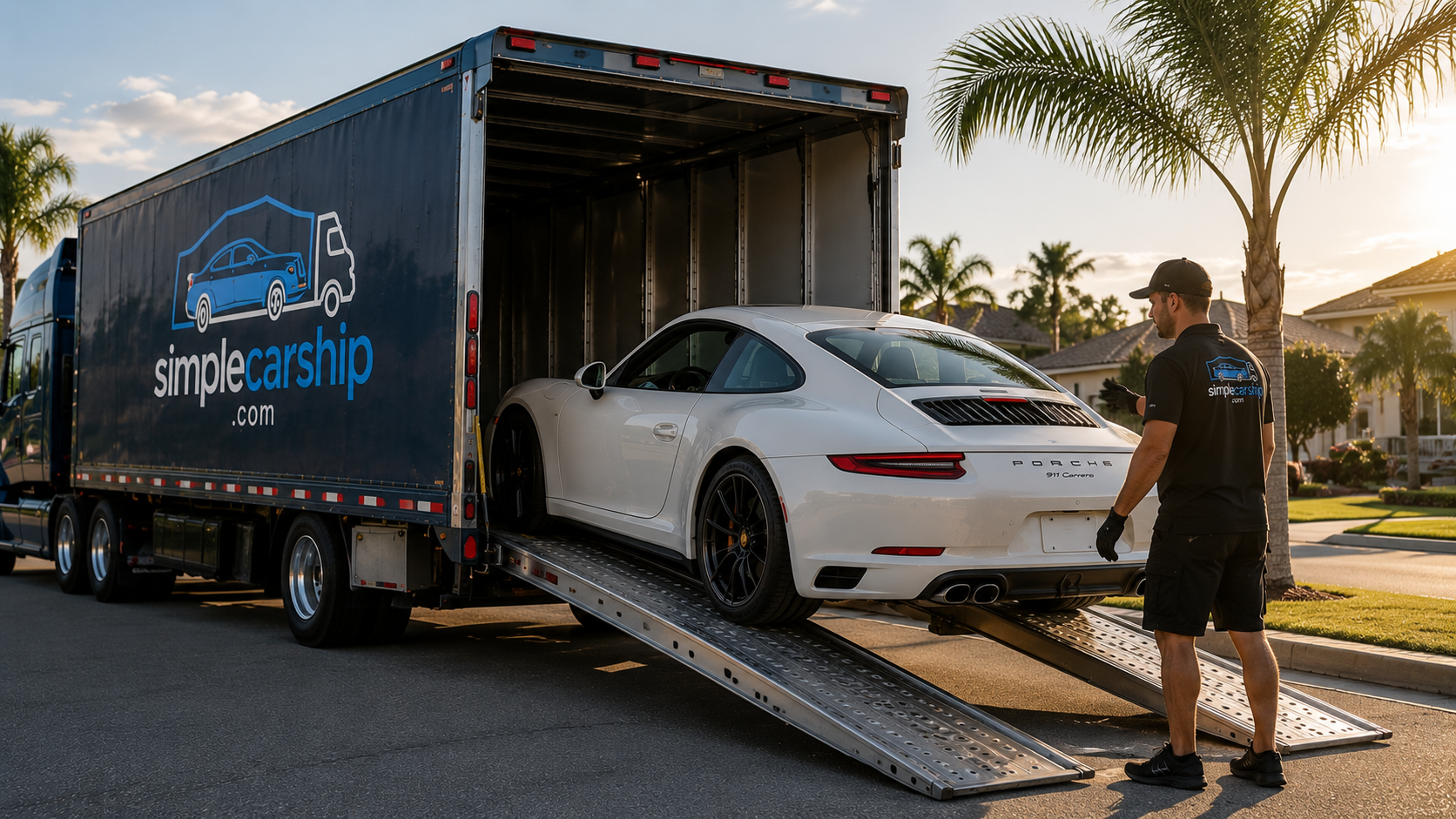
Enclosed transport—where your vehicle rides in a covered trailer, shielded from road spray, weather, and prying eyes—costs $2,470 to $3,005. The 60% premium buys white-glove handling and protection that matters for high-value cars, exotic paint, lowered suspensions, or collector vehicles. For a modified Corvette leaving Tampa or a restored Mustang departing Miami, enclosed service is insurance against the unexpected over 1,200+ miles. We’ll walk through exactly when the upgrade makes sense for your situation.
Pricing fluctuates around a few core variables. Pickup and delivery locations have the largest impact: a door-to-door move from a metro hub like Orlando to downtown St. Louis sits at the low end of the range; a rural Panhandle town to a small Missouri county adds $150–$250 because carriers deadhead extra miles off the interstate. Vehicle size and weight matter too—a compact sedan occupies less trailer space and burns less fuel than a three-row SUV or a lifted F-250, so expect $100–$200 more for larger rigs. Fuel prices and seasonal demand create the remaining variance; a spike in diesel or a surge of snowbird returns in April can nudge quotes higher temporarily.

Open vs. Enclosed Transport: Which Makes Sense for This Route
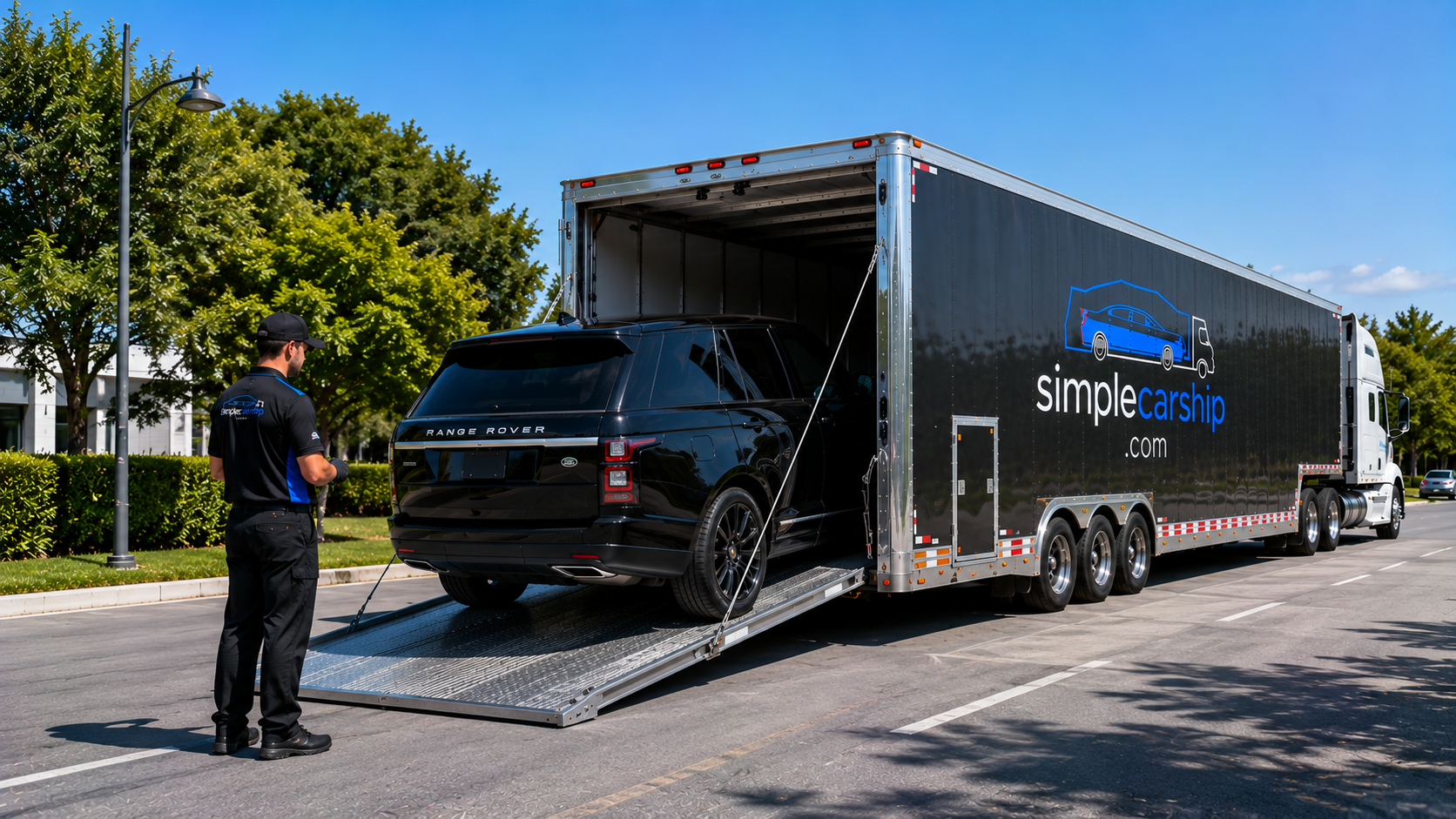
The Florida-Missouri run crosses interstate highways I-75, I-24, and I-64 through Georgia, Tennessee, Kentucky, and Illinois—well-maintained, high-traffic routes that carriers run year-round. Open transport is purpose-built for these conditions: your car is secured on a multi-vehicle carrier, fully visible, and insured for transit damage (every licensed carrier holds $750,000–$1,000,000 cargo coverage). Weather exposure is minimal over a 2–4 day window, and any road grime hoses off at delivery. For daily drivers, leased vehicles, or anything you’d park outside at home, open is the practical, proven choice—and saves you nearly $1,000.
Choose enclosed transport if your vehicle has collector-car value, custom paint, aftermarket aero kits, or a suspension so low it risks scraping on an open trailer’s ramps. Enclosed carriers also make sense for luxury marques (Porsche, Tesla Model S Plaid, Range Rover) where even minor road-chip damage affects resale. The trailer walls block sun, rain, and highway debris; load counts drop from 7–9 cars to 2–6, meaning less jockeying and gentler handling. If you’re moving a classic car from a Florida collection to a Missouri showroom, the enclosed premium is a rounding error compared to the asset’s value.
| Feature | Open Transport | Enclosed Transport |
|---|---|---|
| Price (FL–MO) | $1,545–$1,880 | $2,470–$3,005 |
| Transit Time | 2–4 days | 2–4 days |
| Protection | Insured; weather-exposed | Insured; fully enclosed |
| Best For | Daily drivers, standard vehicles | Classics, exotics, luxury, custom builds |
Pickup and Delivery Across Florida and Missouri
Florida’s population clusters in Miami, Orlando, Tampa, and Jacksonville—all connected by I-95, I-75, and I-4, making them high-frequency pickup zones for carriers. If you’re shipping from one of these metros, expect same-week or next-week pickup windows; carriers run these arteries daily. Rural Panhandle towns, the Keys, or inland citrus-belt communities may require a terminal meet (you drop the car at a nearby hub) or a $100–$200 surcharge for the driver to detour off the main route. We coordinate the logistics so you know the plan before booking.
On the Missouri side, nearly all deliveries funnel through St. Louis or Kansas City—the state’s two anchors, both sitting on major east-west interstates (I-70, I-44). Door-to-door delivery works smoothly in these metros and their suburbs. Springfield, Columbia, and Joplin are secondary markets; carriers service them, but scheduling may add half a day. For farms or small towns an hour off the highway, many customers opt for terminal delivery in the nearest city to shave $150 off the quote. Either way, you’ll get a firm ETA 24 hours before arrival, and our dispatch team confirms directly with you—no game of phone tag with a driver you’ve never met.
Transit Time and Scheduling
Plan for 2 to 4 days in transit once your car is loaded. The 1,214-mile route is straightforward: carriers typically run north through Georgia, cut west across Tennessee and Kentucky, then angle northwest through Illinois into Missouri. Weather rarely disrupts this corridor outside of ice events (which are uncommon in the shoulder seasons), and the interstate system is truck-friendly end to end. Most shipments land in the 3-day window; 2-day service happens when a carrier has a partial load and runs express, while 4 days accounts for multi-stop routes where your car shares the trailer with others.
Booking to pickup takes 1–5 days for open transport, depending on your flexibility. If your Orlando condo or Miami driveway is available across a range of dates, we can usually assign a carrier within 48 hours. Narrow windows (“must pick up this Tuesday only”) or rural locations stretch that to 3–5 days. Expedited open service—priced at $2,516—compresses assignment to 24–48 hours and prioritizes your vehicle for faster delivery, ideal if you’ve already landed in Missouri and need your car for work. Enclosed bookings often require 3–7 days’ lead time simply because fewer enclosed carriers run the route; we hand-select those with spotless safety records and climate-controlled trailers.
How Simple Car Ship Handles Florida-to-Missouri Routes
Ship your car the simple way. You get a clear, binding quote that reflects real market rates for the Florida-Missouri lane—no bait-and-switch “$500 instant quote” that doubles at booking. Once you reserve, we assign your order to a carrier we’ve vetted: licensed, insured, and experienced on this route. You’ll receive the driver’s name, truck number, and direct contact before pickup. Your shipment isn’t a load number lost in a dispatch queue; you have a dedicated coordinator who tracks the truck and answers your texts, calls, and emails in plain English.
We explain what’s covered and what’s not: every carrier holds $750,000+ cargo insurance for transit damage, but pre-existing scratches, dings, or mechanical issues aren’t claims. That’s why we require a joint vehicle inspection at pickup and delivery—photos, signatures, the works—so both you and the driver agree on condition. If something does go wrong (a broken mirror, a new scrape), we walk you through the claim with the carrier’s insurer; you’re not navigating six-page PDFs and 1-800 runarounds alone. Real human support, from quote to claim resolution, because handing over a $30,000 asset to a stranger should feel backed by a team that cares. No guesswork, no runaround.
Whether you’re moving a Tesla Model 3 from Tampa to Kansas City, relocating a Silverado from Jacksonville to St. Louis, or transporting a vintage Camaro from Miami to a Missouri garage, we match you with the right trailer, the right timeline, and the right price. Get your upfront quote here—or call and talk through your specific pickup and delivery needs. Clear quotes. Real communication. That’s the promise.
Frequently Asked Questions
How much does it cost to ship a sedan from Miami to St. Louis?
A standard sedan runs $1,545 to $1,880 via open transport on the Miami–St. Louis route (roughly 1,214 miles). Compact cars tend toward the lower end; mid-size and luxury sedans land mid-range. Enclosed transport for the same trip costs $2,470 to $3,005, recommended for high-value or classic sedans requiring maximum protection.
How long does it take to ship a car from Florida to Missouri?
Transit takes 2 to 4 days once loaded. The 1,214-mile route via I-75 and I-64 is direct and heavily trafficked by carriers. Most shipments complete in 3 days. Add 1–5 days for carrier assignment depending on your pickup location and scheduling flexibility; expedited service cuts assignment time to 24–48 hours.
Is enclosed transport worth the extra cost for this route?
Enclosed adds $925 to $1,125 over open transport. It’s worth it for collector cars, exotics, luxury vehicles, or anything with custom paint and low ground clearance. For daily-driver sedans and SUVs, open transport is safe, insured, and proven on the Florida–Missouri corridor—saving you nearly $1,000 with minimal weather risk over 2–4 days.
Can I ship from Tampa to Kansas City for the same price?
Yes. Tampa and Kansas City are both major metros on high-traffic carrier routes, so pricing remains within the $1,545–$1,880 open and $2,470–$3,005 enclosed ranges. Distance is comparable to Miami–St. Louis (±50 miles), and both origin-destination pairs see daily carrier service, keeping costs and transit times consistent across Florida and Missouri hubs.
What if my pickup location is outside Orlando or Jacksonville?
Rural or off-interstate pickups often add $100–$200 to cover the carrier’s deadhead miles. Alternatively, you can meet the driver at a nearby terminal in Orlando, Jacksonville, Tampa, or Miami to avoid the surcharge. We’ll map the closest hub and coordinate timing so handoff is seamless, keeping your total cost within budget.