How Much Does It Cost to Ship a Car from Colorado to Minnesota?
Shipping a car from Colorado to Minnesota typically costs between $1,070 and $1,300 for open transport, while enclosed transport runs $1,710 to $2,080. The 914-mile route connecting Denver and Colorado Springs to Minneapolis and St. Paul takes 2–4 days, and your final price depends on your vehicle type, trailer choice, seasonal demand, and how flexible you are with pickup timing. Understanding these cost drivers helps you budget accurately and choose the service level that makes sense for your vehicle.
Get your instant car shipping price
Real quote in seconds — no spam, no runaround.
At Simple Car Ship, we believe you deserve a clear quote and straight answers—not the runaround. Ship your car the simple way: real human support, hand-selected carriers, and no load-number treatment. Let’s walk through exactly what you’ll pay and why.
What Drives the Cost of Colorado-to-Minnesota Car Transport
The baseline cost for the 914-mile haul from Colorado to Minnesota reflects fuel, driver wages, and equipment—but several variables push your quote up or down. Vehicle size and weight matter most: a compact sedan rides at the lower end of the $1,070–$1,300 open-transport range, while a full-size SUV or heavy pickup adds $150–$250 because it occupies more trailer deck space and burns more diesel. Trailer type is the second-biggest lever: enclosed transport costs about 60% more ($1,710–$2,080) because enclosed trailers carry fewer vehicles per load and command premium rates. Seasonal demand fluctuates throughout the year—summer months and early fall see higher volume as families relocate before school starts, nudging prices upward by 10–15%. Finally, pickup flexibility saves money; giving the carrier a three-to-five-day window instead of demanding next-day service can shave $100–$200 off your bill, because dispatchers can bundle your car with others heading the same direction.
If speed is critical, expedited open transport runs around $1,743 for this route—guaranteed pickup within 24–48 hours and priority delivery. That’s useful if you’ve already arrived in Minnesota and need your vehicle for work, but most customers find the standard 2–4-day transit window perfectly adequate. Route density also plays a role: the Denver–Minneapolis corridor is well-traveled by freight and auto carriers alike, so you’re rarely waiting long for available trailer space. Less common is true door-to-door suburban service; if you live well outside metro areas, expect to meet the truck at a nearby major intersection or shopping-center lot—large car carriers can’t navigate narrow residential streets or low-clearance neighborhoods.
Open vs. Enclosed Transport for the Colorado–Minnesota Route
Open transport is the workhorse of the industry and the right call for most passenger vehicles on this route. Your car rides on an open-air double-decker trailer alongside up to eight others, exposed to road dust and weather but fully insured. The $1,070–$1,300 price reflects high efficiency—carriers run these trailers constantly between the Rockies and the Upper Midwest. Road grime and bug splatter are cosmetic annoyances, not damage; a quick wash on arrival restores showroom appearance. Spring and fall storms do occasionally pelt the I-80 and I-76 corridors, but carriers secure vehicles with heavy-duty straps and wheel chocks, and insurance covers the extraordinarily rare hail-damage event. For daily drivers, commuter cars, and even late-model crossovers, open transport is safe, cost-effective, and fast.
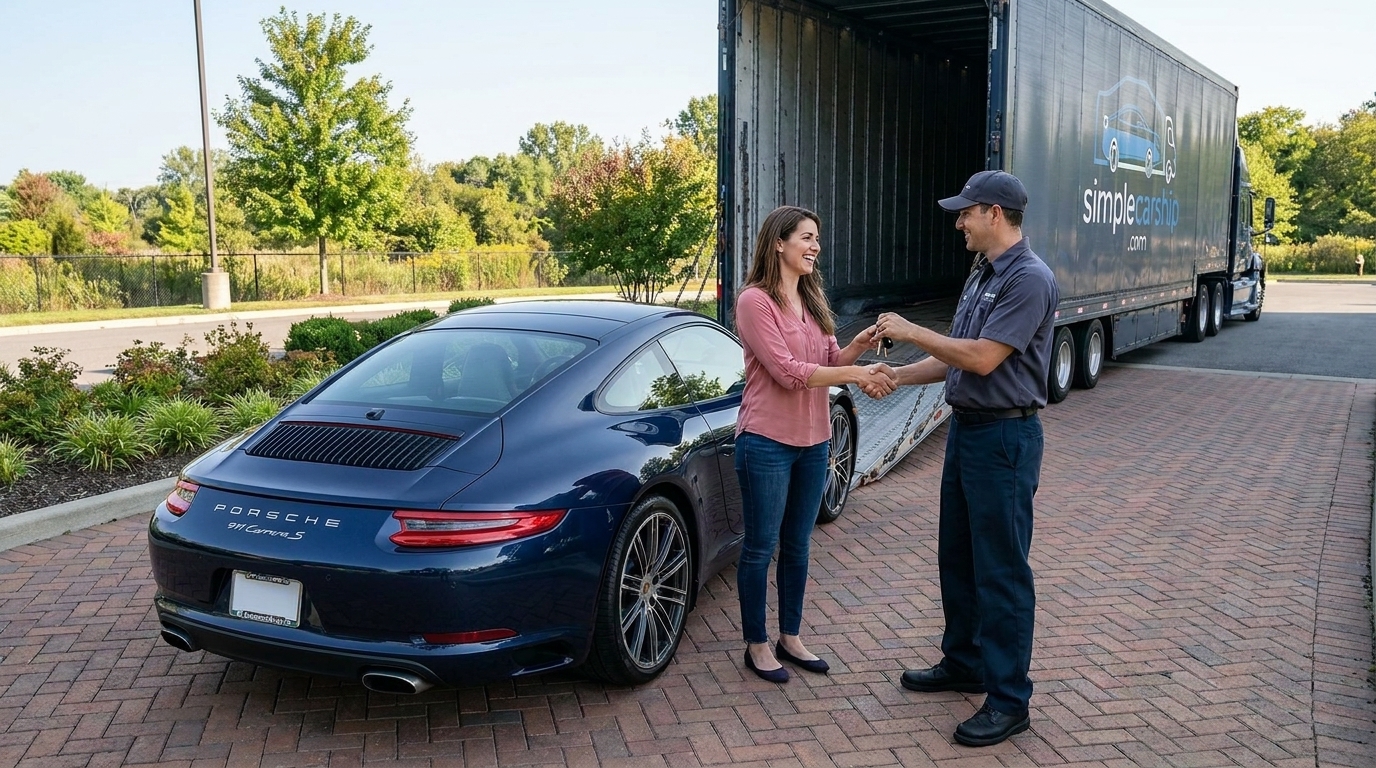
Enclosed transport makes sense when the vehicle justifies the $1,710–$2,080 premium. If you’re moving a classic car, a European luxury sedan, a high-dollar sports car, or a meticulously restored vintage truck, the hard-sided trailer shields paint, chrome, and trim from every element. Enclosed carriers also haul fewer vehicles per load—typically two to six—so your car enjoys more space, gentler handling, and white-glove service. Collectors shipping Porsches or Corvettes from Denver to Minneapolis routinely choose enclosed; the cost delta is negligible when the vehicle is worth six figures. Enclosed trailers also appeal to anyone shipping a brand-new Tesla or BMW straight from a dealer, preserving that untouched finish for delivery. The trade-off is availability: enclosed carriers are less common, so booking takes a bit longer and requires more advance notice—plan for at least 5–7 days’ lead time if possible.
| Feature | Open Transport | Enclosed Transport |
|---|---|---|
| Price (CO–MN) | $1,070–$1,300 | $1,710–$2,080 |
| Transit Time | 2–4 days | 2–4 days |
| Protection | Insured; open to weather | Fully enclosed; maximum protection |
| Best For | Daily drivers, SUVs, most sedans | Classics, luxury, high-value vehicles |
Pickup in Colorado and Delivery in Minnesota
Most Colorado pickups happen in or around Denver and Colorado Springs, the state’s two largest metros and natural staging points for east-bound carriers. If you’re in the Denver metro—Lakewood, Aurora, Thornton, or Centennial—drivers can typically reach your driveway or a nearby commercial lot. Colorado Springs pickups work the same way, with the I-25 corridor offering easy carrier access. If you’re in Boulder, Fort Collins, Greeley, or Pueblo, expect a short drive to meet the truck at a gas station or park-and-ride; the extra 20–40 minutes you spend saves the carrier an hour of detour time and keeps your quote lower. Mountain communities west of the Front Range—Breckenridge, Vail, Aspen—require you to bring the vehicle down to the interstate yourself; no 70-foot car hauler navigates steep switchbacks or narrow ski-town streets.
On the Minnesota side, delivery concentrates in Minneapolis and St. Paul, the Twin Cities metro that’s home to most of the state’s population. Carriers access the area via I-94 and I-35, and neighborhood delivery within the seven-county metro is standard. Suburbs like Bloomington, Edina, Maple Grove, and Woodbury are no problem. Farther out—Rochester, Duluth, St. Cloud—you’ll likely meet the driver at a truck stop or shopping center along the interstate rather than expecting residential delivery. Rural Minnesota addresses often require a rendezvous point; discuss this up front with your coordinator so there’s no surprise on delivery day. The good news: Minnesota’s flat terrain and grid highways make almost any metro-adjacent location easy to reach, unlike mountain states where geography imposes hard limits.
Transit Time and Scheduling Your Colorado–Minnesota Shipment
The 914-mile journey from Colorado to Minnesota clocks in at 2–4 days in transit once your car is on the truck. That timeline assumes normal road and weather conditions—spring and summer trips often land on the shorter end, while January snowstorms across Nebraska or Iowa can add a day. Crucially, “transit time” begins when the carrier loads your vehicle, not when you book; carrier assignment and pickup scheduling typically add 1–3 days up front, so total door-to-door elapsed time is usually 4–7 days from the moment you reserve your spot. If you need the car faster, expedited service guarantees pickup within 24–48 hours and prioritizes your delivery, compressing the whole process to 3–4 calendar days for the $1,743 premium.
Flexibility is your friend. Giving the carrier a pickup window—say, Monday through Thursday—lets dispatchers consolidate loads efficiently, pairing your car with others heading to the Twin Cities and reducing deadhead miles. That efficiency translates directly into lower cost. Conversely, insisting on exact-day pickup shrinks the carrier pool and raises the quote. Same principle applies to delivery: if you can accept a two-day delivery window rather than a hard appointment, you’ll see better pricing and fewer scheduling headaches. Our team handles all carrier coordination, so you won’t be fielding a dozen phone calls—just clear communication and realistic expectations. You’ll get 24-hour notice before pickup and a heads-up call a few hours before delivery, giving you time to arrange to be present (or designate someone with ID to accept the vehicle on your behalf).
How Simple Car Ship Handles Your Colorado–Minnesota Move
We’re not a typical broker shuffling load boards and handing you off to whoever bids lowest. When you request a quote, a real human reviews your route—Colorado to Minnesota, 914 miles, your vehicle specs—and taps our network of hand-selected, fully insured carriers we’ve vetted for safety records, equipment quality, and customer communication. You’ll receive a transparent breakdown: open $1,070–$1,300, enclosed $1,710–$2,080, expedited $1,743, no hidden fees. Once you book, one coordinator stays with your shipment from pickup to delivery, texting or calling with updates and answering questions in plain English. Your shipment isn’t a load number—it’s your car, and we treat it that way.
Every carrier we assign holds active FMCSA authority and meets our insurance minimums (typically $1,000,000 cargo coverage for enclosed, $100,000–$250,000 for open). You’ll receive the driver’s name, truck number, and cell phone before pickup, so there’s no mystery about who’s handling your vehicle. If weather or a mechanical issue delays the truck, we notify you immediately and work out a solution—no radio silence, no runaround. After delivery, you inspect the car with the driver, note any pre-existing damage on the bill of lading (there’s a checklist), and sign off. Claims are rare on this well-traveled route, but if something does happen, we guide you through the carrier’s insurance process step by step. Clear quotes. Real communication. That’s how we earn your trust—and why customers recommend us to friends making the same move. Ready to get started? Request your free quote now and see the Simple Car Ship difference.
Frequently Asked Questions: Shipping a Car from Colorado to Minnesota
- What’s the cheapest way to ship a car from Colorado to Minnesota?
- Open transport with flexible pickup dates is your lowest-cost option, typically $1,070–$1,300 for the 914-mile route. Allowing a 3–5 day pickup window lets carriers consolidate loads, reducing deadhead miles and passing savings to you. Avoid peak summer months if possible, and book at least one week ahead for the best rates.
- How long does it take to ship a car from Denver to Minneapolis?
- Transit time is 2–4 days once your car is loaded onto the carrier. Add 1–3 days for carrier assignment and pickup scheduling, so total elapsed time from booking to delivery is usually 4–7 days. Expedited service compresses this to 3–4 calendar days, with guaranteed pickup within 24–48 hours for $1,743.
- Is my car insured during transport from Colorado to Minnesota?
- Yes. Every licensed carrier holds FMCSA-required cargo insurance—typically $100,000–$250,000 for open trailers and up to $1,000,000 for enclosed. This covers damage caused by accidents or carrier negligence during the 914-mile haul. You’ll receive the carrier’s insurance certificate before pickup; your personal auto policy remains secondary and usually isn’t needed.
- Can I put personal items in my car when shipping it to Minnesota?
- Carriers generally allow up to 100 pounds of personal items in the trunk or rear cargo area, below window level, at no extra charge. Items must be secured and not visible—loose objects shift during transport and can damage interiors. High-value electronics, jewelry, and firearms are prohibited; carriers’ cargo insurance covers the vehicle only, not contents.
- Why does enclosed transport cost so much more for Colorado–Minnesota shipping?
- Enclosed trailers carry only 2–6 vehicles versus 8–10 on open decks, so the per-car cost is higher—$1,710–$2,080 compared to $1,070–$1,300. You’re paying for hard-sided protection, white-glove handling, and the specialized equipment required. For classics, luxury cars, or high-value vehicles, the 60% premium is worthwhile; for daily drivers, open transport is perfectly safe and insured.