
Shipping an SUV or Pickup: Why Bigger Costs More
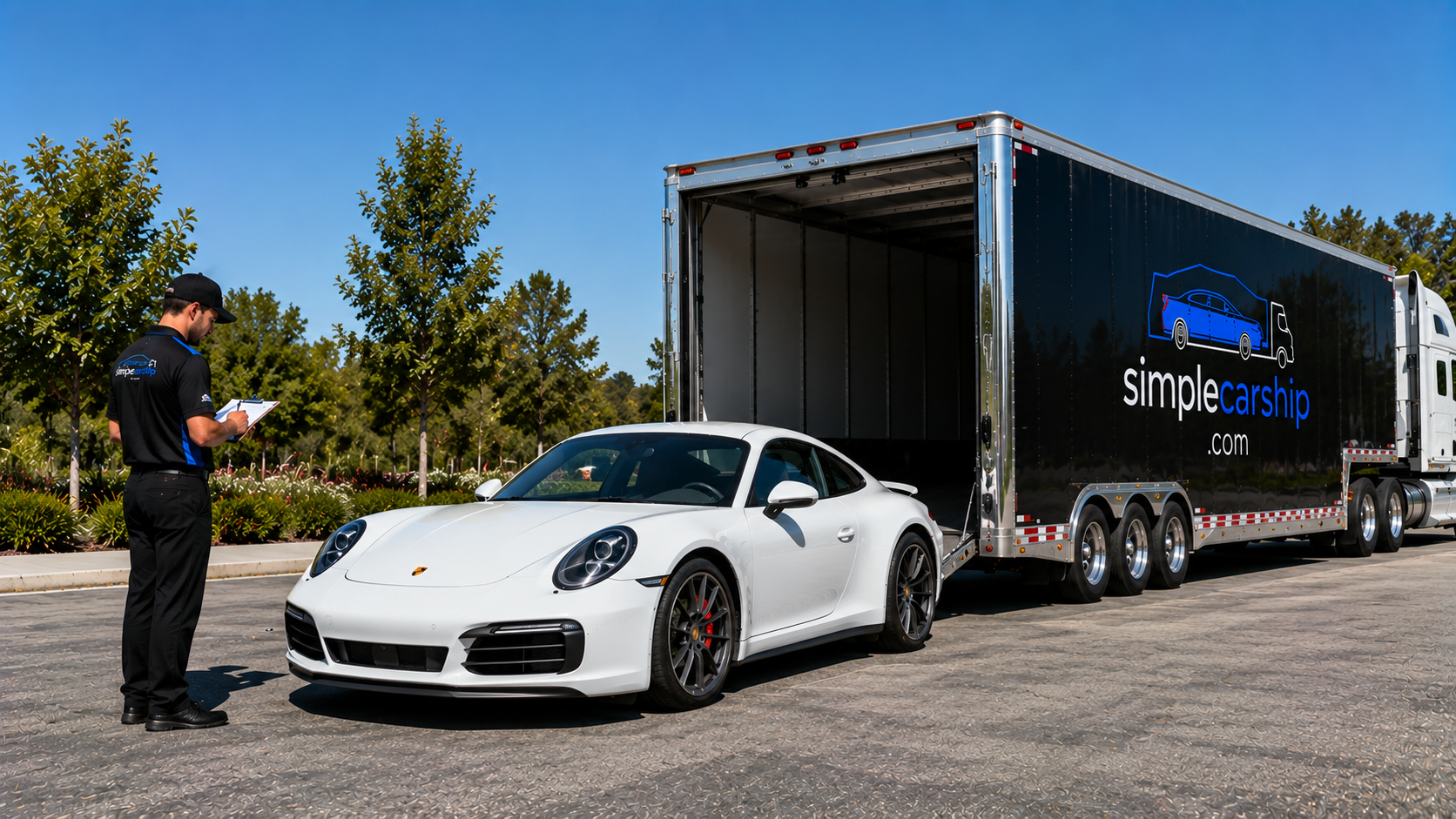
If you’re planning to ship an SUV cost will run higher than moving a sedan over the same route—often noticeably so. The reason comes down to simple economics: your vehicle occupies more deck space on the carrier and weighs more, which translates directly into fuel expense and reduced capacity for the driver. Understanding these mechanics helps you budget accurately and avoid sticker shock when quotes arrive.
Deck Space Is the Primary Driver
Auto carriers price their loads around one scarce resource: the linear feet and weight capacity of the trailer deck. A standard eight- or nine-car hauler has fixed dimensions, and every inch counts. A full-size SUV or crew-cab pickup consumes roughly 18–20 feet of deck length, compared to 14–16 feet for a midsize sedan. That difference means the driver fits fewer vehicles per trip, so each slot must cover a larger share of his operating costs—fuel, insurance, tolls, and time.
Weight amplifies the effect. A heavy-duty pickup can tip 7,000 pounds, nearly double a compact car. Carriers must respect axle-weight limits and total gross vehicle weight ratings; hauling heavier vehicles either forces the driver to leave a slot empty or restricts him to shorter, lighter cars elsewhere on the deck. Either way, your bigger vehicle reduces his revenue potential, and the price adjusts accordingly.
How Weight Economics Translate to Your Quote
Fuel is the single largest variable cost in trucking, and diesel consumption scales directly with load weight. When the U.S. Energy Information Administration’s weekly on-highway diesel price climbs, carriers pass that increase through faster for heavier shipments because the gallons-per-mile penalty is steeper. You won’t see a line-item surcharge labeled “weight fee,” but the total quote reflects the fact that moving your three-row SUV burns measurably more fuel than a sedan over the same 1,200 miles.
Our Cost Index shows open transport averages around $1.32 per mile in 2026. That figure describes a blended rate across vehicle types and distances; your SUV will pull the per-mile rate higher than a compact, while a long-haul move will pull it lower than a short one. Short hauls run closer to $1.93 per mile, and long hauls taper toward $0.85 per mile, but the vehicle’s size shifts where your quote lands within—or beyond—those bands.
To see exactly what drives car shipping costs for your specific SUV and route, request a live quote; the carrier’s dispatch software accounts for current fuel prices, your vehicle’s dimensions, and available backhaul opportunities.
Oversize and Lifted Trucks Add Another Layer
If your pickup rides on a lift kit, oversized tires, or an aftermarket bumper setup, expect the price to climb further. Carriers classify vehicles by height and width; anything exceeding about 7 feet tall or 80 inches wide often requires placement on the top deck or a specialized position that blocks adjacent slots. A lifted three-quarter-ton with 37-inch tires may physically fit, but it forces the driver to re-Tetris his entire load—or skip the truck altogether.
Oversize vehicles also trigger routing constraints. Some urban pickup points have low-clearance parking structures or narrow streets that can’t accommodate a loaded carrier with a tall truck on top. The driver must arrange an alternate meet location, adding time and occasionally a shuttle leg. All of this adds to the delivered cost, even though the mileage hasn’t changed.
When you submit your vehicle details, measure the height from ground to the highest point—roof rack, antenna, or light bar—and note any width-extending mirrors or steps. Accurate dimensions up front prevent last-minute surprises and re-quotes.
SUV and Crossover vs. Sedan: Real-World Pricing Direction
Not all SUVs command the same premium. A compact crossover—think two-row unibody with a sedan platform—adds modestly to the price because its footprint overlaps closely with a midsize car. A three-row body-on-frame SUV or extended-cab dually pickup, by contrast, can push the quote meaningfully higher.
Here’s the directional breakdown:
- Compact crossover: Length and weight close to a sedan; price impact is small.
- Midsize SUV (two-row): Adds to cost due to length and weight, but fits standard deck slots.
- Full-size SUV or crew-cab pickup: Occupies a premium slot; price climbs noticeably.
- Heavy-duty or lifted truck: May require top-deck placement or specialized carrier; highest impact on cost.
Carriers price each load individually, so the only way to know your exact figure is to provide year, make, model, and any modifications when you request a quote.
Enclosed Transport for High-Value SUVs
If you’re moving a high-value or exotic SUV—or simply want maximum protection from road debris and weather—enclosed transport is available. Enclosed carriers run about 60 percent higher than open because the trailers hold fewer vehicles (typically four to six), weigh more themselves, and cost more to operate. The premium buys you a fully enclosed aluminum or steel shell, often with lift-gate loading and climate control.
For a lifted or oversize truck, enclosed options narrow further; not all enclosed trailers can accommodate the extra height or weight. Always confirm dimensions with the carrier before booking, and expect the price to reflect the specialized equipment.
Seasonal and Route Factors That Magnify the Size Premium
The size penalty on your SUV doesn’t exist in a vacuum—it compounds with other cost drivers. Winter moves to or from northern states see higher demand and tighter capacity, so the scarcity of deck space makes large-vehicle premiums steeper. Similarly, routes with sparse backhaul freight (say, a small college town to a rural area) already command higher rates; adding a space-hungry SUV on top amplifies the challenge for the dispatcher trying to build a profitable load.
Conversely, high-traffic lanes—major metro to major metro—offer more frequent departures and better load optimization, which can soften the size impact. The carrier can pair your full-size pickup with smaller cars and still fill the deck efficiently. Timing your shipment during a shoulder season (late spring, early fall) and choosing flexible pickup dates also help keep costs in check, even for larger vehicles.
How to Get an Accurate Quote for Your SUV or Pickup
Generic price ranges don’t account for your vehicle’s actual dimensions, your route’s current supply-and-demand balance, or this week’s diesel price. The best practice is to provide complete details—year, make, model, trim, any lift or oversized tires, and both ZIP codes—and request a real-time quote. Dispatch software pulls current carrier availability and fuel surcharges, then builds a price that reflects your specific shipment.
Look for a broker or carrier that asks detailed questions about your vehicle. If the intake form has only year/make/model and skips height or modifications, you risk a re-quote after the driver shows up and discovers your truck won’t fit the assigned slot.
Also confirm what’s included: door-to-door service versus terminal drop, insurance coverage levels, and the inspection process. Larger vehicles sometimes incur longer loading times, so clarify whether the quoted price covers the full service or if any accessorial fees might apply.
Get your instant car shipping price
Real quote in seconds. Enter your details and we’ll show your price instantly.
No spam — we only use this to send your quote and confirm your booking.
Frequently Asked Questions
Why does my lifted truck cost more to ship than my neighbor’s sedan?
Lifted trucks occupy more vertical space and often require top-deck placement, which limits how many other vehicles the carrier can load. The driver’s reduced capacity per trip means each vehicle must cover a larger share of fuel, tolls, and labor, raising the per-vehicle price.
Do all SUVs cost the same to ship?
No. Compact crossovers add a modest premium over sedans, while full-size three-row SUVs and crew-cab pickups cost noticeably more because they consume additional deck length and weight capacity. Always provide exact make, model, and trim for an accurate quote.
Can I save money by shipping my SUV open instead of enclosed?
Yes. Open transport runs about 60 percent less than enclosed for the same route and vehicle. Open carriers hold more vehicles and weigh less, so operating costs per slot are lower. Enclosed is worth the premium if your SUV is high-value or you want maximum protection.
Will a roof rack or aftermarket bumper change my shipping quote?
It can. Roof racks, light bars, and oversized bumpers increase your vehicle’s height or width, potentially forcing top-deck placement or blocking adjacent slots. Measure and disclose all modifications when requesting a quote to avoid last-minute price adjustments.
How far in advance should I book SUV shipping to get the best price?
Two to three weeks gives carriers time to build efficient loads and pair your SUV with compatible vehicles. Last-minute bookings—especially for oversize or lifted trucks—reduce routing flexibility, which can push the price higher or delay your pickup window.
Get Your SUV or Pickup Shipped With Confidence
Understanding why your larger vehicle costs more to ship helps you plan realistically and choose the service level that fits your budget. Whether you’re moving a compact crossover across state lines or a lifted dually coast to coast, the fundamentals remain the same: deck space and weight drive the economics, and accurate details drive an accurate quote.
Ready to see exactly what your shipment will cost? Get an instant car shipping quote by entering your vehicle details and route. You’ll receive a transparent, no-obligation price based on current carrier availability and fuel rates—no surprises, no hidden fees.