
Military PCS Car Shipping Guide
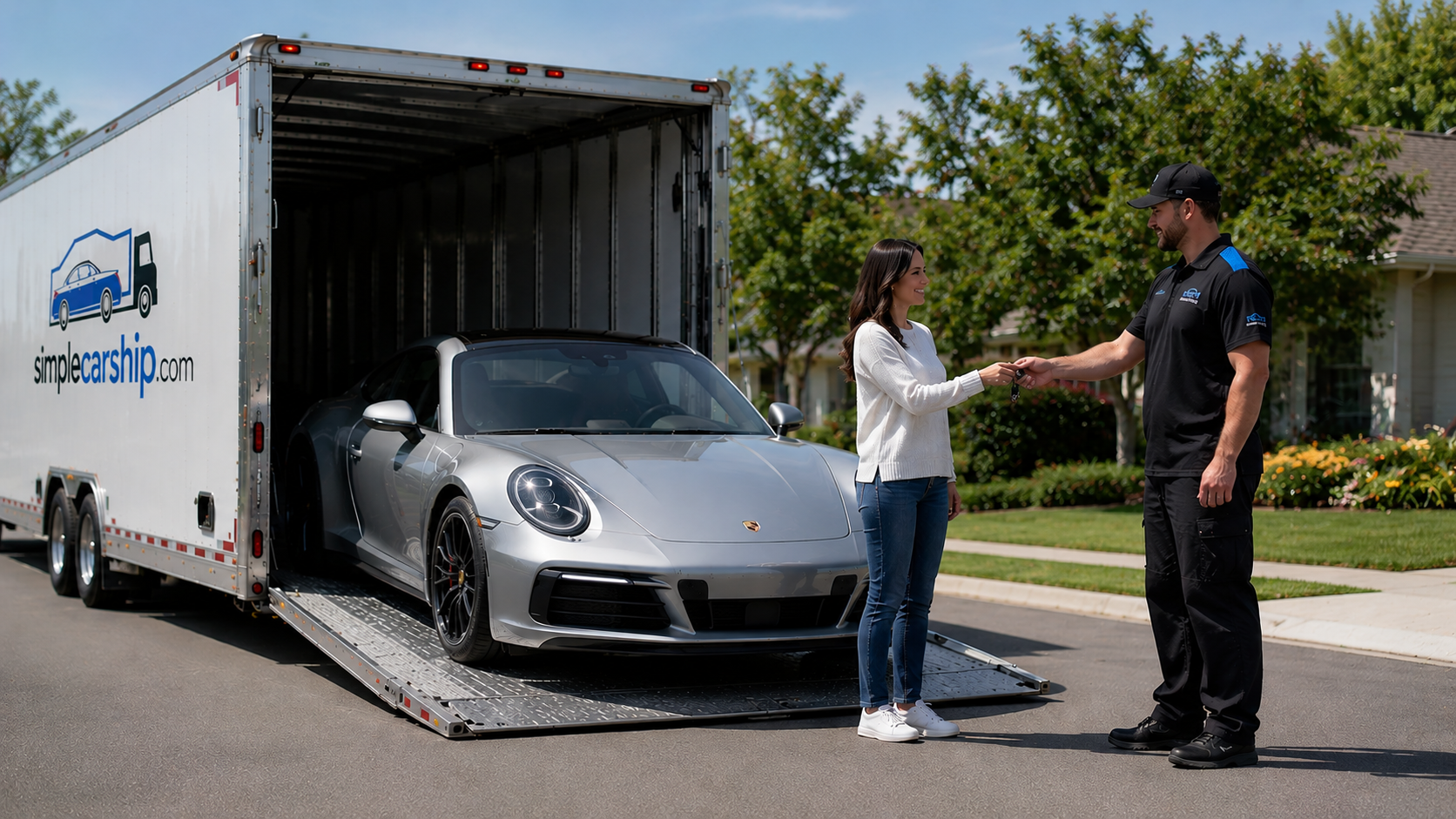
When you receive PCS orders, the clock starts on a hundred moving pieces—housing, household goods, travel arrangements, and getting your privately owned vehicle (POV) to your next duty station. Understanding how military car shipping works, what the government covers, and when to book commercial transport can save you both time and out-of-pocket expense during an already demanding transition.
POV Shipping Entitlements vs. Commercial Auto Transport
Your PCS orders entitle you to government-arranged POV shipment under specific circumstances—primarily for OCONUS moves (overseas assignments) and certain CONUS-to-OCONUS or return trips. The military contracts with vehicle processing centers (VPCs) that handle paperwork, inspection, and ocean freight for one POV per service member, sometimes two depending on your dependency status and the move type.
For CONUS-to-CONUS relocations, the government does not ship your car. You drive it yourself as part of your travel allowance, or you arrange and pay for commercial auto transport out of pocket. Many service members choose the latter when orders are short-notice, when you’re managing multiple vehicles, or when driving cross-country conflicts with report dates, leave, and family logistics.
Commercial transport gives you control over timing and door-to-door service, which government shipment rarely offers. If you’re headed from Fort Hood to MacDill, for instance, the cost to ship a car from Texas to Florida on that roughly 1,181-mile route runs between $845 and $1,025 for open transport, with transit taking two to four days. That predictability matters when you need the vehicle on-station by a hard date.
Timing Your Shipment Around PCS Orders
Auto-transport demand spikes during PCS season—late spring through summer—because carriers also handle civilian summer moves and snowbird returns. Book as soon as you have firm orders and know your report date; thirty to forty-five days out is ideal, though many reputable brokers can arrange shipments with two weeks’ notice if you accept tighter pickup windows.
Coordinate pickup so your car leaves after you’ve cleared housing but early enough to arrive before you need it. Transit times vary: short CONUS moves often complete in two to four days, while coast-to-coast routes can take seven to ten days. Enclosed transport, which runs about 60 percent higher in price than open, moves on a similar schedule but books up faster due to lower trailer availability.
If you’re shipping OCONUS through a VPC, lead times stretch much longer—often four to eight weeks from drop-off to foreign port delivery—so align your personal travel and temporary lodging plans accordingly. For commercial CONUS shipments, ask the broker for a realistic delivery window and build a day or two of cushion into your housing check-in and vehicle registration appointments.
Documentation and Proof of Orders
Commercial carriers do not require a copy of your PCS orders to move your car, but providing them can help in two ways. First, some brokers offer a modest military courtesy discount—ask, but don’t expect it to be advertised. Second, if your shipment crosses a problem (a rare delay, a carrier no-show), showing that you’re on official orders sometimes prompts faster resolution because the broker understands the stakes.
You will need the standard shipping paperwork: a signed bill of lading, the vehicle inspection report (completed at pickup and delivery), proof of ownership or a lien-holder letter if financed, and valid registration and insurance. Keep a photocopy of the inspection sheet; carrier liability hinges on what’s documented before the car rolls onto the trailer.
For OCONUS government shipment, the VPC requires orders, a valid military ID, the vehicle title or registration, and proof that the car meets emissions and safety standards for the receiving country. Japan and some European bases enforce strict rules on right-hand drive, age, and modifications; check your installation transportation office early to avoid a last-minute scramble or a rejected vehicle.
Open vs. Enclosed Transport for Military Moves
Most service members ship in open trailers—the same multi-car carriers you see on highways every day. Open transport is reliable, widely available, and fits the budget when you’re paying out of pocket. According to our Cost Index, open transport averages around $1.32 per mile in 2026, though short hauls run closer to $1.93 per mile and long hauls taper toward $0.85 per mile due to economies of distance.
Enclosed transport makes sense if you’re moving a high-value or exotic vehicle, a pristine classic, or a car with aftermarket work that would be expensive to repair. Enclosed trailers shield the vehicle from road spray, weather, and the minor paint chips that can occur in open hauling. Availability is tighter, so book early if your report date is non-negotiable.
Either method delivers the car in the same mechanical condition it left. The difference is cosmetic protection and price. Weigh the premium against your vehicle’s value and your tolerance for the small risk of in-transit blemishes that insurance and the carrier’s cargo policy would cover.
Pickup and Delivery Logistics During a PCS
Door-to-door service means the carrier drives directly to your residence or as close as a large truck can safely navigate. If you live in base housing with narrow streets or gate-access restrictions, coordinate with the broker and the carrier ahead of time; many installations have a designated lot near the outbound gate where transport trucks can meet you.
For delivery, the same principle applies. If you’re in temporary lodging or an apartment complex that bans commercial vehicles, you’ll arrange a nearby public lot—a shopping center, a hotel with permission, or the base visitors’ center. Carriers call one to two days out with a four-hour arrival window; be reachable by phone and flexible within that block. If you cannot be present, you may designate someone over eighteen with a signed letter of authorization to accept delivery and complete the inspection.
Inspect the vehicle carefully before signing the delivery receipt. Note every new scratch, dent, or missing item on the bill of lading; your signature closes the window for filing a damage claim. Carriers in our network are vetted and carry cargo insurance, but claims hinge on documented proof that the damage occurred in transit.
What Happens to Household Goods and Your Car
Your HHG shipment and your POV move on completely separate timelines. The Transportation Management Office schedules your household pack-out and pickup through one contractor; your car—whether government VPC or commercial carrier—moves independently. Do not assume they will arrive on the same day or even the same week.
If you’re using commercial auto transport, you control the dates. Get an instant car shipping quote as soon as you have orders, lock your window, and plan backward from your report date. That way you know whether the car will beat you to the new station or trail by a few days, and you can arrange a rental or carpool accordingly.
Keep essentials—uniforms, documents, change-of-station paperwork—in your personal luggage, not the trunk. The car may sit on a trailer for several days, and you won’t have access. Similarly, empty the vehicle of all loose items; carriers prohibit personal belongings for liability and weight reasons, and anything left inside risks theft or being cited on the inspection report.
Cost Considerations and Reimbursement
For CONUS-to-CONUS PCS moves, you pay the full cost of commercial car shipping; the government does not reimburse auto-transport fees. You do receive a mileage allowance (and per diem if applicable) for one POV driven to the new duty station, so compare the after-tax value of that reimbursement against the cost and convenience of shipping.
Shipping often wins when you’re moving solo, have a second vehicle, or face a report date that doesn’t allow time for a multi-day road trip. The price depends on distance, season, and transport type. Our Cost Index shows that long-haul routes trend toward $0.85 per mile in open transport, while short moves—under three hundred miles—can run as high as $1.93 per mile because fixed costs (driver time, fuel to reposition) don’t amortize over enough miles.
Fuel surcharges fluctuate with the U.S. Energy Information Administration’s weekly on-highway diesel price, and broader carrier rates track the Bureau of Labor Statistics truck-transportation Producer Price Index. Brokers build these variables into quotes, which is why locking your rate early protects you from mid-move price swings during high-demand PCS season.
Get your instant car shipping price
Real quote in seconds. Enter your details and we’ll show your price instantly.
No spam — we only use this to send your quote and confirm your booking.
Frequently Asked Questions
Can I ship a car on PCS orders if the military won’t pay for it?
Yes. For CONUS moves the government provides mileage reimbursement for driving, not shipping. You may hire a commercial carrier at your own expense. Many service members do this to meet tight report dates or to avoid a long drive with family in tow.
How much advance notice do I need to book military PCS car shipping?
Thirty to forty-five days is ideal, especially during peak summer PCS season. Reputable brokers can often arrange shipment with two weeks’ notice, but earlier booking gives you better carrier selection, firmer dates, and lower risk of premium-priced last-minute assignments.
What documents do I need to ship my POV commercially during a PCS?
You need the vehicle title or registration, proof of insurance, and a signed bill of lading provided by the carrier. If the car is financed, bring a lien-holder authorization letter. PCS orders are not required but can help secure courtesy discounts.
Does the military reimburse commercial auto transport for CONUS PCS moves?
No. For moves within the continental U.S., you receive a mileage allowance for one POV that you drive. Commercial shipping is out of pocket. OCONUS moves may include government-arranged vehicle shipment through a VPC; check your orders and contact your transportation office.
Can I leave personal items in my car when shipping it for a PCS?
Carriers prohibit personal belongings in the vehicle for liability and weight reasons. The car should be empty except for a spare tire, jack, and factory equipment. Items left inside may be noted on the inspection report and are not covered by cargo insurance.
Ready to Ship Your Car for Your Next PCS?
Moving on military orders comes with enough uncertainty—your vehicle transport doesn’t have to be one more worry. Whether you’re headed across state lines or coordinating a complex multi-vehicle move, a clear quote and locked-in dates bring the predictability you need. Get an instant car shipping quote today, and cross one more task off your PCS checklist with confidence.