
Enclosed Car Transport: When the Premium Is Worth It
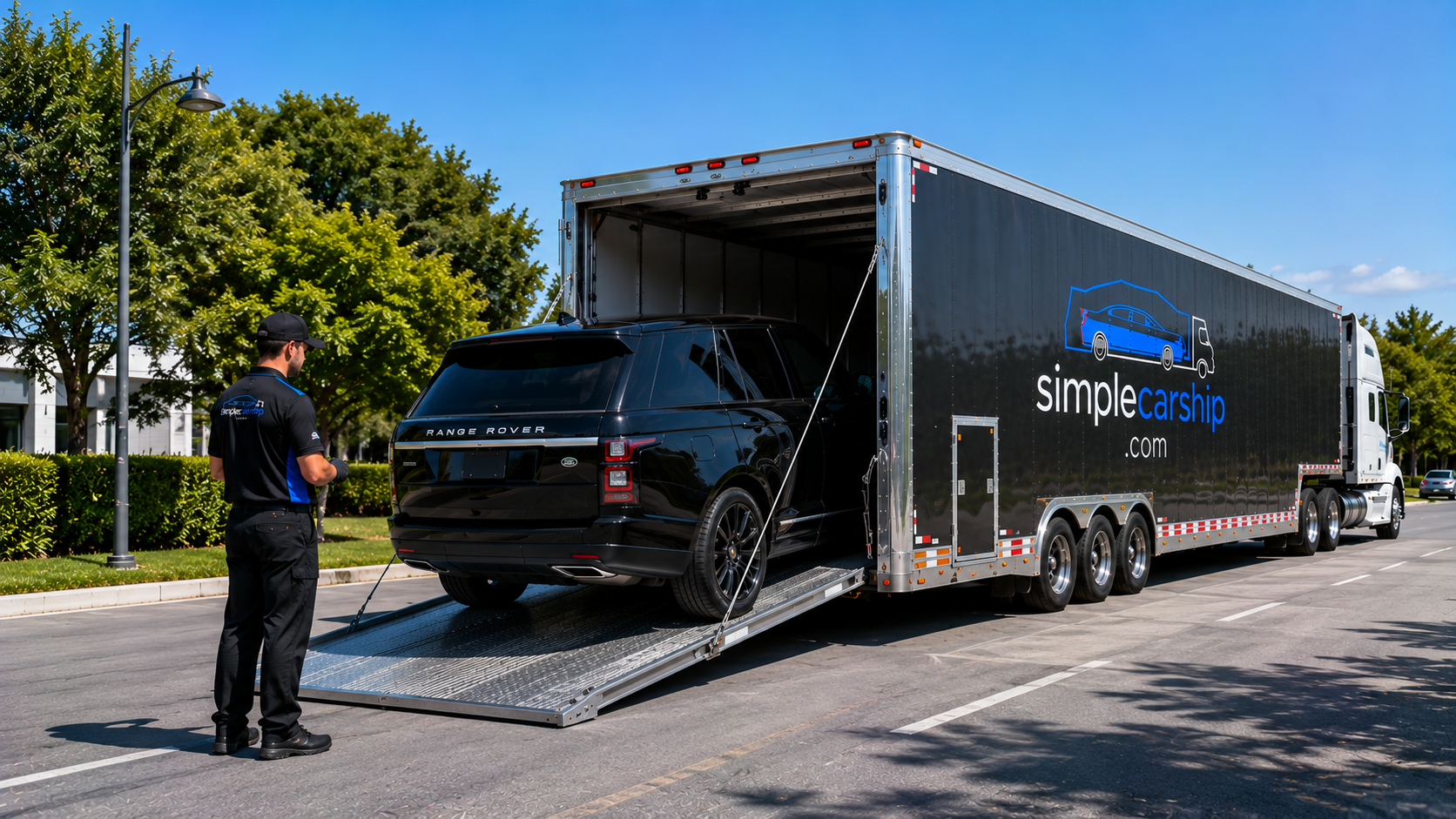
Enclosed car transport shields your vehicle from weather, road debris, and prying eyes inside a fully enclosed trailer—and costs roughly 60% more than open transport. Most cars ship perfectly safely on open carriers, so understanding when that premium buys real value versus peace of mind alone is the first step toward a smart decision. This guide breaks down the mechanics, the variations within enclosed service, and a clear framework for deciding whether your vehicle warrants the upgrade.
How Enclosed Transport Works (and Why It Costs More)
An enclosed auto carrier is a box trailer—hard sides, a roof, and usually a rear roll door or lift gate. Your car rides inside, protected from sun, rain, salt spray, and road debris. The trailer is heavier, burns more fuel, and hauls fewer vehicles than a typical open carrier (which can stack eight or nine sedans). Enclosed trailers typically carry two to seven cars, so per-vehicle cost climbs to cover fixed expenses across a smaller load.
According to our 2026 Car Shipping Cost Index, open transport averages $1.32 per mile, while enclosed runs about 60% higher. That multiplier holds fairly steady across distances, though all car shipping tapers on a per-mile basis: short hauls run closer to $1.93 per mile, cross-country moves drop toward $0.85 per mile. The enclosed premium layers on top of that curve, so a short enclosed move carries a double penalty—higher base rate and the enclosed surcharge.
Soft-Tie vs. Hard-Tie: The Suspension Question
Inside an enclosed trailer, your car must be secured. The two methods are soft-tie and hard-tie, and the difference matters for low-clearance or modified vehicles.
Soft-tie uses wide nylon straps looped over the tires or through the wheels, cinched to recessed D-rings in the trailer floor. The suspension remains free to move, so bumps don’t transfer shock into the chassis. This is the gentler method and the norm for collector cars, exotics, and anything with aftermarket aero or a front splitter that sits an inch off the ground.
Hard-tie (also called axle-strap or direct-mount) clamps or chains directly to suspension components—axles, control arms, or frame rails. It’s faster to rig and holds the car rock-solid, which is why some enclosed carriers use it for high-volume classic runs. The trade-off: the suspension can’t absorb road shock, so every pothole transmits through the mounts. For a stock daily driver this rarely causes trouble, but a lowered car, a vehicle with racing coilovers, or anything with fragile undercarriage components should specify soft-tie when booking.
Most reputable enclosed carriers default to soft-tie for high-value vehicles, but always confirm the securement method in writing.
Lift-Gate Trailers and Ground-Clearance Challenges
Standard enclosed trailers load via rear ramps. If your car has extremely low ground clearance—race-prepped track cars, bagged custom builds, or some supercars with front lift systems disengaged—even a shallow ramp angle can scrape. A lift-gate (hydraulic platform) trailer solves this by lowering flush with the ground, letting the car roll on without any slope.
Lift-gate service adds to the price and shrinks the pool of available trucks, because fewer carriers invest in the hydraulic equipment. If your vehicle needs it, ask the broker explicitly and expect the quote to reflect the specialty. Alternatively, some shops will load an ultra-low car onto a flatbed dolly first, then wheel the dolly into a standard enclosed trailer—a workaround that keeps the car’s belly off every transition.
Single-Vehicle vs. Multi-Car Enclosed Trailers
Enclosed trailers range from single-car “hotshot” boxes up to seven-car race haulers. The configuration changes speed, price, and risk profile.
- Single-car enclosed: Fastest, most flexible routing, zero risk of another vehicle leaking fluid or shifting cargo onto yours. Often run by owner-operators who specialize in exotics. Premium pricing, but door-to-door on your exact schedule.
- Two- or three-car enclosed: The sweet spot for high-value transport. Still selective about what shares the trailer, still owner-operated in many cases, but splits fuel and labor across a couple of loads. Slightly longer pickup windows than single-car.
- Five- to seven-car enclosed: Common for classic-car auctions, dealer trades, and snowbird fleets. More economical per vehicle, but you’re riding with strangers’ cars—meaning longer routes, more stops, and the small chance of a door ding during loading.
For a museum-grade restoration or a six-figure supercar, single-car is the professional standard. For a clean classic or a luxury daily driver, a two- or three-car trailer delivers most of the protection at a better price.
When Enclosed Transport Makes Sense (Decision Framework)
Enclosed isn’t about absolute value; it’s about replaceability, exposure, and risk tolerance. Here’s a practical decision tree:
| Vehicle Type | Recommendation | Why |
|---|---|---|
| Exotic, supercar, or high-value collector | Enclosed (single- or two-car) | Paint chips, weather stains, or road grime devalue the asset; replacement parts are expensive and slow; discretion matters. |
| Restored classic, concours-condition vintage | Enclosed (soft-tie) | Original paint and trim are irreplaceable; judging standards penalize any blemish; often no weather seals or modern clear coat. |
| Luxury daily driver (late-model, clean) | Enclosed or open, based on budget | Open is statistically safe, but enclosed eliminates rock chips and keeps the car pristine for lease return or resale. |
| Modified / lowered / track car | Enclosed (confirm soft-tie, ask about lift-gate) | Ground clearance and aftermarket parts require careful handling; enclosed carriers understand the drill. |
| Everyday sedan, SUV, truck (normal wear) | Open transport | The 60% enclosed premium buys little functional benefit; carriers move these by the thousands daily without incident. |
| Inoperable or project car | Open (with winch service) | Cosmetics are already compromised; save the budget for the build. |
If your car falls into a gray zone—say, a clean but not collectible sports car—ask yourself whether a rock chip or a dusting of road salt would genuinely bother you weeks later. Enclosed buys certainty and cleanliness; open buys economy and accepts the tiny statistical chance of a blemish.
What Enclosed Does Not Do
Enclosed transport is not white-glove concierge service by default—it’s a rolling garage. The driver is a professional trucker, not a detailer. The trailer will be clean and dry, but don’t expect climate control unless you’ve booked a museum-grade specialty hauler. Enclosed does not mean instant pickup; you still share dispatch windows with other loads. And while the trailer shields your car from road debris, it doesn’t eliminate every risk—loading and unloading still happen, and a careless ramp approach can scrape a splitter just as easily as on an open deck.
Inspect at pickup, document the condition with time-stamped photos, and inspect again at delivery. The same diligence you’d apply to open transport still applies here.
Booking Enclosed: What to Confirm Up Front
When you request an enclosed quote, ask these questions before you commit:
Soft-tie or hard-tie? Get it in writing if your car demands soft-tie. Lift-gate available? If your ground clearance is under three inches at the nose, confirm the truck has one or explain your loading plan. How many cars share the trailer? Single-car costs more but moves faster; multi-car is fine if the carrier vets the other vehicles. Door-to-door or terminal? Enclosed carriers often run the same residential routes as open trucks, but in dense metro areas a nearby meet point may be faster. Insurance coverage? Carriers in any reputable broker’s network carry cargo insurance; ask for the certificate if the vehicle’s value warrants it.
Reputable brokers will answer all five without hesitation. Evasive answers or pressure to “just book it now” are signs to walk away.
The Real Cost of Peace of Mind
Enclosed transport is expensive because it’s specialized, lower-volume, and requires careful handling. For the right vehicle, that expense is rational insurance: you’re paying to eliminate the chance of a rock chip that costs five hundred dollars to respray, or a salt stain on leather that drops resale value, or the anxiety of watching your restoration cross four states on an open deck. For a daily driver with normal wear, that same expense buys peace of mind but little functional difference in outcome.
The decision isn’t about what the car is worth in dollars—it’s about what a blemish costs you, financially or emotionally. If the answer is “a lot,” enclosed is the right call. If the answer is “I’d rather save the premium and do a clay-bar detail when it arrives,” open transport will get the car there just as safely, with a slightly dustier hood.
Get your instant car shipping price
Real quote in seconds — no spam, no runaround.
Frequently Asked Questions
Is enclosed car transport safer than open transport?
Both methods are mechanically safe and insured. Enclosed eliminates weather, debris, and road grime—cosmetic risks—but doesn’t change accident or theft rates, which are already extremely low. The safety difference is about the car’s exterior finish, not structural integrity or secure arrival.
How much more does enclosed auto transport cost?
Enclosed typically runs about 60% higher than open transport on the same route. Exact pricing depends on distance, season, trailer type, and how many vehicles share the load. Always request a detailed quote rather than estimating from averages, since short hauls and specialty services add to the base premium.
What is soft-tie securement and why does it matter?
Soft-tie uses wide nylon straps over tires or wheels, letting the suspension move freely and absorb road shock. Hard-tie clamps directly to axles or frame, locking the suspension. Low, modified, or high-value cars should specify soft-tie to avoid stress on undercarriage components during transit.
Can enclosed trailers handle lowered or modified cars?
Yes, if the carrier has a lift-gate or shallow-angle ramps and uses soft-tie securement. Confirm ground clearance and loading method when booking. Some enclosed operators specialize in track cars and custom builds, so communicate your car’s specs up front to ensure the right equipment is dispatched.
Do I need enclosed transport for a luxury car?
Not necessarily. Late-model luxury daily drivers ship safely on open carriers every day. Choose enclosed if the car’s condition is concours-level, if you’re preparing it for resale or lease return, or if rock chips and weather exposure genuinely concern you. Otherwise, open transport offers excellent value and reliability.
Ready to see what enclosed transport costs for your specific vehicle and route? Our network includes vetted enclosed carriers—single-car specialists, soft-tie experts, and lift-gate equipped trucks—with transparent pricing and real dispatch windows. Get an instant quote at simplecarship.com and compare your options in seconds, or call to talk through your car’s needs with a shipping advisor who understands the details that matter.