
Door-to-Door vs. Terminal-to-Terminal Car Shipping
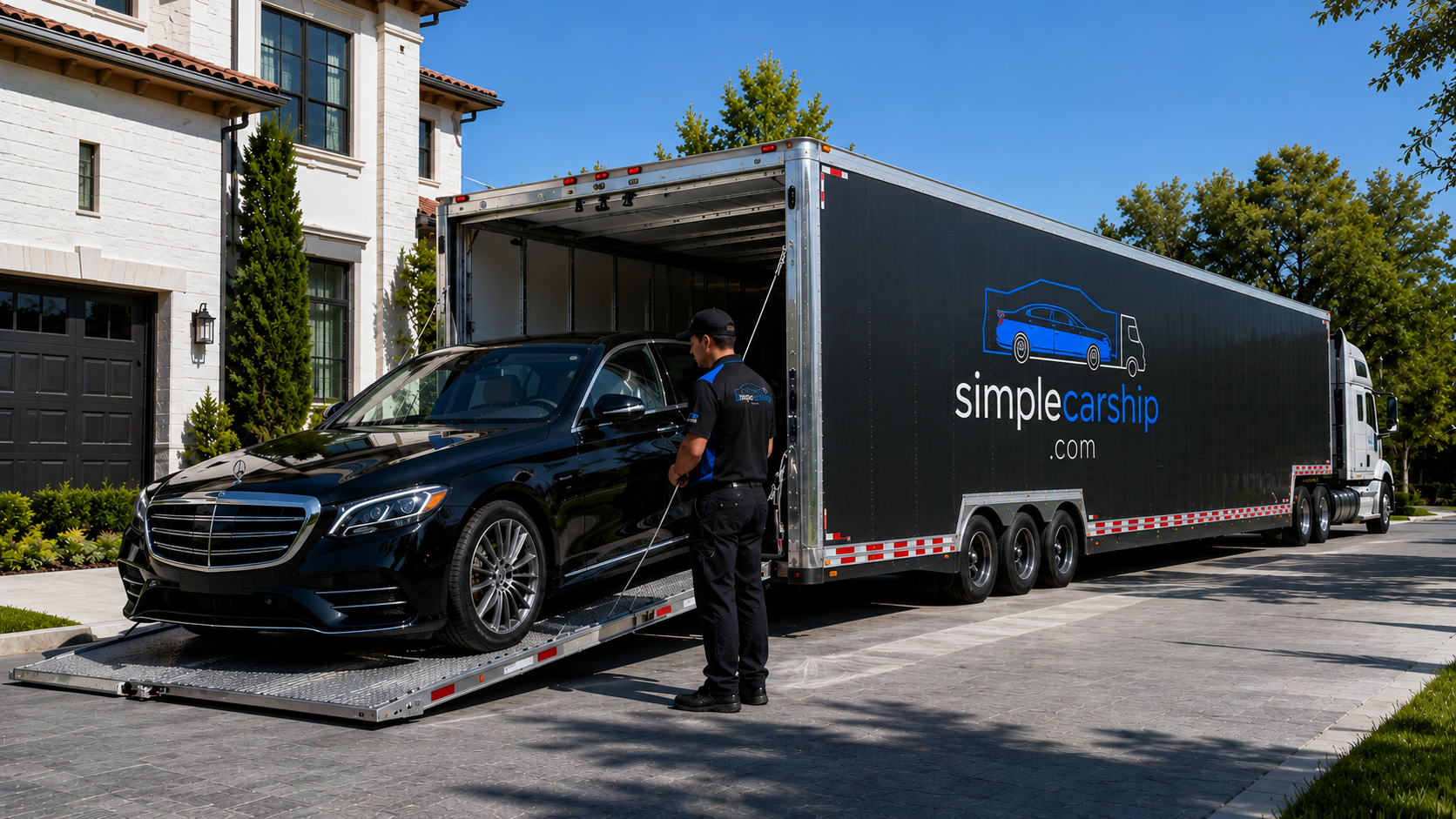
When you book auto transport, you’ll choose between door-to-door service—where the carrier picks up and drops off at your addresses—and terminal-to-terminal, which uses a carrier’s hub at each end. Door-to-door costs more but saves time and logistics work; terminal-to-terminal reduces the price in exchange for you handling drop-off and pickup. Most customers find door-to-door worth the difference, but understanding both options helps you make the right call for your schedule and budget.
How Door-to-Door Car Shipping Works
Door-to-door means the truck comes as close to your address as safely possible. The driver calls a day or two ahead to confirm a window, then arrives at your home, office, or wherever you park the vehicle. At delivery, the carrier contacts your recipient, arranges a window, and brings the car to that address.
“As close as safely possible” is the key qualifier. If you live on a narrow street, under low tree branches, or in a gated community that bans commercial vehicles, the driver will ask you to meet at a nearby wide intersection or shopping-center lot. This still counts as door-to-door because the carrier handles coordination and comes into your neighborhood; you’re only moving the car a few blocks, not driving across town to a terminal.
The convenience is tangible: one phone call, one handoff, one delivery. You don’t store the car anywhere or arrange a second trip.
How Terminal-to-Terminal Shipping Works
Terminal-to-terminal means you deliver the vehicle to a carrier’s yard or partner lot and later retrieve it from another terminal near the destination. Terminals are usually truck depots, storage yards, or partner tow-lots. You coordinate drop-off during business hours, the carrier moves the vehicle on its schedule, and you pick up at the destination terminal when notified.
This model lets carriers build full loads at a central point without detouring for individual pickups. That efficiency translates to a lower rate, though the discount is modest—typically less than the cost of fuel, parking, and your time to drive to and from both terminals.
Terminal hours matter. Many yards close by 5 p.m. and aren’t open weekends, so you may burn leave from work twice. If your destination terminal is an hour away, you’ll also need a ride back or pay for a rental. These hidden costs quickly erode upfront savings.
Cost Difference and When Each Option Makes Sense
Door-to-door adds to the base rate because it requires the carrier to enter residential areas and coordinate two appointments. Terminal-to-terminal reduces that premium by shifting first-mile and last-mile work to you. The difference depends on route density and detour distance, but expect terminal pricing to sit below door-to-door.
Our Cost Index shows open transport averaging around $1.32 per mile in 2026, with short hauls near $1.93 per mile and long hauls near $0.85 per mile. Those benchmarks apply to door-to-door. Terminal-to-terminal shaves a slice off, but that slice is often less than the cost of two round-trips to the terminals.
Door-to-door makes sense when:
- You value your time and want a single hand-off at home or work.
- The vehicle isn’t drivable, making a trip to the terminal difficult or expensive.
- Neither you nor your recipient lives near a terminal.
- You’re coordinating a move or job relocation and can’t spare a day for pickup logistics.
Terminal-to-terminal makes sense when:
- You live close to the origin terminal and your recipient is near the destination terminal.
- You’re shipping an inoperable project car already at a shop or storage yard near the terminal.
- You have flexible hours and free help for the pickup ride.
- You’re willing to trade labor for a modest rate reduction.
For most households, door-to-door wins. The time and coordination cost of terminal service rarely justifies the savings unless both terminals are exceptionally convenient.
Timing and Scheduling Considerations
Door-to-door scheduling is simpler. You agree on a pickup window with the carrier—usually one to three days—and the driver calls to narrow it to a few hours. At delivery, the same process repeats. You control where you’ll be, and the carrier adapts.
Terminal scheduling adds handoffs. You must drop off during business hours, which may not align with your work schedule. Once the car arrives at the destination terminal, you have a limited window to retrieve it—often just a few days—before storage fees start. If you can’t pick up immediately, those daily charges compound quickly.
Weather and delays hit both methods equally once the car is on the truck. With door-to-door, a one-day delay means the driver calls and you adjust your calendar. With terminal, a delay may mean you arrive to find the car hasn’t landed yet, wasting a trip.
Insurance, Condition, and Vehicle Access
Carrier cargo insurance covers your vehicle the same way regardless of service type. What changes is exposure time. Terminal cars sit in a yard—sometimes outdoors, sometimes for days—before and after the truck leg. Door-to-door vehicles spend less time in storage, which matters for high-value or exotic vehicles you’d prefer not to leave in an unsecured lot.
Condition reports happen at pickup and delivery. With door-to-door, you walk around the car with the driver twice, note any marks, and both sign. With terminal, you often check in with a lot attendant who may rush the inspection, and you pick it up the same way. If you later discover damage and the report wasn’t thorough, documenting responsibility becomes harder.
Terminal storage also means your keys and vehicle sit unattended. Reputable carriers secure their yards, but you’re adding an extra environment and extra hands to the chain of custody.
Why Most Customers Choose Door-to-Door
Auto transport is already a significant expense, and what drives car shipping costs includes distance, vehicle size, season, and route demand. Once you’re paying for the truck and driver’s expertise, the incremental cost of door-to-door service buys meaningful convenience. You avoid two drives to terminals, two sets of business-hour constraints, and the risk of storage fees if your schedule slips.
Terminal-to-terminal pricing looks attractive on paper, but when you account for fuel to and from the yards, the value of your time, and potential storage or parking fees, net savings shrink. Unless both terminals are within a few miles of your doors and you have flexibility to drop off and pick up on the carrier’s schedule, door-to-door delivers better value.
The vast majority of customers, even cost-conscious ones, opt for door-to-door once they understand the logistics. The few who choose terminal typically ship project cars already stored near a yard or live where the terminal is on their commute.
Special Situations: Inoperable Cars, Tight Streets, and Storage Needs
If your car doesn’t run, door-to-door becomes even more valuable. Getting an inoperable vehicle to a terminal means paying for a tow or rollback, which can cost as much as the terminal discount itself. Carriers equipped with a winch can load a non-runner at your home, folding that capability into the transport rate.
Tight streets sometimes force a hybrid approach. The carrier offers door-to-door service but asks you to meet at the nearest truck-accessible intersection—often a parking lot or wide cross street a few blocks away. This is still classified as door-to-door; you’re not driving to a distant terminal. The carrier handles everything else.
If you need to store your car before or after transport, terminal service won’t help. Terminals charge daily storage once a grace period expires, and those fees add up faster than a private storage unit. Door-to-door lets you hand off the car on your timeline and have it delivered when you’re ready, with no intermediate holding costs.
Get your instant car shipping price
Real quote in seconds — no spam, no runaround.
Frequently Asked Questions
Does terminal-to-terminal car shipping really cost less than door-to-door?
Yes, terminal service typically costs less upfront because the carrier doesn’t route into neighborhoods or coordinate appointments. However, the savings are modest and often offset by your fuel, time, and potential storage fees at the terminals. Most customers find door-to-door better value once all costs are factored in.
Can I still get door-to-door service if I live on a narrow street?
In most cases, yes. The driver will ask you to meet at a nearby wide intersection or parking lot if the truck cannot safely navigate your street. You move the car a few blocks; the carrier handles the rest. This hybrid is still considered door-to-door service.
What happens if I can’t pick up my car from the terminal on time?
Terminals impose daily storage fees after a short grace period, often starting the second or third day. These charges accumulate quickly. If your schedule is uncertain, door-to-door avoids this risk entirely because the carrier delivers directly to your recipient on an agreed date.
Is my car safer with door-to-door or terminal shipping?
Both methods carry the same cargo insurance during transit. Door-to-door reduces the time your vehicle sits in a storage yard, which can matter for high-value or exotic vehicles. Terminal service adds exposure at the origin and destination lots, plus additional handoffs during check-in and pickup.
Which service is faster, door-to-door or terminal-to-terminal?
Transit time on the truck is identical. The difference is in the handoff. Door-to-door scheduling is simpler—one pickup, one delivery. Terminal adds the time you need to drop off and retrieve the car, plus any waiting if your schedule and the terminal’s hours don’t align cleanly.
Ready to Ship Your Car?
Whether you choose the simplicity of door-to-door or the hands-on approach of terminal service, the next step is getting an accurate quote tailored to your route, vehicle, and timeline. Our instant quote tool pulls real-time rates from carriers in our network, so you can compare your options and book with confidence. Get your free quote now and see exactly what your shipment will cost.