
Car Shipping When You Move: A Relocation Playbook
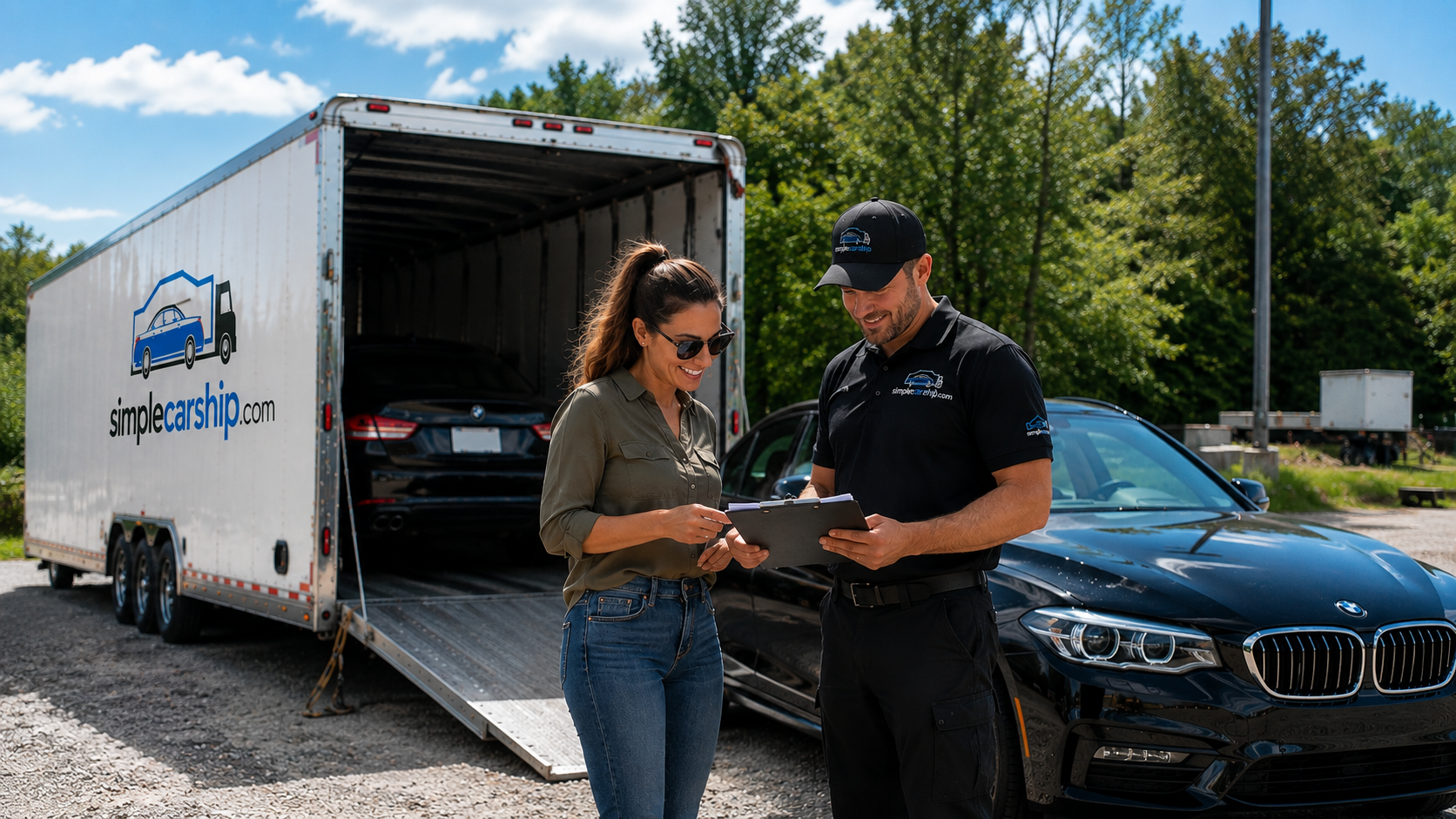
Coordinating car shipping when moving means balancing three timelines: the household-goods truck, your travel schedule, and the carrier delivering your vehicle. This playbook walks through timing, logistics, and cost levers so your car arrives when you need it.
Why Ship Instead of Drive During a Move?
Driving cross-country sounds romantic until you tally the cost: three to five motel nights, meals, fuel, wear on the car, and lost days. When you’re already managing a household move, adding a solo road trip amplifies stress—and if you’re relocating two cars, one will need shipping regardless.
Shipping makes sense when origin and destination exceed six hundred miles. Below that threshold you’re paying fixed dispatch and delivery costs without enough miles to offset them; our Cost Index shows short hauls run around $1.93 per mile while long hauls drop to roughly $0.85 per mile. A cross-country route spreads pickup, paperwork, and drop-off overhead across two thousand miles instead of two hundred.
Calendar efficiency is the second reason. Fly to your new city, have the car meet you there, and you reclaim four travel days to handle utilities, lease signings, and unpacking—not white-knuckling through Nebraska blizzards.
Sequencing Car Pickup with Your Household Move
Household movers and auto carriers operate on different lead times. Van lines book two to four weeks out with a loading window; car carriers confirm pickup one to three days in advance, matching your address with a truck already running your lane.
The golden rule: schedule car pickup for the same day as—or one day after—your household truck loads. This keeps your vehicle available for last-minute errands and ensures you’re on-site to hand over keys and sign the bill of lading. If the car leaves two days early, you’re bumming rides or paying for a rental.
Communicate your household moving date when you get an instant car shipping quote. Reputable brokers note your preferred pickup window and dispatch only when a carrier can hit that span. Avoid outfits demanding you commit weeks in advance; the trucking market is too fluid.
Timing Delivery So You Have Wheels When You Land
Transit time varies by distance and season. Coast-to-coast shipments take five to seven days in summer, sometimes nine in winter. Shorter routes—eight hundred miles—deliver in two to four days.
Work backward from your arrival date. If you fly in Saturday and need the car Monday morning, schedule pickup so delivery lands Friday or Saturday. Carriers quote a window (three to five days California to Texas), not a guaranteed date, because road conditions and prior stops introduce variability.
Build in a one-day cushion. If the carrier quotes three to five days and you need the car on day four, you’re gambling. Plan as if delivery hits the last day of the window. Rent a car for overlap if necessary—cheaper than rebooking flights or waiting in an empty apartment.
One-Car Versus Two-Car Households
Single-car households have the simplest decision: ship and fly, or drive and tow a trailer if you have few boxes. The break-even tips toward shipping beyond seven or eight hundred miles, because the value of your time and vehicle wear outweigh transit convenience.
Two-car households gain flexibility. Most common: drive one vehicle loaded with essentials—laptops, documents, suitcases—and ship the second. This gives you immediate wheels while the shipped car follows days later. Drive the reliable car with cargo space; ship the low-clearance sports car or older sedan you don’t trust for three thousand miles.
Shipping both cars is the premium choice. You fly, the cars meet you, and you avoid marathon drives. The cost is straightforward: two shipments, but you preserve roughly ten thousand miles of cumulative depreciation and reclaim a week. For executives on relocation packages or time-sensitive job starts, double-shipping is standard.
Open Versus Enclosed Transport for a Household Move
Open transport—multi-level trailers carrying eight to ten cars exposed to weather—is the industry backbone. Reliable, widely available, and runs at roughly $1.32 per mile on average in 2026. Enclosed transport uses box trailers, shields from road spray and hail, and costs about sixty percent more.
For typical sedans or SUVs, open is rational. These vehicles were engineered to withstand rain and highway debris; a few days on an open trailer won’t harm them. Enclosed makes sense for high-value or exotic vehicles, classics with vulnerable paint, or cars where minor rock chips justify the premium.
Households moving luxury or collector cars sometimes split: ship the daily driver open, ship the weekend car enclosed. This keeps total outlay reasonable while protecting the asset that matters most.
Cost Levers and How to Control Them
Auto transport pricing hinges on distance, route density, season, and service level. Distance drives base rate, but per-mile cost tapers as mileage climbs—short hauls around $1.93 per mile versus long hauls near $0.85 per mile, reflecting fixed costs spread over more miles.
Route density matters because carriers prefer lanes they run regularly. A California-to-Texas move sits on a high-volume corridor; the cost to ship a car from California to Texas for open transport typically falls between $1,505 and $1,830 for the roughly 1,564-mile haul, with enclosed running $2,405 to $2,930 and transit taking three to five days. A move from rural Vermont to rural Idaho costs more per mile because fewer trucks run that pairing.
Seasonality adds another layer. Summer is peak moving season—prices climb, availability tightens. Winter sees lower demand except snowbird routes (Midwest to Florida, Northeast to Arizona), which surge November through February. Spring and fall offer moderate weather, decent carrier availability, and pricing that hasn’t spiked.
Flexibility is your biggest cost lever. Offering a three- or four-day pickup window instead of a single date lets brokers slot you onto a truck already heading your direction, often at lower rates. Accepting terminal delivery—meeting the truck at a nearby lot—can trim price, though savings rarely justify the hassle unless moving to a very remote address.
What to Do with the Car Before Pickup
Carriers inspect vehicles at pickup and note existing damage on the bill of lading. Wash the car; a clean exterior lets both you and the driver spot every scratch. Remove or secure aftermarket add-ons—spoilers, bike racks, antenna toppers—that might catch wind or snag. Empty the interior except for a floor mat; cargo adds weight and isn’t covered by carrier insurance.
Check fluid levels and tire pressure. The car will be driven on and off the truck, sometimes up steep ramps, so it needs to run and steer normally. If the battery is weak, replace it or leave a jump pack in the cabin.
Document everything. Take time-stamped photos of all four sides, the roof, wheels, and odometer reading. These prove condition at pickup and protect you in the rare event of transit damage. Most shipments arrive without a scratch, but the bill of lading and photo set are your leverage if something goes wrong.
Receiving the Car at Your New Home
When the carrier calls to schedule delivery, confirm the address and ask for a two-hour window. Trucks can be seventy feet long—many residential streets aren’t trailer-accessible. If your driveway is tight or the block has low-hanging trees, suggest meeting at a nearby shopping center or church parking lot.
Inspect the car before you sign the delivery receipt. Walk around it in daylight, compare to your pickup photos, and note any new damage on the driver’s copy of the bill of lading. Once you sign “received in good condition,” filing a claim becomes harder. If you find fresh damage, write a detailed description and take new photos immediately; you’ll need both to pursue a cargo-insurance claim.
Pay the driver with the agreed method—usually cash or payment app for the balance after any deposit. Verify the amount matches your contract. Check the odometer; it should be within ten miles of the pickup reading, accounting for short drives on and off the trailer.
Get your instant car shipping price
Real quote in seconds — no spam, no runaround.
Frequently Asked Questions
Should I ship my car before or after I fly to my new city?
Ship the car so it arrives one or two days after you land. This ensures you’re on-site at origin to hand over keys and on-site at destination to inspect and receive it. Arriving before your car gives you time to settle utilities and handle move-in tasks, then the vehicle appears when you’re ready.
Can I pack boxes inside my car when it ships?
Carriers discourage it because personal cargo isn’t covered by their insurance and adds weight. Some allow a small amount in the trunk—check your contract—but anything valuable or irreplaceable should travel with you or go in the moving truck where it’s insured as household goods.
What happens if the carrier can’t deliver on the day I need?
Carriers quote a window, not a hard date. If delivery looks likely to miss your target, the dispatcher will call. You can usually extend the window or arrange a hold at a nearby terminal. Renting a car for overlap days is common and cheaper than rebooking other travel.
Do I need to be present for pickup and delivery?
Yes, or designate someone over eighteen with photo ID. You’ll sign the bill of lading at pickup and the delivery receipt at drop-off, and both moments require a walk-around inspection. Remote handoffs invite disputes over pre-existing damage.
How much does moving season affect car shipping prices?
Summer demand pushes prices higher and tightens carrier availability because it overlaps with peak household-moving months. Booking four weeks ahead in June or July is smart. Winter rates often drop except on snowbird lanes, and spring or fall offer the best balance of weather and cost.
Get Your Move Rolling
Car shipping when moving is one less thing to white-knuckle yourself. When you align pickup with your household truck, build delivery cushion into your arrival calendar, and lock in your quote early, the car simply appears at your new address—no motels, no wear, no detour through the world’s largest truck stop. Ready to see what your route costs? Get an instant car shipping quote and fold auto transport into your relocation checklist.