Car Shipping Terms Glossary: Broker, Carrier, BOL & More
Auto transport has its own jargon. When comparing quotes or reading contracts, terms like “carrier,” “broker,” “BOL,” and “deadhead” appear constantly—knowing what they mean helps you ask the right questions and avoid confusion. This car shipping terms glossary covers the most common phrases in plain English.
Broker vs. Carrier: Who’s Moving Your Car?
Broker: A car shipping broker (like Simple Car Ship) doesn’t own trucks. We connect you to vetted motor carriers, handle paperwork, and coordinate pickup and delivery. Brokers hold FMCSA broker authority (MC number) and maintain a surety bond. Using a broker typically gets you more competitive pricing because we shop your job across multiple carriers.
Carrier: The trucking company that physically loads your vehicle and drives it to destination. Carriers hold motor carrier (MC) and DOT operating authority and carry cargo insurance. They dispatch the driver and operate the truck. When you book through a broker, the carrier is assigned once routing and pricing are locked in.
Understanding this split matters: when you call for a quote, you’re usually talking to a broker first. The carrier comes into the picture at dispatch.
Bill of Lading (BOL): Your Shipping Contract and Receipt
The Bill of Lading—or BOL—is the most important document in your shipment. It serves three roles: contract of carriage, receipt for your vehicle, and condition report. You’ll sign it twice: at pickup, noting any existing damage (scratches, dents, tire condition), and at delivery, confirming the car arrived in the same state.
Read carefully before signing. The BOL lists year, make, model, VIN, pickup and delivery addresses, and carrier insurance information. If there’s new damage at delivery, note it in writing on the BOL before signing—that documentation is your foundation for any insurance claim. Never sign a blank BOL or one that says “condition subject to further inspection.”
Open vs. Enclosed Transport: The Two Main Methods
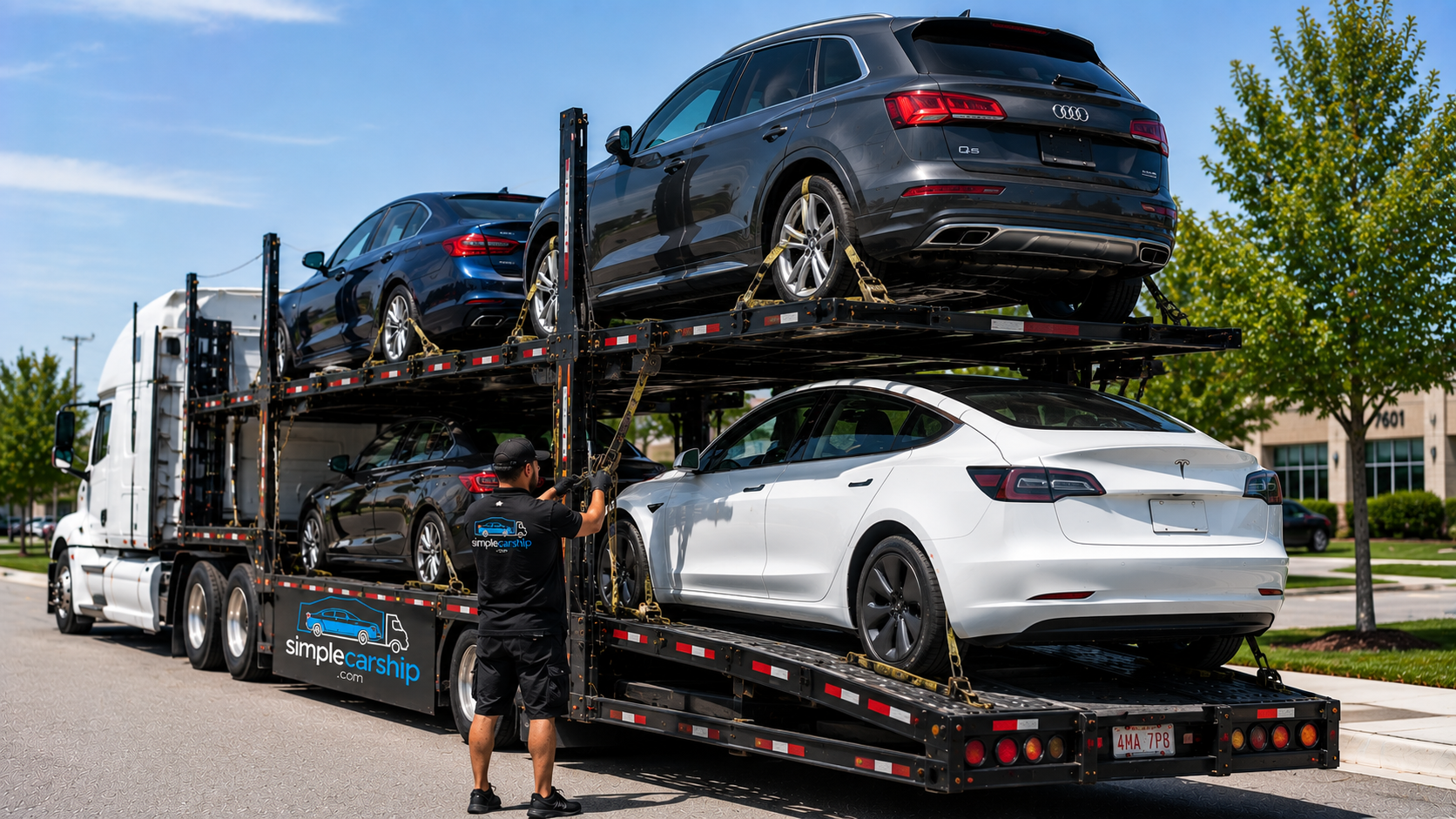
Open transport is the standard multi-level trailer carrying up to ten vehicles exposed to weather. According to our Cost Index, open transport averages around $1.32 per mile in 2026. It’s safe, reliable, and how most cars move across the country, including new cars from factories.
Enclosed transport uses a fully covered trailer that shields vehicles from road spray, sun, and debris. It runs about 60% higher than open because trailers carry fewer cars and are in shorter supply. Enclosed is right for high-value or exotic vehicles, vintage restorations, or any car where cosmetic condition is non-negotiable.
Door-to-Door, Terminal-to-Terminal & Delivery Terms
Door-to-door: The carrier picks up at your address and delivers to your destination address. This is the default service. “Door” is approximate—drivers need space to maneuver trucks that can be seventy feet long, so if your street is narrow, has low-hanging trees, or restricts commercial vehicles, you may meet the driver at a nearby accessible location.
Terminal-to-terminal: You drop your car at a carrier’s yard and pick it up at another terminal near destination. It can cost less but adds inconvenience—you’re responsible for getting to and from terminals, and your car may sit in a lot for days.
Delivery window: The range of dates the carrier commits to for delivery. Interstate moves are rarely exact; weather, DOT hours-of-service rules, and multi-stop routing introduce variability. A typical window is one to five days for cross-country hauls, tighter for shorter runs.
Pricing & Cost Terminology You’ll Encounter
Per-mile rate: Most pricing is built on dollars-per-mile, but the rate isn’t flat. Our Cost Index shows short hauls running around $1.93 per mile, while long hauls drop to about $0.85 per mile—fixed costs (loading, driver time, insurance) spread over greater distance. Moving a car cross-country often costs less per mile than a three-hundred-mile regional run.
Deadhead miles: Empty miles a carrier drives without revenue load—driving from the last drop-off to your pickup location. If you’re shipping from a rural area or off major freight lanes, the carrier may need to deadhead to reach you, which typically adds to price. Routes with good freight balance cost less because carriers minimize deadhead.
Fuel surcharge: A variable fee tied to diesel prices, often indexed to the U.S. Energy Information Administration’s weekly diesel price. When fuel costs spike, carriers adjust surcharges. Some brokers quote all-in prices that absorb the surcharge; others break it out separately. Always confirm what’s included in your quote.
Deposit: Upfront payment to reserve your shipment, usually collected by the broker at booking. The balance is due to the carrier at delivery, typically in cash or certified funds (never wire the balance before delivery). Ask whether the deposit is applied to your total or held separately.
Regulatory & Authority Terms
MC number (Motor Carrier number): A unique identifier issued by the FMCSA to freight brokers and carriers. You can look up any MC number on the FMCSA’s public database to verify authority, insurance, and safety records.
DOT number: A U.S. Department of Transportation identifier assigned to commercial motor carriers. It’s linked to the carrier’s safety rating, inspection history, and crash data, all searchable on the FMCSA website. Checking DOT records before booking is smart diligence.
FMCSA (Federal Motor Carrier Safety Administration): The federal agency that regulates the trucking industry, including auto transport. FMCSA sets rules for hours of service, insurance minimums, broker bonds, and safety standards.
Cargo insurance: Coverage the carrier maintains to protect vehicles in transit. Federal rules require minimum levels; most carriers carry higher limits. Your quote should state the coverage amount. Important: cargo insurance covers damage during transport, not personal belongings inside the car, and claims go through the carrier’s insurer.
Vehicle & Logistics Terms
Inoperable / non-running vehicle: A car that can’t roll, steer, or brake under its own power. Carriers need advance notice because loading a non-runner requires a winch and adds time, which usually increases cost. If your car doesn’t start or has seized brakes, declare it upfront.
POV (Privately Owned Vehicle): Military shorthand for a personal car, often used in PCS (Permanent Change of Station) moves. Some brokers offer specialized POV shipping programs with timing aligned to orders.
Expedited shipping: Faster-than-standard service, often with guaranteed pickup within one to three days and a tighter delivery window. Expedited costs more because it requires the carrier to prioritize your vehicle and may involve dedicated routing. Useful for time-sensitive relocations but not necessary if you plan ahead.
Top-load / bottom-load: On a multi-level open carrier, top-deck positions are sometimes preferred (slightly less road spray), though in practice the difference in exposure is minimal. Some customers request top-load for peace of mind; carriers may accommodate if space allows.
VIN (Vehicle Identification Number): The seventeen-character serial number unique to your car. Carriers and brokers ask for it to confirm year, make, model, and sometimes weight. Your VIN goes on the BOL—always double-check that it’s recorded correctly.
Booking & Operational Terms
Dispatch: The moment your shipment is assigned to a specific carrier and driver. After you book with a broker, the broker “dispatches” your order by contracting with a carrier. You’ll receive dispatch confirmation with the carrier’s name, truck number, driver contact, and estimated pickup date.
First available date (FAD): The earliest date you’re ready for pickup. Giving yourself a flexible window—a range of several days—makes it easier to match your shipment with a carrier running your route, which can mean better pricing and faster assignment.
Get your instant car shipping price
Real quote in seconds. Enter your details and we’ll show your price instantly.
No spam — we only use this to send your quote and confirm your booking.
Frequently Asked Questions
What’s the difference between a broker and a carrier in car shipping?
A broker arranges the shipment and connects you to motor carriers; the carrier owns the truck and physically transports your car. Brokers hold FMCSA broker authority and a surety bond, while carriers hold motor carrier and DOT numbers and carry cargo insurance. Most customers book through brokers for convenience and competitive pricing.
What is a Bill of Lading and why does it matter?
The Bill of Lading is your shipping contract, receipt, and vehicle-condition report combined. You sign it at pickup and delivery, noting any damage each time. It’s your legal record—never sign a blank BOL or one marked “subject to inspection,” and always photograph your car before and after transport.
How much more does enclosed transport cost than open?
Enclosed transport runs about 60% higher than open, according to our Cost Index. The premium buys full weather protection and is typically chosen for high-value, exotic, or classic vehicles. Open transport is safe and used for the vast majority of shipments, including dealership inventory and new cars from the factory.
What does “door-to-door” actually mean in car shipping?
Door-to-door means the carrier picks up and delivers at your specified addresses—but “door” is approximate. Trucks can be seventy feet long, so if your street is narrow, has low trees, or bans commercial vehicles, you may meet the driver at a nearby accessible location. It’s still more convenient than driving to a terminal.
Why do short-distance car shipments cost more per mile?
Fixed costs—loading time, driver wages, insurance, fuel to reach your pickup—don’t scale with distance. Our Cost Index shows short hauls averaging around $1.93 per mile, while long hauls drop to about $0.85 per mile, because those fixed costs spread over more miles. A cross-country move is often a better per-mile value than a regional one.
Ready to Ship? Get Your Quote
Now that you know the language, you’re ready to compare quotes with confidence. Understanding terms like BOL, deadhead, and door-to-door helps you ask the right questions and avoid surprises. When you’re ready, get an instant car shipping quote and see transparent pricing for your route—no jargon, just a straightforward number and a team that speaks your language.