How Much Does It Cost to Ship a Car from South Carolina to Missouri?
Shipping a car from South Carolina to Missouri typically costs between $1,405 and $1,710 for open transport, while enclosed trailer service runs $2,250 to $2,740. The 855-mile journey crosses five states, and your final price depends on your vehicle type, the exact cities involved, current fuel costs, and how quickly you need delivery. Here’s what moves the number—and how to ship your car the simple way.
Get your instant car shipping price
Real quote in seconds — no spam, no runaround.
What Determines the Cost of Shipping from South Carolina to Missouri
Distance is the foundation—855 miles from Charleston or Columbia to St. Louis or Kansas City—but it’s not the only factor. Carrier availability on this Southeast-to-Midwest corridor fluctuates weekly; when fewer trucks are running the route, prices edge higher. Your vehicle matters, too: a standard sedan fits easily on any trailer, but an oversized SUV, lifted truck, or low-clearance sports car may require special equipment or positioning, adding $100–250 to the quote. Pickup and delivery locations play a role as well. If you’re near I-26, I-77, or I-70—the main arteries connecting South Carolina to Missouri—carriers can access your address without detours, keeping costs down. Rural pickups 30+ miles off the interstate can add $75–150 in repositioning fees.
Seasonal demand shifts the market. Spring and summer see higher volumes as families relocate and college students move, tightening carrier capacity and nudging prices upward by 10–15%. Winter is typically softer, though ice storms in the Appalachians or Ozarks can delay schedules. Fuel surcharges fluctuate with diesel prices; a $0.50/gallon jump translates to roughly $40–60 more on an 855-mile haul. Finally, speed costs money: standard transit (3–5 days dock-to-dock) sits in the ranges above, but if you need guaranteed expedited service, expect to pay around $2,294 for express open transport, with a carrier assigned within hours and delivery in 1–3 days.
Open vs. Enclosed Transport: Which Makes Sense for South Carolina to Missouri
Open transport—vehicles loaded onto a two-tier carrier, exposed to weather—is how roughly 90% of cars move across the country, including this route. It’s safe, efficient, and cost-effective at $1,405–$1,710. Your car rides alongside half a dozen others, shielded from road debris by the trailer’s design but not from rain, dust, or sun. For daily drivers, commuter cars, and most SUVs, open is the clear choice: reliable carriers, shorter booking windows, and a price that makes sense. The biggest risk is cosmetic—tree sap, road grime, or the occasional bird strike—all easily washed off.
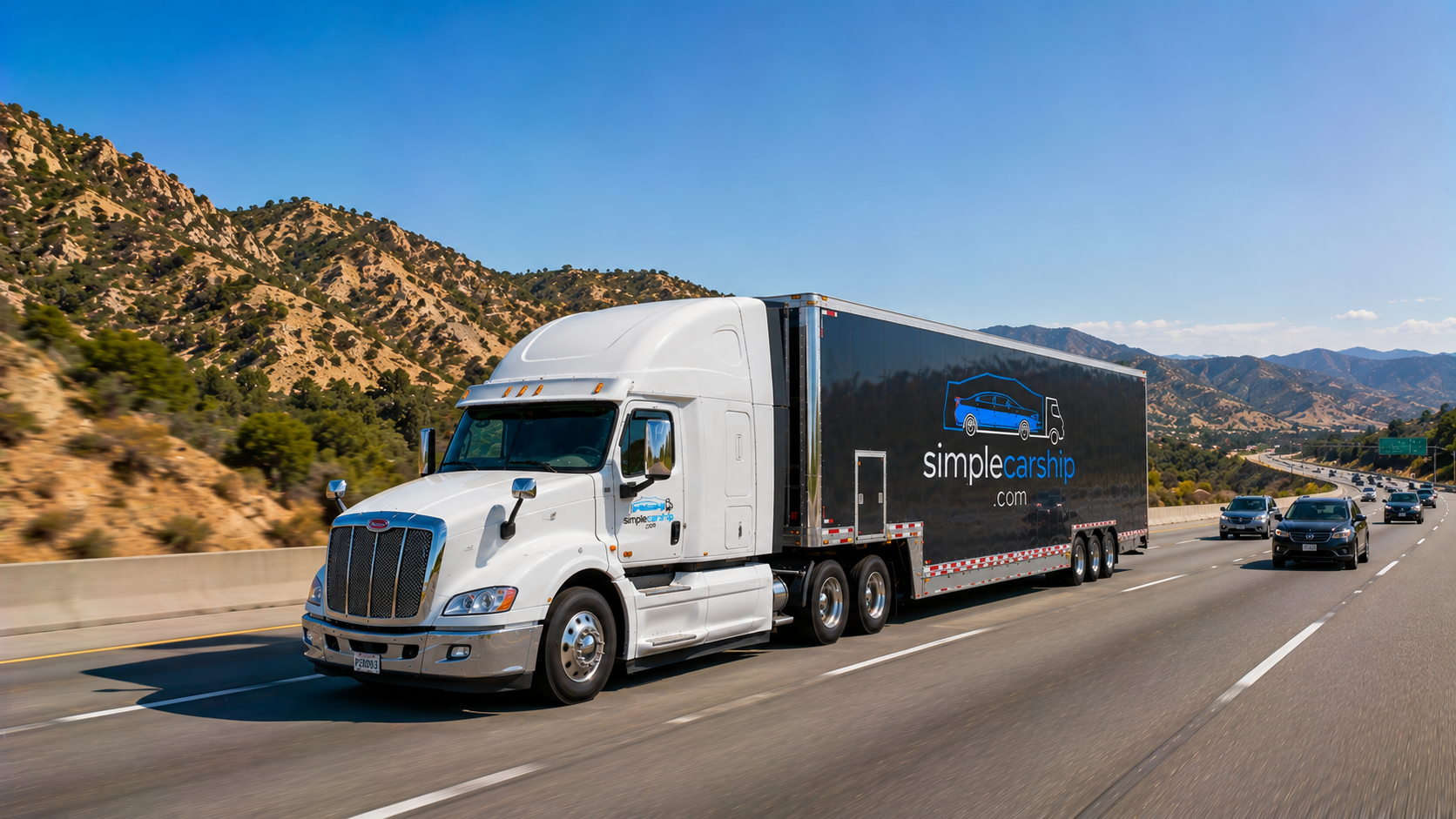
Enclosed transport wraps your vehicle in a hard-sided or soft-sided trailer, protecting it from weather, debris, and prying eyes. At $2,250–$2,740, it costs 60–80% more, but for certain situations it’s worth every dollar. Classic cars, high-value imports, exotic sports cars, and freshly restored vehicles belong in enclosed trailers. If you’re moving a pristine 1967 Camaro or a Tesla Plaid, the $1,000 premium buys peace of mind: climate-controlled environment, fewer vehicles per load (often just two to four), and white-glove handling. Enclosed carriers are less common on the South Carolina–Missouri corridor, so book 10–14 days ahead to secure capacity.
| Factor | Open Transport | Enclosed Transport |
|---|---|---|
| Price (SC→MO) | $1,405–$1,710 | $2,250–$2,740 |
| Transit Time | 1–3 days | 1–3 days |
| Protection | Weather-exposed, debris-shielded | Fully enclosed, climate-stable |
| Best For | Daily drivers, standard vehicles | Classics, exotics, high-value cars |
Pickup and Delivery: How It Works in South Carolina and Missouri
Most pickups in South Carolina happen in Charleston and Columbia, the state’s two largest metros and natural carrier hubs. Charleston sits at the intersection of I-26 and I-526, with direct interstate access to I-95 and points west; Columbia anchors I-77 and I-20, making it a crossroads for north–south and east–west freight. If you’re within 20 miles of either city, door-to-door service is standard: the carrier parks on your street (provided the truck can navigate local roads and overhead clearance), loads your car, and hands you a bill of lading. Smaller towns—Greenville, Spartanburg, Myrtle Beach—are absolutely serviceable, but expect the driver to coordinate a nearby meeting point if your neighborhood has tight turns, low-hanging trees, or weight-restricted streets.
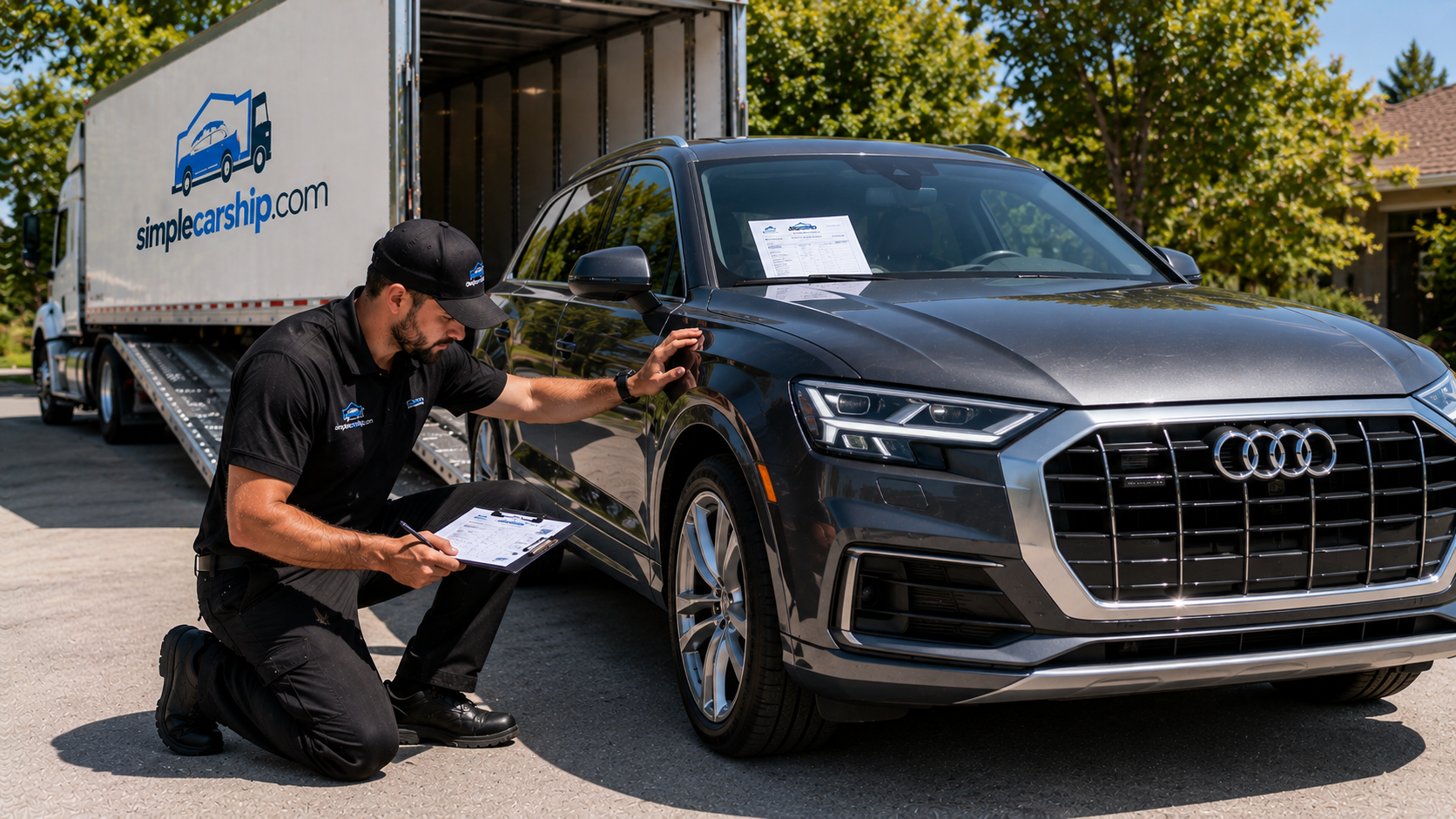
On the Missouri end, St. Louis and Kansas City are the primary delivery zones. St. Louis commands I-70, I-55, and I-64, making it a natural endpoint for eastbound and westbound loads; Kansas City, straddling I-70 and I-35, is the gateway to the Great Plains. Both cities offer dense carrier coverage and flexible delivery windows. If you’re in Springfield, Branson, or Columbia (MO), your car will likely route through St. Louis or KC first, then transfer to a local driver or smaller truck for final delivery—adding half a day but no extra cost if arranged upfront. Always inspect your vehicle at delivery: walk around it with the driver, photograph any new damage, and note discrepancies on the bill of lading before signing. carriers carry $1,000,000+ cargo insurance, but claims are cleanest when documented immediately.
Transit Time and What to Expect on This Route
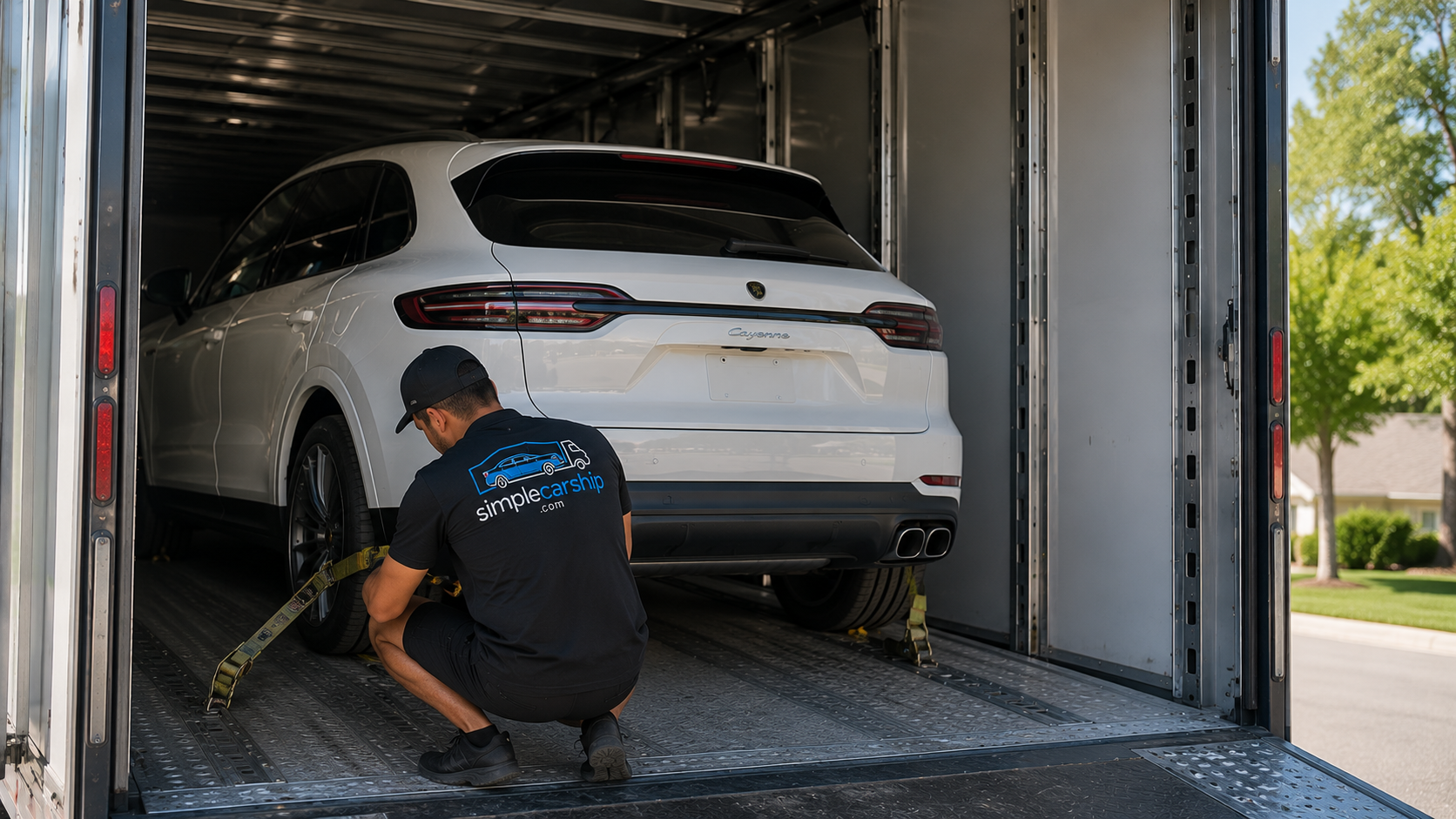
The 855-mile trip from South Carolina to Missouri takes 1 to 3 days in transit, once your car is loaded. That’s dock-to-dock—the time the vehicle spends physically moving on the carrier. Add 1–3 days on each end for booking, dispatch, and the carrier’s pickup route (most drivers load 4–8 vehicles along a corridor before heading to the destination zone). So plan for a 3–7 day total timeline from the moment you confirm your order to the moment your car arrives. If you’re on a tight deadline—job start date, closing on a home—communicate that upfront and consider expedited service, which jumps the dispatch queue and locks in a 1–3 day delivery window for $2,294.
Weather rarely disrupts this route; South Carolina winters are mild, and Missouri’s I-70 and I-44 corridors are plowed aggressively. The Appalachian passes west of Asheville and the Ozark plateau near Springfield can see ice and fog November through February, occasionally adding 4–6 hours to a driver’s schedule, but closures are rare. Carriers communicate delays in real time—you’ll get a call or text if the driver is running behind. Your job is to be flexible on delivery windows (most are 8 a.m.–6 p.m. ranges, not exact appointments) and to have someone 18+ with a valid ID ready to accept the car. If no one’s home, the carrier will attempt to reach you; repeated missed deliveries can incur redelivery fees of $100–150.
How Simple Car Ship Handles South Carolina to Missouri Shipments
We’re not a load board. We don’t throw your car into an algorithmic auction and hope the lowest bidder shows up. Every carrier we work with is hand-selected, vetted for safety ratings, insurance, and track record on Midwest and Southeast lanes. When you request a quote for South Carolina to Missouri, you’ll get a clear number—$1,405–$1,710 open, $2,250–$2,740 enclosed—and a plain-English explanation of what it covers. No hidden fees for “insurance” or “terminal handling” (those don’t exist in legitimate auto transport). You’ll have a dedicated coordinator who books your carrier, tracks your vehicle, and answers your texts. Your shipment isn’t a load number; it’s your car, and you’ll know where it is.
Real human support means you can call with questions about pickup timing, delivery logistics, or what to do if your driveway’s too narrow for a 75-foot truck. We’ll coordinate alternate meeting points, suggest nearby shopping-center lots, and work with the driver to make it happen. Once your car is loaded, you’ll receive the driver’s direct cell and truck number—no middleman runaround. If something changes (a flat tire, a DOT inspection stop, a reroute around a highway closure), you hear it from us first, not three days later. Clear quotes. Real communication. No guesswork, no runaround. That’s how we ship cars from South Carolina to Missouri, and it’s how we’ve built a reputation on transparency instead of hype.
Ready to move your car? Get a clear quote in 60 seconds—real numbers for your exact route, no phone call required unless you want one.
Frequently Asked Questions: Shipping a Car from South Carolina to Missouri
How much does it cost to ship a car from South Carolina to Missouri?
Open transport from South Carolina to Missouri costs $1,405 to $1,710, while enclosed service runs $2,250 to $2,740. The 855-mile route’s price depends on your vehicle size, exact pickup and delivery cities, current fuel costs, and booking lead time. Expedited service is available for $2,294 if you need guaranteed 1–3 day delivery.
How long does it take to ship a car from South Carolina to Missouri?
Transit time is 1 to 3 days once your car is loaded onto the carrier. Total door-to-door time—including dispatch and the carrier’s multi-stop pickup route—is typically 3 to 7 days. Expedited service cuts that to 1–3 days total by prioritizing your vehicle and assigning a dedicated driver immediately after booking.
Is open or enclosed transport better for shipping from South Carolina to Missouri?
Open transport works for 90% of vehicles—daily drivers, SUVs, trucks—and costs $1,405–$1,710. Enclosed is worth the $2,250–$2,740 premium if you’re moving a classic, exotic, or high-value car that demands protection from weather and road debris. Both methods deliver in the same 1–3 day transit window on this 855-mile route.
What cities in South Carolina and Missouri do carriers typically serve?
In South Carolina, Charleston and Columbia are the primary pickup hubs, with excellent interstate access. In Missouri, St. Louis and Kansas City are the main delivery metros. Smaller towns throughout both states are serviceable; carriers coordinate nearby meeting points if your address has tight streets or overhead clearance issues.
Can I put personal items in my car during transport from South Carolina to Missouri?
Most carriers allow up to 100 pounds of personal items in the trunk or rear cargo area, below the window line, at no extra charge. Items must be secured and not visible from outside. Carrier insurance covers the vehicle only—not personal belongings—so don’t pack valuables, and keep weight under the limit to avoid loading delays.