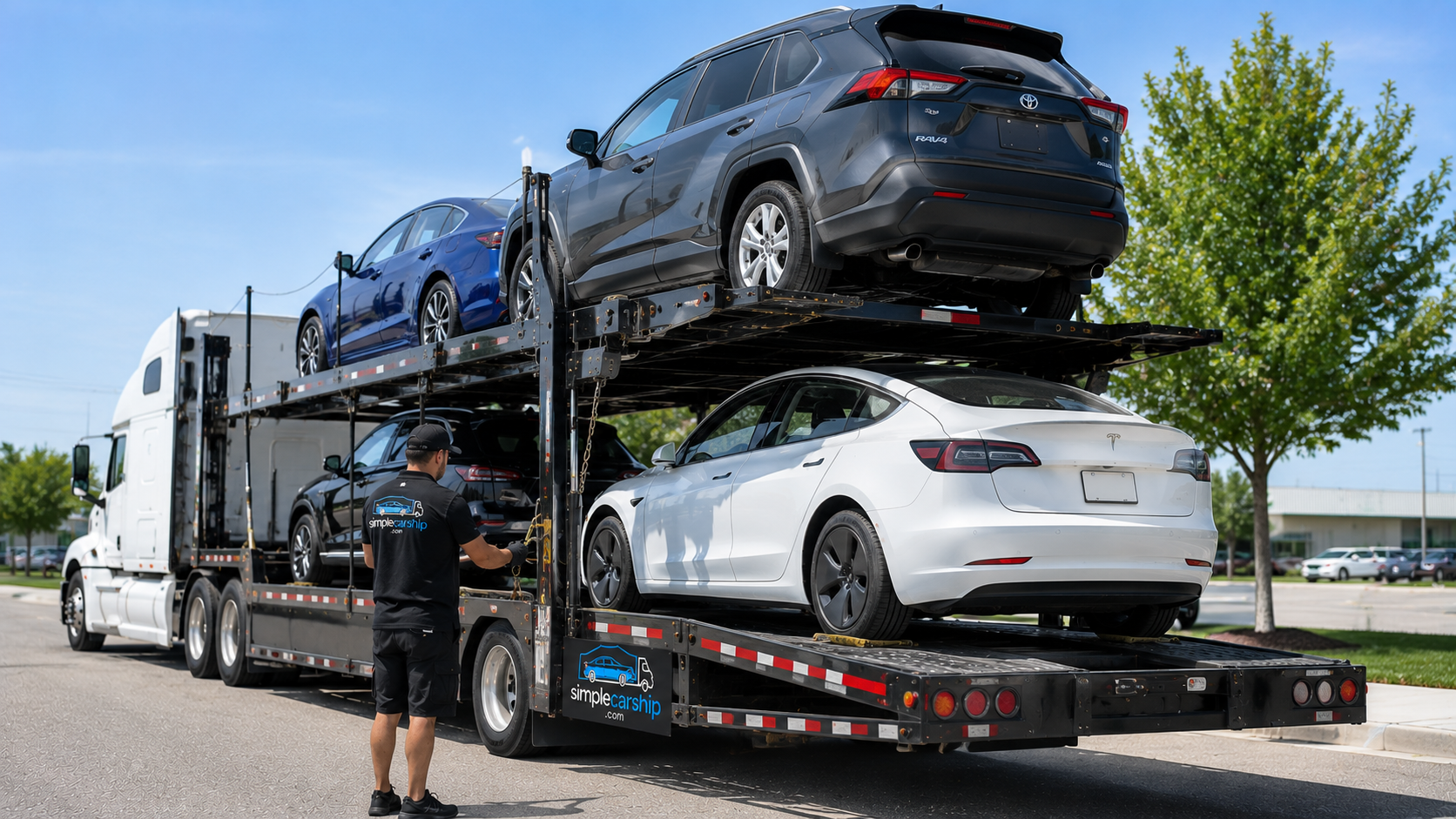
How Much Does It Cost to Ship a Car from Virginia to Maryland?
Shipping a car from Virginia to Maryland typically costs between $215 and $265 for open transport, with enclosed carriers running $350 to $425. Despite the short 146-mile distance between these neighboring states, prices reflect fuel, tolls, driver time, and carrier availability along the I-95 corridor. Understanding what moves the price—vehicle type, service speed, and seasonal demand—helps you budget accurately and avoid surprise costs.
Get your instant car shipping price
Real quote in seconds — no spam, no runaround.
What You’ll Pay to Ship a Car from Virginia to Maryland
For this 146-mile route—typically Richmond or Virginia Beach to Baltimore or Rockville—open auto transport averages $215 to $265. That’s the industry-standard method: your car rides securely strapped on a multi-vehicle carrier, exposed to weather but protected by the same logistics that move thousands of vehicles daily. Enclosed transport, which cocoons your vehicle inside a covered trailer, costs $350 to $425. The premium buys climate control, dust protection, and peace of mind for high-value, classic, or luxury cars.
Price variables on this short haul include your exact pickup and delivery points (rural Shenandoah pickups cost more than suburban Richmond), vehicle size (a Ford F-250 dually takes more deck space than a Honda Civic), and timing. If you need guaranteed pickup within 24 hours, expedited open service runs approximately $354—a roughly 40% premium over standard scheduling. Seasonal swings are minimal here; neither Virginia nor Maryland sees the snowbird migration spikes that hammer Florida-bound routes in October and April. Your biggest lever is lead time: booking seven to ten days ahead typically lands you toward the lower end of the range.
Open vs. Enclosed Transport: Which Makes Sense for Virginia–Maryland?
On a route this short, open transport is the practical default for daily drivers, commuter cars, and anything you’d park outside at home. Transit takes one to three days, your vehicle faces no more weather exposure than a weekend road trip, and the $215–$265 cost reflects the efficiency of high-volume I-95 freight. Carriers run this corridor constantly, so availability is strong and scheduling flexible.
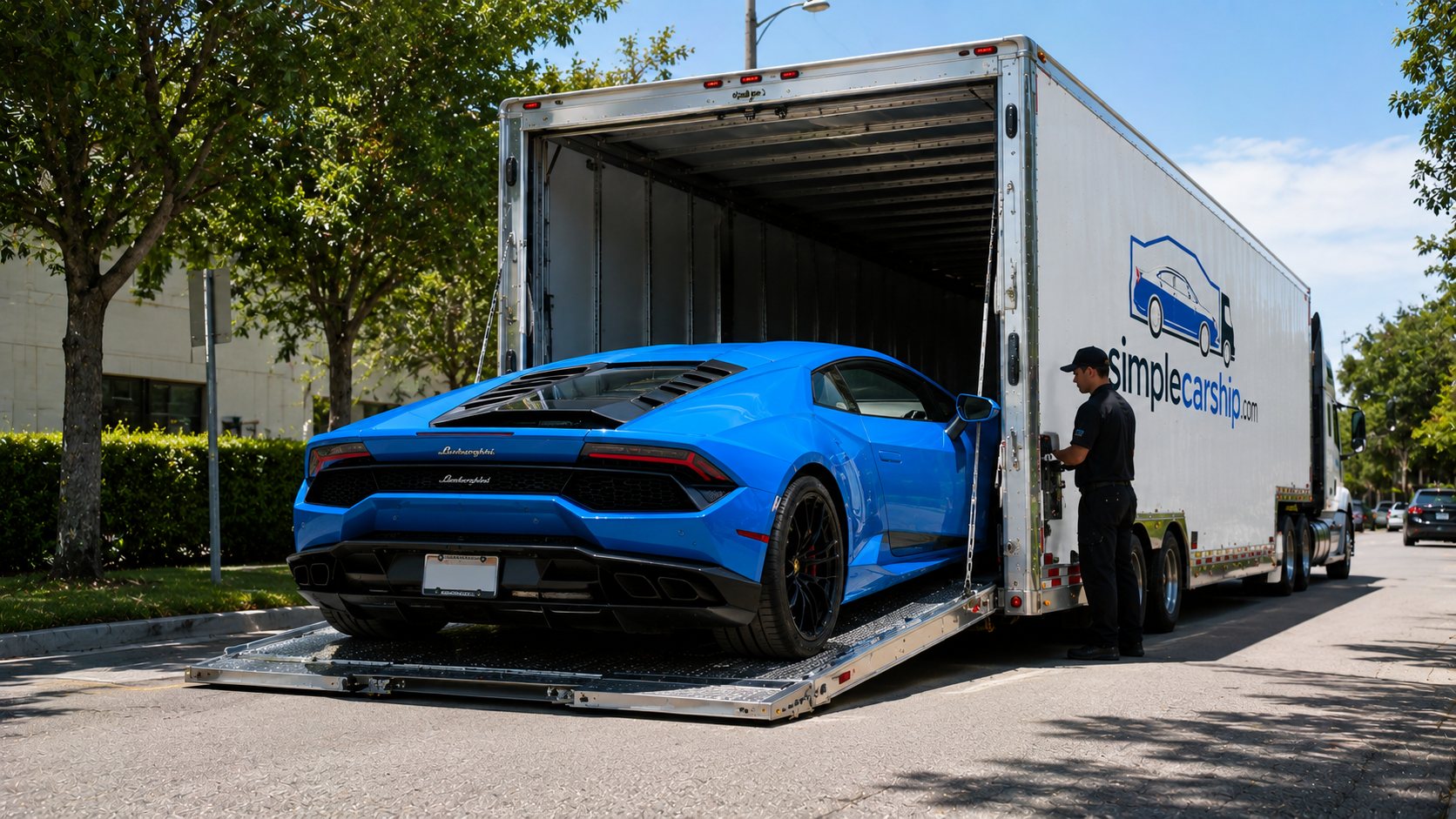
Enclosed makes sense in three scenarios: you’re moving a collector car whose paint is worth protecting from road grit; you’re shipping a luxury or exotic vehicle (Porsche, Tesla Model S Plaid, restored Corvette) where even a stray pebble chip matters; or you’re combining this leg with a longer enclosed journey and want consistent service end-to-end. The $350–$425 enclosed rate is higher in percentage terms than on cross-country routes—short-haul enclosed carriers still incur the same hookup and insurance overhead—but the absolute dollar difference is modest if your vehicle’s value justifies it. For a 2018 Camry or a leased RAV4, open transport is the clear choice. For a 1967 Mustang fastback, the enclosed premium buys real protection.
| Factor | Open Transport | Enclosed Transport |
|---|---|---|
| Price (VA–MD) | $215–$265 | $350–$425 |
| Transit Time | 1–3 days | 1–3 days |
| Weather Protection | Minimal (same as highway driving) | Full enclosure, climate-controlled options |
| Best For | Daily drivers, commuter vehicles, standard sedans/SUVs | Classics, luxury, exotics, high-value or restored cars |
How Pickup and Delivery Work Between Virginia and Maryland
Most Virginia pickups originate in Richmond or Virginia Beach, the state’s primary metro clusters with easy carrier access. If you’re in Charlottesville, Norfolk, or even Roanoke, carriers can typically accommodate you, though rural Appalachian or Eastern Shore addresses may require meeting the truck at a nearby highway interchange or shopping-center parking lot—large car carriers need turning radius and overhead clearance that narrow residential streets don’t offer.
On the Maryland side, Baltimore and Rockville anchor delivery, with strong coverage extending to Annapolis, Frederick, and the D.C. suburbs. Carriers running I-95 and I-270 handle this region daily, so door-to-door service is standard unless your street has low-hanging trees or weight-restricted bridges. Scheduling is straightforward: you’ll get a pickup window (often same-day or next-day on this route), then a delivery window once the vehicle is loaded. Because transit is one to three days, communication stays simple—no cross-country coordination, no multi-day blackout periods. Your car leaves Richmond on a Tuesday morning, arrives in Baltimore by Wednesday afternoon.
Transit Time and When to Book
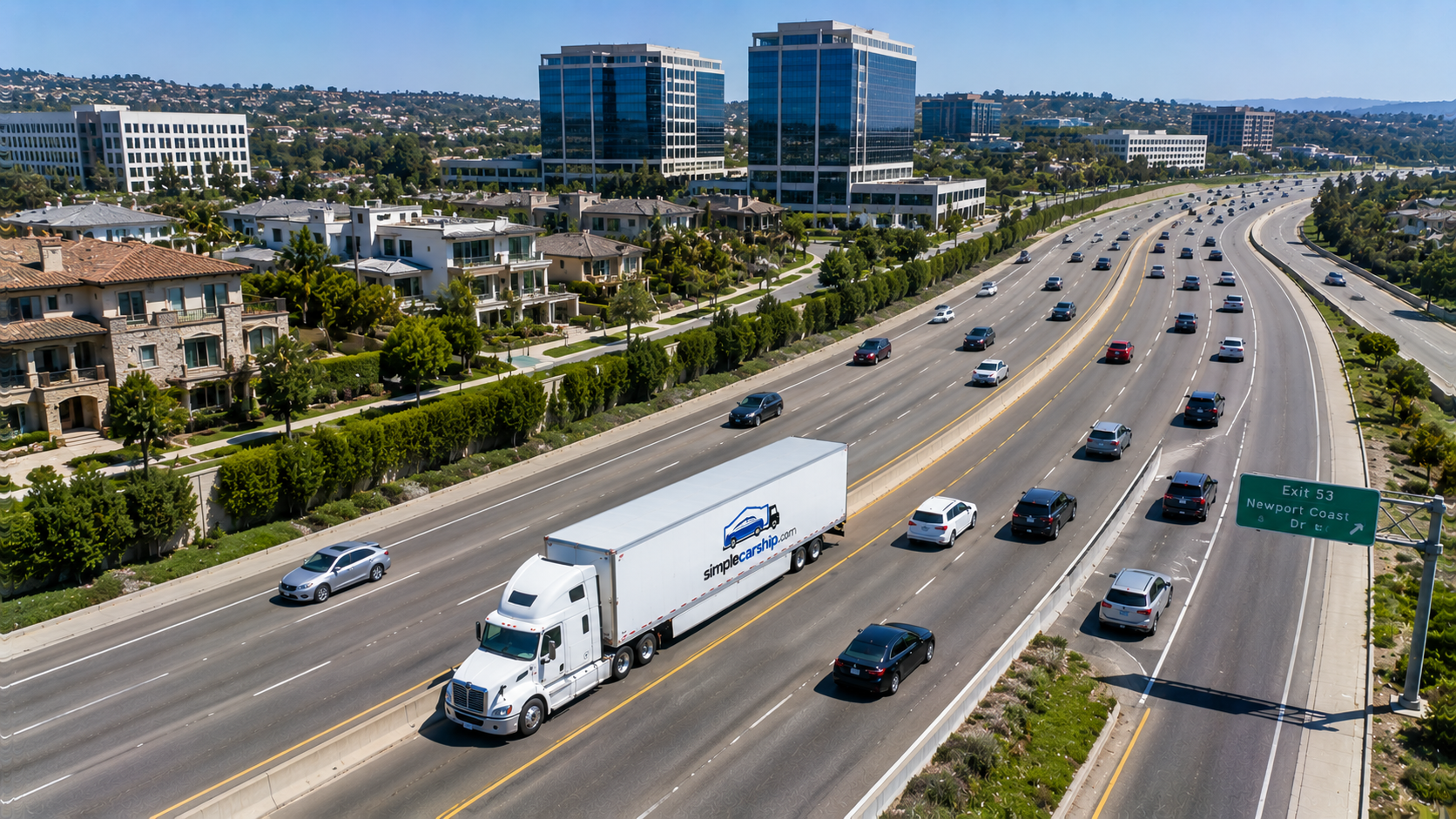
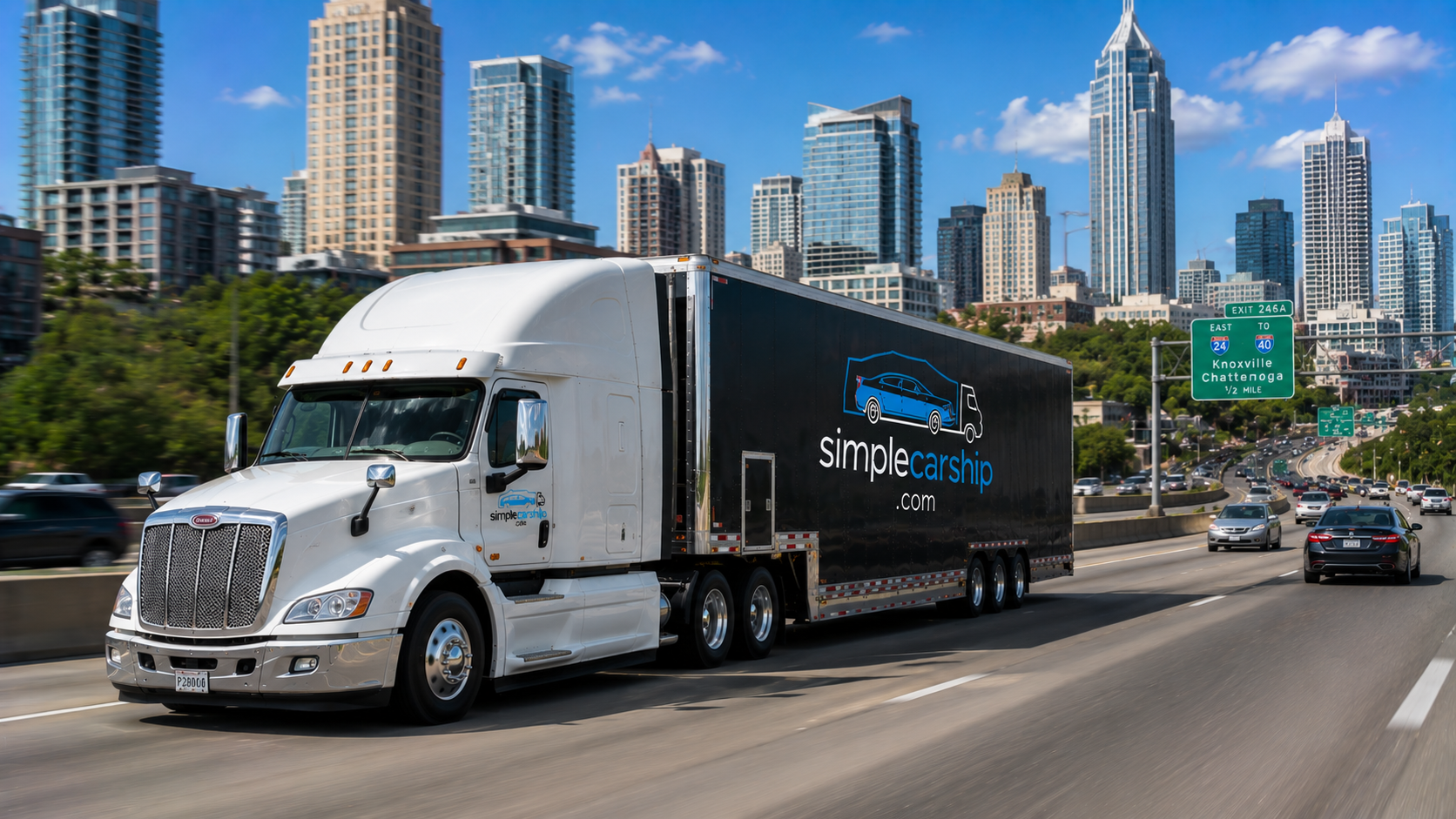
The 146-mile Virginia–Maryland run takes one to three days in transit. Single-day delivery is common when your pickup and drop-off cities align with a carrier’s existing route—say, Virginia Beach to Baltimore on a northbound I-95 load. Two- to three-day windows apply when your vehicle shares deck space with other cars heading to scattered Maryland addresses, requiring the driver to sequence stops efficiently. There’s no seasonality wild card here; neither state experiences the winter snowbird exodus or summer college-move peaks that congest Sun Belt routes.
Book seven to ten days ahead for the best combination of price and availability. Last-minute requests—”I need pickup tomorrow”—push you toward expedited service and the $354 premium, though even expedited is cheaper here than on long-haul routes. If your timeline is firm (military PCS orders, settlement-date-driven relocation), mention it upfront so your broker can match you with a carrier running your exact lane rather than one making a speculative detour.
How Simple Car Ship Handles Virginia–Maryland Moves
We treat short-haul routes with the same care as cross-country shipments—because handing over your keys is never casual, even for a three-hour drive. When you request a quote, you’ll speak with a real person who knows the I-95 corridor, understands why a Rockville townhome driveway might not fit a 75-foot rig, and can tell you whether your vintage Bronco’s height requires enclosed or just careful loading. Clear quotes. Real communication. No guesswork, no runaround.
We work with hand-selected carriers who run Virginia–Maryland regularly—this isn’t a spot-market gamble. You’ll get the driver’s contact info before pickup, a tight delivery window, and a direct line to us if anything shifts. Your shipment isn’t a load number lost in a dispatch queue; it’s a specific car, a specific route, and a specific commitment. Short distance doesn’t mean short attention. Get your free quote here and see the Simple Car Ship difference on every mile.
Looking at other regional routes? Check out our Virginia to Florida and Maryland to North Carolina pages for longer coastal moves, or explore our luxury car shipping service if you’re moving a high-value vehicle that demands enclosed transport.
Frequently Asked Questions: Virginia to Maryland Car Shipping
Why does a 146-mile shipment cost $215–$265 instead of just driving it myself?
Professional transport eliminates mileage, wear, tolls (I-95 has multiple plazas), fuel, and your time. A round-trip drive adds 292 miles to your odometer, costs $40–$50 in gas and tolls, and consumes half a day. For leased vehicles nearing mileage caps or buyers protecting a just-purchased car’s condition, the $215 open rate delivers the vehicle untouched and lets you fly or handle the move yourself.
Can I get same-day pickup from Richmond to Baltimore?
Same-day pickup is possible when a carrier already running that corridor has open deck space, but it requires expedited service at approximately $354. Standard scheduling—booking three to seven days ahead—gives carriers time to consolidate loads efficiently and keeps your cost in the $215–$265 range. If timing is critical, mention your deadline upfront so we can match available capacity.
Is enclosed transport necessary for a Tesla or Audi on this short route?
Not strictly necessary—open transport handles luxury EVs and sedans safely every day over 146 miles—but many Tesla and Audi owners choose enclosed for the $350–$425 range to avoid any road debris or weather exposure. If your vehicle is new, high-trim, or part of a coordinated longer move, the enclosed premium offers dust-free, climate-controlled peace of mind worth the extra cost.
What if I live in rural Virginia or a smaller Maryland town—will carriers deliver there?
Carriers can reach most Virginia and Maryland addresses, but rural or narrow-street locations may require meeting the truck at a nearby accessible spot—a shopping center, park-and-ride, or highway interchange. Large car carriers need turning radius and clearance. Your broker will review your exact addresses during booking and coordinate a practical meet-point if door-to-door isn’t feasible, adding no extra mileage cost.
How much does vehicle size affect the price on this route?
Oversized or heavy vehicles—dually pickups, Suburbans, lifted trucks—consume more deck space and weight capacity, often adding $50–$75 to the base $215–$265 open rate. Compact sedans and crossovers ship at the lower end. Inoperable vehicles (non-running, no steering, no brakes) require winch loading and typically add $75–$100. Always disclose dimensions and mechanical status upfront for an accurate quote.