
Get your instant car shipping price
Real quote in seconds — no spam, no runaround.
Motorcycle Shipping
The single line that swings a motorcycle quote the most isn’t distance, it’s whether you put the bike in an open trailer or an enclosed one, and that one choice can add roughly 30 to 60 percent to the price. People expect a bike to be the cheap shipment because it weighs a fraction of a car, and on a shared open trailer it usually is. But the protection a bike actually needs has a way of erasing that discount fast. A motorcycle rides with no metal cage around it, a finish that records every scuff, and a value that often outruns whatever number an insurance form wants to assign it. Whether you’re moving a daily commuter, a touring rig, a vintage restoration, or a track machine, it deserves a plan built for two wheels rather than a car plan with the corners trimmed off. Simple Car Ship moves motorcycles across the country in plain English: a quote you can actually trust, a carrier who knows how to chock and soft-strap a bike, and a human you can reach the whole way. Your motorcycle is never just a slot to fill on someone’s deck.
What Makes Motorcycle Shipping Different
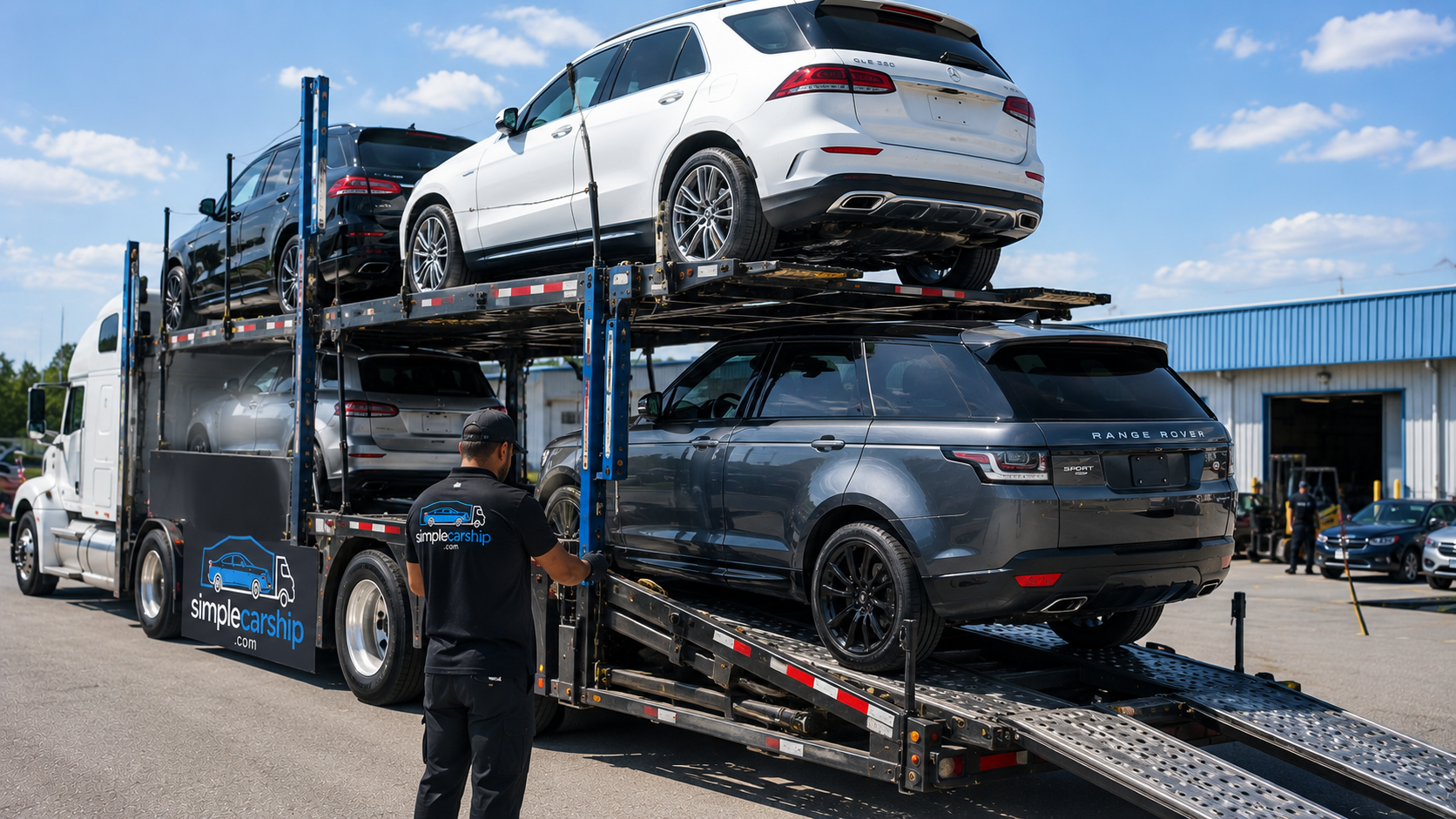
Cars roll onto a trailer, get chained at the wheels, and ride. A motorcycle has none of that built-in stability. It can’t stand on its own without a kickstand or a chock, and it can’t be ratcheted down at four corners. So the first thing that separates good motorcycle transport from bad is how the bike is secured. The right way uses a wheel chock to lock the front tire, soft straps looped around solid points so nothing scratches or bends, and tie-downs angled to compress the suspension just enough to keep the bike planted without overloading the forks. Done wrong, you get fork seal damage, scuffed triple clamps, or a bike that shifts in transit. Done right, it doesn’t move an inch.
Operability matters too. A running, rolling bike that can be wheeled up a ramp is straightforward. A non-running project bike, a bike with a seized engine, or one with no brakes needs to be loaded differently, sometimes with a lift gate or extra hands, and that changes the equipment a carrier needs. Dimensions are a factor as well: a full-dress touring bike with hard bags and a fairing takes far more deck space than a stripped-down dirt bike, and that footprint drives part of the cost. And then there’s value. A clean liter bike, a restored vintage cruiser, or a custom build can be worth as much as a car while being far more exposed, which makes the insurance conversation more important than people expect.
Insurance and Why It Deserves a Real Answer
Here’s where a lot of motorcycle shippers get vague, and we won’t. A motorcycle has no body panels protecting it, so any contact, vibration, or improper strap is a finish or mechanical issue, not just a paint chip. Before your bike moves, you should know that the assigned carrier carries active cargo insurance and you should understand what it covers and what it doesn’t. We confirm the carrier’s coverage is in force for your shipment and we walk you through it in plain English. We will never invent a coverage number or quote you a policy amount we can’t back up. What we will do is make sure the bike is documented at pickup with a written and photographed condition report, so if there’s ever a question, there’s a clear record of how the bike looked before it ever touched the trailer.
That documentation step is doubly important for motorcycles because their value is so condition-dependent. A scratch on a car door is a body-shop ticket; a scratch on a polished tank or chrome pipe can knock real money off a collectible. Photographing every angle before transport isn’t paperwork for its own sake, it’s how you protect the actual worth of the machine.
Open vs Enclosed Transport for Motorcycles
For cars, open transport is the default and it’s fine for most. For motorcycles, the recommendation leans differently. A bike rides fully exposed on an open trailer, taking direct road spray, rain, sun, bugs, and highway debris with nothing between it and the elements. For a rugged daily commuter or an inexpensive bike you’re not precious about, open transport can still make sense and it’s the lower-cost option. But for most motorcycles, and certainly for anything with real value, a clean finish, or sentimental weight, enclosed transport is the smarter call. Inside an enclosed trailer the bike is shielded from weather and road grime, often secured in its own chock with soft ties, and frequently shipped with crated or palletized handling that keeps it isolated from other vehicles.
What Motorcycle Shipping Typically Costs
Because this is a nationwide vehicle-type service rather than a single route, we won’t pretend to hand you one number, and we won’t run fake route math on a page like this. What matters more is understanding the cost drivers so a real quote makes sense. The biggest factor is distance, the same as any vehicle. After that, motorcycle-specific drivers take over. A motorcycle generally costs less than shipping a full-size sedan on the same lane, because it weighs less and takes less deck space, especially on open transport. But that advantage shrinks or flips once you add the handling a bike actually needs.
Here’s the honest part on premiums. If you ship a motorcycle on a shared open trailer alongside cars, expect it to land below the cost of moving a sedan, often noticeably so. But many motorcycle owners choose enclosed transport, which typically runs roughly 30 to 60 percent more than open for the same move, and that’s where a bike can cost as much as or more than a standard car. Specialized handling, like a dedicated chock, crating, a lift gate for a non-running bike, or single-bike enclosed service, adds to that. None of these are surprise fees when you understand them up front. They’re the difference between a bike that arrives perfect and one that arrives with a story. All figures here are estimated and typical, not guaranteed prices. Your real number depends on distance, the bike’s size and weight, whether it runs and rolls, open versus enclosed, and how fast you need it.
Your Motorcycle Prep Checklist
A little prep makes the whole move cleaner. This list is specific to two wheels, not a generic car checklist:
- Wash the bike first. A clean motorcycle makes existing scratches, chips, and dents visible, which protects you on the condition report. Grime hides damage.
- Photograph every angle. Tank, fairings, pipes, wheels, fork lowers, mirrors. Timestamped photos before pickup are your record of how it looked.
- Drain the fuel to about a quarter tank or less. Enough to load and unload, not a full tank adding weight and fire risk.
- Disable the alarm. A motion alarm that triggers in transit drains the battery and annoys the driver. Turn it off or share the disarm steps.
- Note fluid leaks and loose parts. Secure or remove anything that can rattle off: loose mirrors, GPS mounts, saddlebags, windshields where practical.
- Fold in mirrors and lower the windshield if removable. Reducing the bike’s footprint and fragile sticking-out points helps it fit and ride safely.
- Check tire pressure and the kickstand. Properly inflated tires and a working stand make chock loading smoother.
- Flag any non-running or mechanical issue up front. A bike that won’t roll or brake needs different equipment, so tell us before pickup, not at the curb.
How Simple Car Ship Handles Your Motorcycle
Here’s the part that’s actually different. We treat your bike like the machine you’d ride yourself, not a box to fill empty trailer space. You get a clear quote with no bait-and-switch, a hand-selected carrier who knows how to chock and soft-strap a motorcycle properly, and a real person you can reach from pickup to delivery anywhere in the country. We confirm the carrier’s insurance is active for your shipment, we make sure the bike is documented before it loads, and we’ll tell you honestly whether open or enclosed is the right call for your specific bike instead of upselling you by reflex. We handle daily commuters, touring rigs, sport bikes, cruisers, dirt bikes, and vintage restorations with the same care. If a transport company has ever treated your bike like cargo on a board, this is the antidote. Ship your motorcycle the simple way.
Want to see what your bike actually costs to move, open or enclosed? Get your free quote in about a minute, or pick up the phone and talk to a real person, with no pressure and no spam afterward. If a car or something special is making the same trip, it’s worth comparing luxury and exotic car shipping, and if the bike is one piece of a larger relocation, here’s how we handle cross-country moving and multi-vehicle shipments.
Motorcycle Shipping FAQ
How is motorcycle shipping different from car shipping?
A motorcycle can’t be ratcheted down at four wheels like a car, so it’s secured with a wheel chock and soft straps angled to compress the suspension just enough to keep it planted. It rides fully exposed with no body panels protecting it, which makes the finish more vulnerable and the choice of enclosed transport more important. Operability and footprint also matter more: a non-running bike or a full-dress tourer needs different handling than a stripped-down commuter.
Should I ship my motorcycle open or enclosed?
For most motorcycles we recommend enclosed transport. A bike on an open trailer takes direct road spray, rain, sun, and debris with nothing shielding it, so anything with real value, a clean finish, or sentimental weight is better off enclosed, where it’s protected and often secured in its own chock. Open transport is the lower-cost option and can make sense for a rugged daily commuter or an inexpensive bike you’re not precious about. Enclosed typically runs roughly 30 to 60 percent more.
How much more does it cost to ship a motorcycle versus a car?
On a shared open trailer a motorcycle usually costs less than a full-size sedan because it weighs less and takes less deck space. But many owners choose enclosed transport, which typically runs roughly 30 to 60 percent more than open, plus specialized handling like a dedicated chock, crating, or a lift gate for a non-running bike. That’s where a motorcycle can cost as much as or more than a standard car. All figures are estimated and depend on distance, the bike, and how fast you need it.
What insurance covers my motorcycle in transit?
The assigned carrier carries active cargo insurance, and before your bike moves we confirm that coverage is in force for your shipment and walk you through what it covers in plain English. Because a motorcycle has no body panels protecting it, we also document the bike at pickup with a written and photographed condition report, so there’s a clear record of how it looked before it touched the trailer. We will never invent a coverage number we can’t back up.
How do I prepare my motorcycle for shipping?
Wash it so existing scratches are visible, photograph every angle, and drain the fuel to about a quarter tank or less. Disable any motion alarm so it doesn’t drain the battery in transit, secure or remove loose parts like mirrors, GPS mounts, and saddlebags, fold in the mirrors, and lower or remove the windshield if practical. Check tire pressure and the kickstand for smooth chock loading, and flag any non-running or braking issue before pickup so the carrier brings the right equipment.
Can you ship a non-running or project motorcycle?
Yes. A bike that won’t start, won’t roll, or has no working brakes needs different loading equipment, sometimes a lift gate or extra hands instead of a simple ramp and chock. That’s not a problem, but it does change what the carrier brings and can affect the cost, so the key is telling us up front rather than at the curb on pickup day. Flag any seized engine, flat tire, or mechanical issue when you request your quote so we match you with the right carrier.