
Get your instant car shipping price
Real quote in seconds — no spam, no runaround.
Exotic Car Shipping
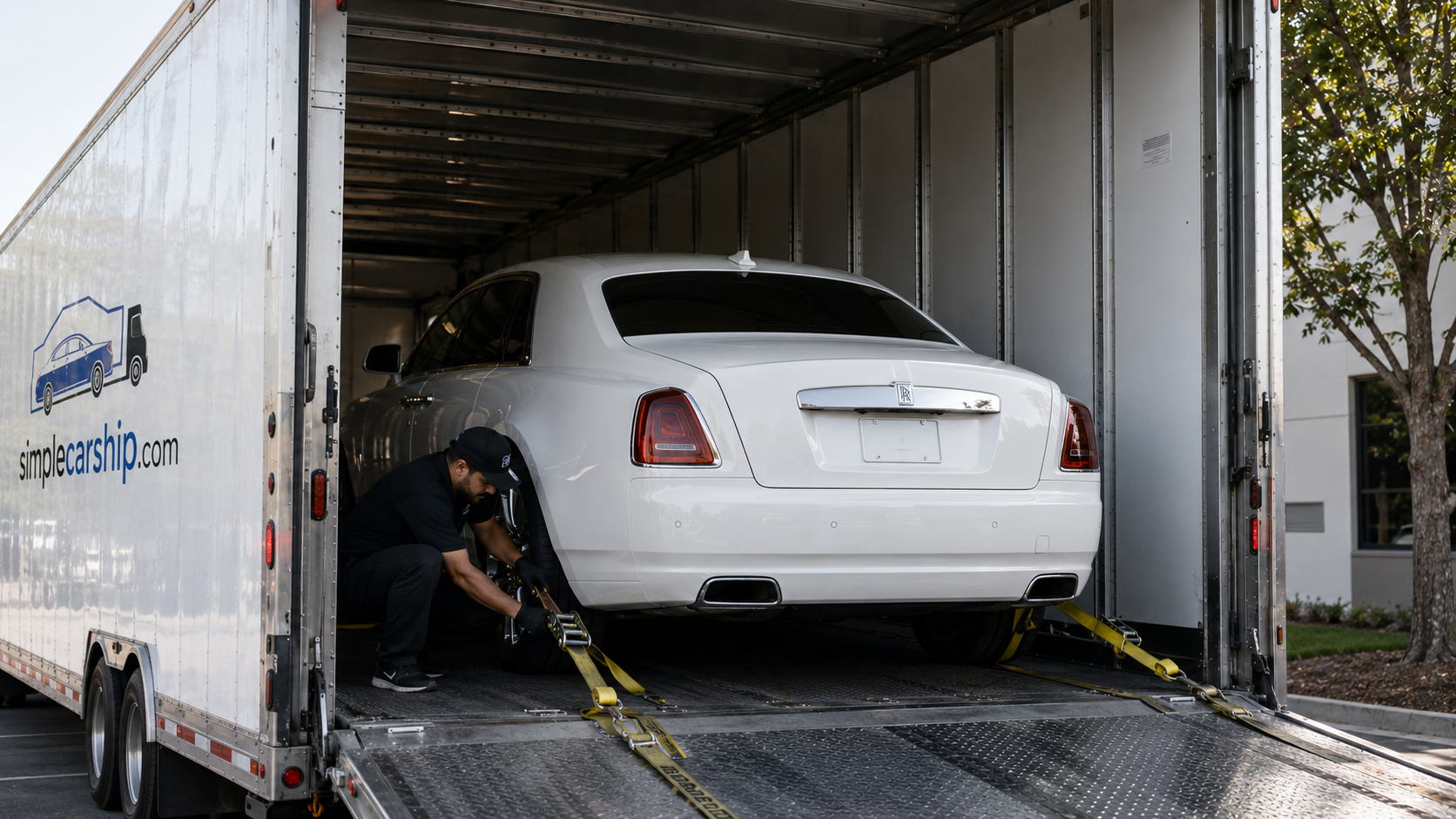
With an exotic, the very first fork in the road is open versus enclosed, and for these cars the math is lopsided. A front splitter that sits under four inches off the ground does not belong on an open deck behind a steep ramp, exposed to highway gravel for two thousand miles. So before anything else: ship it enclosed, on low-angle or liftgate loading, with a driver who has actually strapped down a Ferrari, Lamborghini, McLaren, Porsche GT, or Aston Martin before. That single decision protects the paint, the aero, and the value far more than any discount on the rate ever could.
Simple Car Ship handles exotic transport nationwide around that priority. We hand-pick a carrier who knows low-clearance cars, we confirm their cargo coverage fits a six- or seven-figure machine before it moves, and we keep a real person on the line the whole way. You bought a car that turns heads in a parking lot. Moving it should not feel like handing the keys to the lowest bid on a load board.
What Makes Exotic Car Shipping Different
Most car shipping is straightforward because most cars are alike: standard ride height, predictable weight, replaceable everywhere. Exotics break every one of those assumptions, and each difference changes how the car has to be moved.
Ground clearance. Supercars and exotics sit dangerously low, sometimes under four inches at the front splitter. A standard ramp angle that’s fine for a sedan can scrape a carbon-fiber lip or crack a chin spoiler worth thousands. Exotics need low-angle ramps, liftgates, or specialized loading so the car never drags on the way up.
Dimensions and weight. Wide track widths, long noses, and aggressive aero make these cars harder to position and secure than a typical vehicle. They take up more deck space and need careful placement so nothing contacts a body panel during transit.
Operability. Many exotics have finicky cold-start behavior, low fuel tolerances, launch-control quirks, or batteries that drain fast when parked. A driver who knows these cars handles them gently; a driver who doesn’t can do real damage just loading and unloading.
Value and insurance. A fender-bender on a daily driver is an inconvenience. On an exotic, a single stone chip or a soft-tie scuff can be a five-figure paint-correction or panel job. That raises the stakes on carrier vetting and on confirming the carrier’s cargo coverage actually fits the value of what they’re hauling. We never invent coverage figures or make guarantees we can’t back up, but we do confirm a carrier is properly insured before your car ever goes on the truck.
Open vs Enclosed: Our Recommendation for Exotics
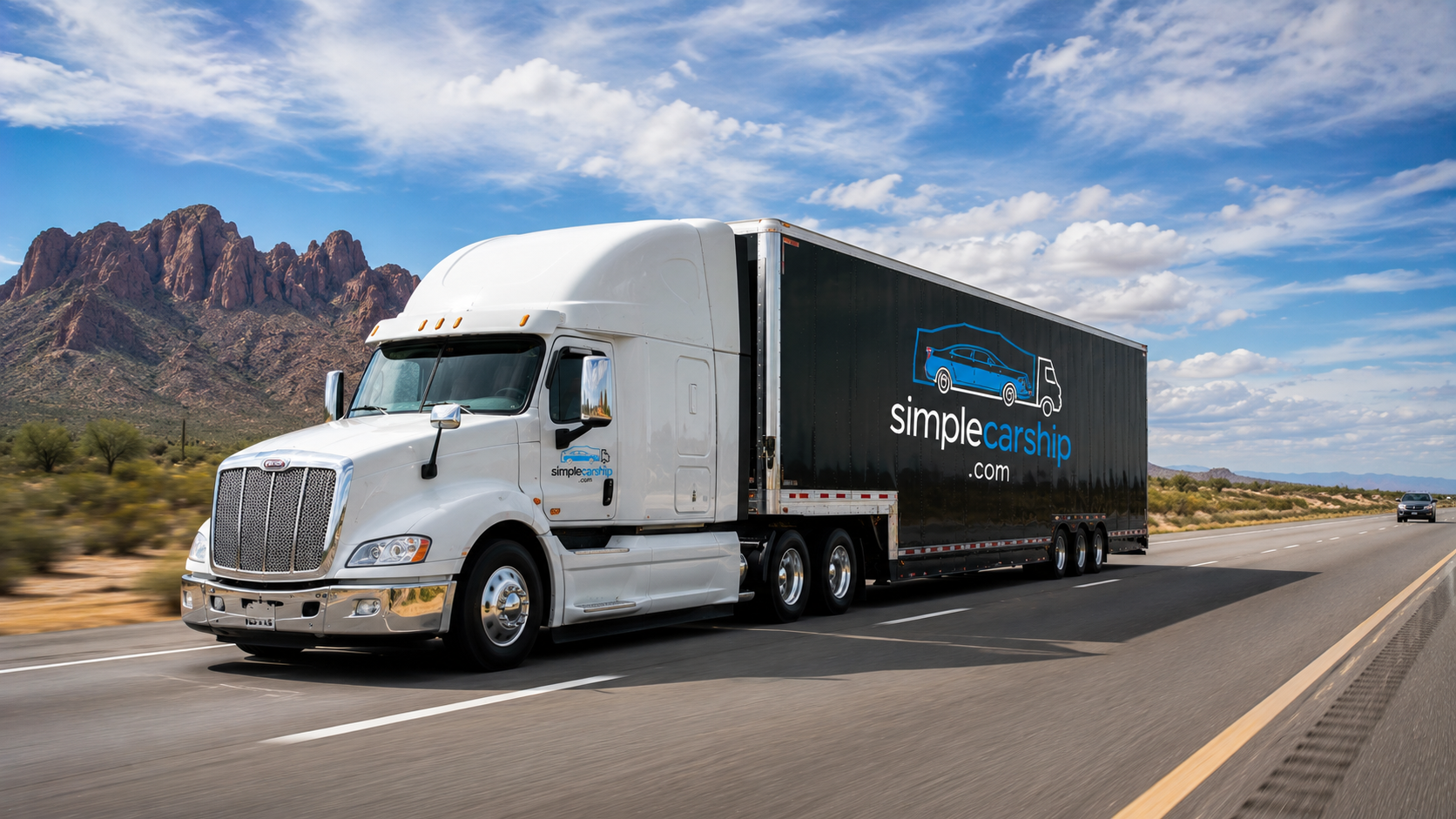
For everyday vehicles, open transport is the sensible default. For exotics, our honest recommendation flips: go enclosed. It’s the one category where the premium almost always earns its keep. Open carriers expose the car to road debris, rock chips, brake dust, weather, and the eyes of everyone on the highway. On a $30,000 sedan that’s a non-issue. On a $250,000 supercar with delicate paint, ceramic coating, or a wrap, that exposure is exactly what you’re paying to avoid.
Enclosed transport puts your car inside a fully covered trailer, shielded from weather and debris, usually with soft straps or wheel nets instead of over-the-body chains, and often with liftgate loading so a low car never faces a steep ramp. It’s quieter exposure, fewer hands, and a controlled environment from door to door. For most exotic owners that peace of mind is the whole point.
What Exotic Car Shipping Typically Costs
Exotic car shipping costs more than moving a standard sedan, and it’s worth understanding why instead of just being handed a number. Two main things drive the premium: the type of transport and the level of care the vehicle demands.
Enclosed transport runs about 1.5 times the cost of open. Since we recommend enclosed for nearly all exotics, your starting point is already above a typical open-transport sedan rate on the same route. Enclosed trailers carry fewer cars, cost more to operate, and require more skilled drivers, all of which is built into the rate.
Specialized handling adds to it. Liftgate loading, single-car or top-load placement, soft-tie securing, and a driver experienced with low-clearance exotics aren’t free. As a rough, clearly estimated guide, exotic owners often see a premium of roughly 40% to 70% over what a standard sedan would cost on the same distance, and sometimes more for ultra-low or ultra-rare cars that need single-vehicle service. That’s a range, not a quote.
Other real cost drivers include total distance, the route’s popularity (busy lanes have more carriers and steadier pricing), how far your pickup and delivery sit from main corridors, the season, and how quickly you need it moved. We won’t pretend a one-size number exists, and we won’t dangle a teaser rate to get you on the phone. The honest way to land on your figure is a real quote on your actual car and your actual ZIP codes. No “best price” gimmicks, no runaround, just a straight estimate you can plan around.
Exotic Car Prep Checklist
A little preparation protects the car and makes loading day smooth. For exotics specifically, here’s what matters most:
Wash and document it first. Clean the car so existing chips, swirls, or scuffs are visible, then take dated, well-lit photos from every angle plus close-ups of wheels, splitter, and any existing marks. On a high-value car, thorough condition documentation is your best friend.
Keep fuel low. A quarter tank or less is plenty. It reduces weight and is safer for transport. Exotics don’t need a full tank to be loaded.
Note the quirks. Write down anything the driver needs to know: how to disable an aftermarket alarm, lift-kit or front-nose-lift operation, low-clearance approach angles, cold-start procedure, kill switches, or a stubborn battery. Clear instructions prevent improvised guesses.
Disable toll tags and trackers you don’t need pinging, retract or note adjustable aero, fold mirrors if they fold, and remove or secure any removable hardtop or loose interior items.
Check tire pressure and battery charge. A car that loads and rolls under its own power is easier and safer to handle. If your exotic tends to drain its battery when parked, mention it so the carrier plans for it.
Leave roughly a quarter tank, a charged battery, and the right key (some exotics have valet keys or specific start procedures) so the handoff at both ends takes minutes, not a struggle.
How Simple Car Ship Handles Your Exotic
Here’s the part that’s actually different. You don’t get tossed onto a load board to whoever bids lowest. We hand-select an insured carrier with real experience moving exotics and the right equipment, enclosed trailers, low-angle or liftgate loading, and soft-tie securing. We confirm coverage before your car is loaded. We give you a clear quote with no bait-and-switch, a realistic door-to-door window, and a real person you can reach the whole way, not a chatbot and not a voicemail loop.
On timing, plan around the same honest math we use for everything: figure roughly 500 miles a day of transit once the car is rolling, plus a 1 to 3 day pickup window. Enclosed and specialized exotic carriers run less frequently than open trucks, so it’s smart to book a week or more ahead, especially around auction season, major shows, or the snowbird stretches when these carriers fill up fast. We’ll tell you the realistic range up front rather than promising a date we can’t control.
If a broker has ever treated your supercar like a pallet on a manifest, this is the opposite of that. A vetted enclosed carrier, coverage confirmed before loading, and someone who picks up the phone when you call. That is the whole idea.
Want a real number for your car on your actual route? Get your free quote in about a minute, or call and talk to an actual human, no pressure and no spam. If you’re still weighing it, compare luxury car shipping for high-end vehicles that stop short of full exotic, or read up on enclosed car shipping to see exactly what that premium buys you.
Exotic Car Shipping FAQ
Should I ship my exotic car open or enclosed?
For exotics, we recommend enclosed transport in nearly every case. Open carriers expose the car to road debris, rock chips, brake dust, and weather, which is fine for a daily driver but a real risk on delicate exotic paint, ceramic coatings, or wraps. Enclosed transport puts the car in a fully covered trailer with soft-tie securing and often liftgate loading. Since enclosed runs about 1.5 times the cost of open, it’s the one category where that premium consistently earns its keep.
How much more does it cost to ship an exotic versus a regular car?
Expect a premium. Enclosed transport, which we recommend for exotics, already runs about 1.5 times an open-transport rate, and specialized handling adds more. As a clearly estimated guide, exotic owners often see roughly 40% to 70% above what a standard sedan would cost on the same distance, sometimes more for ultra-low or ultra-rare cars needing single-vehicle service. That’s a range, not a quote. Distance, route popularity, season, and access all factor in, so a real quote on your car is the only way to pin it down.
Why do exotics need special handling?
Three reasons mainly. Ground clearance: many exotics sit under four inches at the front, so standard ramps can scrape splitters and spoilers, which means low-angle ramps or liftgate loading. Dimensions: wide track widths and aggressive aero make them harder to position and secure. Operability: cold-start quirks, lift-kit operation, and battery drain all matter. A driver experienced with these cars handles them gently, while one who isn’t can cause damage just loading and unloading.
How should I prep my exotic before shipping?
Wash it and take dated photos from every angle so existing chips or scuffs are documented. Leave roughly a quarter tank of fuel or less, confirm a charged battery and proper tire pressure, and use the correct key. Write down any quirks the driver needs, like front-nose-lift operation, alarm disabling, low-clearance approach angles, or cold-start procedures. Secure or remove loose items and any removable hardtop. Good prep keeps loading smooth and the handoff to minutes at both ends.
Is my exotic insured during transport?
The carrier moving your car must carry cargo coverage, and we confirm a carrier is properly insured before your vehicle is ever loaded. Because exotics carry far higher values than typical vehicles, matching the car to a carrier whose coverage fits what they’re hauling is a core part of how we vet. We won’t invent coverage figures or make guarantees we can’t back up, but we will walk you through the actual protection in place and document the car’s condition at pickup.
How far ahead should I book exotic car shipping?
Book at least a week or more ahead when you can. Enclosed and specialized exotic carriers run less frequently than open trucks, so availability is tighter, especially around auction season, major car shows, and snowbird travel windows when these carriers fill fast. For timing, plan on roughly 500 miles a day of transit once the car is rolling plus a 1 to 3 day pickup window. We give you a realistic door-to-door range up front rather than promising a date no one can control.