
Get your instant car shipping price
Real quote in seconds — no spam, no runaround.
Classic Car Transport
Enclosed haulers don’t run as thick on the road as open carriers, so a coast-to-coast classic move usually means a 1,500 to 2,800 mile run that takes a week to ten days once a covered slot opens up, and shorter regional hops of a few hundred miles can often be scheduled inside a few days. Fewer trailers, fewer cars per load, and slower booking are simply the math of moving collector cars, and it’s worth planning around rather than rushing. That’s also why a classic deserves a different conversation than a daily driver: the value usually climbs instead of depreciating, the parts can be impossible to re-source, and the right carrier isn’t always the first one available. At Simple Car Ship we plan the move around your car instead of the cheapest open slot, talk to you like a person the whole way through, and put the real number and real plan in front of you up front. This page walks through what makes classic car transport different, why we lean toward enclosed for this kind of vehicle, what the cost premium really looks like and why, how to prep your car, and exactly how we handle it from pickup to delivery.
What Makes Classic Car Transport Different
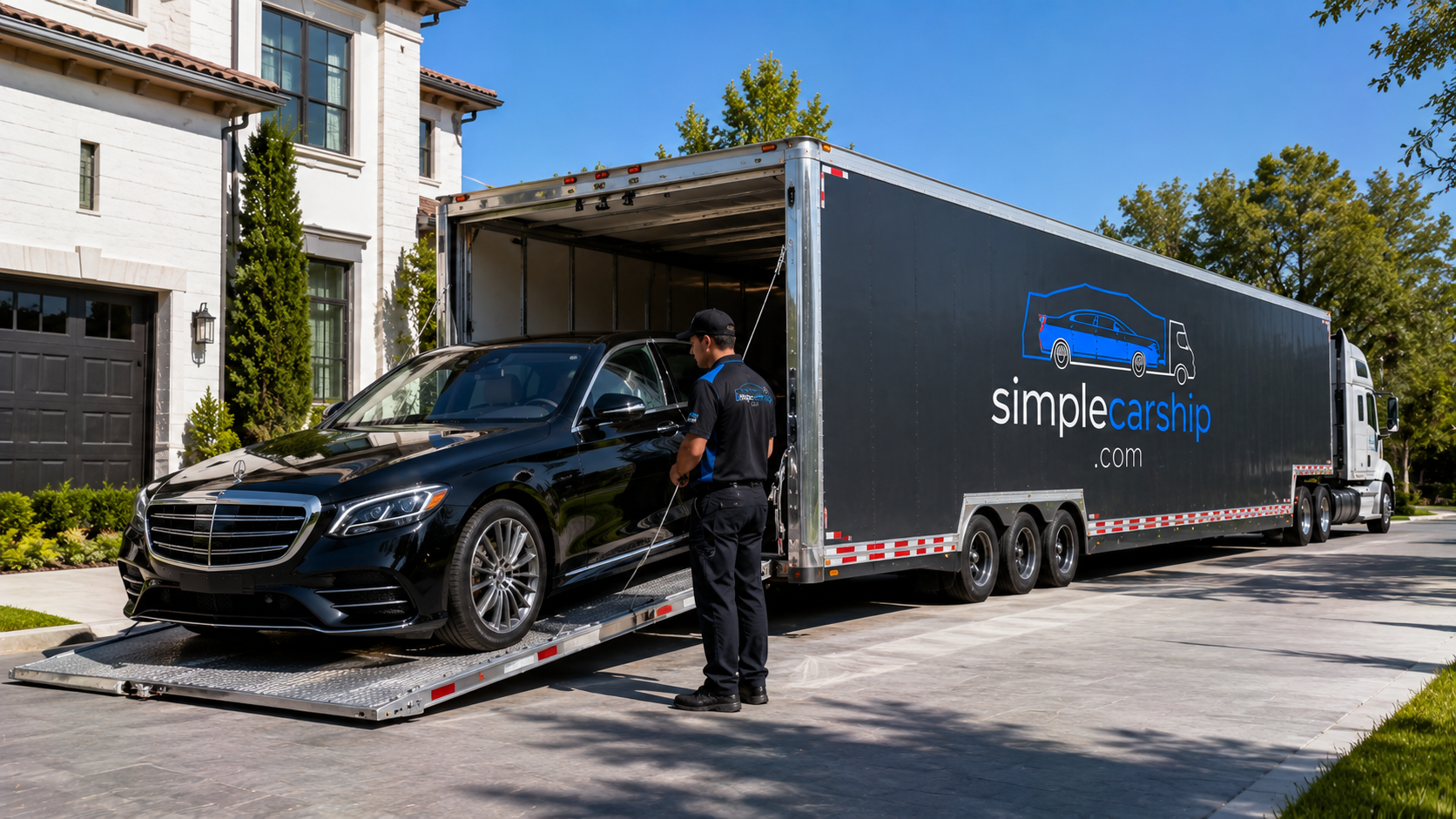
Standard car shipping assumes a fairly predictable vehicle: it runs, it rolls, it’s a known size, and if something minor happens, parts and panels are easy to source. A classic car breaks most of those assumptions, and that changes how it should be handled at every step.
Start with operability. Plenty of classics don’t start reliably, don’t hold a charge, leak a little, or aren’t safe to drive on and off a ramp under their own power. A non-running or low-clearance classic needs the right equipment: a liftgate or winch, soft tie-downs, and a driver who knows not to muscle it. Loading a stubborn 1968 fastback is not the same as rolling a late-model sedan up a ramp.
Then there are dimensions. Older cars can be unusually long, wide, low, or heavy, with chrome bumpers and trim that stick out past the bodywork. Low front splitters and soft suspension mean ground clearance is often the real constraint, not the spec sheet. Carriers need to know the actual measurements so the car is loaded on the right deck position with enough clearance.
Value and irreplaceability are the heart of it. A factory-correct numbers-matching restoration, a period-correct paint job, or original interior trim can’t simply be re-ordered if it’s scratched. That raises the bar on both protection and insurance. You want to confirm the carrier’s cargo coverage actually fits your car’s value, document its condition thoroughly before it loads, and make sure everyone involved understands what they’re carrying. Treating a six-figure collector car like a $4,000 commuter is exactly the kind of corner-cutting we exist to avoid.
Open vs Enclosed: Our Recommendation for Classics
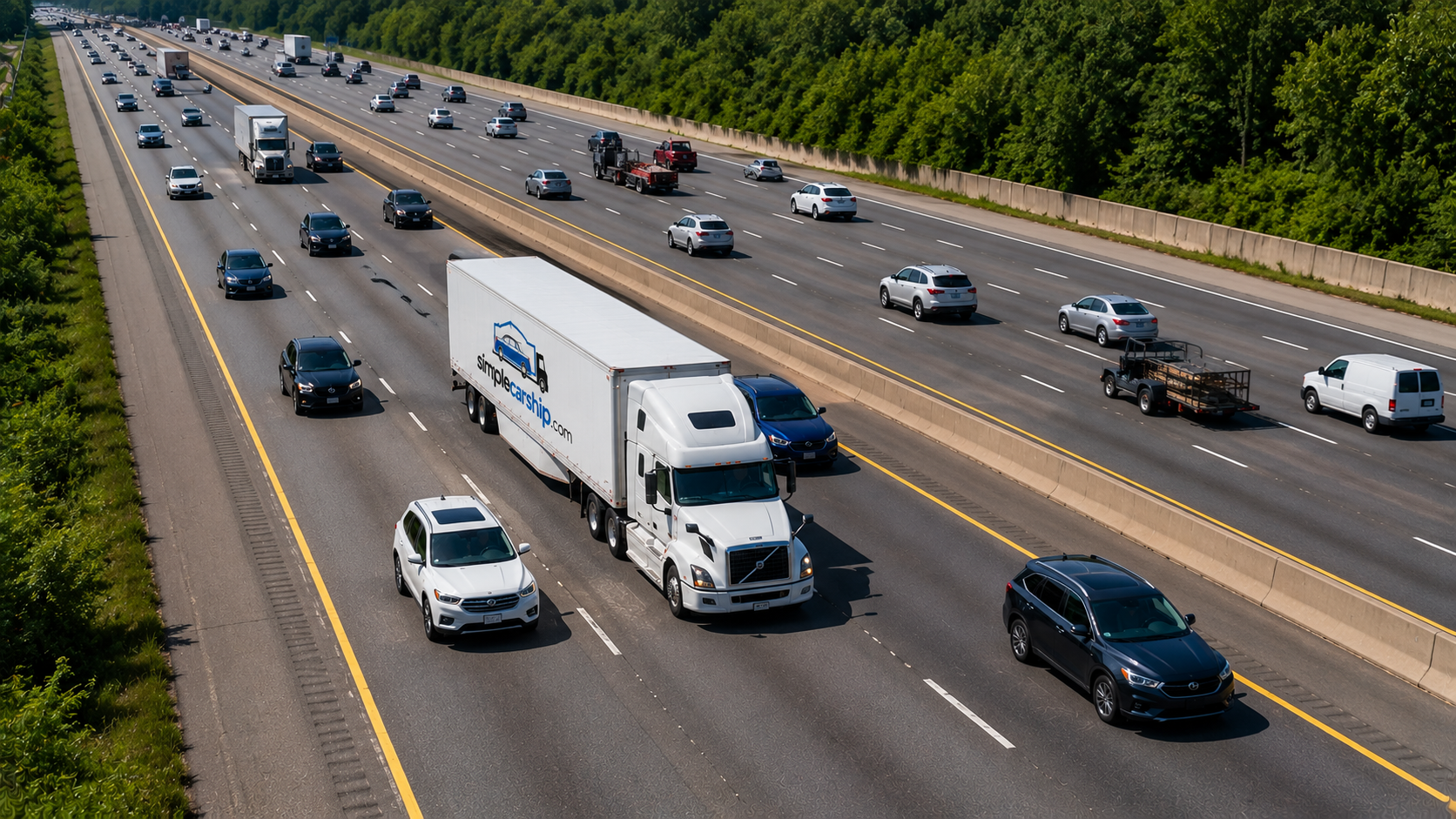
For most classic and collector cars, we recommend enclosed transport. Open carriers are perfectly safe and sensible for everyday vehicles, but a classic is exactly the kind of car that justifies the extra protection. Enclosed trailers fully shield the car from road debris, rock chips, rain, road salt, and prying eyes, and they typically come with the better-trained drivers, softer tie-down equipment, and lower-volume loads that high-value cars deserve.
That said, open transport is a legitimate choice for some classics. A solid driver-quality survivor, an unrestored project car headed to a shop, or a car whose value doesn’t warrant the premium can ship open and arrive fine, the same way new cars reach dealerships every day. The honest test is simple: if a rock chip or a weather-exposed delivery would genuinely hurt you, financially or emotionally, go enclosed. If the car is a sturdy driver you’re not precious about, open is a reasonable way to save.
What Classic Car Transport Typically Costs
Because this is a nationwide service rather than a single route, the right way to think about cost is drivers and premiums, not one fixed number. Every classic move is still priced on distance first, but a few things push a classic above what the same trip would cost for a standard sedan. All of these figures are estimated and typical, never a guaranteed price.
The biggest factor is enclosed transport itself. As a rule of thumb, enclosed runs roughly 1.5 to 2 times the open-transport rate for the same distance. That premium pays for the covered trailer, the specialized equipment, the more experienced driver, and the fact that enclosed haulers carry fewer cars per trip. On top of that, expect cost to rise with the car’s size and weight, non-running or non-rolling status (which adds winch or liftgate handling), low ground clearance, and any request for top-load placement so nothing can drip onto your car from above.
As a loose guide, an enclosed classic move often lands somewhere in the range of a few hundred dollars on a short regional hop to a couple thousand or more on a long cross-country haul, depending entirely on distance, vehicle, and access. Rather than quote a number that may not fit your car, we give you a real estimate on your actual vehicle, condition, and ZIP codes. No teaser rate, no “best price” gimmick, just a straight figure you can plan around.
Classic Car Prep Checklist
A little prep protects your car and prevents surprises on loading day. For a classic specifically, run through this before the carrier arrives:
- Document condition thoroughly. Take clear, dated photos of every panel, the wheels, the interior, and any existing chips, cracks, or imperfections. This is your baseline if any question ever comes up.
- Note operability and quirks in writing. Tell us and the driver if it doesn’t start reliably, won’t hold a charge, has a manual choke, sticky brakes, an aftermarket kill switch, or a tricky shifter. Surprises at the ramp are how cars get hurt.
- Record ground clearance and dimensions. Measure the lowest point and overall length and width, especially for lowered cars, splitters, or wide chrome bumpers, so the carrier brings the right equipment.
- Keep fuel low. About a quarter tank is plenty. It’s enough to load and unload without adding unnecessary weight.
- Check for leaks and secure fluids. Note any oil, coolant, or fuel seepage so the car can be positioned to protect others on the trailer, and yours from anything above.
- Secure or remove loose and fragile items. Take off soft tops if they’re not weather-tight, retract antennas, secure loose trim, and remove personal items and valuables.
- Disable alarms and aftermarket toggles. A car that won’t stop honking, or a hidden kill switch nobody knew about, slows everything down.
- Leave it mostly clean. A clean car makes the pre-load inspection accurate, so existing marks are easy to see and agree on.
How Simple Car Ship Handles Your Classic
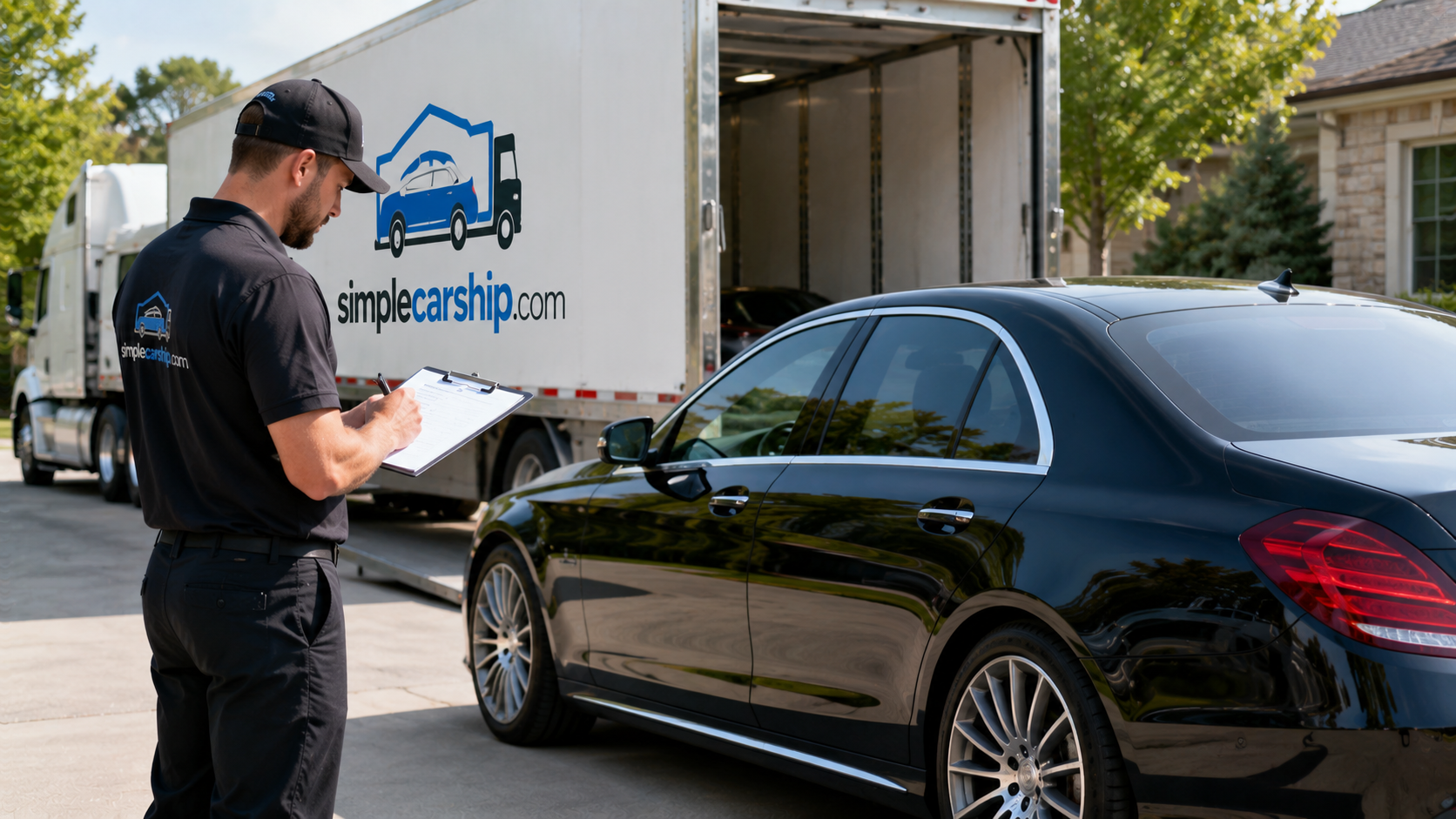
Here’s the part that’s actually different. When you ship a classic with us, you get a clear quote with no bait-and-switch, a hand-selected carrier matched to your specific car (not whoever bid lowest on a load board), and a real person you can reach from pickup to delivery. For higher-value cars we steer you toward enclosed transport and carriers running the right equipment for a non-running, low-clearance, or irreplaceable vehicle, and we confirm the carrier’s cargo coverage makes sense for what you’re shipping. We help you document condition before it loads, we walk the inspection with care, and we keep you posted instead of going dark.
We treat a driver-quality survivor and a concours restoration with the same seriousness, just scaled to the car. No hype, no fake urgency, no “guaranteed lowest price” broker-speak. Just careful handling and straight communication. If shipping a car, especially one you care about, has burned you before, this is the antidote. Ship your car the simple way.
Want to know what a covered slot on your lane actually runs and how soon one opens? Get your free quote in about a minute, or call and talk to an actual human who can map out the transit window for your specific pickup and delivery ZIPs. No pressure, no spam, just a straight answer on your car. You may also want to compare luxury and exotic car shipping if you’re moving something high-value, look at enclosed auto transport for the full picture on covered hauling, or read about car show and event transport if you’re shipping to and from shows.
Classic Car Transport FAQ
Should I ship my classic car open or enclosed?
For most classic and collector cars we recommend enclosed transport, because it fully shields the car from road debris, rock chips, rain, road salt, and weather, and usually comes with better-trained drivers and softer equipment. Open transport is still a reasonable choice for driver-quality survivors or project cars headed to a shop. The honest test: if a rock chip or weather-exposed delivery would genuinely hurt you, go enclosed; if the car is a sturdy driver you’re not precious about, open can save you money.
How much more does it cost to ship a classic versus a standard sedan?
The main premium comes from enclosed transport, which typically runs about 1.5 to 2 times the open-transport rate for the same distance. On top of that, cost rises with the car’s size and weight, non-running or non-rolling status that requires a winch or liftgate, low ground clearance, and any request for top-load placement. All of these are estimated, typical ranges, not a guaranteed price. The only way to pin down your number is a real quote on your actual car, condition, and ZIP codes.
Can you transport a classic car that doesn’t run?
Yes. Non-running classics are common, and we match them to carriers equipped with a winch or liftgate and soft tie-downs so the car is loaded safely without being forced up a ramp. The key is telling us up front exactly what the car does and doesn’t do: whether it starts, holds a charge, rolls, steers, and brakes. A non-running or non-rolling car costs a bit more to handle, and that’s reflected honestly in your quote rather than sprung on you at pickup.
Is my classic insured during transport?
Carriers carry cargo insurance, but coverage amounts vary, which matters a lot for a high-value classic. Before your car loads, we confirm the assigned carrier’s cargo coverage actually fits your vehicle’s value so there are no gaps. We also help you document the car’s condition with dated photos beforehand, and we walk the pre-load inspection report carefully. We never invent or promise specific insurance figures; we make sure the real coverage on your specific move is appropriate and clear to you.
How do I prepare my classic car for shipping?
Document the car’s condition with dated photos of every panel and existing imperfection, write down any operability quirks like a hard start or manual choke, and measure ground clearance and overall dimensions for lowered or wide cars. Keep fuel to about a quarter tank, note any fluid leaks, secure or remove loose and fragile items, disable alarms and aftermarket kill switches, and leave the car mostly clean so the inspection is accurate. These steps protect your car and prevent surprises on loading day.
Do you ship classic cars nationwide?
Yes. Classic car transport is a nationwide service for us, not a single route. We arrange door-to-door pickup and delivery across the country, matching your car to a carrier already running equipment suited to it. Pickups and deliveries in tight neighborhoods, low-clearance streets, or rural areas may need a nearby accessible meeting point a full-size enclosed carrier can reach, which we coordinate with you ahead of time so delivery day isn’t a surprise.