
Get your instant car shipping price
Real quote in seconds — no spam, no runaround.
Military PCS Vehicle Transport
The first real decision on a PCS move usually isn’t whether to ship the car, it’s how. Open carrier for the daily driver, or pay the premium for enclosed because that vehicle is something you’d hate to ride exposed across the country? For most service members the answer is open transport, the same trucks that haul new cars to dealerships, and we’ll tell you plainly when enclosed is worth it and when it’s just extra money you don’t need to spend before a move. That’s the kind of straight talk Simple Car Ship runs on: a price you can plan a move around, a carrier we actually vetted, and a person who picks up the phone. You’re already juggling out-processing, housing, and a report date that won’t move, so we keep the car part simple and out of your way.
Why Military Families Ship Their Vehicles
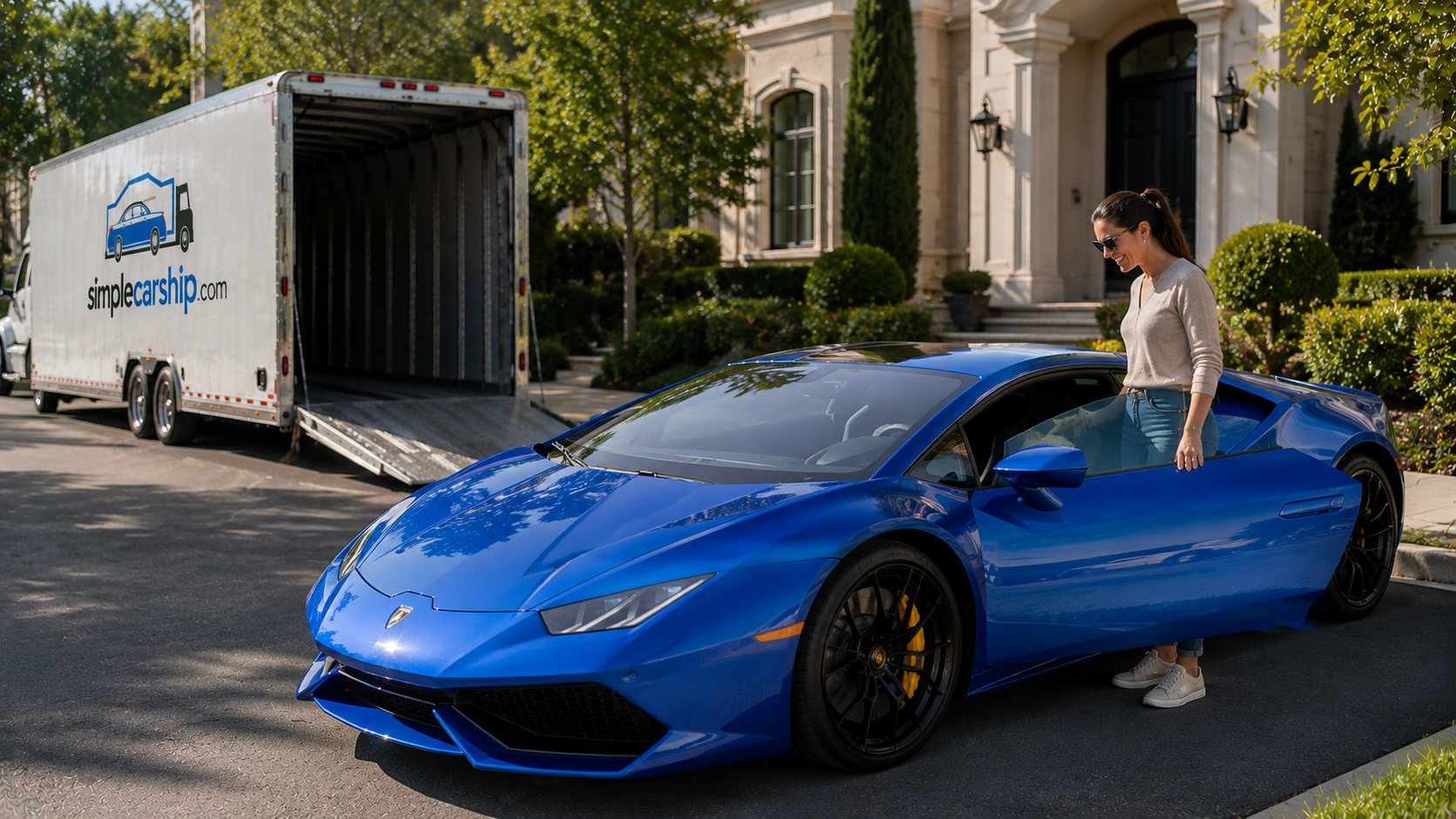
When you get PCS orders, you’ve got options for your car, and none of them are great if it means a long solo drive. Maybe you’re heading from a base on the East Coast to one out West, maybe you’re flying ahead while your family follows, or maybe you simply don’t want to put 1,800 highway miles on a vehicle you just paid off. Driving it yourself burns leave days, racks up wear and tear, and means hotels, fuel, and meals on the road. Shipping it lets the car ride on a truck while you fly, settle the family in, and check in at your new command without a multi-day drive hanging over you.
There’s also the second-car problem. A lot of military households have two vehicles and only one driver who can make the trip. You can’t be in two cars at once, and renting a tow dolly or paying for a one-way rental adds up fast. Shipping the second vehicle is usually cheaper and far less hassle than any of the workarounds. We hear from a lot of service members and spouses who didn’t realize how affordable and simple it could be until they actually got a real quote.
What Vehicle Transport Costs on a PCS Move
Cost is almost always the first question, especially when you’re managing a move on a fixed allowance. Here’s an honest, estimated picture. For a typical cross-country PCS of around 1,800 miles, open transport generally runs in the range of about $1,000 to $1,250, and enclosed transport about $1,500 to $1,875. These are estimated, typical ranges, not a fixed or guaranteed price. Shorter moves cost less and longer hauls cost a bit more per mile. A move under 600 miles, say between two regional bases, might land closer to $0.90 to $1.20 a mile, while a long coast-to-coast or stateside-to-port haul drops toward $0.40 to $0.52 a mile because the distance spreads the cost out.
Your exact number moves with a few real factors: the size and weight of the vehicle, whether it runs and rolls, how far your pickup and delivery sit from major routes, the season, and how fast you need it. We give you a straight estimate on your actual vehicle and ZIP codes, not a teaser rate built to get you on the phone. No “best price” gimmicks, no guesswork. One important note on reimbursement: the military will sometimes cover or partially cover privately owned vehicle shipment under certain orders, especially OCONUS moves, so always check with your transportation office (TMO/PPSO) about what your specific orders authorize before you pay out of pocket.
Open vs Enclosed Transport for a PCS Move
Most PCS vehicle shipments go open carrier, the same kind of truck that delivers new cars to dealerships. It’s cost-effective, widely available, and perfectly safe for everyday vehicles, your daily-driver sedan, the family SUV, the truck. Enclosed transport makes sense when the vehicle’s value or finish justifies the premium: a classic you’ve been restoring, a motorcycle, or a low-mileage car you’d lose sleep over riding exposed. For most service members on a budget and a deadline, open transport is the practical choice. Here’s how the two compare for a typical PCS move.
Timing Your Shipment Around PCS Orders
Timing is where PCS moves get tricky, because your report date isn’t a suggestion. For a typical cross-country move of around 1,800 miles, plan on a realistic door-to-door window of about 5 to 7 days for open transport. That accounts for a 1 to 3 day pickup window plus roughly 4 days of actual transit at a typical pace near 500 miles a day. Enclosed moves can run a day or two longer, in the 6 to 8 day range, because those carriers run less often. Shorter regional moves obviously take less time, often just a few days end to end.
The single best thing you can do is book early. As soon as you have firm orders and a rough date, get a quote and lock in your window. PCS season runs heavy from late spring through summer, when half the military seems to be moving at once, and carriers fill up fast on the busiest lanes. Booking ahead during that window gets you better availability and a smoother handoff. If your orders shift, which happens, just tell us; we’d rather adjust the plan with you than leave you guessing. We build in the realistic window up front so your report date and your car’s arrival actually line up.
How to Prepare Your Car for PCS Shipment
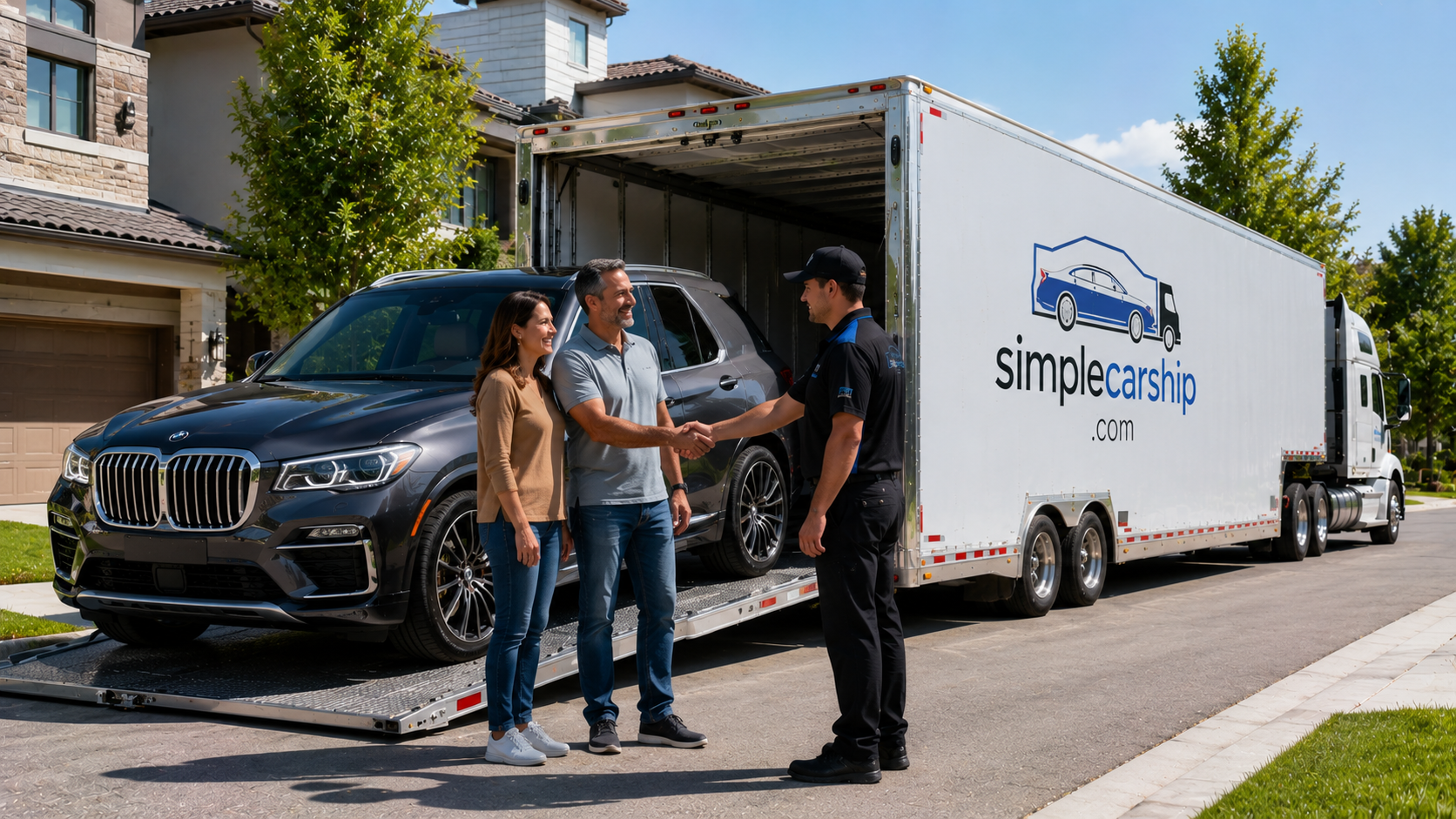
Prepping a vehicle for transport takes about fifteen minutes and saves headaches later. Wash the car so the inspection report can clearly document its condition at pickup, and take a few timestamped photos of any existing scratches or dings. Leave about a quarter tank of fuel, no more, since a lighter vehicle is easier and safer to load. Remove personal belongings, toll transponders, parking passes, and anything loose; carriers transport the vehicle, not its contents, and loose items can shift in transit.
Check for fluid leaks and note any mechanical quirks, like a finicky alarm or a battery that drains, so the driver knows. Make sure the car has a working battery and properly inflated tires so it can be driven on and off the truck. Disable aftermarket alarms, retract antennas, and fold in mirrors if you can. Keep one set of keys for the driver. That’s really it. We’ll walk you through anything specific to your vehicle before pickup so there are no surprises on loading day, which is one less thing to think about while you’re juggling everything else a PCS throws at you.
How Simple Car Ship Makes a PCS Easy
Here’s where we earn the booking. The quote you get is the quote that holds, the carrier moving your car is one we vetted and confirmed is insured, not the cheapest bid on a load board, and the person you reach on day one is the same person who answers on delivery day. Military timelines don’t bend, so we put a realistic window in writing and keep you updated instead of making you chase us. Orders slip, dates slide, ports back up; when that happens we rework the plan with you rather than parking you on hold. A junior enlisted family’s commuter and a retiring officer’s garage-kept coupe get the same attention here, because to the person waiting on it, every car is the important one. If a shipper has left you stranded before, we built this to be the opposite of that.
Have orders in hand and a date circled? Pull a free quote in about a minute, or call and talk to an actual person; either way you get a real number and zero spam afterward. Shipping the second family vehicle too? It’s worth reading up on car shipping for relocating families first. Moving something you’d rather see in an enclosed trailer, like a restoration project or a weekend car, check how classic and collector car shipping works. And if you want a number tied to your actual lane between bases, browse our state-to-state shipping routes.
Military PCS Vehicle Transport FAQ
How much does it cost to ship a car for a PCS move?
For a typical cross-country PCS of around 1,800 miles, open transport generally runs about $1,000 to $1,250, and enclosed transport about $1,500 to $1,875. These are estimated ranges, not a guaranteed price. Shorter regional moves cost less per total trip, while a longer coast-to-coast haul drops toward $0.40 to $0.52 a mile. Your exact cost depends on the vehicle, your pickup and delivery ZIP codes, the season, and how fast you need it, so a real quote on your actual move is the only way to pin it down.
Does the military pay to ship my car during a PCS?
It depends on your specific orders. The military will sometimes cover or partially cover privately owned vehicle shipment, especially on OCONUS (overseas) moves, while many stateside CONUS moves leave POV shipment as an out-of-pocket choice. Rules change and your situation is unique, so always check with your transportation office (TMO or PPSO) about what your orders authorize before you pay anything. We’re happy to provide a clear written estimate you can use in that conversation.
How long does it take to ship a car on a PCS move?
For a typical cross-country move of about 1,800 miles, plan on roughly 5 to 7 days door to door with open transport. That includes a 1 to 3 day pickup window plus around 4 days of actual transit at a typical pace near 500 miles per day. Enclosed shipments can run a day or two longer, in the 6 to 8 day range. Shorter regional moves between nearby bases take less time, often just a few days end to end.
When should I book my PCS car shipment?
As early as you can, ideally the moment you have firm orders and a rough date. PCS season runs heavy from late spring through summer, when carriers fill up fast on the busiest lanes, so booking ahead gets you better availability and a smoother handoff that lines up with your report date. If your orders shift later, which happens often, just tell us and we’ll adjust the plan with you rather than leaving you to start over.
What do I need to do to prepare my car for transport?
It takes about fifteen minutes. Wash the car so the pickup inspection can document its condition, leave about a quarter tank of fuel, and remove personal belongings, toll transponders, and loose items since carriers move the vehicle, not its contents. Make sure it has a working battery and properly inflated tires so it can be driven on and off the truck, disable aftermarket alarms, and keep one set of keys for the driver. We’ll walk you through anything specific to your vehicle before loading day.
Can you handle the second car when only one driver can make the trip?
Yes, and it’s one of the most common reasons military families call us. A lot of households have two vehicles and only one person free to drive cross-country. Shipping the second car is usually cheaper and far less hassle than a one-way rental or a tow dolly, with open transport on a roughly 1,800-mile move typically running about $1,000 to $1,250. You fly or drive one vehicle, we move the other, and the whole family arrives together without anyone making a separate solo haul.