Open vs Enclosed Auto Transport: What You Actually Need to Know
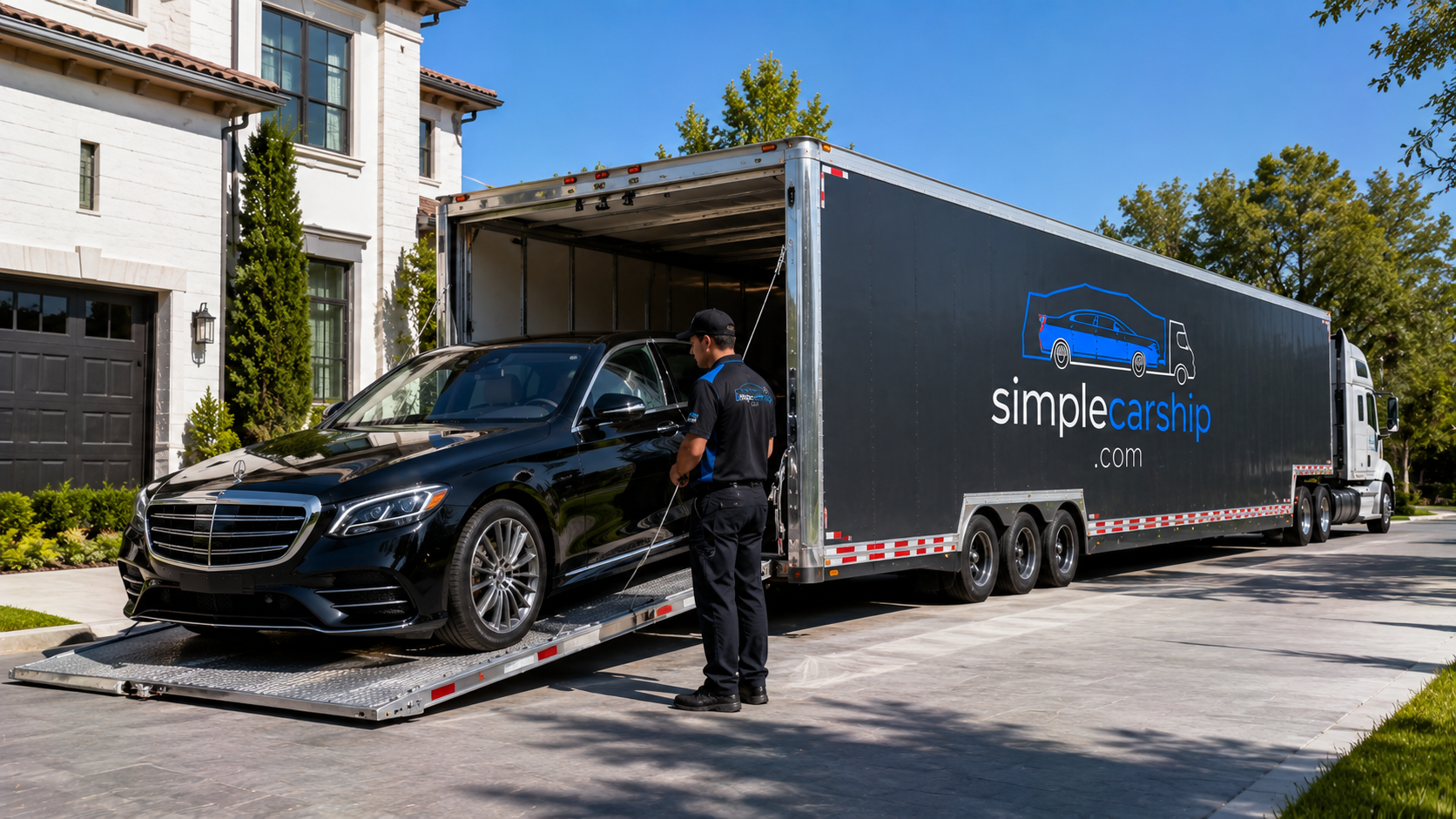
Enclosed auto transport shields your vehicle inside a covered trailer, protecting it from weather, road debris, and prying eyes. It costs more than open transport—typically 30–60% more—but for high-value, classic, or low-clearance vehicles, that premium buys real peace of mind. The question isn’t which is “better”; it’s which fits your car and your budget.
Most vehicles ship open without issue. Some genuinely need the extra protection. Here’s how to decide, what it actually costs, and how the process works.
Get your instant car shipping price
Real quote in seconds — no spam, no runaround.
What Enclosed Auto Transport Is (and What It’s Not)
Enclosed auto transport means your vehicle rides inside a fully covered trailer—hard-sided walls, a roof, and often climate control. You’ll see two types: soft-sided trailers (canvas or vinyl curtains) and hard-sided trailers (aluminum or fiberglass panels). Hard-sided is premium, common for exotics and collectors. Soft-sided offers weather protection at lower cost but less defense against side impacts.
Enclosed trailers carry fewer vehicles—typically two to seven cars versus eight to ten on open carriers. That exclusivity drives cost, but it also means more attention per vehicle: tighter strapping, less jostling, and drivers who specialize in high-value shipments.
What enclosed transport is not: a luxury upgrade for its own sake. If you’re shipping a daily-driver sedan in good weather on a budget, open transport is rational. Enclosed makes sense when the vehicle’s value, condition, or your risk tolerance tips the scale.
What Enclosed Auto Transport Costs—and Why
Open transport typically runs $500–$1,800 depending on distance. Short moves (under 500 miles) cost $500–$700; cross-country routes run $1,300–$1,800. Enclosed adds 30–60%, so expect $650–$1,100 for shorter hauls and $1,700–$2,900 coast-to-coast. The premium narrows on longer routes; it widens on short moves where enclosed scarcity matters more.
Price drivers beyond trailer type: distance is foundational—fuel, driver time, and wear scale with miles. Vehicle size and weight matter because they dictate space and load limits. Condition adds cost if the car doesn’t run—winching onto enclosed trailers is trickier. Season spikes prices October through April when snowbirds flood southern routes; summer is softer. Accessibility—metro-to-metro is cheaper than rural addresses off interstates.
Enclosed capacity is tighter than open, especially on less-traveled routes. You may wait extra days for a carrier, and you’ll pay more for door-to-door in remote areas. Cost is predictable if you quote early and stay flexible; it climbs fast for rush jobs.
When Enclosed Transport Makes Sense (and When It Doesn’t)
Use enclosed when cosmetic damage cost approaches or exceeds the premium. Classic cars, exotics, luxury vehicles over $70,000, modified builds, and anything with irreplaceable paint justify the expense. Low-clearance sports cars benefit because enclosed eliminates scraping risks on ramps. If you’re moving a vehicle for a show, sale to a finicky buyer, or storage, enclosed removes variables you can’t afford.
You probably don’t need enclosed for: daily drivers under $30,000 in good condition, trucks and SUVs with factory paint, or any vehicle you’d park outside year-round without concern. Open transport has moved millions safely; damage rates are low, most incidents minor. Carrier insurance covers rare outliers. If you’d drive it cross-country yourself, open transport replicates that exposure cheaply.
The gray zone: $40,000–$70,000 vehicles, recent paint jobs, or sentimental projects. Weigh the premium against tolerance for dust or a rock chip. Some split the difference—open in mild seasons, enclosed in winter or high-exposure routes. It’s cost-benefit math with your priorities.
How to Choose an Enclosed Auto Transport Company
Start with carrier authority, not broker promises. Verify active FMCSA operating authority (MC number) and adequate cargo insurance. For enclosed transport, confirm the policy covers your vehicle’s full value—some cap at $100,000 or $250,000. Request the certificate before committing, and confirm it lists enclosed transport specifically.
Assess communication and process. Legitimate operators explain carrier selection, inspection process, and claims handling. Red flags: won’t name the carrier until pickup, pressure tactics, or quotes far below market with hidden fees later. Transparent pricing means one binding quote including insurance and standard service—no surprises.
Look for experience with your vehicle type. Ask how many similar vehicles they’ve moved, how they secure non-running cars, and whether they offer hard-sided versus soft-sided options. Companies shipping high-value vehicles regularly know the questions before you ask.
Read reviews with a filter. Every company has bad reviews—logistics involves weather and human error. What matters: how they respond to problems, whether complaints center on communication or damage claims, and whether bulk feedback confirms they deliver. Patterns of “carrier no-showed” or “claim ignored” disqualify. Occasional “day late but updated” is normal.
The Enclosed Transport Process: What to Expect
Expect a pickup window, not a guaranteed date. Enclosed carriers run less frequently, so windows span two to four days. The carrier calls 24–48 hours before arrival to confirm timing and access constraints. If your driveway can’t fit a 30-foot trailer, you may meet nearby—that’s common and normal.
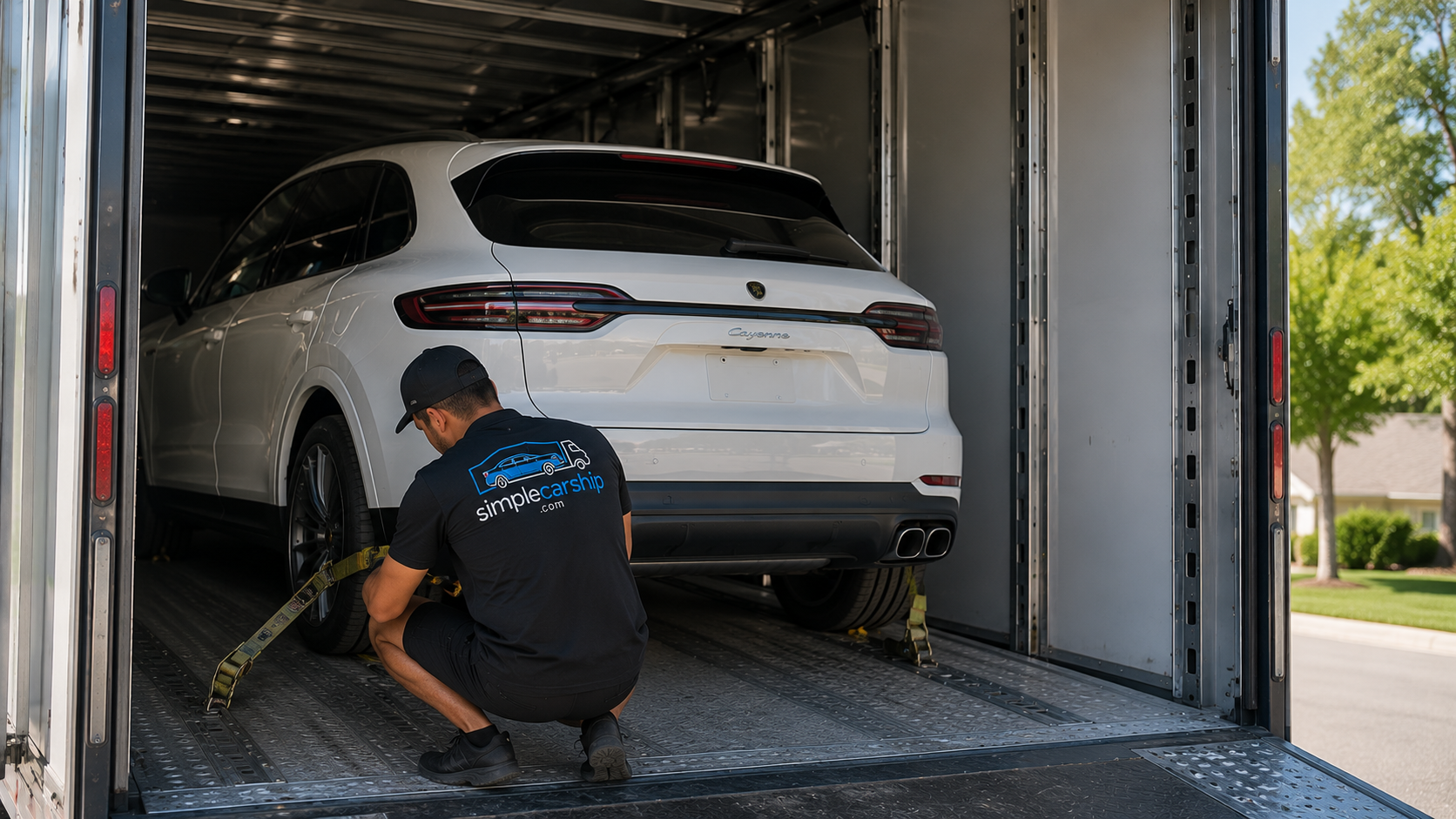
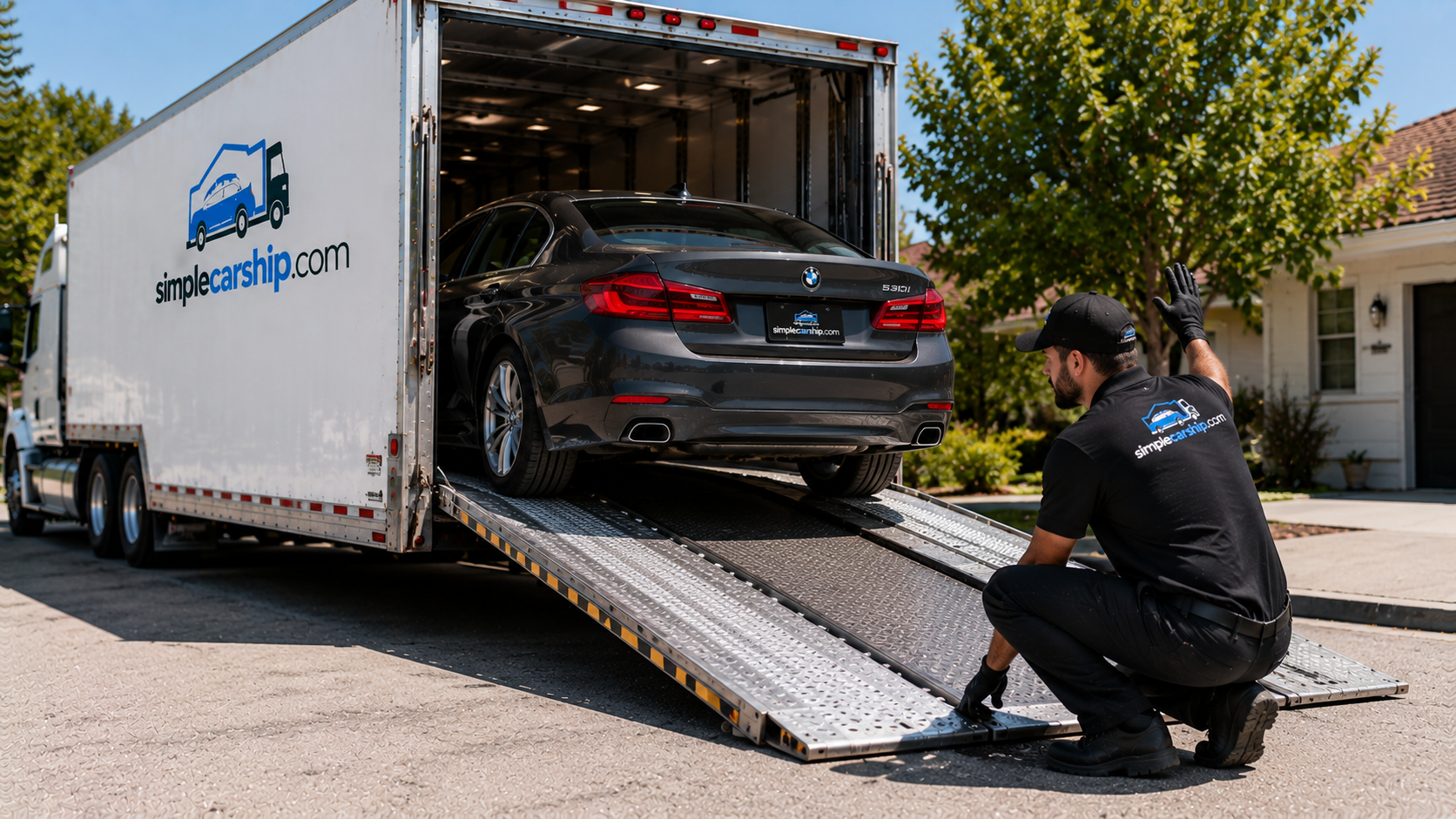
At pickup, complete a condition report: walkaround inspection documenting existing damage with photos and notes. This is your evidence for claims, so be thorough—note every scratch and chip. The driver secures the vehicle with wheel straps and soft tie-downs. If your car doesn’t run, notify the company when booking; winching requires different equipment.
In transit, don’t expect daily updates. Expect one or two check-ins on long hauls, usually when the driver is within a day of delivery. At delivery, repeat the condition inspection before signing. Spot new damage? Document it on the report and photograph immediately. Claims resolve smoothly if flagged at delivery; disputes get harder after you sign off.
How Simple Car Ship Handles Enclosed Transport
We hand-select carriers with verified enclosed authority and cargo coverage matching your vehicle’s value. You get the carrier’s name, MC number, and insurance details upfront—no mystery trucks. Your shipment isn’t a load number in a call center. You’ll work with a dedicated coordinator who knows your route, vehicle, and timeline.
Our pricing is transparent: one quote, all fees included, locked at booking. If our assigned carrier can’t make the window, we find an alternative at no extra cost. We’ve moved classics, exotics, and daily drivers coast to coast with carriers who treat enclosed transport as the specialized service it is. Real communication, clear quotes, no runaround.
Need a quote for enclosed transport—or want to compare enclosed and open pricing for your route? Request a quote here. We’ll give you real numbers and a realistic timeline, not a placeholder that balloons later.
Enclosed vs Open Transport: Side-by-Side
| Factor | Open Transport | Enclosed Transport |
|---|---|---|
| Cost (500 miles) | $500–$700 | $650–$1,100 |
| Cost (cross-country) | $1,300–$1,800 | $1,700–$2,900 |
| Protection | Weather/road debris exposure | Fully covered; climate-controlled options |
| Capacity/Availability | High; frequent departures | Lower; longer booking windows |
| Best For | Daily drivers, standard vehicles | Classics, exotics, high-value, low-clearance |
Popular car-shipping routes
- Phoenix To Chicago car shipping
- New York To Atlanta car shipping
- Atlanta To New York car shipping
- North Carolina To Texas car shipping
- Texas To North Carolina car shipping
- Cost to ship a car from California To Maryland
- Cost to ship a car from California To Missouri
- Cost to ship a car from Maryland To California
- Cost to ship a car from Missouri To California
- Cost to ship a car from Arizona To Texas
Frequently Asked Questions About Enclosed Auto Transport
Is enclosed auto transport worth the extra cost?
Enclosed transport is worth the premium if your vehicle’s value, condition, or risk tolerance justifies it. For classics, exotics, luxury cars over $70,000, or vehicles with irreplaceable paint, the 30–60% increase buys meaningful protection. For daily drivers under $30,000, open transport is usually sufficient and economical.
How much more does enclosed car transport cost than open?
Enclosed typically costs 30–60% more than open on the same route. Short moves under 500 miles: open runs $500–$700, enclosed $650–$1,100. Cross-country: open $1,300–$1,800, enclosed $1,700–$2,900. The premium is steeper on shorter routes due to limited availability, narrower on long hauls.
What’s the difference between soft-sided and hard-sided enclosed trailers?
Soft-sided use canvas or vinyl curtains over a frame, offering weather protection at moderate cost. Hard-sided have solid aluminum or fiberglass walls, delivering maximum protection against impacts, spray, and temperature swings—some include climate control. Hard-sided is premium for exotics; soft-sided works for luxury daily drivers.
How long does enclosed auto transport take?
Transit time matches open—roughly one day per 500 miles—but booking and pickup windows can be longer because enclosed carriers run less frequently. Expect two-to-four-day pickup windows. Cross-country enclosed shipments typically deliver in five to ten days total, including booking lead time.
Do I need special insurance for enclosed car transport?
Reputable carriers include cargo insurance covering your vehicle during transit, typically up to $100,000 or more. For high-value cars, verify the policy limit before booking and request a certificate. If your car exceeds carrier coverage, ask about supplemental transport insurance or check your personal policy.
Can enclosed transport handle non-running or modified vehicles?
Yes, but disclose condition when booking. Non-running cars require a winch, adding $100–$200 and time—not all enclosed carriers have winch-equipped trucks. Modified vehicles need clearance measurements and sometimes custom ramps. Be specific about ride height and whether the car rolls. Surprises at pickup can delay or cancel shipment.
How do I prepare my car for enclosed auto transport?
Clean inside and out for accurate condition reports. Remove loose items, retract antennas, fold mirrors. Leave a quarter-tank of fuel. Disable alarms and provide special loading instructions. Take time-stamped photos from every angle before pickup. The goal: clear baseline and a car ready to load without surprises.