
Cross-Country Car Shipping: The Complete Guide
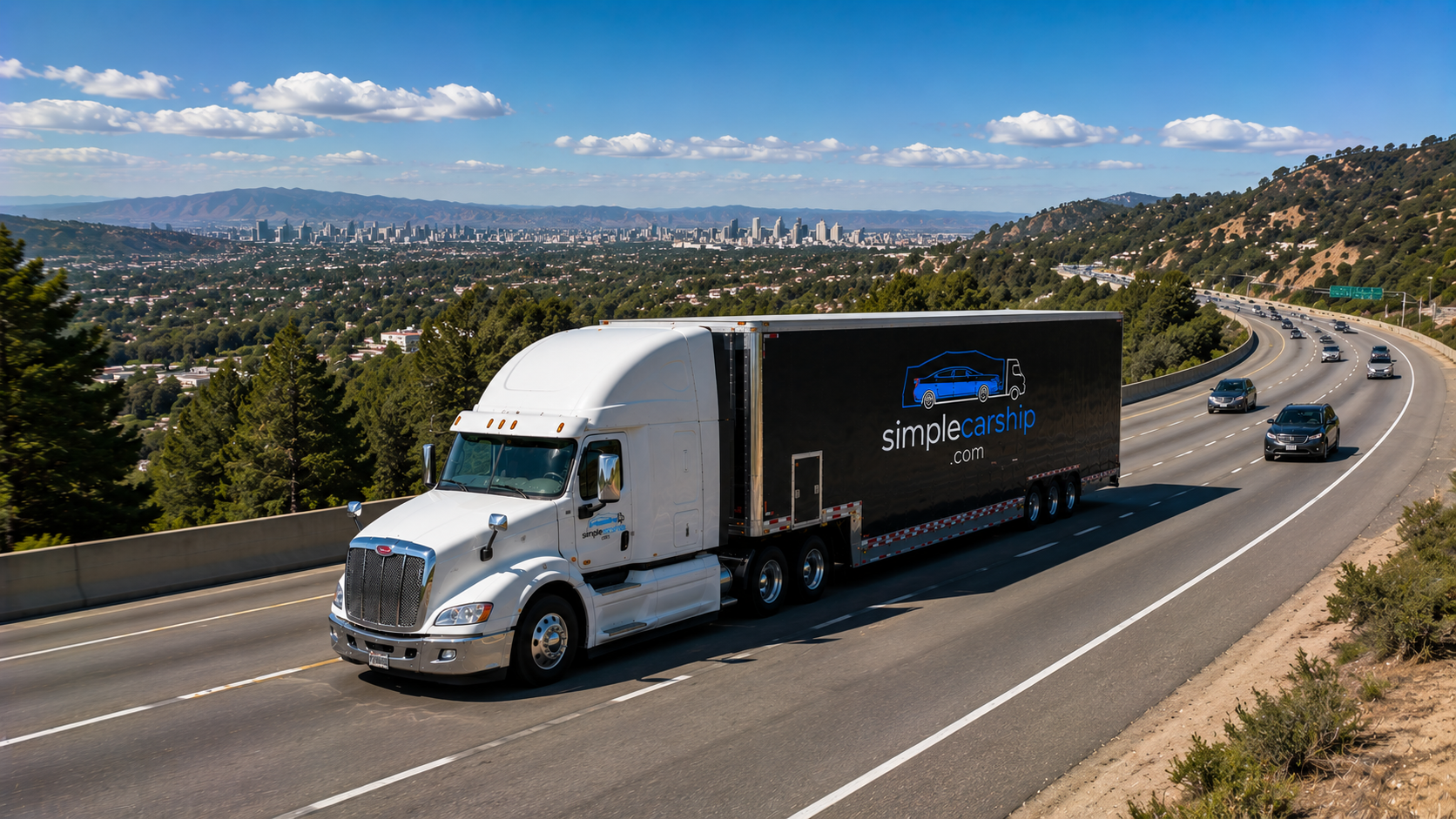
When moving a vehicle coast to coast—whether relocating for work, buying out of state, or snowbirding—understanding cross country car shipping saves time and money. Key differences from local moves: distance-based pricing that works in your favor, multi-day transit, and scheduling logistics across eight or more states. This guide covers mechanics, costs, and strategy.
How Distance Changes the Economics of Car Shipping
The most misunderstood aspect is pricing. Many assume doubling distance doubles cost. The opposite is true: per-mile rates *drop* as distance increases, because fixed costs—dispatch, loading labor, fuel, and driver setup—spread over more miles.
According to our 2026 Car Shipping Cost Index, open transport averages $1.32 per mile nationwide. But short hauls under 500 miles run closer to $1.93 per mile, while routes over 1,500 miles drop to around $0.85 per mile. A cross-country route spreads overhead across 2,500–3,000 miles.
Enclosed transport runs about 60 percent higher than open, reflecting smaller trailer capacity (six to seven cars versus nine to ten), specialty equipment, and premium protection. The same distance taper applies: enclosed cross-country shipments cost significantly less per mile than short enclosed moves.
What Cross-Country Transit Times Actually Look Like
Coast-to-coast shipments typically take five to seven days in transit once loaded. That window accounts for required driver rest breaks under federal Hours of Service rules, refueling, and the reality that loaded carriers average 45–55 mph. Weather, inspections, and urban traffic can add a day.
The bigger variable is *pickup* lead time. Carriers build efficient multi-stop routes, so your car waits until the driver assembles a load heading the same direction. On major corridors—Interstate 80, I-40, I-10—dispatchers usually assign trucks within two to five days. Less-traveled routes or northern tier winter shipments may need a week or more. Flexibility on your pickup window by 24–48 hours often shaves days off total time.
The Major Cross-Country Corridors and Why They Matter
Car carriers follow freight logic: they run where volume justifies backhaul. Busiest transcontinental lanes are California to the Northeast, Texas to the Midwest, and Florida to the West Coast. These routes see daily or near-daily trucks, meaning faster pickup and tighter pricing.
California to New York is the textbook example. At roughly 2,796 miles, the cost to ship a car from California to New York in open transport runs $2,060–$2,505, enclosed $3,295–$4,010, with five to seven days transit. Volume is constant—college students, corporate relocations, online car sales—so carriers rarely deadhead empty. That two-way demand stabilizes pricing and availability year-round.
Secondary corridors—Seattle to Miami or Phoenix to Boston—move regularly but may require one additional connection. Pricing remains competitive; the trade-off is usually an extra day or two in lead time.
Open vs. Enclosed for Long-Distance Shipments
The decision hinges on vehicle value, weather exposure during travel dates, and budget. Open carriers are the industry workhorse: multi-level trailers moving the vast majority of cars nationwide. Your car rides exposed to weather and road spray—the same method dealerships use for inventory delivery.
Enclosed makes sense for high-value or exotic vehicles, classic restorations, or cars where minor paint chips or dust matter. The trailer is a box; your vehicle is fully shielded. Enclosed carriers handle fewer cars per load, so less jockeying during loading. The cost premium—about 60 percent—is real, but for cross-country moves the absolute dollar difference is often smaller than expected due to distance taper.
One practical note: enclosed availability is thinner in rural zones. Metro-to-metro enclosed is straightforward. If one end is 90 minutes off the interstate, expect the carrier to request a meet-point at a truck stop or shopping center with trailer access.
Booking Strategy: When to Reserve and What to Expect
Cross-country shipments benefit from advance booking—ideally two to three weeks before your preferred pickup. Early orders give dispatchers room to build efficient routes and offer wider pickup windows. Last-minute bookings (inside 72 hours) are possible on major lanes but sacrifice flexibility and sometimes incur expedite premiums.
When requesting a quote, provide pickup and delivery ZIP codes, vehicle year/make/model, preferred dates, and whether the car runs (inoperable vehicles require winch, adding cost). The broker returns a price range reflecting real-time carrier availability; final assignment happens when a driver confirms your load. Reputable brokers lock price at booking—no surprise additions unless you change vehicle or dates.
Most brokers collect partial deposit at booking and balance on delivery (cash or certified funds to driver, card payment to broker). Confirm payment split and accepted methods before committing.
Seasonality and Cross-Country Demand Cycles
Demand follows migration patterns. Summer is peak: college moves, corporate relocations, families synchronizing with school calendars. Snowbird season—October through November southbound, April through May northbound—creates surges on I-75, I-95, and I-10. Winter sees highest enclosed demand to Florida and Arizona as retirees move high-value cars away from snow and salt.
Prices rise with demand, but distance taper still dominates. A July cross-country shipment may cost more than February, but the difference is modest compared to swings on short-haul or seasonal routes.
Fuel is the other variable. Diesel prices directly affect operating costs. Long-distance routes burn more fuel in absolute gallons, but per-mile fuel cost is stable. If diesel spikes 20 percent, expect cross-country quotes to tick up a few percent, not double.
Preparing Your Vehicle and Managing Pickup/Delivery
Carriers require vehicles clean enough to document pre-existing damage, no more than a quarter tank of fuel (weight and safety rules), and free of personal belongings beyond what fits in the trunk. Remove or secure antennas, spoilers, and bike racks. Disable alarms.
At pickup, the driver performs walk-around inspection with you (or your agent), noting scratches and dents on a Bill of Lading. Take your own timestamped photos. Same inspection happens at delivery; new damage is documented and submitted to carrier’s cargo insurance. Ask for the carrier’s insurance certificate and MC number once assigned, and verify coverage with FMCSA database if desired.
Delivery windows are broader than pickup—often 24 to 48 hours—because cross-country routes stack multiple stops. The driver calls 12–24 hours out to confirm. If you can’t be present, authorize an agent to sign the Bill of Lading. Inform the broker in writing beforehand.
Get your instant car shipping price
Real quote in seconds — no spam, no runaround.
Frequently Asked Questions
How much does it cost to ship a car cross country?
Cost depends on exact distance, route demand, and transport type. Long-haul open transport averages around $0.85 per mile, so a 2,800-mile trip will fall into a specific range you should request via quote. Enclosed transport runs about 60 percent higher. Always get a quote for your precise pickup and delivery locations to see current pricing.
How long does cross country car shipping take?
Transit time coast to coast is typically five to seven days once your vehicle is loaded. Pickup lead time adds two to five days on major corridors, longer for rural or off-season routes. Total elapsed time from booking to delivery averages one to two weeks, depending on your flexibility and the season.
Is my car insured during a cross-country shipment?
Licensed carriers carry cargo insurance that covers damage caused during transport. Coverage limits and deductibles vary by carrier. When your broker assigns a driver, request the carrier’s insurance certificate and MC number, then verify active coverage through the FMCSA database. Document your vehicle’s condition with photos at pickup and delivery.
Can I put personal items in my car during shipping?
Carriers allow small amounts in the trunk, but the Department of Transportation prohibits hauling household goods on a car carrier. Anything beyond a spare tire and standard cargo risks violating weight limits and voids insurance for those items. Ship separately or pack your car yourself if you drive it to a terminal.
What’s the best time of year to ship a car cross country?
Late winter and early spring (February through March) and late fall (November) see lower demand and slightly better pricing. Summer and snowbird season (October, April–May southbound/northbound) are peak. Weather is rarely a deal-breaker; carriers run year-round on interstates. Book early regardless of season for the widest pickup windows.
Cross country car shipping is more predictable and often more economical per mile than short moves, but requires clear understanding of transit windows, route dynamics, and booking process. Book early, choose transport type matching your vehicle’s value, and work with a broker who explains costs up front. Ready to see what your specific route will run? Get an instant quote at Simple Car Ship and compare real carrier prices for your locations.