
How to Ship a Car: A Step-by-Step Guide for First-Timers
Shipping a car across the country can feel opaque if you’ve never done it before, but the process itself is straightforward once you know what to expect. Whether you’re moving for work, sending a vehicle to a family member, or buying a car out of state, this guide walks you through every step—from getting your first quote to watching the carrier drive away with your vehicle on the trailer.
Step 1: Understand Your Transport Options
Before you request a quote, you need to know the two main service types.
Open transport is the standard. Your car rides on an uncovered multi-car trailer, exposed to weather but fully insured. According to our Cost Index, open transport averages around $1.32 per mile in 2026. It’s reliable, widely available, and accounts for the vast majority of shipments nationwide.
Enclosed transport uses a covered trailer—walls and a roof—to shield your vehicle from road spray, sun, and the elements. It runs around 60% higher than open, but it’s the better choice for high-value or exotic vehicles, classic restorations, or any car you’d rather not expose to highway conditions. Availability is tighter because fewer carriers run enclosed equipment, so book early if you need it.
Most people ship open unless the car itself justifies the upgrade. A daily-driver sedan heading to a new state? Open is fine. A freshly painted classic or a luxury lease return? Enclosed makes sense.
Step 2: Get a Quote and Compare Carriers
Start by gathering quotes from a few brokers or carriers. You’ll need to provide your origin and destination cities (ZIP codes are even better), the year/make/model of your vehicle, whether it runs and drives, and your preferred shipping window.
When you get an instant car shipping quote, the system pulls real-time availability from carrier networks and fuel indexes like the U.S. Energy Information Administration’s weekly on-highway diesel price. Rates fluctuate with fuel, seasonality, and route density, so what you see today reflects current market conditions.
Pay attention to distance. Our Cost Index shows short hauls average around $1.93 per mile, while long hauls drop to around $0.85 per mile. The per-mile rate tapers as distance grows, because fixed costs—dispatch, loading time, paperwork—spread across more miles. A cross-country run is more efficient than a 200-mile shuttle, and pricing reflects that.
For example, the cost to ship a car from Texas to Florida—roughly 1,181 miles—ranges from $815 to $995 for open transport and $1,305 to $1,590 for enclosed, with transit taking two to four days. Those figures come from our live pricing engine and include the distance taper at work.
Compare not just price but also carrier vetting. Reputable brokers work only with licensed, insured motor carriers. Ask what insurance the carrier holds, and confirm they’ll provide a copy of their cargo policy before pickup. You want to know your vehicle is covered if something happens in transit.
Step 3: Book Your Shipment
Once you’ve chosen a quote, you’ll reserve your spot by paying a deposit. The broker assigns your order to a carrier, typically within a few days, and you’ll receive the driver’s name, truck number, and pickup window.
The pickup window is usually a range—say, Monday through Wednesday—because carriers run multi-stop routes and schedules shift with traffic, weather, and other pickups. Flexibility on your end makes dispatch easier and often costs less. If you need a guaranteed date, that service exists, but it adds to the price.
Confirm your contact information is current. The driver will call you directly to coordinate the pickup time, usually a few hours ahead. Make sure someone age 18 or older can be present to hand over the keys and sign the bill of lading.
Step 4: Prepare Your Car for Pickup
Carriers have rules, and following them prevents delays or extra fees.
- Wash the exterior. A clean car makes the pre-trip inspection easier. You and the driver will walk around together and note any existing damage—door dings, scratches, chips—on the bill of lading. Clear visibility matters.
- Remove personal items. Carriers’ cargo insurance covers your vehicle, not your belongings. Personal items add weight, shift during transit, and aren’t insured. Take everything out except a spare tire and factory jack.
- Check fluids and tire pressure. The car doesn’t need to be road-trip perfect, but it should start, steer, and brake. Low tire pressure or a weak battery can cause loading trouble.
- Disable alarms. A car alarm going off on the trailer for 1,200 miles is nobody’s idea of a good time. Disable or disconnect it.
- Document the condition. Take time-stamped photos of all four sides, the roof, and the wheels. Store them on your phone or email them to yourself. If a dispute arises, photos are your best evidence.
- Leave a quarter tank of gas. Enough to drive on and off the trailer, but not a full tank. Fuel is weight, and weight affects the carrier’s axle limits and fuel economy.
Step 5: The Pickup Inspection and Bill of Lading
When the driver arrives, you’ll walk the vehicle together. He’ll mark any pre-existing damage—scratches, dents, paint chips—on a condition report, and both of you will sign it. This document, the bill of lading, is your legal record of the car’s condition at pickup.
Read it carefully before signing. If the driver notes something you don’t agree with, speak up and clarify. Once you sign, that report is the baseline for delivery. Take a photo of the signed bill of lading with your phone.
Hand over one set of keys. If you have a second set, keep it—you won’t need it until delivery, and drivers prefer not to manage extra fobs.
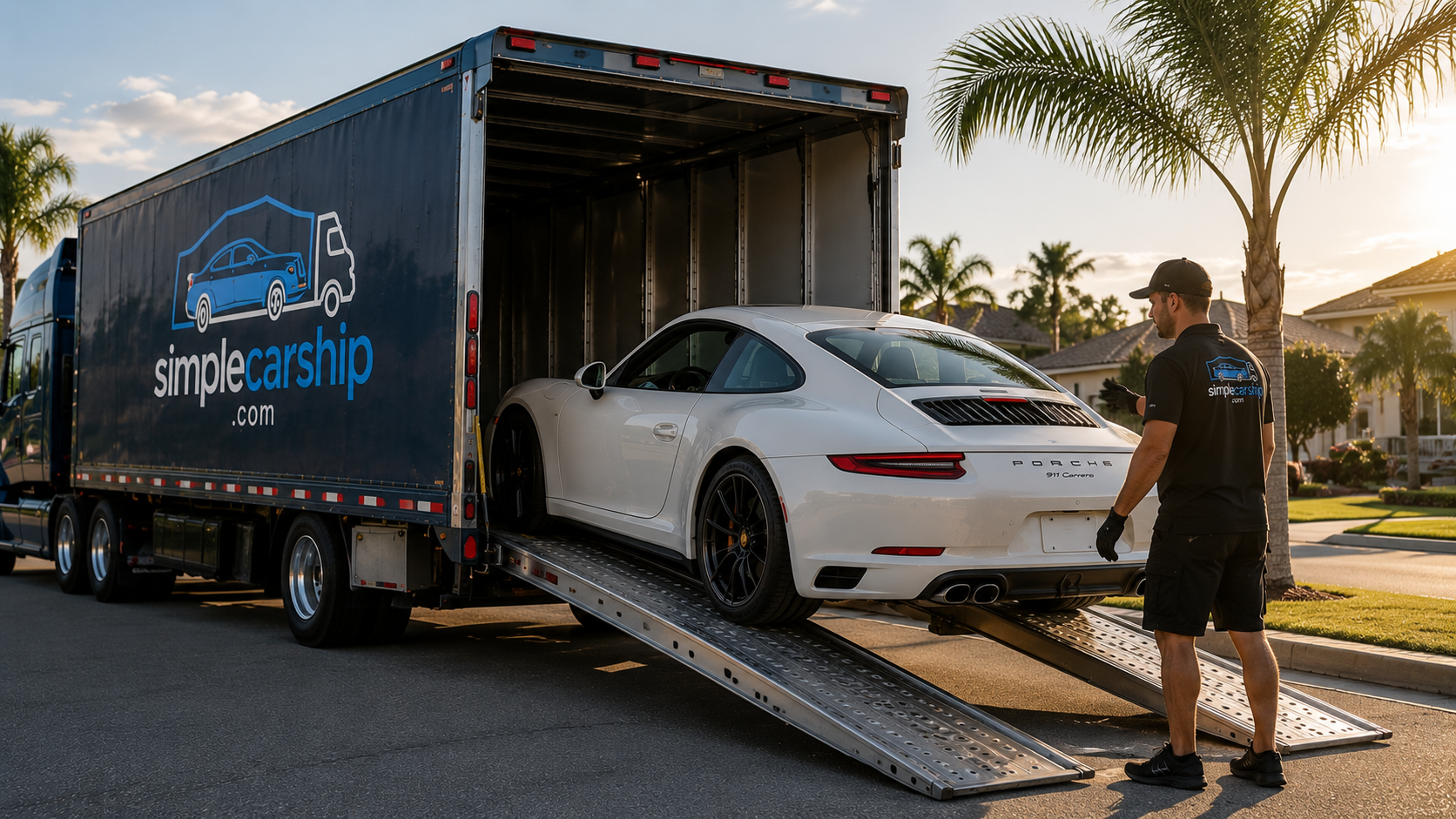
The driver will load your car onto the trailer using ramps and secure it with wheel straps or chains. The car won’t be driven during transit; it stays locked in place. Loading takes fifteen to thirty minutes, depending on the trailer configuration and how many other vehicles are already aboard.
Step 6: Transit and Communication
Once your car is en route, most of your job is done. Transit time depends on distance and route density. A regional move might take two days; a coast-to-coast run can take a week to ten days. The broker or carrier will give you an estimated delivery window at booking.
Drivers typically don’t provide daily updates—they’re busy driving—but you can call the broker or carrier dispatch if you need a location check. Some companies offer GPS tracking; ask if that’s available when you book.
Understand that trucking schedules are fluid. Weather, traffic, DOT hours-of-service limits, and other pickups or deliveries can shift timing by a day or two. Barring a breakdown or major storm, your car will arrive within the window, but rigid expectations lead to frustration. Build a cushion into your own plans if possible.
Step 7: Delivery Inspection and Final Payment
The driver will call a few hours before delivery to confirm the drop-off time. Be ready—or have someone age 18 or older ready—to meet the truck, inspect the vehicle, sign the delivery receipt, and pay the balance. Most carriers accept cash or a cashier’s check for the balance; some take credit cards, but ask in advance.
Walk the vehicle with the driver just as you did at pickup. Compare its condition to the bill of lading and your photos. Check all four sides, the roof, the glass, and the wheels. If everything looks good, sign the delivery receipt and note “no new damage” or “received in good condition.”
If you spot new damage—a crack, a dent, a scrape that wasn’t there at pickup—note it in writing on the delivery receipt before you sign. Take photos immediately. You have a right to refuse to sign until the damage is documented. Once you sign without noting damage, filing a claim later becomes much harder.
Carrier cargo insurance exists for this reason. Legitimate damage that occurred in transit is a covered claim. Document it, notify the broker or carrier within the time window specified in your contract (often 24 to 48 hours), and follow their claims process. Most claims for visible damage are resolved within a few weeks.
What Affects the Cost When You Ship a Car?
Several factors determine your final quote, and understanding them helps you plan.
Distance and route density. As noted earlier, short hauls cost more per mile; long hauls taper down. High-traffic routes—say, Texas to Florida—see more carrier availability, which can moderate price. Remote or rural endpoints add to the cost because carriers have to deadhead farther to reach you.
Vehicle size and weight. A compact sedan takes up less trailer space and weighs less than a full-size truck. Heavier or larger vehicles consume more of the carrier’s weight capacity and cost more to ship.
Operable vs. inoperable. If your car doesn’t start, steer, or brake, the carrier needs a winch to load it. That takes extra time and limits which carriers can handle the load, so inoperable vehicles cost more.
Seasonality and fuel prices. Summer is peak moving season; demand rises and so do prices. Winter routes to and from snow states see surges around college breaks and snowbird migrations. Diesel prices, tracked weekly by the U.S. Energy Information Administration, flow directly into carrier costs. When fuel spikes, rates follow within days.
Service type. Enclosed transport, expedited pickup, guaranteed dates, and top-load requests (your car on the upper deck, away from road spray) all add to the base price. Standard open transport with flexible dates is the most economical choice.
Get your instant car shipping price
Real quote in seconds — no spam, no runaround.
Frequently Asked Questions
How far in advance should I book my car shipment?
Two to three weeks is ideal for most routes, especially if you need enclosed transport or you’re shipping during peak season. If your timeline is tighter, many carriers can accommodate last-minute orders, but expect reduced availability and higher costs as your pickup window narrows.
Can I ship personal items inside my car?
Carriers generally allow a small amount of personal items in the trunk, but they aren’t insured and the carrier’s cargo policy won’t cover them. Heavy or valuable items add weight and liability. The safest answer is to remove everything and ship belongings separately if possible.
What happens if my car is damaged during transport?
Note any new damage on the delivery receipt before you sign, take photos, and notify the broker or carrier immediately. Cargo insurance carried by the motor carrier covers damage that occurs in transit. Follow the claims process outlined in your contract, and provide your documentation to support the claim.
Do I need to be present for pickup and delivery?
Yes, or you need to designate someone age 18 or older to act on your behalf. That person will inspect the vehicle, sign the bill of lading, hand over keys at pickup, accept the car at delivery, and pay any balance due. Remote handoffs aren’t allowed.
How do I know the carrier is legitimate and insured?
Ask your broker for the motor carrier’s U.S. DOT number and verify it on the Federal Motor Carrier Safety Administration website. Request a copy of the carrier’s cargo insurance certificate before pickup. Reputable brokers vet every carrier in their network and will provide this documentation without hesitation.
Ready to Ship Your Car?
Now that you know what to expect at every step, getting your vehicle from one state to another is less mystery and more logistics. Whether you’re moving across the region or across the country, the process is the same: quote, book, prepare, inspect, and deliver. If you’re ready to see what your shipment will cost and lock in a pickup date, get an instant car shipping quote and you’ll have a firm number in seconds.