
How Much Does It Cost to Ship a Car? (2026 Guide)
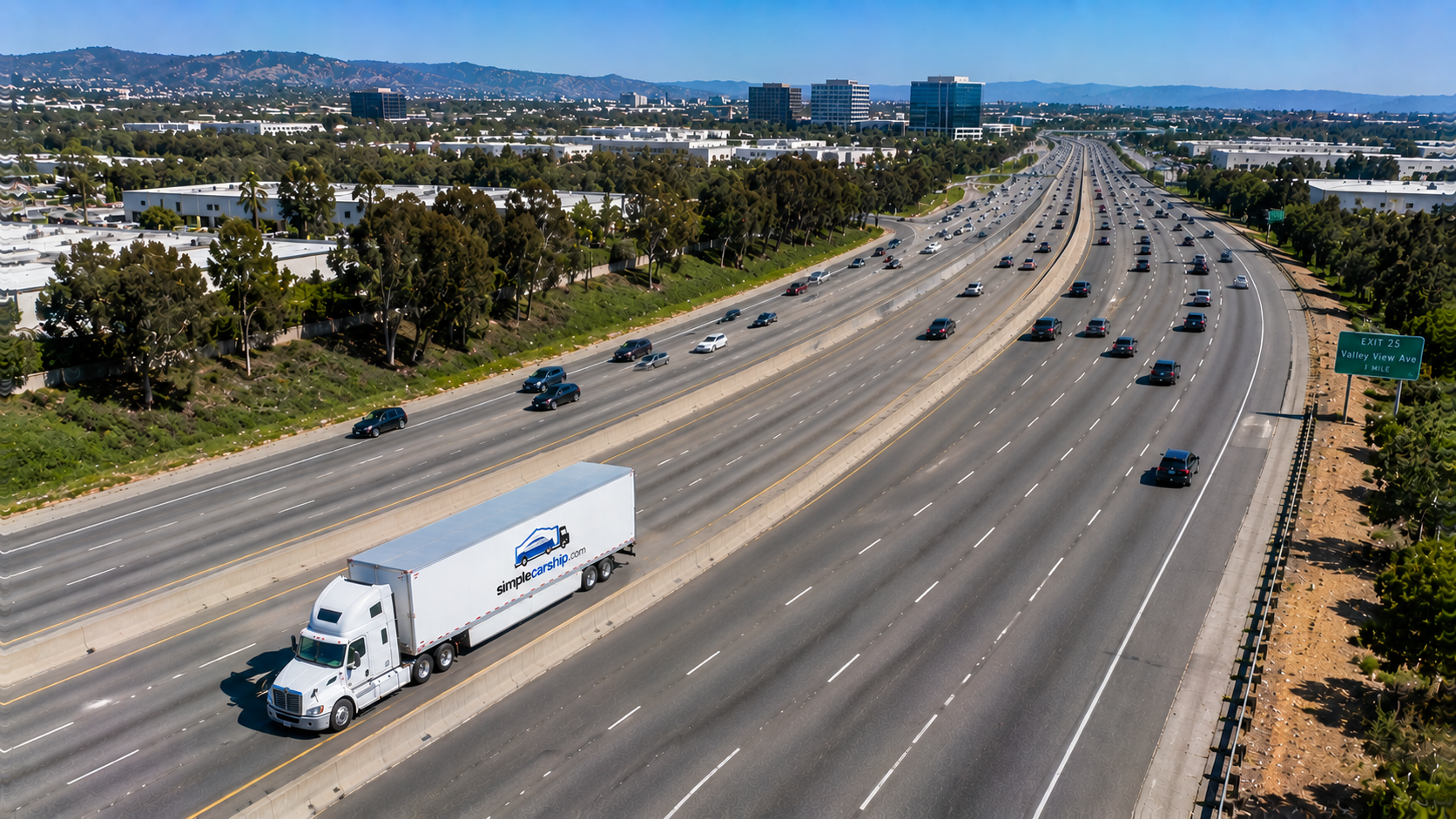
Shipping a car in 2026 costs between roughly $0.85 and $1.93 per mile, depending on distance, transport type, and route characteristics. According to our 2026 Car Shipping Cost Index, open transport averages around $1.32 per mile, while enclosed transport runs approximately 60% higher. The final price you pay will depend on seven key factors, from distance and equipment to seasonality and your vehicle’s size.
Why Per-Mile Rates Taper With Distance
Car shipping follows an economies-of-scale curve: short moves cost more per mile, long hauls cost less. Our Cost Index shows short hauls—typically under 500 miles—average around $1.93 per mile, while long-haul routes over 1,500 miles drop to approximately $0.85 per mile. The reason is fixed cost: every shipment incurs pickup, loading, paperwork, and delivery overhead. On a 200-mile run, those fixed hours dominate; on a 2,000-mile run, they’re diluted across highway time.
Drivers also optimize multi-car loads on trunk routes between population centers. A cross-country haul from California to the East Coast fits neatly into a carrier’s existing lane; a rural-to-rural 300-mile trip often requires a dedicated detour, which you pay for. That’s why distance alone never tells the whole story—route density matters just as much.
Open vs. Enclosed Transport: Real-World Price Comparison
Most customers ship in open carriers—the same multi-car trailers you see on the highway. Open transport is the industry workhorse: safe, insured, and cost-effective. Enclosed transport uses walls and a roof to shield vehicles from weather and road debris. It costs more because enclosed trailers hold fewer cars (typically four to seven versus eight to ten), limiting the carrier’s revenue per trip.
Here’s what that looks like on two high-volume routes:
| Route | Distance | Open Transport | Enclosed Transport | Transit Time |
|---|---|---|---|---|
| California to Texas | ~1,564 mi | $1,520–$1,850 | $2,435–$2,965 | 3–5 days |
| New York to Florida | ~1,286 mi | $1,210–$1,475 | $1,940–$2,360 | 2–4 days |
Choose enclosed if you’re moving a high-value or exotic vehicle, a classic undergoing restoration, or any car where paint condition is critical. For daily drivers, SUVs, and sedans in typical condition, open transport delivers excellent protection at a lower price point.
The Seven Factors That Move Your Quote
Every quote reflects a combination of variables. Understanding what drives car shipping costs helps you anticipate the number you’ll see and identify where you have control.
Distance and Route Density
As outlined above, longer trips cost less per mile. But route popularity matters equally: shipping between major metro areas—Los Angeles to Dallas, Chicago to Atlanta—costs less than remote or rural endpoints because carriers run those lanes regularly and can combine loads.
Transport Type
Open versus enclosed is the single largest optional cost lever. If your vehicle doesn’t require climate isolation or maximum cosmetic protection, open transport will save you money without compromising safety or insurance coverage.
Vehicle Size and Weight
Carriers load by both space and weight. A compact sedan occupies one slot; a full-size pickup or three-row SUV takes more deck space and adds payload. Larger or heavier vehicles cost more to ship because they reduce the number of cars a trailer can carry and increase fuel consumption.
Seasonality and Demand Cycles
Demand peaks during summer, winter snowbird migrations, and around holidays. Capacity tightens, and prices rise. Conversely, shipping in shoulder seasons—late winter and early fall—often yields better availability and lower quotes. If your timeline is flexible, avoid June through August and the December snowbird rush.
Fuel Prices
Diesel is a carrier’s second-largest expense after labor. When the U.S. Energy Information Administration’s weekly on-highway diesel price climbs, you’ll see upward pressure on quotes. Conversely, falling fuel costs can soften pricing industry-wide. Reputable brokers adjust quotes to reflect current fuel realities rather than locking in stale rates.
Pickup and Delivery Locations
Door-to-door service is standard, but “door” means the nearest location a 70-foot tractor-trailer can safely access. If you live on a narrow street, in a gated community with clearance restrictions, or down a steep grade, the driver may ask you to meet at a nearby large parking lot. Rural locations far from Interstate highways add time and miles, which can increase cost. Urban addresses on truck-friendly streets are the easiest and most economical.
Vehicle Condition
Inoperable cars—those that don’t roll, brake, or steer—require a winch and extra labor to load. Expect an additional charge for non-running vehicles. If your car starts and moves under its own power, even with cosmetic damage or a check-engine light, it counts as operable and ships at the standard rate.
How to Get an Accurate Quote (And What to Ask)
Online calculators give you a ballpark, but real quotes require a conversation. Carriers price each move individually based on current fuel, equipment availability, and lane balance. When you request a quote, provide:
- Exact pickup and delivery ZIP codes (city-level estimates miss important details)
- Vehicle year, make, and model (size and weight vary significantly across trims)
- Operational status (runs and drives, or inoperable)
- Preferred transport type (open or enclosed)
- Flexibility on pickup and delivery dates (tighter windows sometimes cost more)
Ask every broker whether the quote is binding or an estimate, what the deposit and payment schedule look like, and which carrier insurance coverage applies. Reputable brokers will walk you through each line item and explain how adjustments—such as choosing a slightly later pickup window—affect the total.
Understanding What You’re Paying For
Your quote covers more than miles. It includes carrier insurance (every licensed motor carrier must carry cargo insurance, typically covering your vehicle up to its current value during transit), driver labor, fuel, tolls, equipment wear, and broker coordination. The broker finds a vetted carrier, confirms pickup, tracks your car, and handles any issues that arise. The carrier provides the truck, the driver, and the liability.
This is not a commodity service with fixed pricing. The Bureau of Labor Statistics tracks long-distance truck-transportation costs in its Producer Price Index, and those figures have climbed over the past several years due to fuel volatility, insurance premiums, and driver wages. When you see a quote, you’re seeing a snapshot of those real-world operating costs passed through to your move.
How to Save Money Without Cutting Corners
Legitimate savings come from flexibility and planning, not from choosing the cheapest quote. An implausibly low bid often signals a bait-and-switch or a broker working with unvetted carriers. Here’s where smart customers trim costs:
Book early. Requesting a quote two to three weeks before your preferred pickup date gives brokers time to match you with a carrier running your lane, rather than scrambling for last-minute capacity at a premium.
Choose open transport unless you need enclosed. The cost difference is substantial, and open carriers deliver hundreds of thousands of vehicles safely every week.
Be flexible on dates. A five-day pickup window instead of a two-day window lets the broker fill a truck more efficiently, which can lower your price.
Avoid peak season. If you can schedule your move outside of summer and the winter snowbird window, you’ll find better rates and faster booking.
Meet the truck if necessary. If your address is difficult for a large trailer, offering to meet the driver at a nearby shopping center or truck stop eliminates the access surcharge some carriers add for challenging locations.
What Quotes Don’t Include (And What to Expect on Pickup Day)
Standard quotes assume your car is in operable condition, empty of personal belongings beyond what fits in the trunk without adding weight or blocking windows, and ready to roll on the scheduled day. Carriers allow a small amount of personal items in the trunk—often up to the cargo weight limit—but anything beyond that is neither insured nor permitted.
If the driver arrives and discovers your car doesn’t start, you’ll pay a non-running surcharge on the spot. If you’ve packed the car full, the driver may ask you to remove items before loading. Document your vehicle’s condition with photos before the driver loads it; you’ll do a joint inspection and sign a bill of lading that notes existing damage. Keep that document—it’s your record if you need to file a claim.
Get your instant car shipping price
Real quote in seconds — no spam, no runaround.
Frequently Asked Questions
What is the average cost per mile to ship a car in 2026?
Open transport averages around $1.32 per mile nationally, according to our Cost Index. Short hauls under 500 miles run closer to $1.93 per mile due to fixed costs, while long-haul routes over 1,500 miles average approximately $0.85 per mile. Enclosed transport costs roughly 60% more than open.
How much does it cost to ship a car cross-country?
Cross-country routes depend on origin and destination density. For example, shipping open transport from California to Texas—about 1,564 miles—ranges from $1,520 to $1,850, while enclosed runs $2,435 to $2,965. Always request a quote for your specific route to get an accurate figure.
Is enclosed transport worth the extra cost?
Enclosed transport makes sense for high-value, exotic, or classic vehicles where protecting paint and finish is paramount. It shields your car from weather and road debris. For most daily drivers and sedans in typical condition, open transport is safe, insured, and much more economical.
Can I negotiate car shipping prices?
Pricing reflects real carrier costs—fuel, labor, and equipment. However, flexibility on pickup dates, willingness to meet the truck, or booking during off-peak periods can lower your quote. Avoid brokers offering suspiciously low bids; quality carriers price realistically for safe, insured service.
When is the cheapest time of year to ship a car?
Late winter and early fall see lower demand and better availability. Avoid summer, the December-to-March snowbird migration, and major holidays when capacity tightens and prices rise. Booking two to three weeks in advance also improves your rate compared to last-minute requests.
Ready to see what your move will cost? Get an instant, no-obligation quote from Simple Car Ship today. Enter your route, vehicle, and dates at simplecarship.com, and we’ll connect you with vetted carriers in our network—backed by real experience and transparent pricing every step of the way.